




Industrial Area-Significance for Logistics
Table of Contents
- What defines an industrial area (IG) in the context of logistics?
- Infrastructure and location: The nervous system of logistics
- The logistics property: More than just a "hall"
- Technical specifications: What is important for modern halls
- Warehouse Logistics vs. Contract Logistics: The Processes in the Property
- Future trends: The industrial area of tomorrow
What defines an industrial area (IG) in the context of logistics?
An industrial area is a specific zone defined by building law that is primarily intended for industrial and production-related companies. The legal basis in Germany is the Building Use Ordinance (BauNVO).
For logistics, the distinction between industrial area (GI) according to § 9 BauNVO and commercial area (GE) according to § 8 BauNVO is of existential importance.
- Commercial areas (GE): Used to accommodate commercial enterprises that do not cause significant nuisance. This often limits logistics activities, especially in terms of noise (e.g. night deliveries).
- Industrial Areas (GI): Intended for commercial operations that are prohibited in other areas (such as GE), often due to higher emissions (noise, odor, etc.).
Question: Why is a GI area often the only choice for logisticians?
Answer: Only one GI area usually allows the 24/7 operation necessary for modern logistics (especially e-commerce, CEP services and production supply). In a GE area, noise protection requirements for the night (22:00 - 06:00) would paralyze handling operations. The higher permissible noise immission guideline values in a GI (70 dB(A) during the day, 70 dB(A) at night) compared to a GE (65 dB(A) during the day, 50 dB(A) at night) are the decisive factor.
Infrastructure and location: The nervous system of logistics
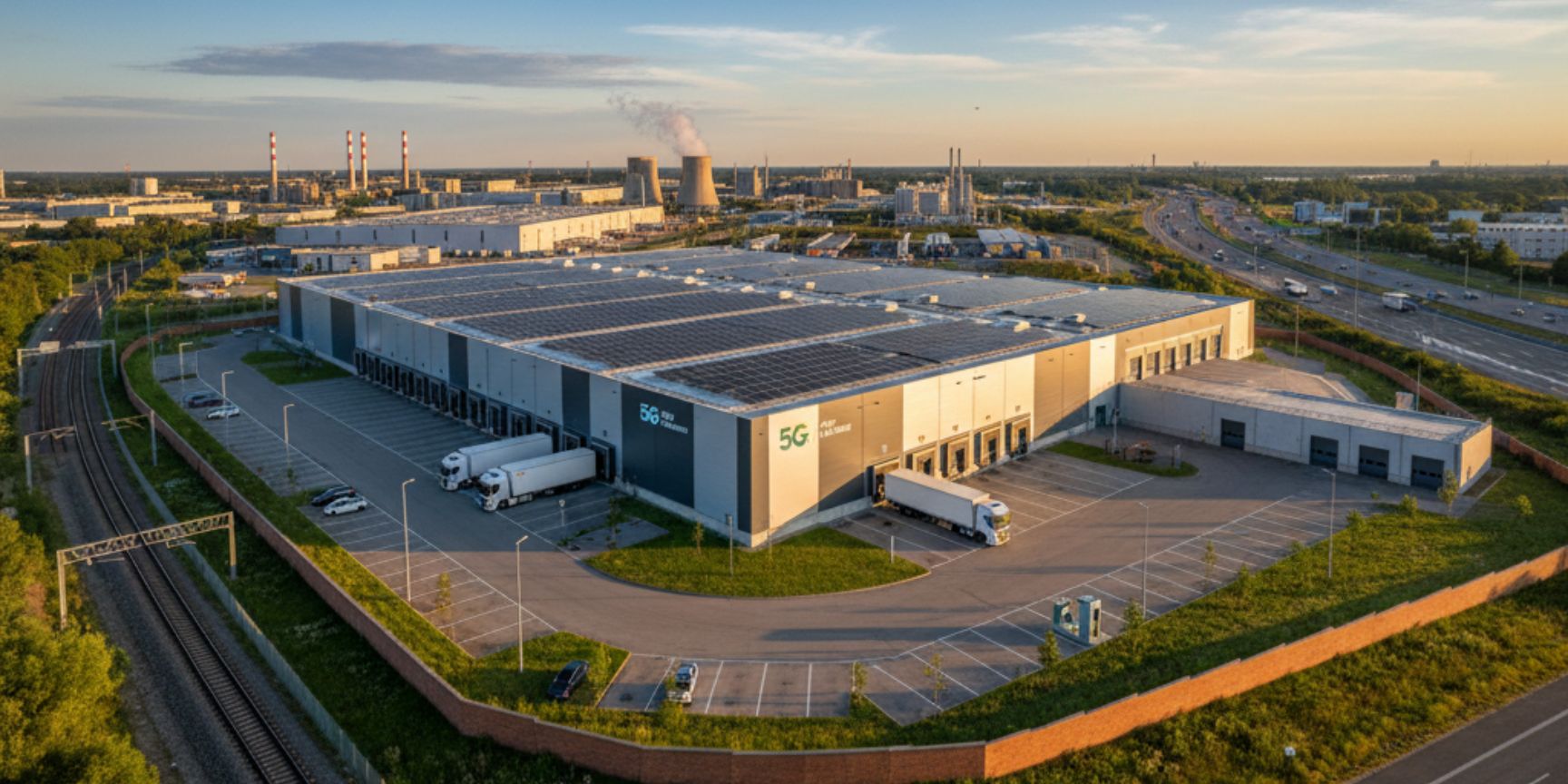
Industrial areas are useless if they are not optimally connected. For logistics, the "last mile" is often the most expensive. The quality of a location is defined by its multimodal connection .
Essential location factors:
- Road: Direct, traffic light-free connection to federal roads and motorways (ideally < 5 km) is a must for truck traffic.
- Rail/CT terminal: For intermodal transport (combined transport), the rail connection (separate siding or proximity to a CT terminal) is becoming increasingly important, also with regard to ESG goals (CO2 reduction).
- Port/Waterway: Relevant near the coast or on inland waterways for the import/export of heavy lift or containers.
- Airport: Critical for air freight logistics and express services.
Question: Do you focus on greenfield or brownfield development?
Answer: Both have advantages and disadvantages.
- Greenfield : Development on previously undeveloped (often agricultural) land. Advantage: Optimal, needs-based planning possible. Disadvantage: High land consumption, often lengthy approval procedures and lower public acceptance ("land grabbing").
- Brownfield (conversion area): Revitalization of former industrial or military wastelands. Advantage: Existing infrastructure, often better acceptance, land recycling. Disadvantage: High costs for remediation of contaminated sites and demolition, often suboptimal plot layouts.
The logistics property: More than just a "hall"
The "hall" is the heart of logistics in the industrial area. However, a distinction is made between different types of logistics properties that are optimized for specific processes:
- Big Box / Distribution Center: Large areas (>10,000 m²), primarily for storage, picking and distribution. They are the backbone of e-commerce and retail.
- Cross-dock terminal: Slender buildings with a lot of gates (dock levelers) on opposite sides and minimal storage space. Focus on fast turnover (incoming goods -> goods being dispatched in < 24 hours), typical for general cargo networks and CEP services.
- Urban Logistics / City-Hub: Smaller areas (< 5,000 m²) in urban locations (often GE areas) that serve as a buffer for the "last mile".
- Special properties: refrigerated warehouses (fresh food logistics), hazardous goods warehouses (e.g. according to WGK - water hazard classes) or pharmaceutical warehouses (temperature control, GDP standard).
Technical specifications: What is important for modern halls
Today, a logistics property must be flexible and "suitable for third-party use" in order to be attractive to different tenants (service providers). Standards have risen sharply in recent years.
Question: What are the "hard facts" of an A-grade logistics hall?
Answer: Experts pay attention to the following key figures:
- Hall height: At least 10 metres, today often 12 metres UKB (lower edge of truss) in order to be able to use modern high-bay warehouses efficiently.
- Floor load capacity: Standard is 5 tonnes per m² (surface load). For special requirements (e.g. block storage) also 7 t/m² or higher. The flatness according to DIN 18202 is decisive.
- Column grid: A wide grid (e.g. 12m x 24m) offers maximum flexibility when setting up shelving systems.
- Gates: Sufficient dock levelers – as a rule of thumb, approx. 1 door per 800–1,000 m² of hall space. At least one ground-level door for internal traffic.
- Fire protection: An ESFR ( Early Suppression Fast Response) sprinkler system is essential, which enables flexible storage (also of plastics, "in-rack sprinkling" is often avoided) without complex fire compartments.
- Mezzanine: Flexible intermediate levels (often steel platforms) above the loading zones for value-added services (VAS) or offices.
Warehouse Logistics vs. Contract Logistics: The Processes in the Property
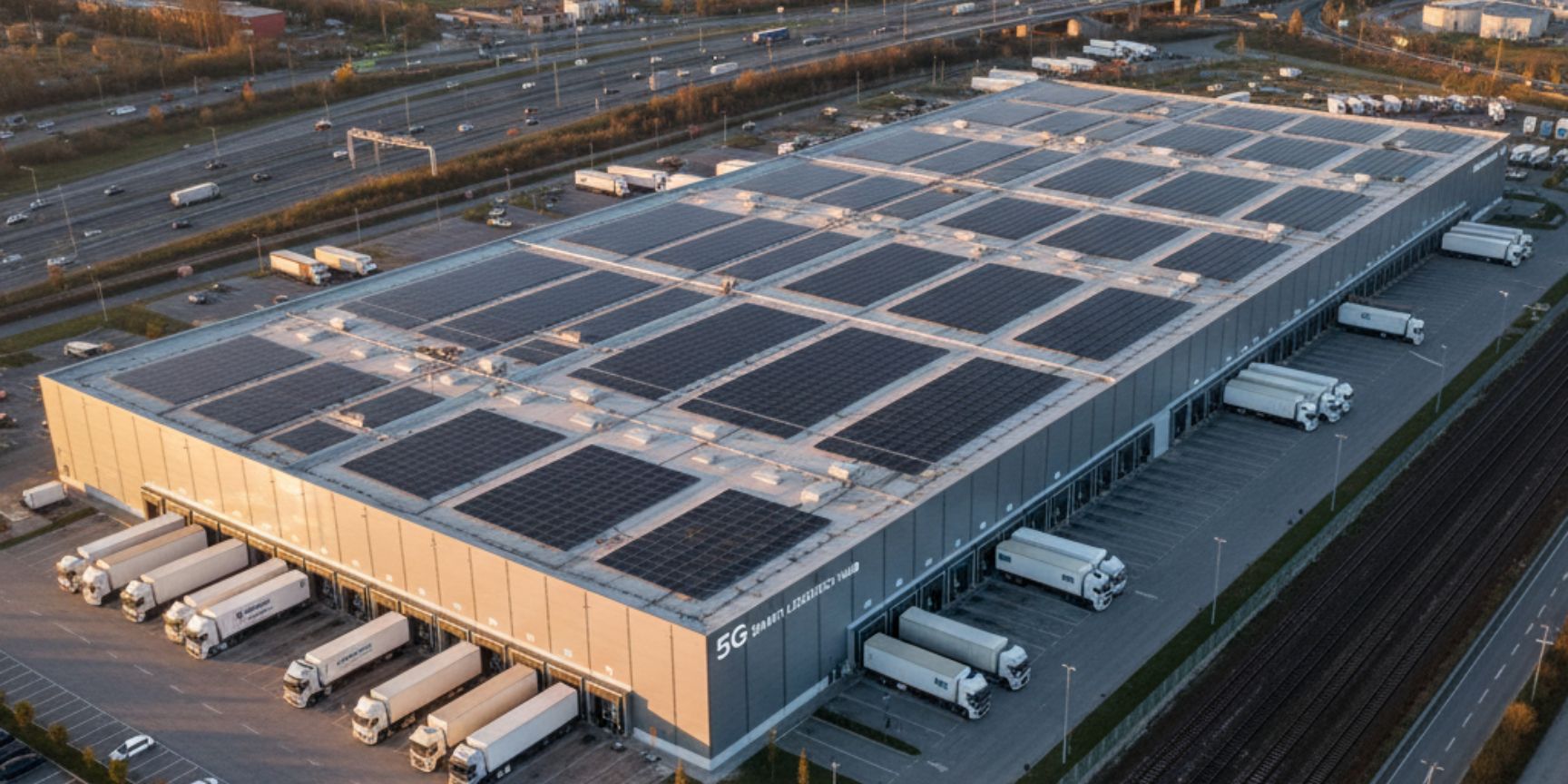
The property in the industrial area is only the shell. The processes that take place in it define the value.
Warehousing: This is the traditional function: receiving, storing, picking and shipping goods. The focus is on the efficient management of inventories. It is often a standardized, transactional service.
Contract Logistics: This is the "premier class" and the reason why 3PL (Third-Party Logistics) service providers are looking for long-term locations in industrial areas.
Question: What is the fundamental difference between contract logistics and pure warehouse logistics?
Answer: Contract logistics is a long-term, partnership-based outsourcing of complex logistics and logistics-related services. The 3PL service provider is deeply integrated into the customer's value chain (industry or trade).
The "contract" goes far beyond storage and includes value-added services (VAS), such as:
- Quality
- Packaging (set formation, display construction)
- Assembly activities (e.g. pre-assembly of assemblies for the automotive industry)
- Returns management (a huge factor in e-commerce)
- Customs clearance
- IT management (direct connection to the customer's ERP system)
Contract logistics contracts typically run for 3-7 years and often require specific modifications to the logistics property (e.g. special conveyor technology, clean rooms or cold storage).
Future trends: The industrial area of tomorrow
Industrial areas and the logistics located within them are facing a massive change, driven by three main factors:
- ESG (Environmental, Social, Governance): Logistics real estate must be sustainable. DGNB or BREEAM certifications are standard. These include PV systems on the roof (often for the tenant's own use), e-charging infrastructure (for trucks and cars), intelligent lighting (LED) and biodiversity measures on the property.
- Automation and digitalization: Robotics (autonomous mobile robots - AMR) and warehouse automation (e.g. AutoStore) require extremely flat floors, a high power supply and perfect IT connectivity (5G campus networks).
- Space scarcity and densification: Since "greenfield" areas are scarce and expensive, densification is becoming more important. In Asia, multi-level logistics properties are standard. This trend is now also reaching Europe's metropolitan areas, where trucks can serve the upper floors via ramps.
Question: Will logistics real estate remain a "concrete gold" asset class?
Answer: Yes, the demand for modern space remains high (growth in e-commerce, reshoring tendencies). At the same time, the requirements (see ESG and Automation) and development costs are increasing. Yields have normalised after the interest rate turnaround, but the fundamental demand for logistics in well-connected industrial areas remains unbroken.