




Lower edge truss in the hall
Table of Contents
- What exactly is the "lower edge of the truss"?
- Why is lower edge of truss so crucial in modern logistics?
- What lower edge of the truss heights are standard today?
- FAQ: Frequently asked questions about the lower edge of the truss
- Lower edge of the truss from the perspective of logistics real estate
- Conclusion: More than just a measure
What exactly is the "lower edge of the truss"?
The lower edge of the truss refers to the clear, i.e. freely usable, vertical dimension between the upper edge of the hall floor and the lowest point of the roof construction. This lowest point is usually the so-called "truss" – a load-bearing, horizontal component of the roof structure.
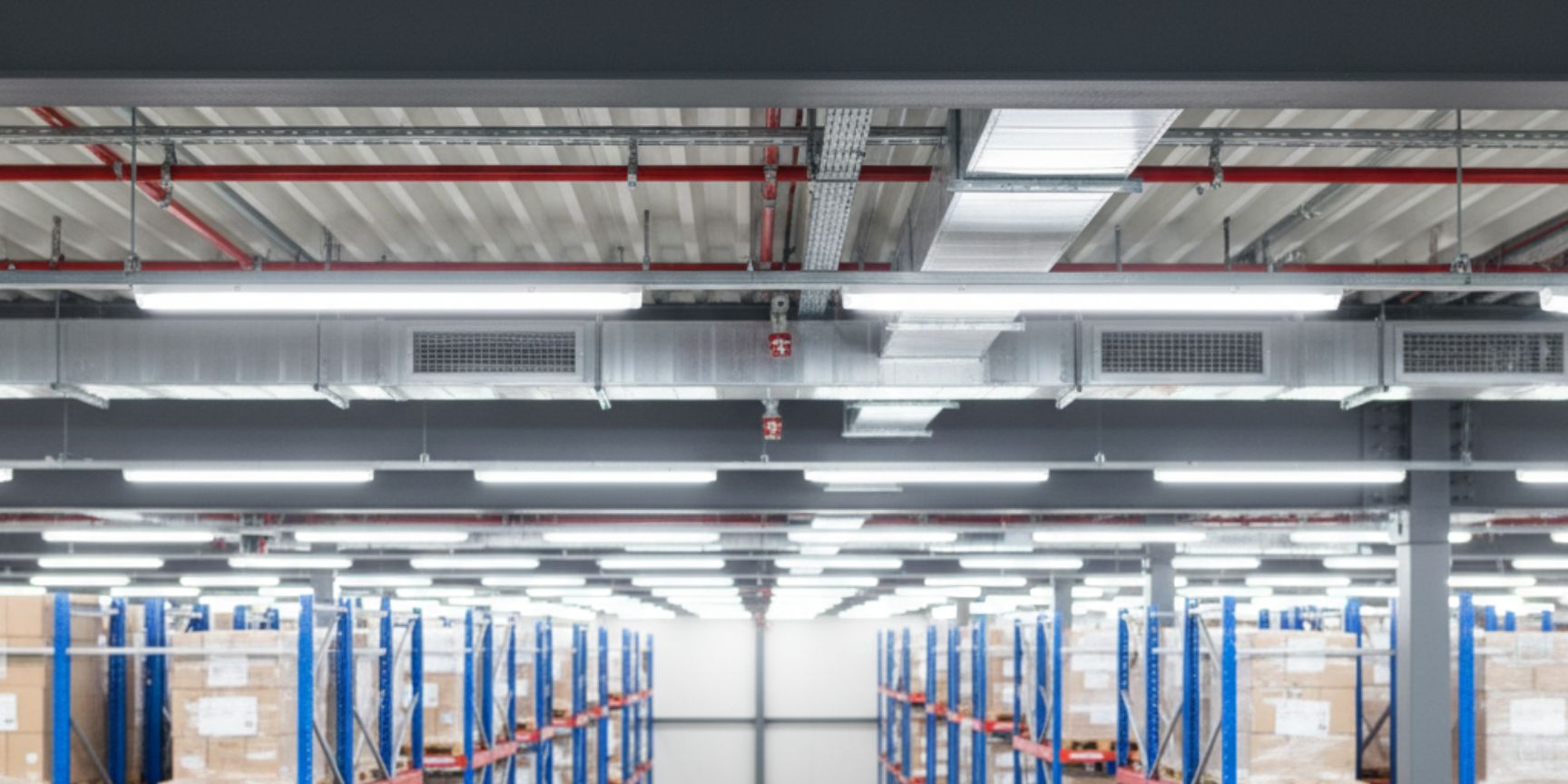
Important: The lower edge of truss is not to be confused with the entire hall height or the ridge height. It represents the actual stacking and working height available for storage and operational processes, before obstacles such as roof trusses, technical installations (e.g. sprinkler systems, lighting, heating) or other construction elements restrict the space. The exact definition and measurement is crucial, as even a few centimetres of deviation can make the difference between the storage of an entire pallet level.
Why is lower edge of truss so crucial in modern logistics?
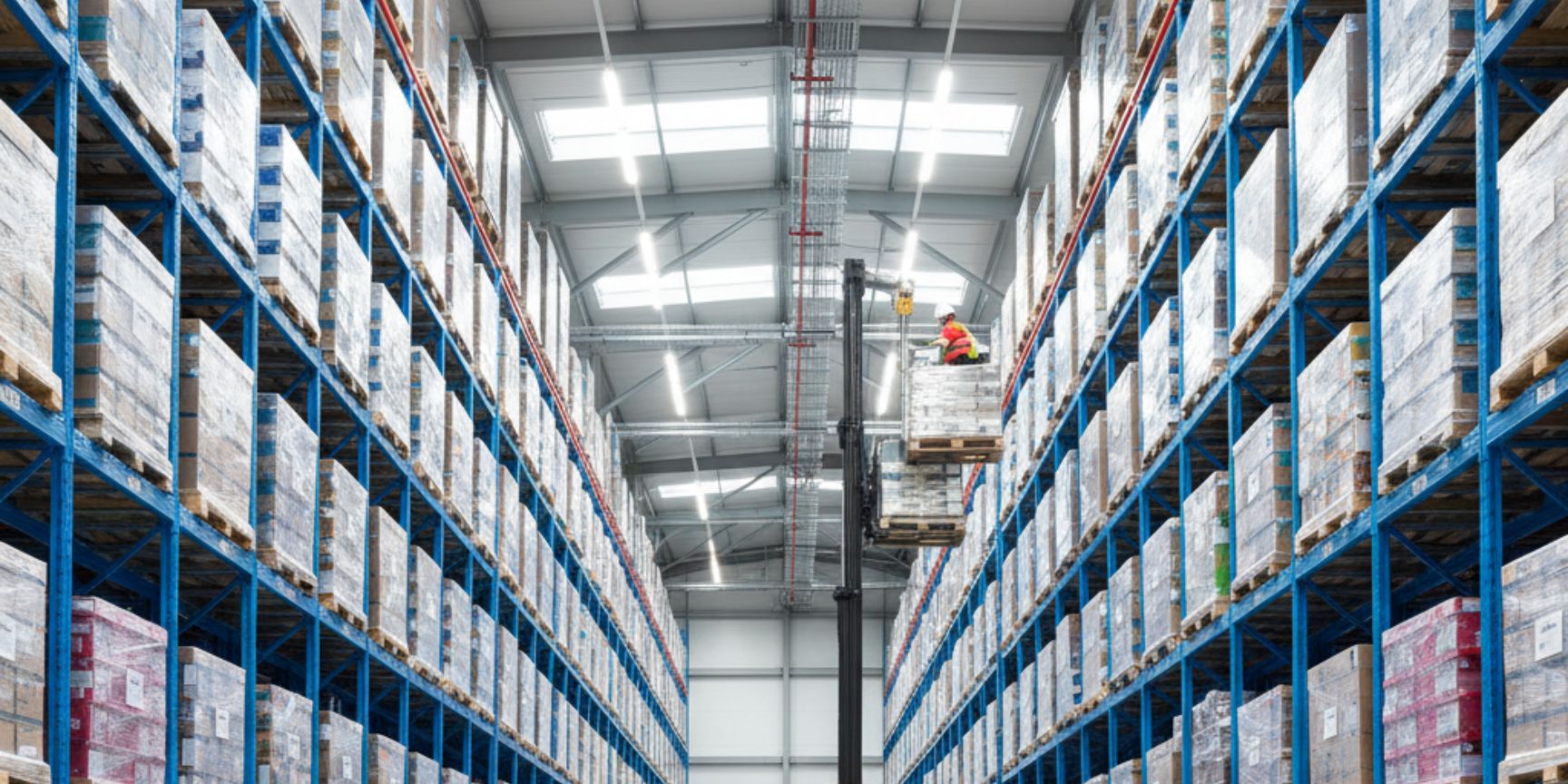
In today's warehouse logistics, the aim is to achieve maximum storage volume on a given floor space. Vertical use of space ("building upwards") is the most efficient way to increase storage capacity without expanding the floor space. A higher lower edge of the truss enables the use of high-bay warehouses, narrow-aisle forklifts and automated storage systems, which allow for a significantly higher storage density.
- Storage capacity: Depending on the racking system, an increase in the lower edge of the truss from 10 meters to 12 meters can mean an additional storage level and thus a capacity increase of 20-25% on the same floor space.
- Flexibility: A generous lower edge of the truss creates flexibility for future requirements. If the goods to be stored or the storage strategy change, a higher hall offers more options for adaptation, for example for the installation of mezzanines (intermediate levels).
- Third-party usability: For investors and developers, a high lower edge of the truss is a guarantee for a high third-party usability. A hall with 12 metres of lower edge of the truss can be used by a wider range of potential tenants than a hall with only 8 metres, minimising the risk of vacancy and securing the re-letting value.
What lower edge of the truss heights are standard today?
The demands on lower edge of the truss
- Modern standard: 10 meters of lower edge of the truss are now considered the minimum requirement for many logistics and freight forwarding applications.
- Premium standard (big box): For large, modern distribution centres, such as those used by e-commerce companies or in contract logistics, 12 metres lower edge of the truss is the established standard. This height usually allows the storage of five to six Euro pallets on top of each other.
- Special applications: In certain areas, such as fully automated high-bay warehouses or special production logistics, heights of over 15 meters may also be required.
Halls with a lower edge of the truss of less than 8 meters are often considered outdated today and are only suitable to a limited extent for modern, space-intensive logistics processes.
FAQ: Frequently asked questions about the lower edge of the truss
Question: How does lower edge of the truss influence the rental prices of a logistics hall?
Answer: The lower edge of the truss is a major driver of the rental price per square metre. A higher lower edge of the truss justifies a higher rental price, as the tenant achieves a significantly higher storage capacity and thus higher efficiency per square metre of floor space. Properties with 12 meters of lower edge of the truss usually fetch significantly higher rents than those with 10 meters or less, as they are classified as higher quality and more sustainable.
Question: What role does the lower edge of the truss play in contract logistics?
Answer: Maximum flexibility is required in contract logistics, where service providers take over complex logistics processes for their customers. A high lower edge of the truss makes it possible to implement tailor-made storage solutions for different customers and industries under one roof. This can include the installation of multi-storey picking platforms (picking towers) or the use of special conveyor technology that requires a corresponding free height.
Question: Do sprinkler systems and lighting have to be located below the lower edge of the truss?
Answer: Yes, that is exactly the crucial point. The lower edge of the truss is measured up to the lowest fixed obstacle. This means that all operational technology such as sprinkler heads (ESFR sprinklers), lamps, radiant heaters or ventilation ducts must be installed above this defined height in order to ensure full usability.
Lower edge of the truss from the perspective of logistics real estate
For developers and investors, the "lower edge of the binder" is one of the key figures in the design and valuation of a logistics property. It is a decisive criterion for the classification as a "core" property. Future-proof planning today provides for a lower edge of the truss of at least 12 metres as standard in order to remain competitive in the long term. Other important structural features associated with the lower edge of the truss are:
- Floor load capacity: High shelves mean high point loads. A soil load capacity of at least 5 t/m² is therefore essential.
- Column grid: A wide column grid (e.g. 12 x 24 meters) in combination with a high lower edge of the truss ensures maximum flexibility in the design of the warehouse layout.
- Door equipment: A sufficient number of dock levellers (at least one door per 1,000 m² of warehouse space) is necessary to efficiently handle the potentially higher volume of goods made possible by the larger storage volume.
Conclusion: More than just a measure
The "lower edge of the truss" is much more than just a technical specification in a blueprint. It is a fundamental indicator of the performance, flexibility and value of a logistics property. For logistics companies, it is the basis for efficient use of space and optimized processes. For investors, it is a benchmark for the future viability and long-term rentability of their assets. In an industry where every cubic metre counts, lower edge of the truss defines the limits of what is possible.