




Storage in logistics
Table of Contents
- The world of warehousing: strategies, structures and trends in logistics
- Definition and Core Functions: Why We Stock
- Warehouse logistics: The heart of intralogistics
- Contract logistics: Outsourcing as a success factor
- The logistics property: More than just four walls
- Key Performance Indicators (KPIs): How to Measure Inventory Success
- Questions & Answers: The Expert Glossary (FAQ)
- The future: AI and robotics in the hall
- Conclusion for practice
The world of warehousing: Strategies, structures and trends in logistics
Definition and Core Functions: Why We Stock
In logistics, storage is the deliberate interruption of the flow of materials. Buffers are created that compensate for temporal, quantitative and qualitative differences between supply and demand. While in the past the focus was on "hoarding" stocks, today the focus is on reaction speed.
Modern storage primarily fulfils four functions:
- Balancing function: Buffering seasonal fluctuations (e.g. Christmas business).
- Safety function: Protection against supply bottlenecks or strikes.
- Speculation function: Exploiting price advantages for raw materials.
- Finishing function: Ripening processes (e.g. wine, cheese, wood).
Warehouse logistics: The heart of intralogistics
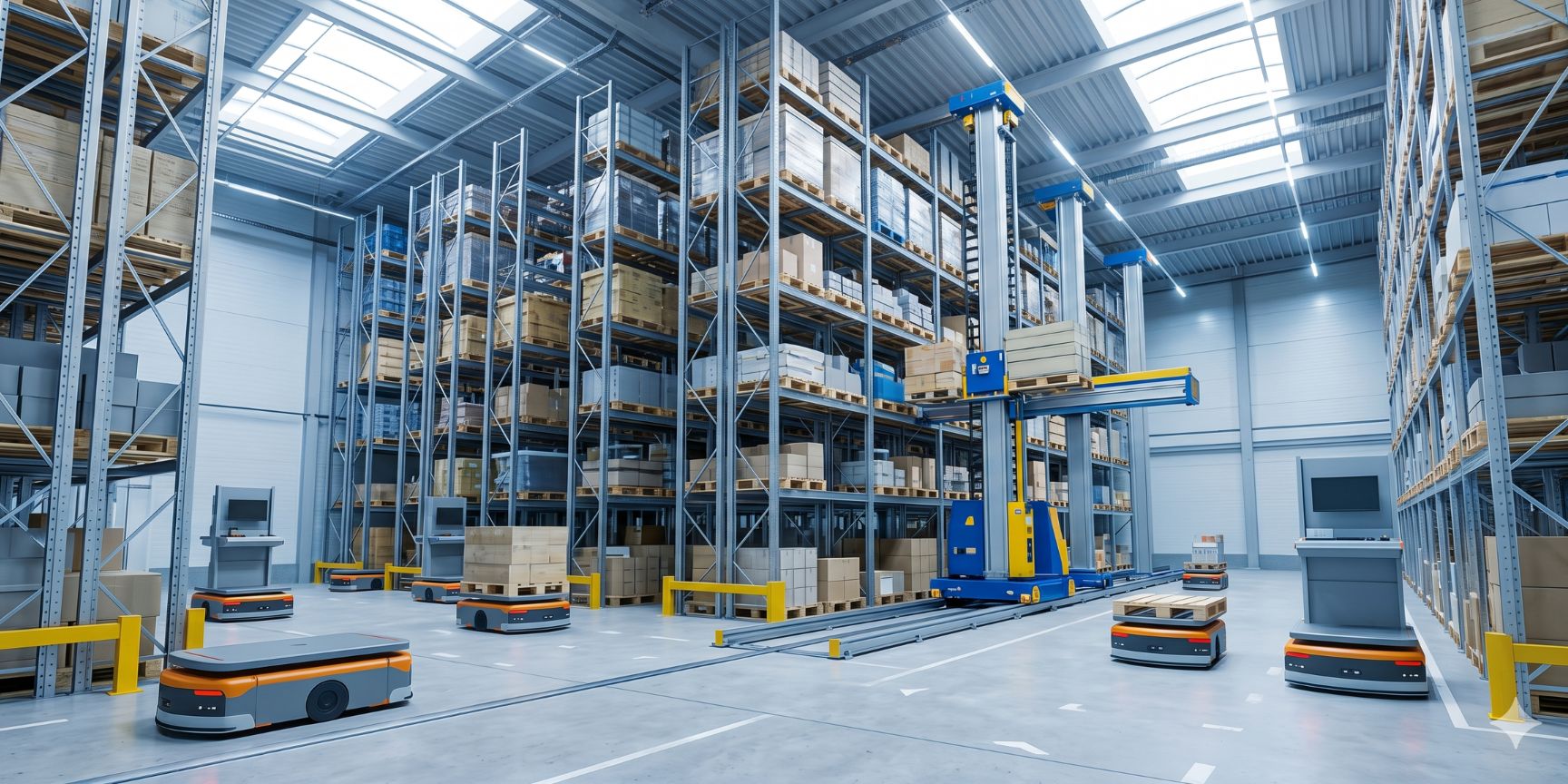
Warehouse logistics includes the planning, control and monitoring of all processes within a warehouse. It starts with the receipt of goods (inbound), continues with storage and picking to the outbound goods issue.
An efficient warehouse is based on choosing the right storage strategy:
- FIFO (First-In-First-Out): The oldest product leaves the warehouse first (essential for expiration dates).
- LIFO (Last-In-First-Out): The last stored goods are removed first (often in the case of bulk materials or building materials).
- FEFO (First-Expired-First-Out): Focus on the expiration date.
Figures, data, facts: Experts estimate that storage costs account for about 15% to 25% of the inventory value per year. Of this, approx. 40% is attributable to capital commitment, 30% to room costs and 30% to handling and administration.
Contract logistics: Outsourcing as a success factor
Contract logistics is a form of long-term cooperation between a manufacturer/retailer and a logistics service provider (3PL – Third Party Logistics). In this case, the service provider not only takes care of pure storage, but also Value Added Services (VAS).
Typical additional services are:
- Packaging and repackaging.
- Quality control and returns management.
- Assembly activities (pre-assembly).
The advantage for companies is the conversion of fixed costs (own hall, personnel) into variable costs (payment per pallet/pick). This massively increases scalability.
The logistics property: More than just four walls
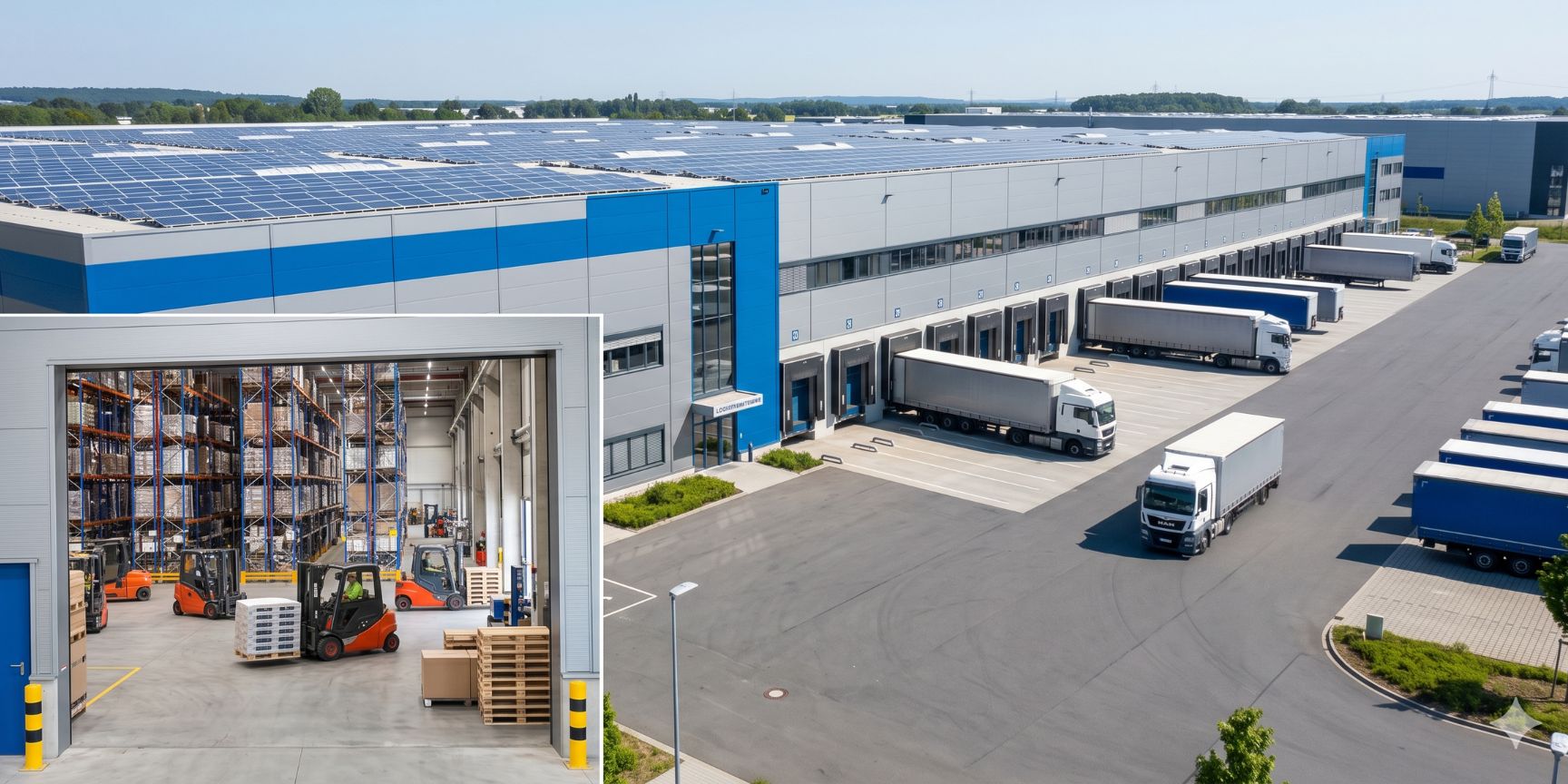
Today, a modern logistics property must meet high technical and ecological requirements. A distinction is made between different types of halls:
- Transshipment warehouse (cross-docking): Short dwell time, many gates, focus on speed.
- High-bay warehouse (HRL): Maximum space utilisation through heights of up to 45 metres.
- Cold storage: Special properties for food or pharmaceuticals.
Important technical parameters of a hall are the floor load capacity (often 5–7 tonnes per m²), the lower edge of the hall (UKB) for the stacking height and the number of dock levellers. In the course of ESG criteria (Environmental, Social, Governance), photovoltaic systems and energy-efficient insulation are increasingly becoming the focus of value retention.
Key Performance Indicators (KPIs): How to Measure Inventory Success
In order to evaluate the efficiency of a storage system, data is essential. The three most important KPIs are:
| Key figure | Formula / Meaning | Objective |
| Inventory turnover frequency | Cost of goods sold / ø stock | The higher, the less capital is tied. |
| Lead time | Time from goods receipt to goods issue | Minimization to accelerate the supply chain. |
| Pick Accuracy | (Correct Picks / Total Picks) * 100 | Reduction of the error rate and return costs. |
Questions & Answers: The Expert Glossary (FAQ)
Question: What is the difference between a warehouse and a depot?
Answer: A warehouse is used for long-term or medium-term stockpiling and buffering. A depot (often used in transportation) is more of a short-term collection point for distribution.
Question: When does an automated storage system (AS/RS) pay off?
Answer: Automation is usually worthwhile when there is a high number of items (SKUs), a high turnover rate and a shortage of skilled workers. The payback period (ROI) is usually between 3 and 7 years.
Question: What does "Chaotic Warehousing" mean?
Answer: No article has a fixed place here. The Warehouse Management System (WMS) assigns the next free space to the goods. This optimizes space utilization by up to 25%.
The future: AI and robotics in the hall
The storage of the future is autonomous. AI-supported algorithms calculate inventory optimizations in advance (predictive analytics), while Autonomous Mobile Robots (AMR) support order pickers. The logistics property is developing into a "smart building" that minimizes energy consumption through sensor technology and independently plans maintenance intervals (predictive maintenance) for conveyor technology.
Conclusion for practice
Efficient storage is not a static state, but a dynamic process. Whether in-house warehouse or contract logistics – the decision depends on the core competence of the company and the volatility of the markets. If you know your key figures and invest in the flexibility of your logistics property, you will secure