




Single-use pallets in Logistics
Table of Contents
- Definition and technical demarcation: What is a single-use pallet really?
- The single-use pallet in contract logistics: Calculation and process advantages
- Effects on logistics real estate: statics and shelving systems
- Fire protection and insurance in the hall
- Sustainability and waste management logistics
- Practical check: Questions and answers for logistics decision-makers
- The role of the single-use pallet in last-mile logistics
- Conclusion for niche logistics
Definition and technical demarcation: What is a single-use pallet really?
In contrast to the standardised Euro pallet (EPAL 1), the single-use pallet (or disposable pallet) is not subject to a rigid exchange system. It is designed to remain with the recipient or the one-time transport chain. But "disposable" does not mean "inferior". In niche logistics, single-use pallets are often precisely tailored to the goods to be transported.
Technically, we distinguish primarily according to material and construction:
- Disposable wooden pallets: Usually made of softwood. Important for export is the ISPM 15 standard (heat treatment against pests).
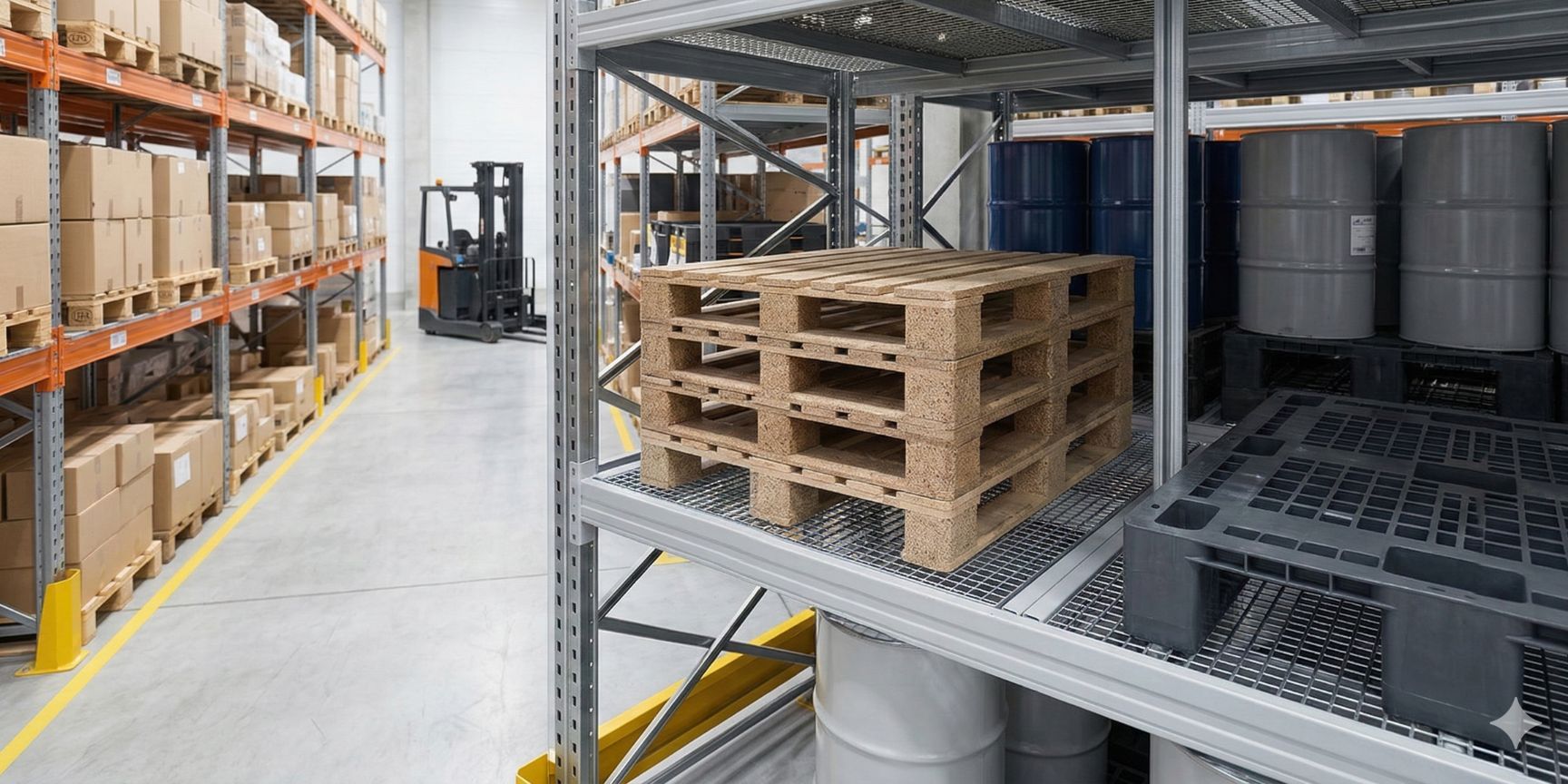
- Inca pallets (pressed wood): Consist of glued wood chips, are nestable (space-saving) and are considered "processed wood", which makes them export-friendly without an additional certificate.
- Single-use plastic pallets: Ideal for pharmaceutical logistics or cleanroom environments (hygiene logistics).
- Corrugated cardboard/carton: Extremely lightweight, ideal for air freight, but limited in load capacity and sensitive to moisture.
The single-use pallet in contract logistics: Calculation and process advantages
In contract logistics, the decision in favor of single-use systems is often a purely business "make-or-buy" question of pallet management. While reusable systems (pools) cause high administration costs (pallet accounts, return, sorting), the disposable pallet shines with cost transparency.
Facts & Figures:
A standard single-use pallet (800x1200 mm) costs between €6.00 and €11.00, depending on the price of wood and the quantity purchased. A new Euro pallet is often twice as much. For service providers, the risk of quality disputes during exchange ("pallet debt") is eliminated, which massively increases the process speed in incoming goods.
Effects on logistics real estate: statics and shelving systems
This is where the wheat is separated from the chaff. Anyone planning or using a logistics hall for disposable pallets must keep an eye on the shelving statics. Disposable pallets often have thinner deck boards or fewer bottom boards.
- Deflection: In high-bay warehouses, low-quality single-use pallets tend to deflecate. This can interrupt light barriers in automatic warehouses or – in the worst case – lead to breakage.
- Point loads: While a Euro pallet distributes point loads well, single-use pallets often concentrate the load on more unstable zones.
- Solution in practice: In modern halls, gratings or shelves are often inserted into the truss racks for single-use pallets to guarantee a flat load distribution.
Fire protection and insurance in the hall
Logistics properties are optimized for fire loads. Disposable plastic pallets have a significantly higher calorific value compared to wooden pallets. This influences the design of the sprinkler system (K-factor) and the insurance classification.
- Stacking height: In block warehouses, the distances between single-use pallet stacks must be strictly adhered to, as the instability caused by heat (especially with plastic) leads to collapse more quickly than with solid wood pool pallets.
Sustainability and waste management logistics
Is "disposable" ecologically justifiable? In a professional logistics centre, the disposable pallet is often part of an efficient circular economy.
- Second-life: Many single-use pallets are resold in the used market for less critical transports.
- Thermal recycling: Damaged pallets are shredded and used to generate energy (pellets/combined heat and power plants).
- Recycling: Plastic single-use pallets often already consist of recycled pellets.
Practical check: Questions and answers for logistics decision-makers
Question: Can I use disposable pallets in an automated high-bay warehouse?
Answer: Only to a limited extent. The sensors of automatic operating devices are calibrated to exact dimensions and reflection values. Single-use pallets often fluctuate in height and wood quality. We recommend the use of "system pallets" on which the single-use pallet is placed.
Question: How do I know if a single-use pallet is suitable for export to the USA or China?
Answer: Look for the IPPC stamp. He confirms the treatment according to ISPM 15. Without this stamp, you risk the rejection of the entire container load at the port of destination.
Question: What weight classes are realistic for disposable pallets?
Answer: There are "light" versions (up to approx. 400 kg), "medium" (up to 800 kg) and "heavy" single-use pallets, which are in no way inferior to the Euro pallet (up to 1,500 kg). The payload must be explicitly checked in the manufacturer's data sheet.
The role of the single-use pallet in last-mile logistics
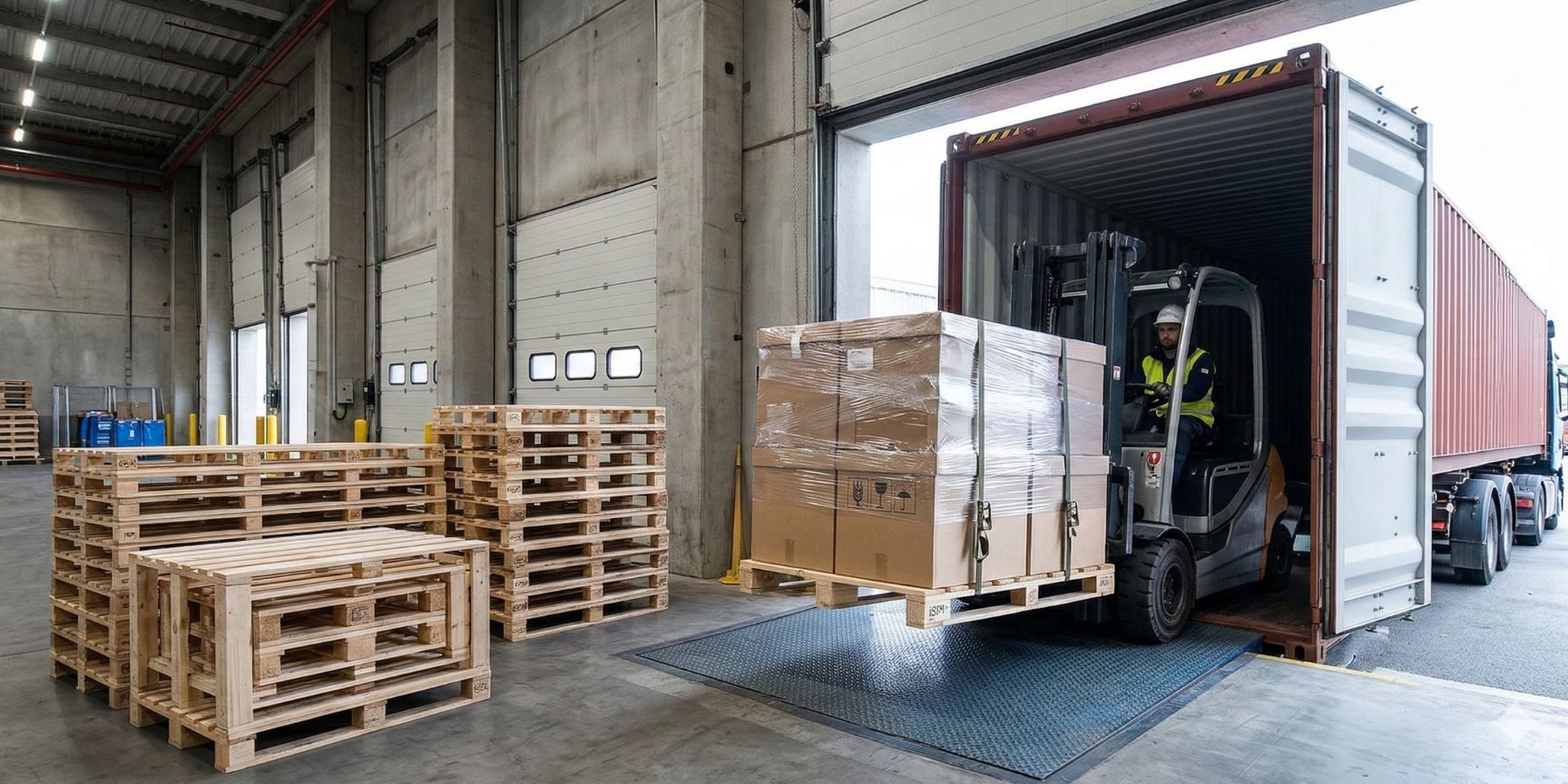
In distribution to the end customer (B2C) or on construction sites, the disposable pallet is the absolute standard. Since returning the load carriers would be logistically impossible or too expensive, the pallet becomes part of the product packaging. Display pallets (600x400 mm), which can serve directly as a retail sales area, are particularly important here.
Conclusion for niche logistics
The disposable pallet is not a waste product, but a strategic tool. In logistics real estate, it requires specific infrastructures (shelves), in contract logistics it offers clear cost advantages due to the elimination of pallet management. Those who have mastered the material properties (wood moisture, board thickness) and the regulatory requirements (ISPM 15) use the single-use pallet as an efficiency lever.