




Storage location in warehouse logistics
Table of Contents
- The storage location: the linchpin of modern logistics value creation
- Physical vs. Logical Location: A Differentiation
- The logistics property: The "home" of the storage locations
- Storage Locations in Contract Logistics: Flexibility Is the Key
- Storage Location Allocation Strategies: Festplatz vs. Chaos
- Facts, figures, data: The economy of space
- Expert FAQ: Questions and answers on the topic
- The future: The "smart" warehouse
- Conclusion for practice
The storage location: The linchpin of modern logistics value creation
In the classic sense, a storage location is the smallest logical or physical unit within a storage system where goods are stored. But if you take a deeper look into the world of warehouse logistics and contract logistics, you will quickly realize that behind this term is a complex network of process optimization, structural requirements and digital control.
Physical vs. Logical Location: A Differentiation
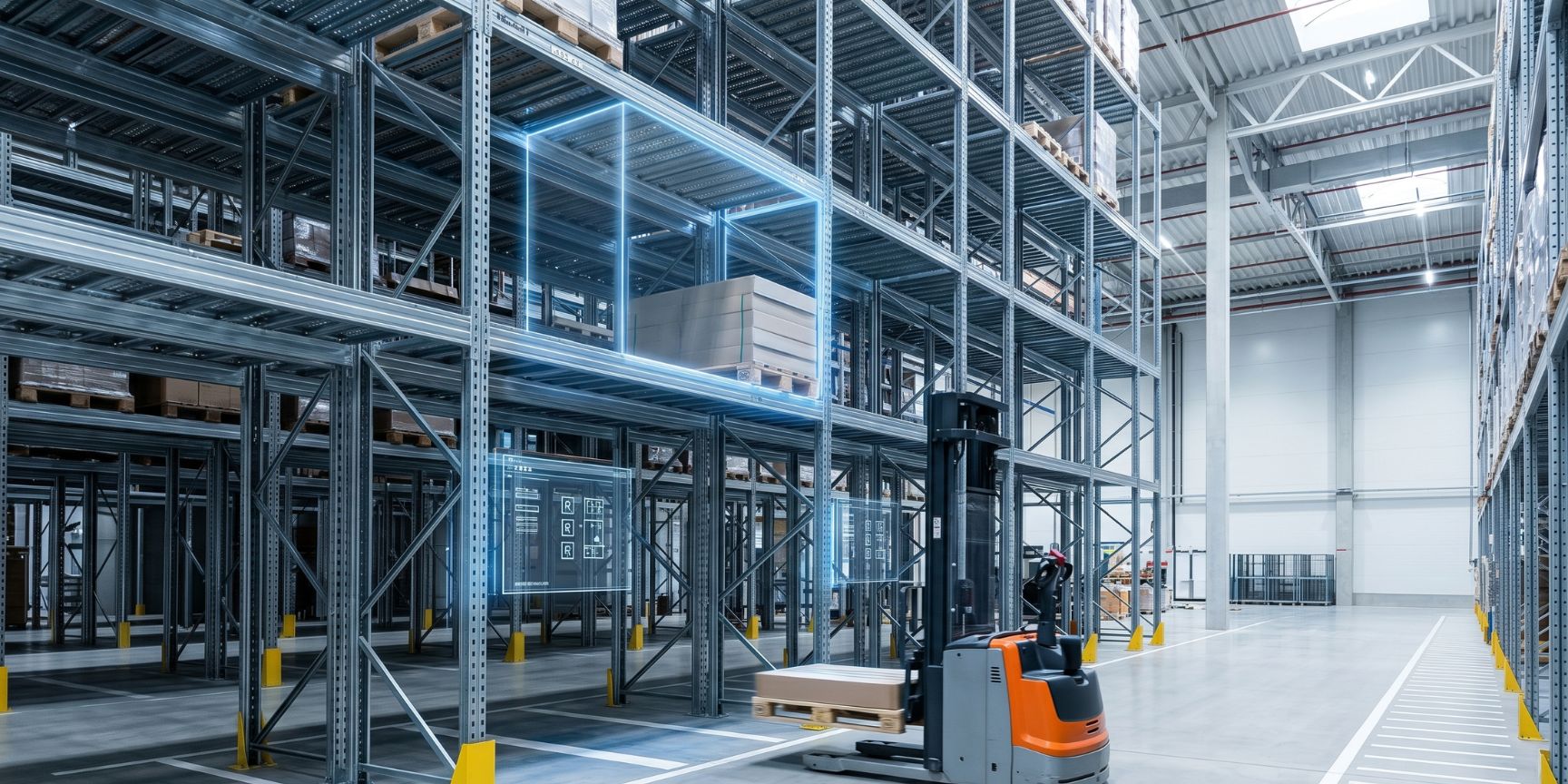
In the professional world, we make a strict distinction between the physical location (the shelf space, the floor space) and the logical storage location in a warehouse management system (WMS).
For example, a logical storage location can be a virtual area for "quality inspection" that is physically distributed throughout the hall. In intralogistics practice, each storage location is defined by a unique coordinate (aisle, shelf, level, compartment). This is the basic requirement for chaotic warehousing, where the system allocates the optimal space based on walking distances and utilization.
The logistics property: The "home" of the storage locations
When we talk about storage locations, we have to talk about the logistics property. Today, a modern hall is a high-performance tool. Technical key figures play a decisive role in the usability of the storage locations:
- Hall height (UK truss): Modern logistics halls often have a lower edge truss of 12 to 15 meters in order to exploit the vertical potential of the storage locations (high racks).
- Floor load capacity: A standard value for high-quality logistics space is approx. 50 to 70 kN/m² (kilonewtons per square meter). Without this load capacity, heavy pallet racking could compromise static integrity.
- Grid dimensions: The arrangement of the columns in the hall has a direct influence on how flexibly the storage locations (rows of racks) can be planned.
Storage Locations in Contract Logistics: Flexibility Is the Key
In contract logistics, the service provider often acts as an interface for several customers (multi-user hall). Here, the storage location must be extremely versatile. Today, small-scale electronics (shelving racks) are stored there, tomorrow bulky automotive components (block storage).
An efficient warehouse in contract logistics is characterized by the fact that it enables value-added services (VAS). This means that the storage location is not only there for resting the goods, but is also optimized for picking, labeling or repackaging in the immediate vicinity.
Storage Location Allocation Strategies: Festplatz vs. Chaos
How is a storage location occupied? Here, two main strategies determine efficiency:
- Festplatz system: Each article has its fixed "hometown". Advantage: Easy orientation without IT. Disadvantage: High space requirement, as seats remain empty when the item is sold out.
- Chaotic warehousing (free space system): The goods are stored wherever there is space. The WMS guides the order picker. Advantage: Maximum use of space (often up to 20-25% higher capacity).
Facts, figures, data: The economy of space
Efficiency can be measured. In professional warehouse planning, experts look at the following benchmarks:
- Space utilisation rate: The ratio of the storage space actually used to the total area of the hall.
- Volume utilisation rate: Since modern halls build upwards, this is the decisive key figure for economic efficiency.
- Pick density: How many hits per square meter can be generated at the storage locations in one shift?
Practical tip: A well-planned storage location reduces search and travel times, which can account for up to 50% of the total picking time in manual warehouses.
Expert FAQ: Questions and answers on the topic
Question: What role does the fire protection classification play for the storage location?
Answer: A decisive one. Depending on the fire hazard class (HPR - Highly Protected Risk) and stored substances, storage locations must be protected by sprinklers (in-rack sprinklers) or fire walls. This directly affects the shelf height and aisle width.
Question: How does automation affect the term storage location?
Answer: In automated systems such as an AutoStore or a high-bay warehouse (HRL), the storage location often becomes an anonymous cell. "Goods to man" logistics makes the physical location of the location irrelevant to the employee, while IT optimizes access speed to milliseconds.
Question: What is an "active" storage location?
Answer: An active storage location is a space intended for direct access (picking), usually on the lower shelf level. Levels above serve as "reserve storage" from which the active storage location is replenished.
The future: The "smart" warehouse
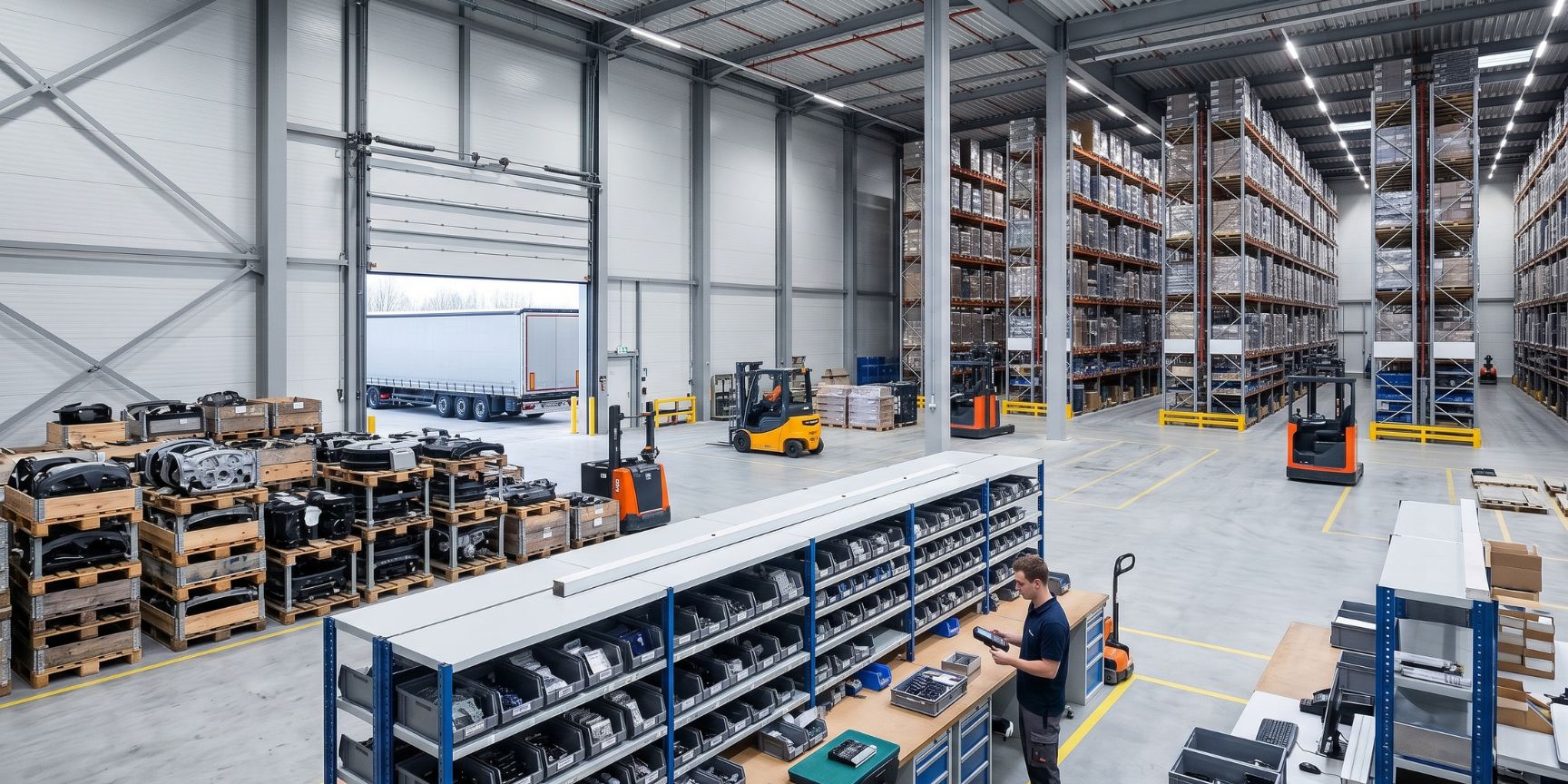
With the advent of IoT (Internet of Things), warehouse locations are starting to "talk". Sensors on the shelf compartments report fill levels in real time or detect incorrect occupancy even before an employee notices the error. In conjunction with AI-supported forecasting models, storage locations are now dynamically allocated according to seasonality – in winter, the crumble goods automatically move to the quickly accessible "A-place" storage locations near the outgoing goods department.
Conclusion for practice
The choice and management of the storage location is not a trivial detail, but a decision about the profitability of the entire logistics chain. Whether in a specialized logistics property or a flexible contract logistics hall, only those who have mastered the interaction of physical infrastructure (floor, height, technology) and digital control (WMS, AI) can minimize throughput times and maximize space productivity.
For companies, this means: Invest not only in "square meters", but in the intelligence of your storage locations.
Your Ideal Logistics Warehouse
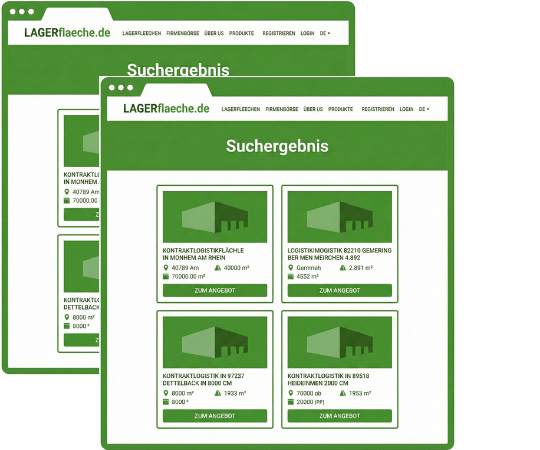
Browse listings for warehouse space, logistics real estate, industrial land, and contract logistics solutions.
Browse Exposés
Maximize Exposure for Your Warehouse Space
Showcase your logistics properties and attract qualified inquiries.
Discover Products