




Standalone facility in logistics
Table of Contents
- The Standalone Facility in Logistics
- What is a Standalone Warehouse? (Definition)
- The Demarcation: Free-standing Property vs. Logistics Park
- For Whom is a Standalone Warehouse in Contract Logistics Worthwhile?
- The Advantages of a Standalone Logistics Property
- Challenges and Disadvantages of Being Alone
- ESG and Sustainability in Standalone Facilities
- Frequently Asked Questions (FAQ) about the Standalone Warehouse
- Conclusion: Strategic independence as a competitive advantage
The Standalone Facility in Logistics
In the dynamic world of warehouse logistics and project development, choosing the right type of building is a decisive competitive factor. In addition to huge business parks, one central term comes up again and again: the standalone facility (also known as a standalone warehouse). But what exactly is behind it, and for which business models in contract logistics is this type of building the absolute best solution?
What is a Standalone Warehouse? (Definition)
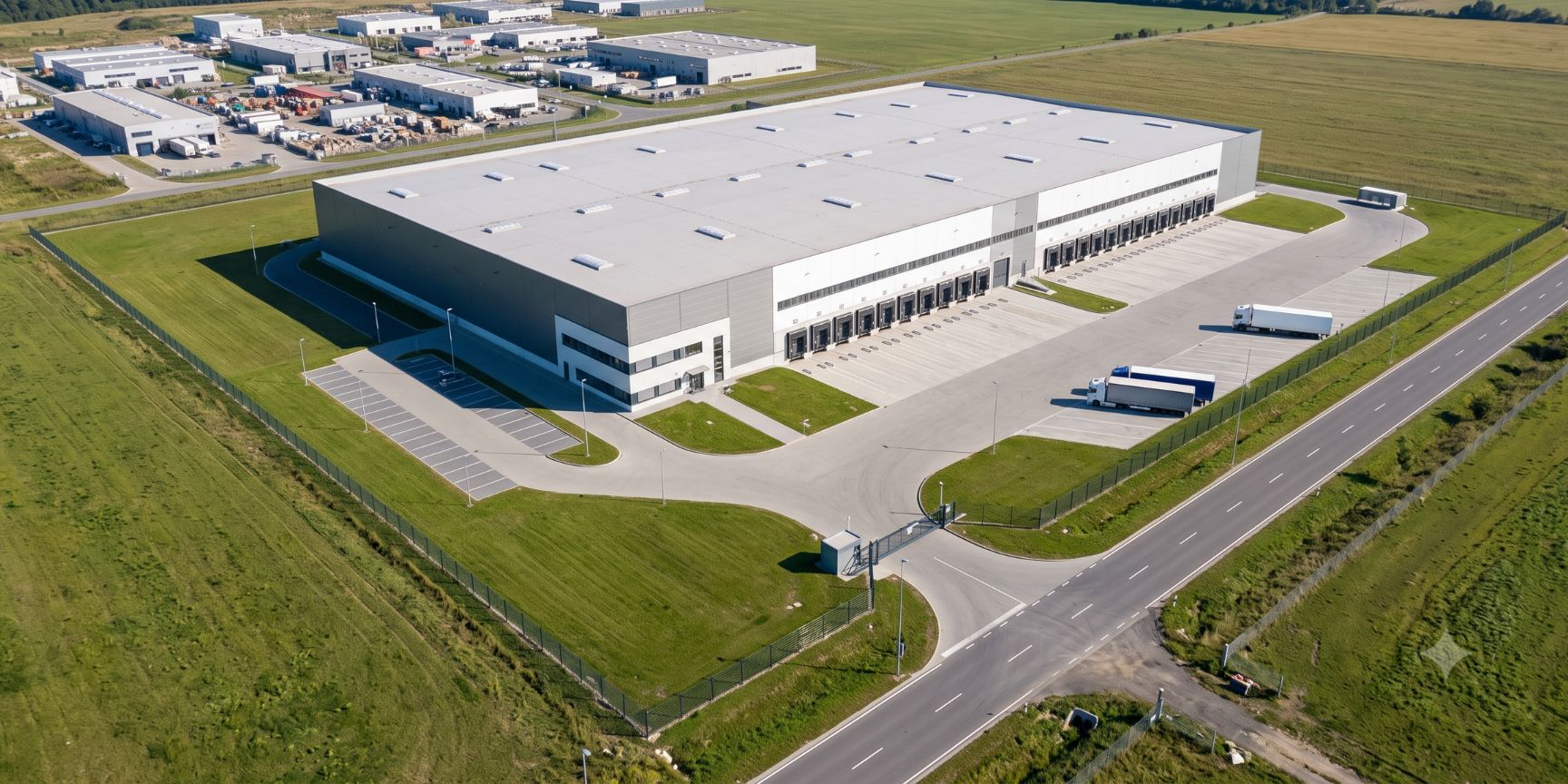
In the real estate industry – and especially in logistics – a free-standing property that is completely independent in terms of construction and infrastructure. In contrast to a hall in a large logistics or business park (multi-user park), the free-standing location has its own, clearly demarcated property.
In practice, this means having its own access roads, its own fenced yard, its own parking spaces for trucks and cars, and completely self-sufficient supply technology. These logistics properties are often designed as "single-tenant" properties, i.e. for use by a single tenant or owner-occupier, even if subletting remains theoretically possible.
The Demarcation: Free-standing Property vs. Logistics Park
In order to fully examine the standalone facility, a direct comparison with logistics parks helps. In a logistics park, several companies share the higher-level infrastructure (often in rows of hall sections). These include shared access routes, a central gatekeeper, shared manoeuvring areas and often also overarching facility management.
In the case of the standalone warehouse, these synergies are no longer available. The user bears 100% of the costs for the doorman, the winter service and the maintenance of the grounds. In return, however, he enjoys absolute autonomy. There are no traffic jams at the central barrier due to the trucks of neighboring companies and no compromises in the use of the yard.
For Whom is a Standalone Warehouse in Contract Logistics Worthwhile?
Free-standing logistics properties are not a standard product for small interim storage, but strategic assets. They are particularly worthwhile for:
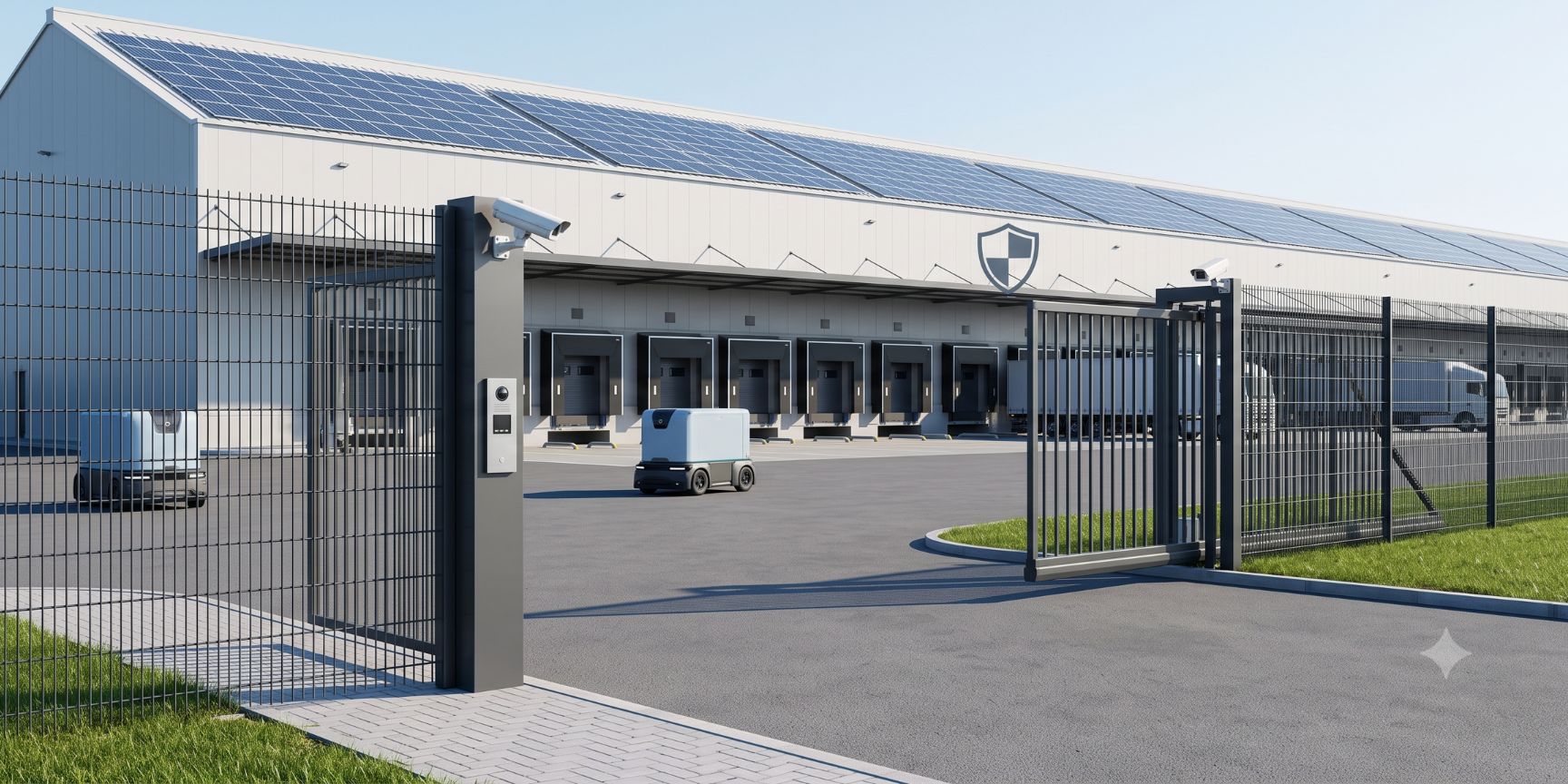
- High-Security & Pharmaceutical Logistics: Companies that require TAPA (Transported Asset Protection Association) certifications for sensitive goods appreciate Standalone facilities because the property can be hermetically sealed off and under video surveillance without external persons having access.
- Hazardous materials logistics: When storing in accordance with the Federal Immission Control Act (BImSchG), strict distances to neighbouring buildings must often be observed. A free-standing building is often mandatory here.
- Dedicated warehousing: Contract logistics companies that operate a tailor-made solution for a single large customer (e.g. from the automotive or e-commerce industry) prefer stand-alone warehouses in order to set up processes without external disruptive factors.
The Advantages of a Standalone Logistics Property
The practical utility value of a free-standing hall is evident in day-to-day operations:
- Maximum process control: 24/7 operation and night-time deliveries are often easier to approve because no direct hall neighbors are disturbed.
- Corporate identity: The building can be fully branded. A strong appearance for your own brand or that of the logistics customer.
- Security architecture: A dedicated gatekeeper and an exclusive fence course massively reduce the risk of theft.
- Flexibility in the yard: swap bodies and trailers can be parked at your own discretion.
Challenges and Disadvantages of Being Alone
Despite the enormous freedom, there are also clear economic factors that must be taken into account when choosing a location. The operating costs (OPEX) are often higher per square metre at the standalone facility. Why? Because the costs for security, outdoor facility care and maintenance are not spread over several shoulders (as in a park). In addition, renting an entire property usually requires a long-term strategic commitment (usually leases over 5 to 10 years) and a high, constant volume of goods to avoid vacancies.
ESG and Sustainability in Standalone Facilities
ESG (Environmental, Social, Governance) criteria dominate today's logistics real estate landscape. This is where the standalone warehouse plays one of its greatest trump cards. Since the building is self-sufficient, the collection of consumption data (Scope 1 to 3 emissions for CSRD reporting) is much more transparent. The installation of large-scale photovoltaic systems on the roof of the hall and charging infrastructure for e-trucks in the company's own yard can be implemented without complex coordination with a community of owners or neighboring tenants. Many new free-standing locations therefore easily achieve the highest certifications such as DGNB Gold or Platinum.
Frequently Asked Questions (FAQ) about the Standalone Warehouse
Is a free-standing location more expensive than a hall in a logistics park?
There are often hardly any differences in the pure basic rent, in some cases it is even cheaper, as there are no higher-level parking surcharges. However, the ancillary costs (facility management, security) are usually higher for the individual user because there are no economies of scale.
Can I use a standalone warehouse as a multi-user warehouse?
Yes, absolutely! Many logistics service providers rent a large free-standing property (e.g. 20,000 m²) and operate a multi-user warehouse inside for various of their own customers. Externally, however, the building remains a standalone facility, as only the logistics service provider acts as the sole tenant.
How do I find available solitaire locations?
Since large, detached logistics properties are in high demand, they often change hands or tenants "off-market". Using specialized B2B platforms such as LAGERflaeche.de, users can filter specifically for free-standing halls and get in touch directly with developers or owners.
Conclusion: Strategic independence as a competitive advantage
The standalone location is the proverbial "own house with garden" in the logistics industry. If you are an e-commerce giant, industrial group or contract logistics company that depends on uncompromising security, undisturbed processes and a strong identity of your own, there is no way around the free-standing logistics property. Even if the ancillary operating costs have to be borne alone, the benefits of a tailor-made, highly flexible supply chain clearly outweigh the additional effort in most strategic business cases.
Your Ideal Logistics Warehouse
Browse listings for warehouse space, logistics real estate, industrial land, and contract logistics solutions.
Browse Exposés
Maximize Exposure for Your Warehouse Space
Showcase your logistics properties and attract qualified inquiries.
Discover Products