




Warehouse definition & success factor: What matters when it comes to selection, location, equipment and sustainability
Table of content
- What is a warehouse?
- What types of warehouses are there?
- The importance of modern warehouses for warehouse logistics
- What are the key success factors?
- Rent or buy: economic considerations
- Regional Differences in Rental and Operating Costs
- Technological Equipment and Automation in Warehouses
- Sustainability and Energy Efficiency in the Modern Warehouse
- What are the security aspects of a warehouse?
- Key Success Factors for Entrepreneurs in Choosing the Optimal Warehouse
What is a warehouse?
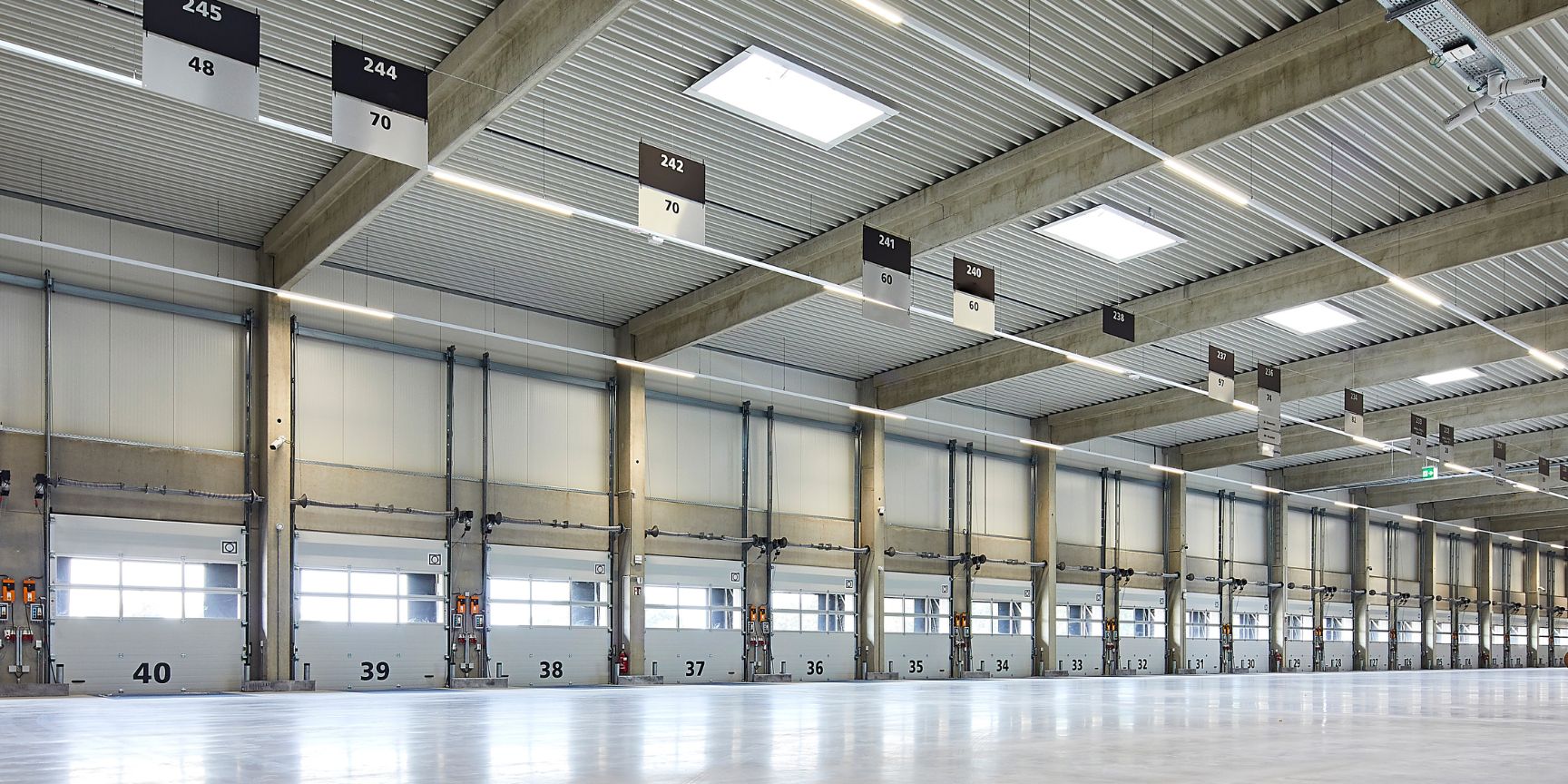
A warehouse is a building or structure designed specifically for the storage and management of goods, raw materials or operating resources. Warehouses are often large, have appropriate access roads for trucks and offer flexible storage options – from shelves to open spaces. They play a central role in the warehouse logistics of companies in a wide range of industries. What can you do in a warehouse?
In a warehouse, you can primarily store and manage goods, raw materials or operating resources. Use is usually limited to storage and logistics activities, such as storing and retrieving goods, picking and packing goods. Production or distribution activities are usually only permitted to a limited extent or with official approval. It is important to observe the terms of use of the respective location as well as the applicable building and trade regulations.
What types of warehouses are there?
Warehouses, storage areas and storage rooms are crucial for the storage of materials and goods that are either needed in production or delivered to customers. There are various storage options, including warehouses, retail and wholesale warehouses, and material and machine warehouses, each of which meets specific requirements. Shipping warehouses are particularly important for online retail, as they enable efficient picking and shipping of products. Logistics centres act as central hubs for the receipt, storage and shipment of goods. When choosing a warehouse, it is important to focus on your own business concept and select the appropriate category in the real estate market.
The importance of modern warehouses for warehouse logistics
A modern warehouse is at the heart of efficient warehouse logistics and plays a crucial role in today's economy, where flexibility and speed are decisive factors for success. It serves not only as a storage location, but also as a multifunctional centre within the supply chain that optimally links production, warehousing and distribution. The right dimensions and flexible steel structures are essential in order to be able to respond to changing requirements. In e-commerce in particular, the rapid availability of products is an important competitive factor. Companies must weigh up the pros and cons of buying or renting a warehouse, with both options offering different advantages. The choice depends on specific needs such as storage volume, degree of automation and insulation requirements.
What are the key success factors?
A modern warehouse is central to a company's efficiency and growth. The location, size, equipment and sustainable construction are crucial factors that influence costs, processes and flexibility. Flexible, modular designs and technical infrastructure enable adaptations to future requirements. The choice of location should take into account accessibility to suppliers and customers, infrastructure and regional costs in order to optimise transport routes and reduce operating costs. Sustainability and energy efficiency ensure long-term value retention. A structured analysis of these factors ensures a future-proof warehouse solution with sustainable competitive advantages.
Rent or buy: economic considerations
Whether to buy or rent a warehouse depends on economic considerations. Buying offers long-term planning security and flexibility, but involves high capital commitment and risks for young companies. Renting, on the other hand, allows for flexibility and quick adjustments to market changes, but has disadvantages such as high rental costs without property acquisition. The costs of purchasing vary greatly depending on location, size and equipment; simple warehouses in Germany usually cost between 500 and 1,200 euros per square metre. The construction of a simple warehouse costs between 400 and 900 euros per square metre, plus ongoing operating costs. The advantages and disadvantages of the two options are decisive: renting offers financial flexibility and tax deductibility, while buying creates fixed assets and enables tax depreciation. However, buying ties up capital and restricts flexibility. In metropolitan areas, purchase prices can be considerably higher, while rental prices start at around £9 per square metre.
Regional Differences in Rental and Operating Costs
The cost structure of a warehouse depends heavily on its location and influences the profitability of warehouse logistics. In metropolitan areas, rents and purchase prices are higher, while rural regions often offer cheaper options but may involve longer transport routes and weaker infrastructure. The choice between buying and renting is determined by regional price structures; renting offers flexibility, while buying provides long-term planning security. In addition to rental or purchase prices, operating costs such as energy prices and maintenance play an important role. Energy-efficient halls can reduce running costs, especially with sustainable construction methods. The available labor supply and regional funding programs also significantly influence the overall cost structure. A thorough analysis of all location factors is crucial for selecting an economically optimal warehouse before considering technological equipment and automation to increase efficiency in modern warehouses.
Technological Equipment and Automation in Warehouses
The integration of modern technologies into warehouses significantly increases efficiency and process reliability. Innovative automation solutions, such as automatic storage and retrieval systems and automated guided vehicles, optimize the movement of goods and reduce order picking times. These systems are scalable and adapt to the company's needs, which offers long-term investment protection. Digitization plays a central role: intelligent warehouse management software enables seamless inventory monitoring and improves transparency along the supply chain. Mobile devices speed up processes and minimize sources of error. A powerful IT infrastructure is essential for smooth operation. Security is ensured by fire protection systems, video surveillance, and access controls, while special sensors protect temperature-sensitive products. In addition, intelligent control systems contribute to reducing energy consumption and operating costs. Thorough planning is crucial to select the right technologies for current and future requirements.
Sustainability and Energy Efficiency in the Modern Warehouse
Sustainable construction methods and energy-efficient systems are crucial for the planning and use of warehouses. Companies must find solutions that are not only functional but also environmentally friendly. The choice of resource-saving materials, such as steel constructions, as well as modern insulation techniques, reduce energy demand and operating costs. Innovative building technology, including intelligent heating and lighting systems, significantly improves energy efficiency. Photovoltaic systems on roofs enable in-house electricity production and reduce dependence on external sources. Sustainable operation also requires digital monitoring of energy consumption and can be supported by certifications such as DGNB or LEED. These measures minimize the ecological footprint and offer economic advantages through lower operating costs and funding opportunities. Overall, sustainability is a central component of modern logistics properties. Companies that plan and act in an energy-efficient manner not only secure a competitive advantage but also make an active contribution to environmental protection – without having to sacrifice flexibility or profitability.

What are the security aspects of a warehouse?
A warehouse should be adequately secured to prevent theft and vandalism. Check in advance whether there are appropriate security measures and who is responsible for them. For the safe operation of a warehouse, fire protection measures such as smoke detectors, fire extinguishers, and clearly marked escape routes are essential. Employees must be trained in the use of warehouse technology and equipped with protective gear. The storage of heavy goods should be done safely, floors should be non-slip and well-lit. Access controls, video surveillance, and alarm systems protect against theft. Ergonomic workstations and break regulations promote the health of employees. Hazardous materials must be stored properly, accompanied by emergency plans for accidents.
Key Success Factors for Entrepreneurs in Choosing the Optimal Warehouse
When renting a warehouse, clear contractual agreements and communication with the landlord are essential, especially regarding structural changes, their costs, and obligations for dismantling. The choice of warehouse significantly influences logistics processes and business success. In addition to size and price, location, technical equipment, flexibility, and sustainability play a central role. Modern technologies and modular concepts increase efficiency and adaptability, while sustainable construction methods reduce costs and enhance the company's image. A clear definition of individual requirements and professional advice are crucial for using the optimal warehouse as a strategic competitive advantage. Use our network for a successful warehouse selection – because the optimal warehouse is more than just a building; it is a central success factor in your value chain.