




Rent vs. lease in warehouse logistics
Table of Contents
- Rent vs. lease: The legal basis in the focus of logistics
- The Crucial Difference: Use vs. Fruit Harvesting in Warehouse Logistics
- Contract Term and Notice Periods: Flexibility vs. Stability
- Maintenance and repair: Who is responsible?
- Practical relevance for the logistics industry: What is the right choice?
- Conclusion: A decision with far-reaching consequences
Rent vs. lease: The legal basis in the focus of logistics
In business transactions, especially in the use of commercial real estate such as warehouses and logistics halls, the terms rent and lease are often used synonymously. However, there are fundamental legal and economic differences that are of crucial importance for logistics companies. The distinction lies at the core of the purpose of the contract. While the lease agreement under Section 535 of the Civil Code only grants the tenant the use of the leased property for consideration, the lease agreement under Section 581 of the Civil Code goes a significant step further: it grants the tenant not only the use of the leased property, but also the enjoyment of the fruits, i.e. the possibility of deriving an economic return from the property.
For a logistics property, this means in concrete terms: A pure lease agreement would include the use of the empty hall for the storage of goods. However, as soon as the property is handed over to an operational unit, for example a fully equipped fulfillment center including shelving systems, conveyor technology and perhaps even an existing customer base, it is a lease in the legal sense. The tenant not only uses the premises, but also actively generates income with the operating basis provided.
The Crucial Difference: Use vs. Fruit Harvesting in Warehouse Logistics
The concept of "fruition" is the linchpin of the demarcation. In the context of warehouse logistics, "fruits" are not to be understood literally as agricultural products, but as the income resulting from the operation of the entrusted item.
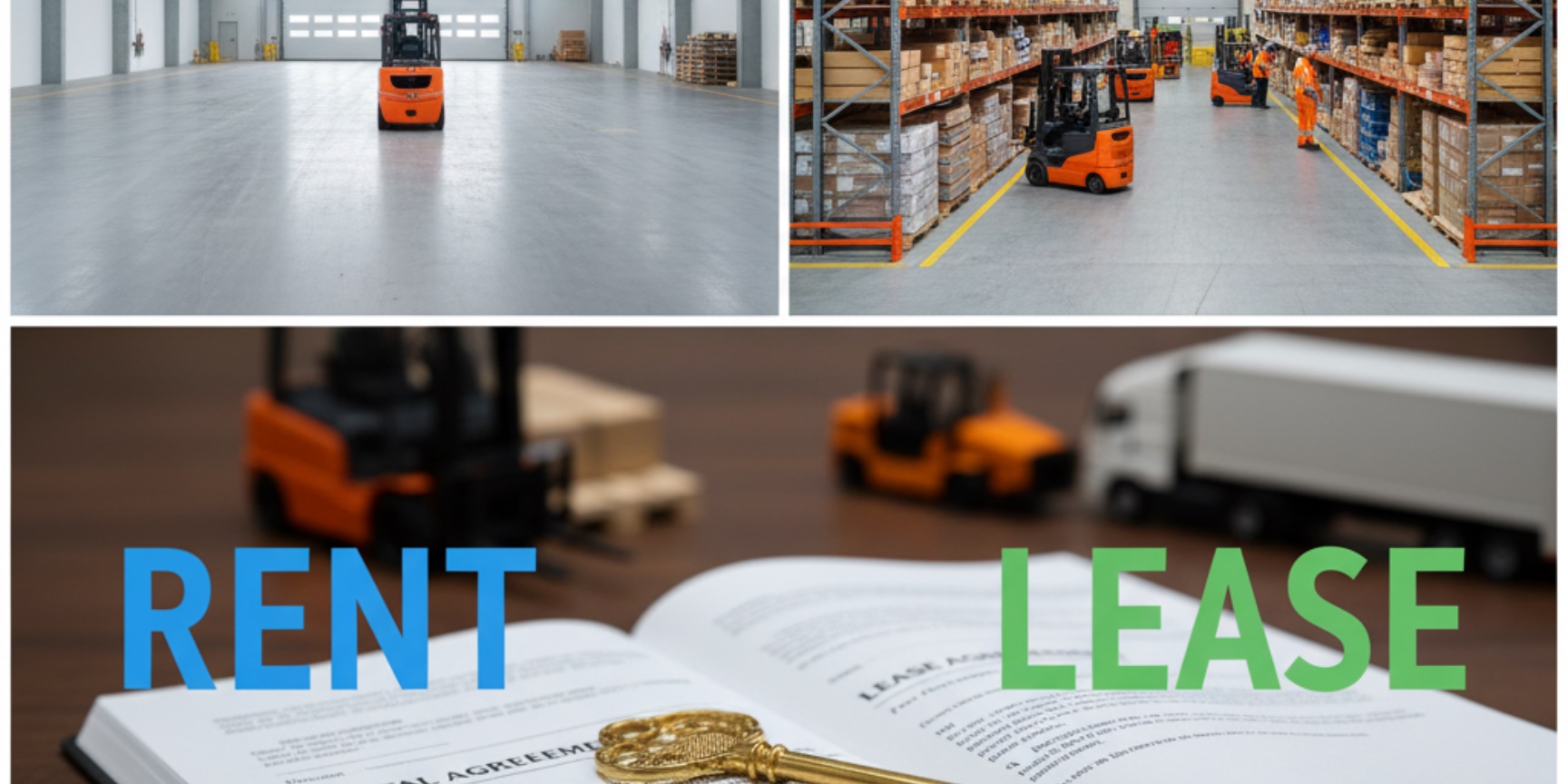
- Rent: A logistics service provider rents an empty hall. He equips them himself with racks, industrial trucks and software and acquires his own customers. The profit he generates is the result of his own entrepreneurial activity and investment. The hall itself is only the passive shell for his operation. The use of the property is in the foreground.
- Lease: A company takes over an existing, fully functional distribution center from a predecessor. The lease agreement includes not only the property, but also the entire operating equipment (racks, software licenses, forklifts) and possibly even the inventory of goods or ongoing service contracts. The lessee continues the business and derives his profit directly from it. The thing left is an active source of income.
This distinction is often fluid in practice. If a contract for a logistics property also contains the provision of essential, operationally necessary facilities that enable an immediate start of operations, the case law strongly tends to assume a lease agreement, even if the document is titled "lease agreement". The actual intention of the parties and the content of the contract are decisive.
Contract Term and Notice Periods: Flexibility vs. Stability
The legal framework for the termination of leases and leases also show significant differences that influence the strategic planning of logistics companies.
- Leases for business premises are often concluded for a fixed period of time in order to give both sides planning security. In the case of open-ended contracts, the law provides for an ordinary notice period in Section 580a (2) of the German Civil Code: Termination is permissible no later than the third working day of a calendar quarter at the end of the next calendar quarter. This allows for relative flexibility.
- Lease agreements , on the other hand, especially if they relate to a complex business unit, are often characterised by longer terms and stricter termination regulations. According to § 584 BGB, a lease over a property or a right can only be terminated at the end of a lease year; the termination must take place no later than the third working day of the six months at the end of which the lease is to end. These longer periods reflect the higher investment protection and the more complex nature of the subject matter of the contract. For the tenant, this means more stability, but also less flexibility in the event of market changes.
Maintenance and repair: Who is responsible?
The distribution of maintenance and repair obligations is another critical point that must be carefully regulated when negotiating contracts for logistics properties.
When renting business premises, the basic legal rule is clear: According to Section 535 (1) sentence 2 of the German Civil Code, the landlord is obliged to maintain the leased property in a condition suitable for use in accordance with the contract. This means that he is responsible for the maintenance and repair of the roof and compartment. So-called minor repair clauses can be contractually agreed, which impose the costs of minor cosmetic repairs on the tenant, but the essential maintenance obligations remain with the landlord.
In the case of lease agreements, the legal situation is more differentiated. Since the tenant uses the property to generate income, a larger part of the maintenance obligations is often imposed on him. Section 582 of the German Civil Code (BGB) stipulates that the lessee must carry out the usual repairs to the leased property that are necessary for the preservation of the property for normal use at his own expense. This often includes more than just cosmetic repairs and can also include the maintenance of operationally necessary equipment (e.g. conveyor technology, ramps), provided that these have been co-leased. The exact delimitation must be regulated in detail in the lease agreement in order to avoid later conflicts.
Practical relevance for the logistics industry: What is the right choice?
The decision between rent and lease depends on the specific corporate strategy and the subject matter of the contract.
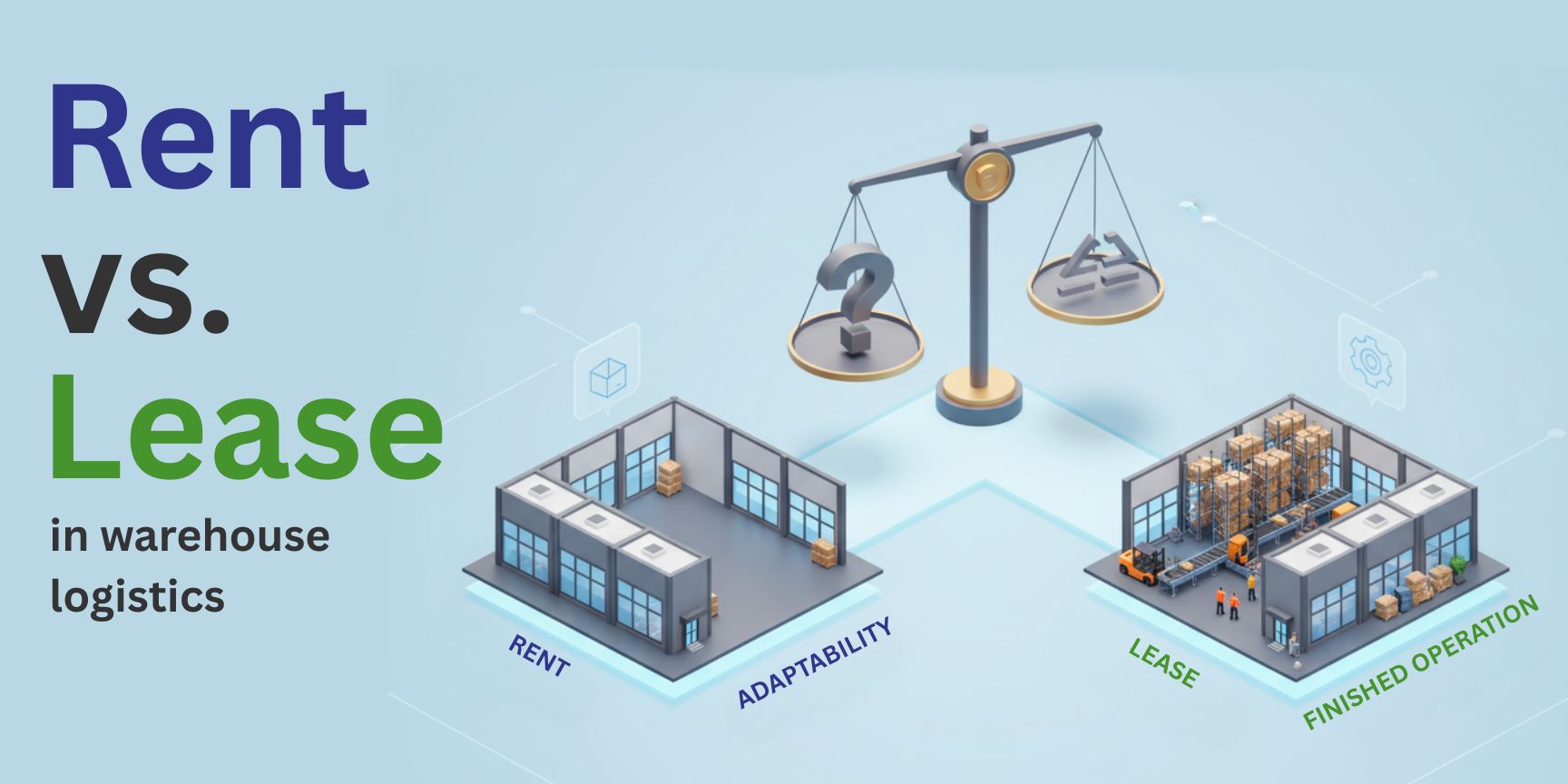
- Renting is the ideal choice for companies looking for maximum flexibility in designing their own logistics processes. They rent an empty shell and implement their own bespoke equipment and technology. This is typical for logistics service providers who need to develop highly specialized solutions for their customers or quickly adapt their operational model.
- Lease comes into play when the focus is on a quick market entry or the takeover of an ongoing operation. A company can lease a fully equipped logistics center in order to become operational immediately without long start-up times and high initial investments. This can also be a strategically sensible option in the case of company successions or the takeover of a site from an insolvent competitor.
Conclusion: A decision with far-reaching consequences
The distinction between rent and lease in warehouse logistics is not a legal subtlety, but a fundamental course setting with direct effects on costs, liability, flexibility and operational operations. A careful examination of the subject matter of the contract and a clear contractual regulation are essential. It is crucial to understand whether only a property is being made available for use or a complete operating basis for generating income. This knowledge protects against unexpected obligations and secures the economic and legal basis of the logistics operation. Expert legal advice is always recommended when drafting and reviewing corresponding contracts.