




Ramps in logistics
Table of Contents
Definition: What is a loading dock?
In warehouse and contract logistics, the term ramp (also loading ramp or docking station) refers to the structural interface between a logistics building (warehouse, transshipment hall) and the transport vehicle (truck, container). Its primary function is to enable efficient and safe horizontal handling of goods by compensating for the difference in height between the loading area of the vehicle and the floor level of the hall.
The ramp is often the biggest bottleneck in intralogistics. Poor planning, inadequate equipment or poor maintenance directly lead to loss of time, increased personnel costs, damage to goods and vehicles as well as considerable safety risks.
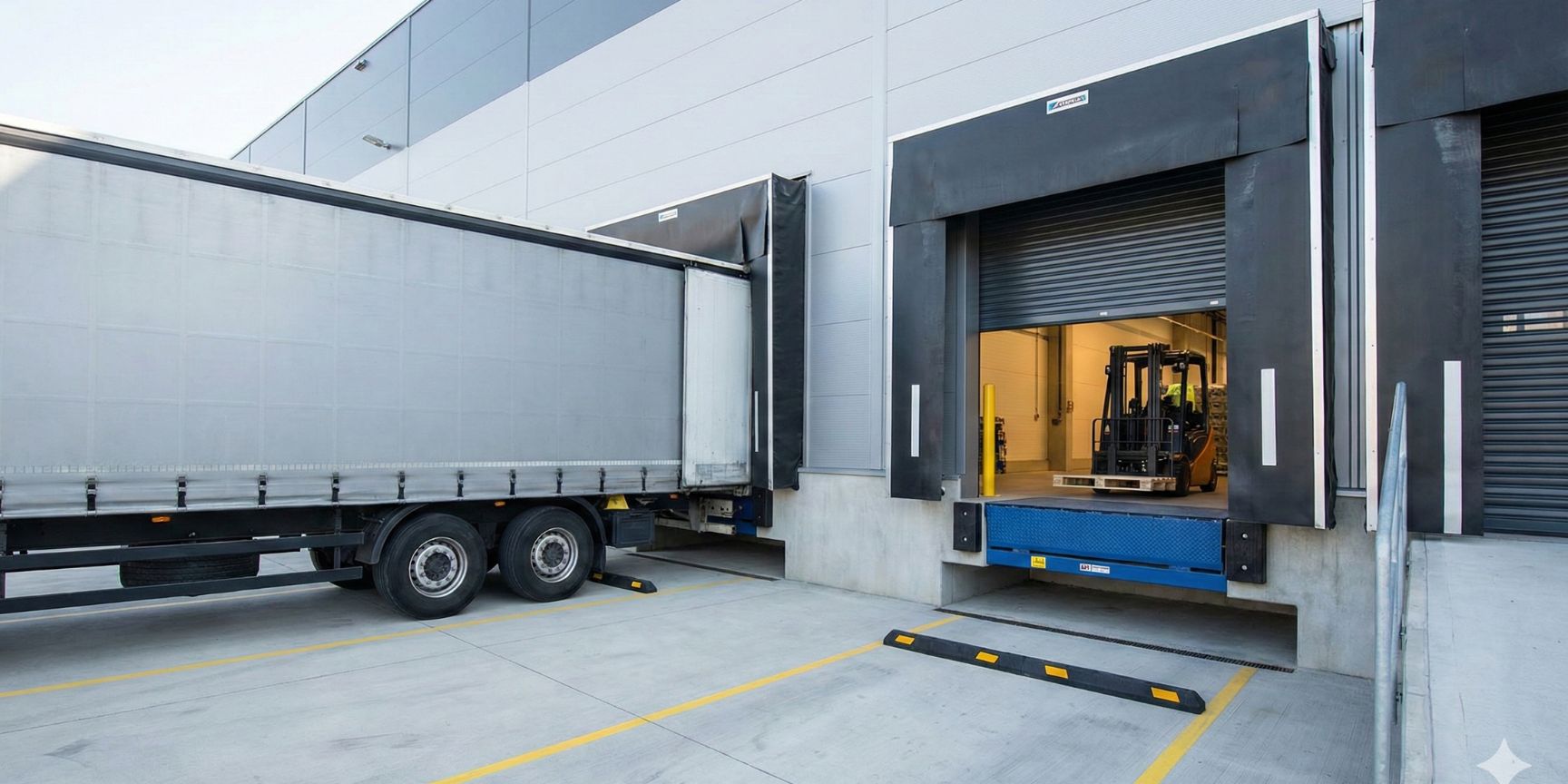
The Core Components of a Modern Docking Station
A professional loading dock is a system of several coordinated components that optimize the loading and unloading process:
- The dock leveller (also known as the dock leveller): This is the centerpiece. It physically bridges the gap and height difference between the edge of the ramp and the truck bed.
- Moving bridges (with telescopic lip): The lip extends horizontally and rests precisely on the loading area. They are flexible and standard for new buildings.
- Bascule bridges: A simpler variant in which the bridge "falls" onto the loading area.
- Drive: Mostly hydraulic (electro-hydraulic), less often mechanical (by spring force). Hydraulic systems allow for more precise control and adjustment, even during the loading process (the so-called "breathing" during suspension movements of the truck).
- The dock shelter: This encloses the truck during docking and seals the gap between the vehicle and the building.
- Benefits: Protection of goods and employees from the weather (rain, wind), maintenance of temperature chains (refrigerated logistics!), energy saving (heating costs) and hygiene (protection against insects/dust).
- Types: Common are tarpaulin sluices (robust PVC tarpaulins) or inflatable seals (KISS sluices), which attach themselves to the contour of the vehicle at the touch of a button and seal perfectly – indispensable for pharmaceutical and food logistics.
- The sectional or roller door: The actual hall door, which is located behind the dock leveller. It must be well insulated (ISO panels), robust and high-speed to minimise energy losses during opening hours.
- Collision buffers (ram buffers): Solid rubber or steel spring buffers mounted below the dock leveller. They absorb the impact energy of the docking truck and thus protect the building fabric (façade, ramp) and the vehicle from damage.
- Additional components: Often supplemented by wheel chocks, locking systems (dock locks that "claw" the truck to the ramp), traffic light systems (inside/outside) to signal the release and entry aids (crash barriers or floor markings).
FAQ: Practical questions about ramp planning
Question: What is the height of a standard loading dock?
Answer: The standard height for loading ramps in heavy-duty transport (semitrailers, 40-tonne trucks) in Europe is 1.20 metres to 1.30 metres above yard level. This dimension corresponds to the common loading area height of most trailers.
Question: What is a "Sawtooth Dock"?
Answer: In the sawtooth arrangement, the ramps are not arranged at a 90° angle to the façade, but at an angle (e.g. 45° or 60°).
Advantage: This saves yard depth. The trucks don't have to swing so far when maneuvering.
Disadvantage: It "costs" the length of the façade (fewer doors fit on the same building length) and loading and unloading is done at a slight angle. It is a typical solution for existing properties with limited outdoor space.
Question: What happens if a vehicle (e.g. Sprinter) is much lower?
Answer: This is one of the biggest challenges. A standard dock leveller often cannot compensate for this difference. Solutions are:
- Deep ramps (attachment ramps): Separate ramp areas that are lowered to a level of approx. 0.60 m - 0.80 m, especially for CEP vehicles (courier, express, parcel).
- Scissor lift tables: Flexible lifts that adjust the floor level.
- Loading houses (attachment locks): Complete docking stations that are placed in front of the façade. They may be equipped with special bridges for vans.
The ramp from the perspective of the logistics property
For developers and investors of logistics properties, the number of ramps is one of the most important key figures (KPIs) for evaluating a hall.
- Rule of thumb: In modern logistics, one ramp door is calculated per 800 m² to 1,000 m² of hall space.
- Important deviation: This rule applies primarily to warehouse and distribution centers. In cross-docking halls (typical for freight forwarders and CEP services), where goods are only handled and not stored, the door density is extremely high (e.g. one door every 200 m²).
- Yard depth: The space in front of the ramp is essential. A 40-ton semitrailer truck needs a turning circle. The minimum is a courtyard area (distance between the ramp and the next obstacle) of 30 metres, 35 to 40 metres is better to ensure smooth manoeuvring.
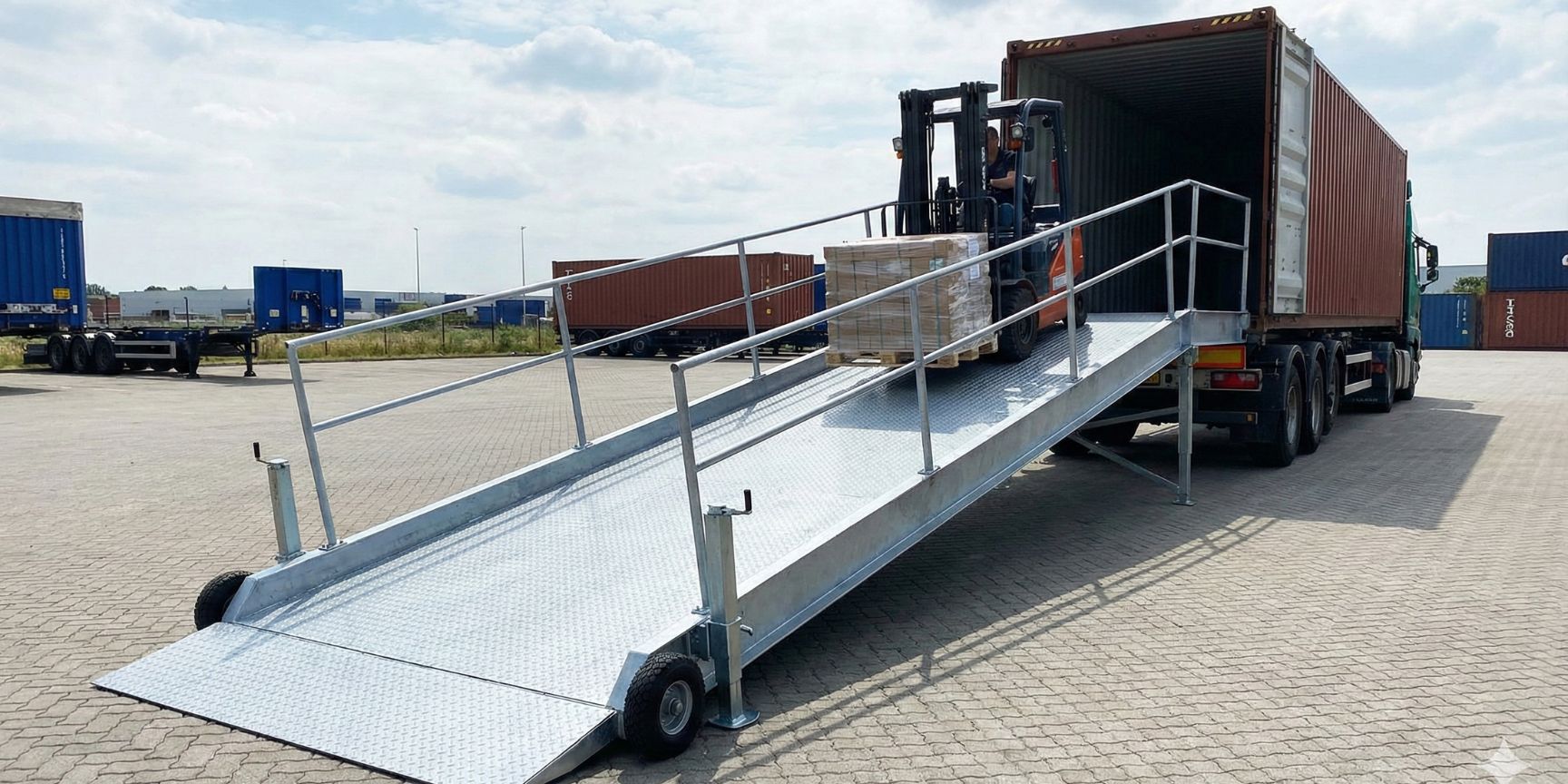
Special requirements (refrigerated goods, CEP, jumbo)
Contract logistics thrives on specialization, which has a direct impact on ramps:
- Refrigeration and pharmaceutical logistics: Maintaining the cold chain is the top priority. Inflatable dock shelters (KISS locks) are mandatory here. Attachment locks (loading houses) are often used. Advantage: The door closes in front of the dock leveller (instead of behind it). The truck docks before the hall door opens. This minimizes air ingress and energy loss to almost zero.
- CEP services (parcel services): Primarily used vans (Sprinter class). You will need the aforementioned deep ramps (approx. 0.80 m) or ground-level sectional doors (drive-in).
- Jumbo trucks / low-liners: These vehicles have a deeper loading area to achieve more interior height (3m). The dock leveller must have a correspondingly large negative positioning range, i.e. it must be able to lower far below the ramp level.
Operation and Safety
In operations (warehouse logistics), the ramp is a focal point of danger. The most common accidents are crashes of industrial trucks (forklifts) because the truck rolls away during the loading process or the bridge does not rest correctly.
- Safety measures:
- Anti-roll-off devices: Mandatory wheel chocks or automated "dock lock" systems that physically hold the vehicle in place.
- Communication: Traffic light systems (red/green) for driver (outside) and forklift driver (inside) prevent premature departure.
- Load capacity: The dock leveller must safely support the dynamic load of a fully loaded forklift (often 6 tons or more).
The efficiency of contract logistics is measured at the ramp: How many "pallets per hour" can be handled? The right equipment, short cycle times of the gates and intelligent allocation (yard management) are crucial here.