



Reverse Logistics in Logistics
Table of Contents
What is reverse logistics? A definition
Reverse logistics encompasses all logistical processes that take products and materials from the end customer or the last stage of the supply chain back to the manufacturer or another recycling point. In contrast to classic "forward logistics", which concentrates on the path of the goods to the customer, reverse logistics steers the flow of goods, information and value in the opposite direction. This includes returns from e-commerce as well as the take-back of old devices, the reuse of packaging or the recycling of production residues.
The Process of Reverse Logistics
The process of reverse logistics is often more complex and less standardized than that of forward logistics. Each returned item must be individually inspected and categorized. A typical process can be broken down into several steps:
- Acceptance and receipt: The process begins with the acceptance of the returned goods at the warehouse. This is where an initial identification and sorting takes place.
- Testing and assessment (triage): Each item is inspected. Is the packaging damaged? Is the product functional? Are parts missing? Based on this check, a decision is made as whether the item is classified as A, B or C goods.
- Decision on the further route: Depending on the condition, the product is fed into another process. Possibilities are:
- Return to Stock: Items in mint condition (A-stock) are prepared for resale and put back into storage.
- Refurbishment/Remarketing: Slightly damaged products (B-stock) are repaired, cleaned and resold as B-goods or refurbished items at a reduced price.
- Recycling and recycling: Products that can no longer be sold are dismantled in order to obtain spare parts or to recycle the raw materials.
- Disposal: Only the residue that can no longer be used is disposed of properly.
Reverse Logistics in Warehouse and Contract Logistics
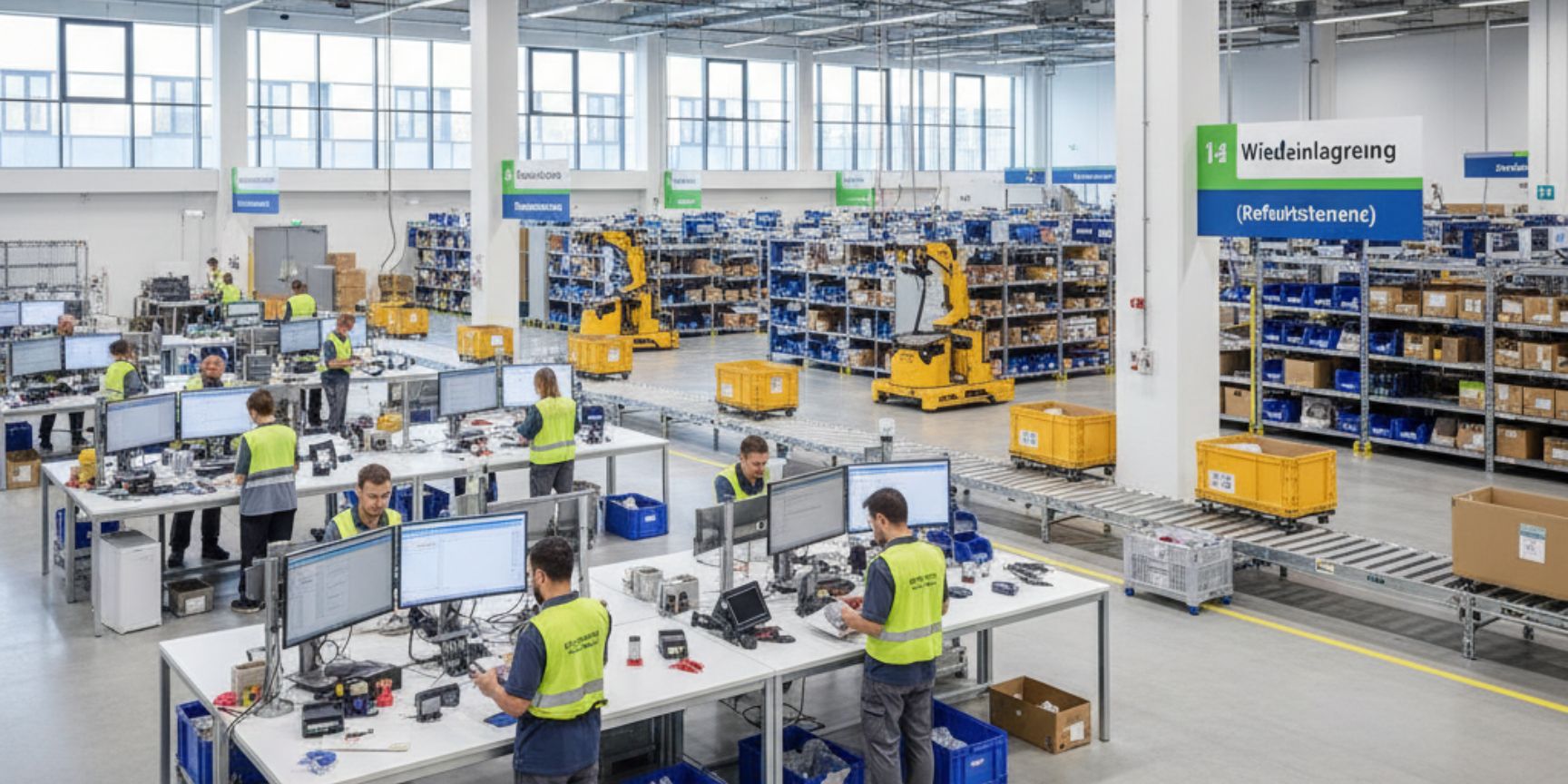
Reverse logistics represents an enormous challenge for warehouse logistics. While a classic distribution warehouse is designed for the fast handling of standardized units (pallets, cartons), returns management requires flexible processes and specially trained personnel for individual item inspection. In modern logistics properties, dedicated zones are therefore often set up for returns processing. These areas require different equipment: well-lit workbenches for inspection, test stations for electronic items and special IT systems to record the condition of the article.
In contract logistics, reverse logistics is increasingly becoming an important value-added service. Logistics service providers (3PL) take over the entire returns process for retailers and manufacturers. This relieves the client and allows him to concentrate on his core business. A professional 3PL partner can reduce the cost per return through optimized processes and significantly shorten the time until the goods are available again (time-to-market). According to a study by Statista, the return rate in German online retail in 2023 was between 5% and over 25%, depending on the product segment. These figures illustrate the immense volume and economic relevance of efficient returns processes.
The importance for logistics real estate
The increasing importance of reverse logistics has a direct impact on the design and construction of logistics properties. Today, a modern hall has to do more than just provide storage space. Important aspects are:
- Flexible spaces: Separate areas are needed that are specifically designed to handle returns (receiving, inspection, preparation, repackaging).
- Technical equipment: Sufficient power connections for test equipment, a good IT connection and bright lighting are essential for the qualitative test processes.
- Social rooms: Since returns processing is more personnel-intensive than classic warehouse logistics, the need for social and office space for employees is increasing.
- Sustainability: The property itself should take sustainability aspects into account, for example through the possibility of installing recycling and waste separation systems.
Questions and Answers (FAQ)
Question: Is reverse logistics just another term for returns management?
Answer: No. Returns management is the most well-known sub-area, but reverse logistics is broader. It also includes the recycling of materials, the return of transport packaging (e.g. pallets, reusable containers) and the disposal of end-of-life products.
Question: Why is reverse logistics so expensive?
Answer: The costs are higher because the processes are more unpredictable and fragmented. Each returned item must be handled and evaluated individually. In addition, there are the costs for transport, testing, processing, repackaging and restorage or disposal. Experts estimate that processing a return can cost between 10 and 20 euros.
Question: Can you earn money with reverse logistics?
Answer: Yes. Well-organized reverse logistics can turn a pure cost into a revenue stream. Through the fast and efficient processing of B-goods and their resale via secondary markets (e.g. outlets, special online platforms), the loss of value can be minimized and additional sales can be generated. In addition, a customer-friendly returns process strengthens customer loyalty.
Conclusion: From cost factor to strategic advantage
Efficient reverse logistics is no longer a necessary evil, but a decisive lever for economic success and sustainable business. It reduces waste, conserves resources and can increase profitability by recovering value. Companies that invest in smart processes, suitable logistics real estate and specialised service providers secure a clear competitive advantage in a market in which the handling of returns has a significant influence on customer satisfaction.