




Warehouse in logistics
Table of Contents
- The Warehouse: Between Functional Shell and Logistical Heartbeat
- The Logistics Property: Technical Requirements for the "Hall"
- Warehouse Logistics: The Operational Backbone
- Contract Logistics: The Strategic Partnership
- Camp Types and Specializations
- Expert Q&A: Practice-relevant Questions Answered in Depth
- Key Figures, Data and Facts (Benchmarks)
- Conclusion: The Warehouse of the Future
The Warehouse: Between Functional Shell and Logistical Heartbeat
In the modern sense, a warehouse is much more than a "hall". It is a specialized logistics property designed to buffer, sort and refine flows of goods. Whereas in the past the focus was on pure storage capacity, today a first-class warehouse is defined by its throughput and process intelligence.
The Logistics Property: Technical Requirements for the "Hall"
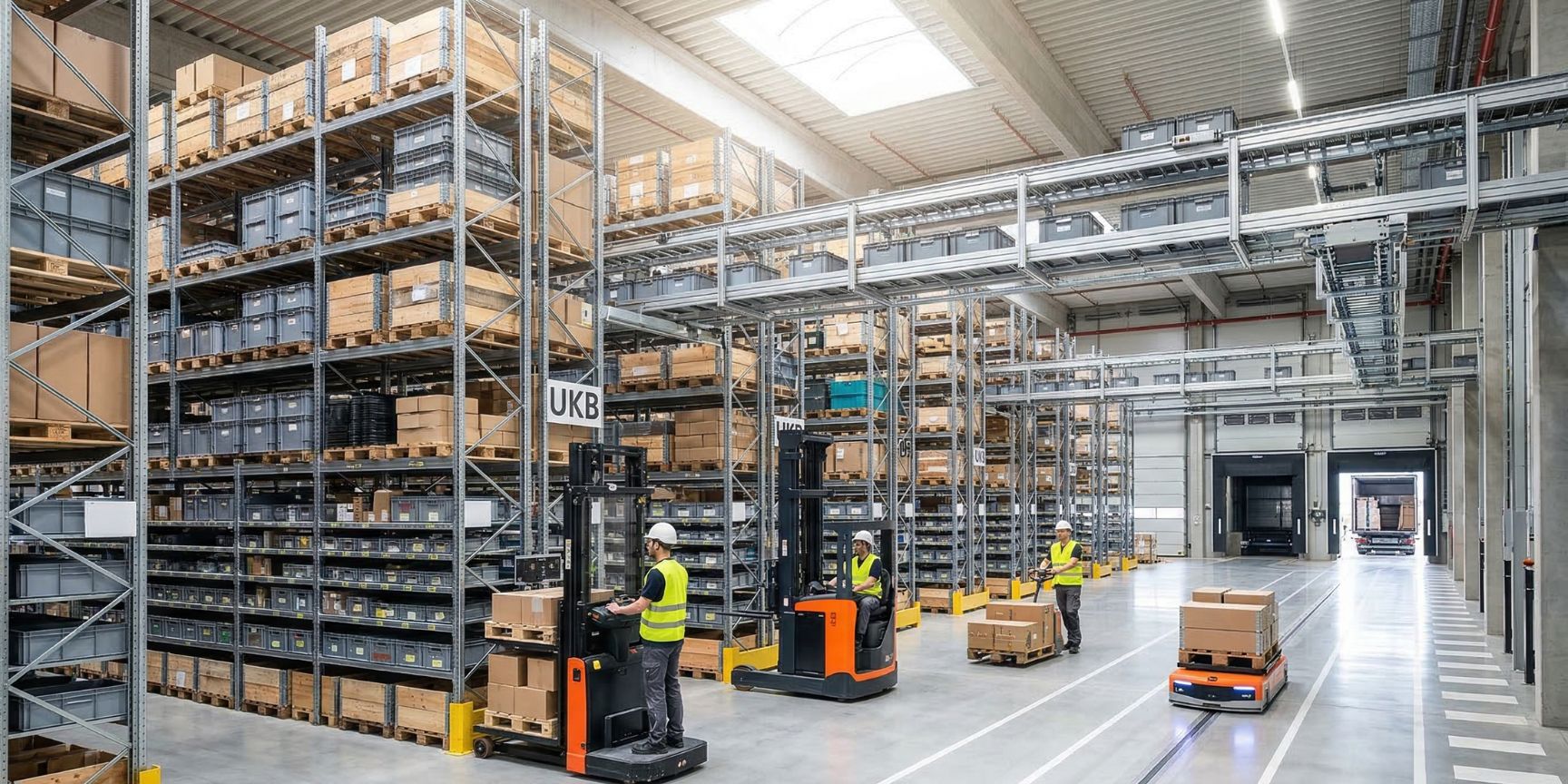
Anyone who talks about a warehouse must know the structural facts. A modern logistics property differs drastically from a simple commercial property.
- Hall height: The clear height (lower edge of the truss) is now 10.50 to 12.00 meters as standard. This enables efficient vertical use of space through high-bay systems.
- Floor load capacity: Since forklift trucks and racking systems generate enormous point loads, industrial floors are mandatory according to DIN 18202 (flatness tolerances). The load capacity should be at least 5 to 7 tons per square meter.
- Fire protection: Without a sprinkler system (often according to ESFR standards) and fire protection sections, a property for third-party use is hardly marketable.
Warehouse Logistics: The Operational Backbone
Warehouse logistics is all about the efficient control of internal material flows. This is where the classic phases come into play: incoming goods, storage, picking and outgoing goods.
A decisive parameter is the inventory turnover frequency. A specialist portal reader knows: A warehouse that is only "full" does not earn any money. Only the movement generates added value. Modern warehouses use a warehouse management system (WMS) to optimize travel times and reduce the error rate in the picking process (e.g. through pick-by-voice or pick-by-light) to almost zero.
Contract Logistics: The Strategic Partnership
Contract logistics describes the long-term cooperation between a shipping company and a logistics service provider. The range of services goes far beyond mere storage.
- Value Added Services (VAS): These include packaging, labeling, assembly of assemblies or quality controls.
- Risk sharing: The service provider often assumes the investment risk for the property and the staff.
- Integration: The IT systems of the customer and logistics provider merge via EDI interfaces (Electronic Data Interchange).
Camp Types and Specializations
Not every warehouse is the same. The architecture follows the function:
| Warehouse type | Characteristics | Focus |
| High-bay warehouse | Over 12m height, often automated | Maximum volume utilization |
| Cross-docking center | Lots of gates, shallow depth | Fast handling without storage |
| Cold/frozen storage | Insulated shells, CO2/NH3 cooling | Food Logistics & Pharma |
| Dangerous goods warehouse | Special WGK tanks, extinguishing systems | Chemicals & Automotive |
Expert Q&A: Practice-relevant Questions Answered in Depth
Question: Why is "third-party usability" so important in logistics real estate?
Answer: Investors and banks are more likely to finance real estate if it is not only built for a specific tenant. A standard logistics property with flexible office space, sufficient ramp gates (approx. 1 gate per 1,000 m²) and a standard height can be reoccupied more quickly after the end of the lease. Special buildings (e.g. for chemicals) carry a higher risk of vacancy.
Question: What influence does ESG have on the modern warehouse?
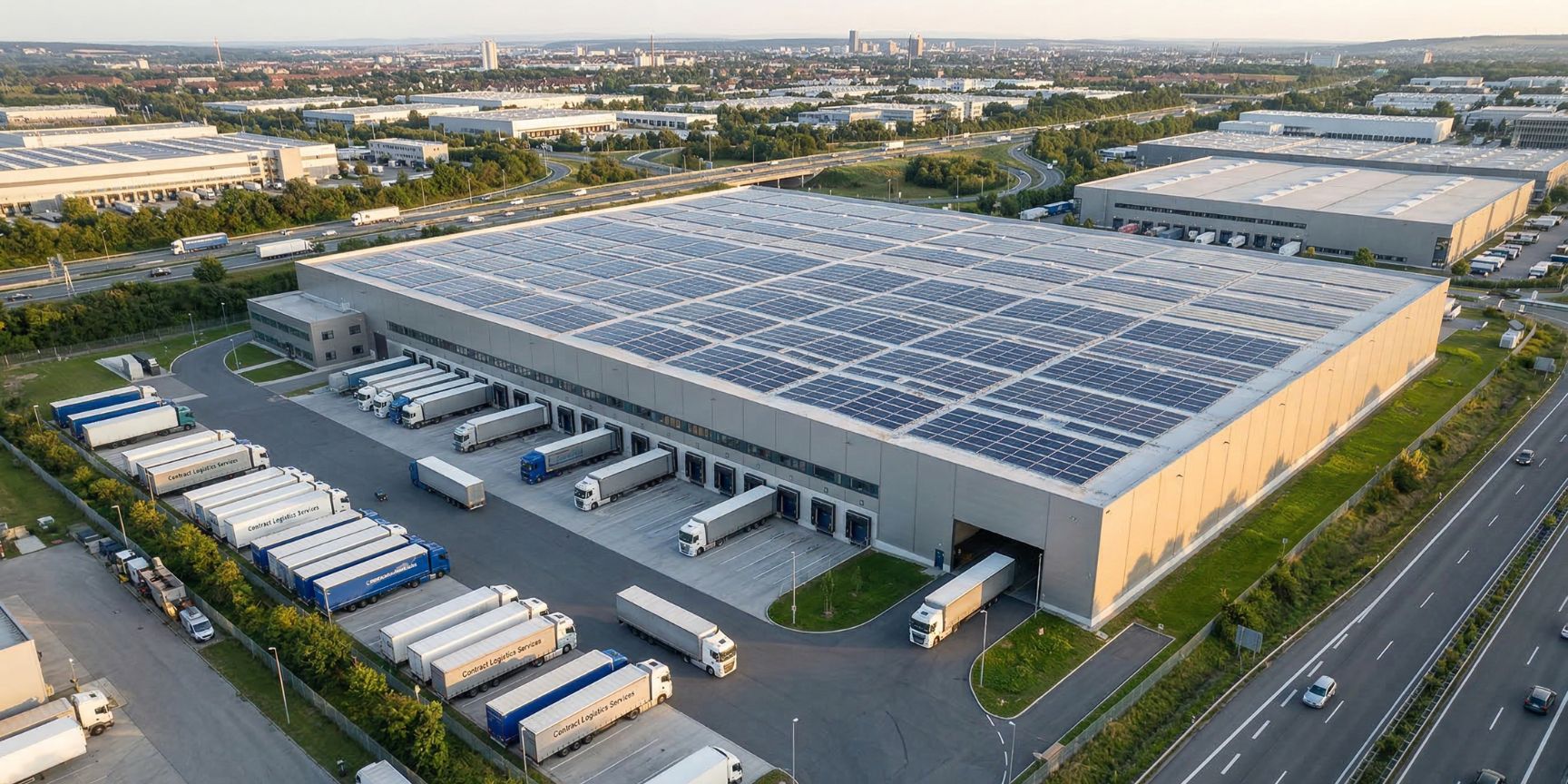
Answer: ESG (Environmental, Social, Governance) is no longer a buzzword, but rather a value-determining factor. PV systems on the roof, heat pumps instead of gas heaters and LED lighting with motion sensors massively reduce ancillary costs. Certifications such as DGNB or BREEAM are now standard for new buildings to ensure fungibility on the capital market.
Question: How do you calculate space efficiency correctly?
Answer: A distinction is made between gross and net storage space. The decisive factor is the degree of land use. A narrow-aisle warehouse offers a significantly higher density than a wide-aisle warehouse, but requires more expensive special forklifts (inductive guidance).
Key Figures, Data and Facts (Benchmarks)
To objectively evaluate a warehouse's performance, professionals should keep an eye on these benchmarks:
- Pick rate: How many positions does an employee work on per hour? (In manual warehouses often 60–120 picks/h).
- Inventory accuracy: Should be >99.5% through permanent inventory.
- Throughput time: The time from goods receipt to readiness for shipment.
- Space rent: In top logistics regions (e.g. Hamburg, Frankfurt, Ruhr area), prime rents in 2024 will sometimes range from €7.50 to €9.50/m².
Conclusion: The Warehouse of the Future
The trends are clearly pointing in the direction of automation and autonomy. AGVs (Automated Guided Vehicles) and AMRs (Autonomous Mobile Robots) are increasingly replacing classic forklift traffic. The property is becoming smarter: Sensors not only monitor the temperature, but also proactively report maintenance requirements for the building technology (predictive maintenance).
For companies, this means that the choice of location and type of warehouse design is a strategic decision that will determine competitiveness for years to come. Flexibility in terms of space combined with technological depth is the secret of success.