




Vacancy in the warehouse
Table of contents
- Vacancies in the warehouse: From "dead capital" to strategic space management
- The different faces of vacancy
- Vacancy from the perspective of logistics real estate: An asset analysis
- Contract logistics: When the "white space" eats up the margin
- Vacancy as a Cost Factor: The Hidden Expenses
- Strategies against vacancy: Proactive space management
- FAQ: Frequently asked questions about warehouse vacancy
- Conclusion: Vacancy as a management task
Vacancies in the warehouse: From "dead capital" to strategic space management
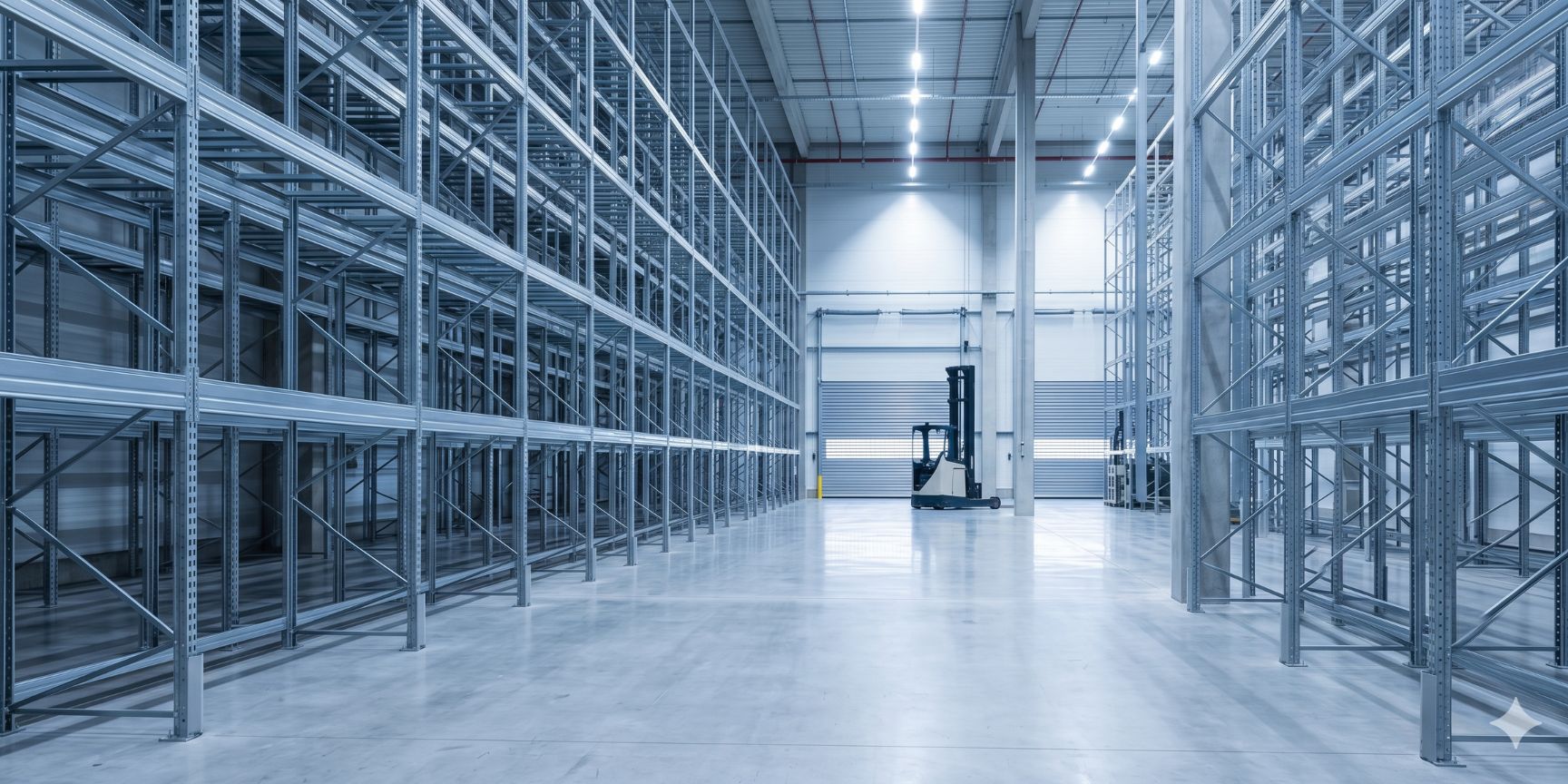
In the world of logistics real estate and supply chain management, space is the hardest currency. But what happens if the shelves remain empty? Warehousevacancy describes the state in which existing storage capacities – be they storage spaces, square meters or cubic meters – are not used by goods or productive processes for a defined period of time.
The different faces of vacancy
Not all vacancies are the same. Experts distinguish here primarily according to the cause and the duration:
- Structural vacancy: Long-term unused space, often due to outdated building fabric or poor location attractiveness (e.g. lack of suitability for third-party use).
- Frictional vacancy: Short-term vacancy that arises when tenants change or when warehouse areas are restructured.
- Speculative vacancy: Deliberately accepted vacancy in new buildings in order to wait for rising rents or major enquiries.
- Seasonal vacancy: Planned buffer capacities that arise outside peak times (such as the Christmas season).
Vacancy from the perspective of logistics real estate: An asset analysis
For owners and asset managers of logistics properties, vacancy is the biggest risk to returns. In Germany, the vacancy rate in the top logistics regions (e.g. Hamburg, Munich, Ruhr area) has often been below 2% in recent years – a sign of an extreme shortage of space.
Nevertheless, vacancy in the logistics hall poses a risk to its suitability for third-party use. A property that is too specifically tailored to one user (e.g. specialised refrigeration technology or hazardous goods warehouse) will find it more difficult to find a new tenant.
Facts & Figures: A vacancy rate of only 5% in a portfolio can disproportionately reduce the market value of a property due to the increased risk profile and the lack of cash flow. Investors today calculate with vacancy reserves, but the line between a "healthy buffer" and a "losing business" is narrow.
Contract logistics: When the "white space" eats up the margin
In contract logistics, space efficiency is the basis of the calculation. Logistics service providers often rent large halls to handle customer projects. If a "white space" is created here – i.e. an area for which rent is paid but which no customer remunerates – the operating margin drops immediately.
- Risk of fixed costs: While personnel costs can be made more flexible to some extent through temporary work, hall rental remains a fixed cost parameter.
- Multi-user concepts: To avoid vacancies, modern contract logistics companies rely on multi-user warehouses. Here, different customers share an area to compensate for fluctuations in volume.
Vacancy as a Cost Factor: The Hidden Expenses
What does an empty hall actually cost? The calculation goes far beyond the basic rent. In addition to the opportunity costs , there are:
Cost element | Description | Impact |
Fixed costs | Rent/lease, property tax, insurance. | Direct liquidity outflow. |
Empty halls also have to be heated (frost protection), guarded and cleaned. | Increase in ancillary costs (OPEX). | |
Opportunity Cost | Lost profits due to lack of service revenues (pick & pack). | Missing contribution margin III. |
Degradation | Unused equipment (e.g. sorters, stacker cranes) can be damaged by downtime. | Increased reactivation costs. |
Strategies against vacancy: Proactive space management
How can companies minimise vacancies or make good use of them?
- Flexibilisation through sub-letting: Subletting partial space to partners or start-ups is a proven means of covering fixed costs.
- Short-term warehousing platforms: Digital marketplaces make it possible to offer free capacities at short notice (on-demand).
- Conversion into a "dark store": In urban locations, vacant logistics spaces can be converted into micro-fulfillment centers for e-commerce at short notice.
- Data-driven forecasts: AI-supported prediction models help to plan future space requirements more precisely and prevent vacancies from occurring in the first place.

FAQ: Frequently asked questions about warehouse vacancy
Question: When does a certain vacancy rate in the warehouse even make sense? Answer: In warehouse logistics, a capacity utilization rate of 85% to 90% is ideal. A vacancy rate of 10-15% serves as a "breathing reserve". It enables smooth internal transfers, offers space for seasonal peaks and prevents operational processes from being blocked by overcrowding (keyword: blockade storage).
Question: How do you calculate the vacancy rate in the warehouse? Answer: The formula is:
Vacancy rate(%)= vacancy (unused unit/area) x 100
Total stock (total capacity)
It is important to distinguish between physical vacancy (no goods there) and economic vacancy (no rental income available).
Question: What role does AI play in preventing vacancies? Answer: AI systems analyze historical inventory data, market trends, and even weather data to calculate optimal inventory. This allows space to be marketed more proactively or shared more efficiently with other locations (collaborative warehousing).
Conclusion: Vacancy as a management task
Vacancies in warehouses are not fate, but a controllable key figure. While the real estate industry looks at vacancies from the point of view of property returns, logistics companies see it as an efficiency hurdle. Modern technology, flexible rental models and a high degree of third-party usability can minimise the risks. In times of volatile markets and unstable supply chains, the ability to use space in an agile manner becomes a decisive competitive advantage.
Your Ideal Logistics Warehouse
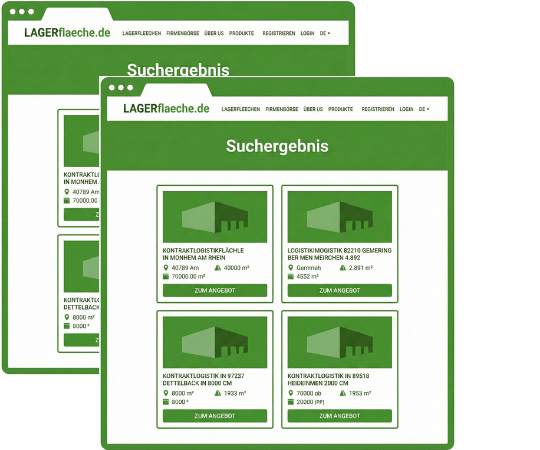
Browse listings for warehouse space, logistics real estate, industrial land, and contract logistics solutions.
Browse Exposés
Maximize Exposure for Your Warehouse Space
Showcase your logistics properties and attract qualified inquiries.
Discover Products