




Multi-channel Warehousing
Table of Contents
- What is multi-channel warehousing? A clear demarcation
- The core principle: Separate stocks for separate channels
- Advantages and typical use cases in practice
- The disadvantages and risks of the silo structure
- Technology in the multi-channel approach: Controlled isolation
- Conclusion: Is multi-channel warehousing a discontinued model?
Guide: Multi-channel warehousing – foundation or obsolete model?
What is Multi-channel Warehousing? A clear Demarcation
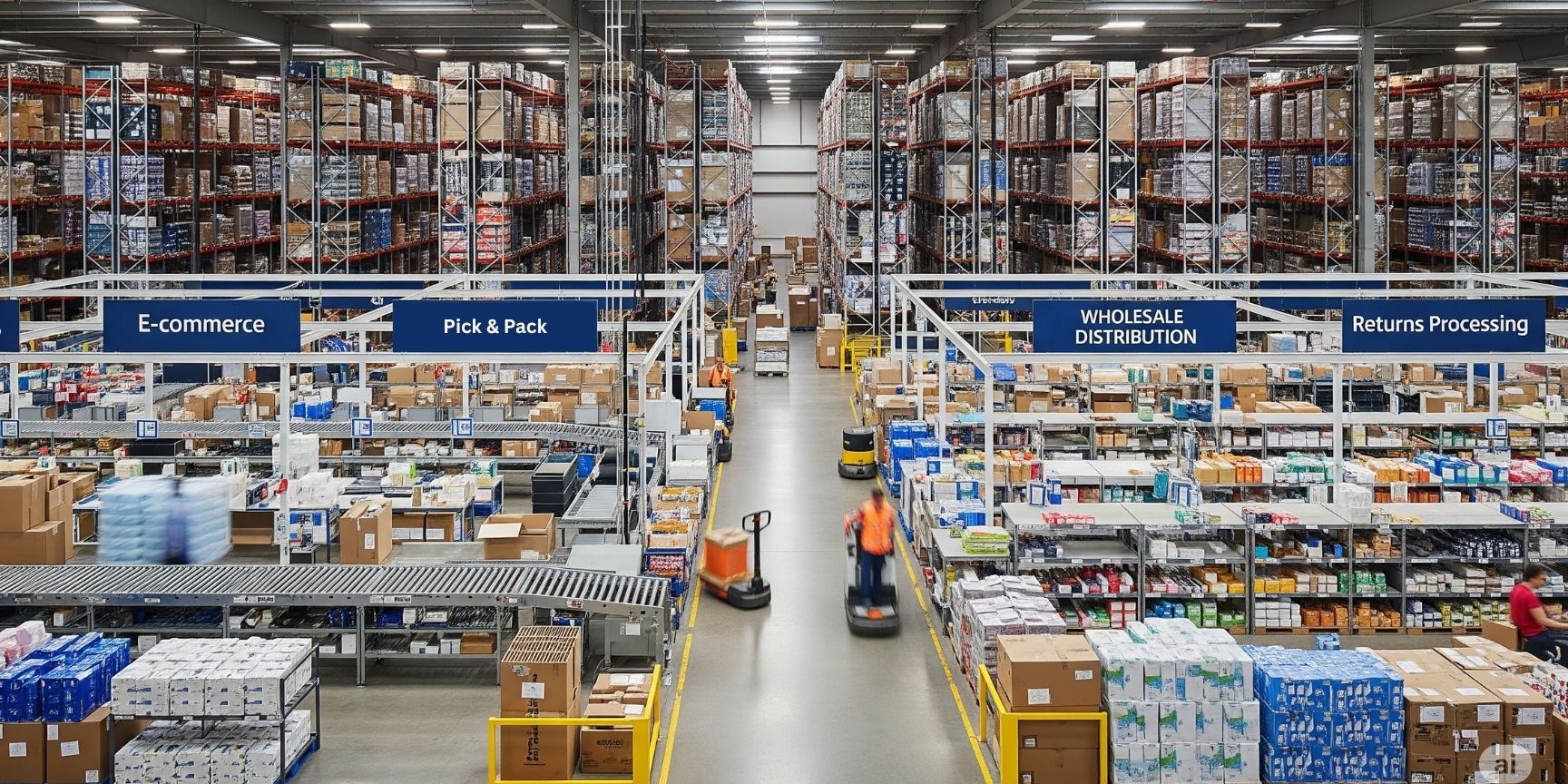
Multi-channel warehousing refers to an approach in which a company sells its products through multiple, independent channels and maintains a separate warehouse and logistics infrastructure for each of these channels. Typical channels are brick-and-mortar retail, your own online shop, marketplaces such as Amazon or classic catalog mail-order. The decisive feature is the silo structure: Each channel acts operationally self-sufficient and accesses its own, dedicated inventory. In direct contrast to omni-channel warehousing, which strives for full integration and a single, transparent inventory, in the multi-channel model, inventories and processes coexist.
The Core Principle: Separate Stocks for Separate Channels
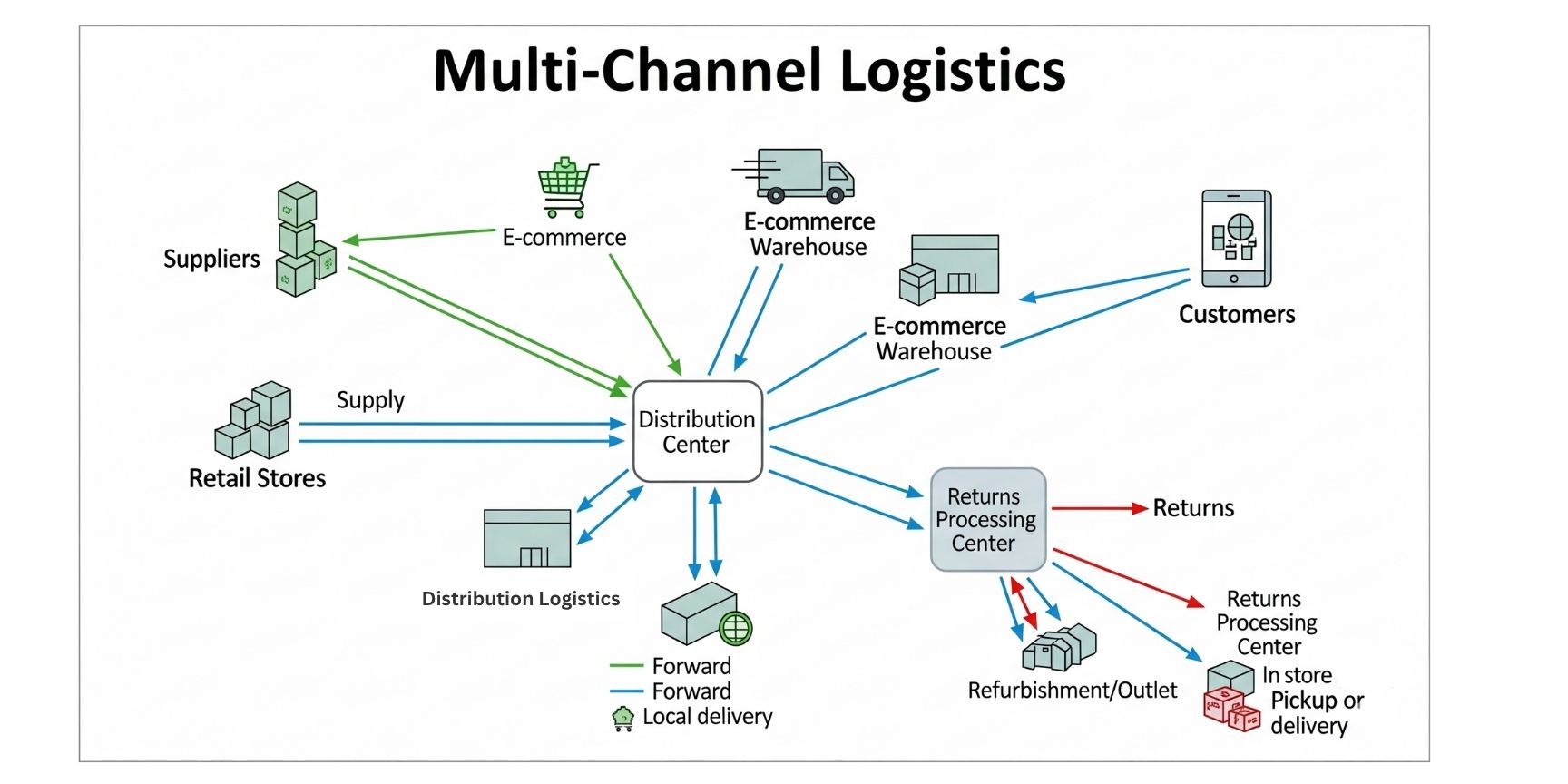
The operational heart of multi-channel warehousing is the strict separation of inventories. A physical warehouse can certainly accommodate several inventories, but these are clearly assigned to a sales channel on the system side.
Practical example: A fashion retailer operates an online shop and 20 branches. In the multi-channel model, there is a central e-commerce warehouse that exclusively supplies the online shop and a separate central warehouse that supplies the stores. If a T-shirt is sold out in the online store, the system cannot access the inventory in a store to fulfill the order – the sales opportunity is lost. The store's inventory is invisible to the online channel and vice versa. This separation applies to all processes: picking, packing, shipping and returns processing are organized separately for each channel.
Advantages and Typical Use Cases in Practice
Although the multi-channel model is considered less advanced, it has legitimate use cases and offers benefits in certain circumstances:
- Process clarity and specialization: Each logistics area can focus on the specific needs of its channel. The processes for pallet picking for store delivery (B2B-like) and fine-grained single-item picking for online retail (B2C) do not interfere with each other.
- Easier implementation: For companies that come from brick-and-mortar retail and are building an online store as a new channel, it is often easier and faster to set up a separate e-commerce warehouse instead of restructuring all existing logistics.
- Clear cost control: Costs for warehousing, personnel and shipping can be clearly assigned to the respective sales channel, which simplifies profitability analysis per channel.
The Disadvantages and Risks of the Silo Structure
The strict separation of channels has significant drawbacks that directly impact efficiency and customer experience:
- Inefficient use of inventory: In order to be able to deliver in every channel, higher safety stocks must be maintained. This leads to an overall higher capital commitment in the warehouse and an increased risk of slow sellers or markdowns.
- Lost sales: As shown in the example, "out-of-stock" situations in one channel lead to sales abandonment, even though the goods would be available in another channel.
- Inconsistent customer experience: Modern services such as Click & Collect, ship-from-store or the online reservation of store goods cannot be implemented in a purely multi-channel structure in terms of technology and processes, or can only be implemented with a great deal of manual effort. The customer experience is broken across channels.
Technology in the Multi-channel Approach: Controlled Isolation
Modern warehouse management systems (WMS) and merchandise management systems (ERP) are also used in the multi-channel environment. The key difference lies in their configuration: the systems are designed to isolate inventories and processes from each other. The WMS for the e-commerce warehouse is optimized for the high-frequency processing of small orders (e.g. by optimizing paths for "chaotic warehousing"), while the WMS of the store warehouse is geared towards handling large orders and pallets. By definition, there is no provision for real-time synchronization of inventory data between these systems.
Conclusion: Is Multi-channel Warehousing a Discontinued Model?
Multi-channel warehousing is not a bad model per se, but often a logical stage of development for growing companies. However, in an increasingly customer- and service-centric world, the rigid silo structure represents a significant barrier to competition. For most retail companies, it is a transitional stage on the way to an integrated omni-channel strategy. Only in niche scenarios, in which the sales channels serve fundamentally different customer groups and products, can a multi-channel approach remain a pragmatic and economically sensible solution in the long term. For the mass market, however, the future belongs to seamless integration.