




Omni-channel Warehousing
Table of Contents
- What is omni-channel warehousing? A definition
- The core principle: The uniform, cross-channel inventory
- Challenges in practice: complexity and synchronization
- Technological Basics: The Interaction of WMS and AI
- Strategic warehouse models in the omni-channel context
- Conclusion: The path to a seamless customer experience and increased efficiency
Guide: Mastering Complexity – Omni-Channel Warehousing as a Strategic Success Factor
What is Omni-channel Warehousing? A Definition
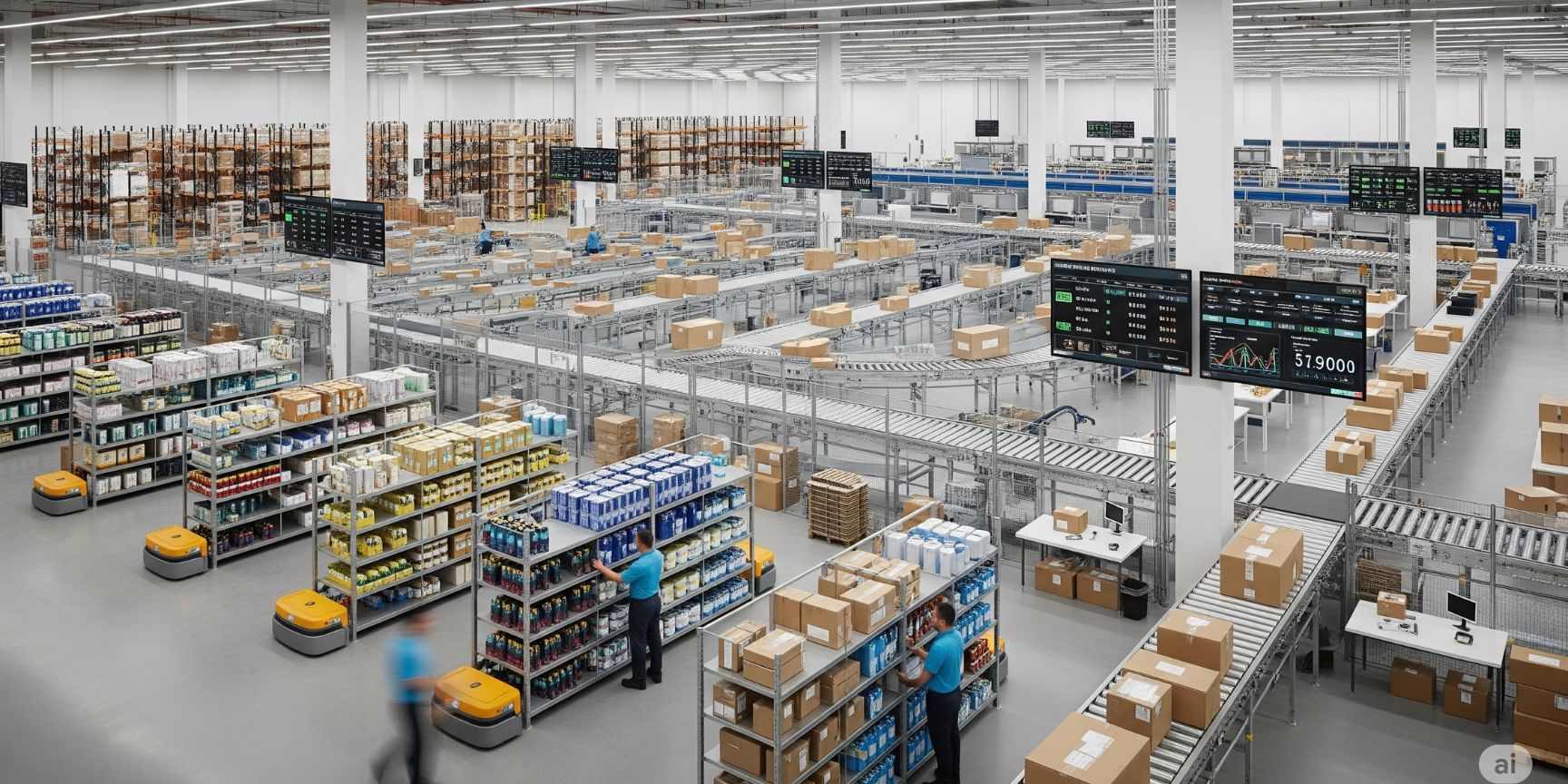
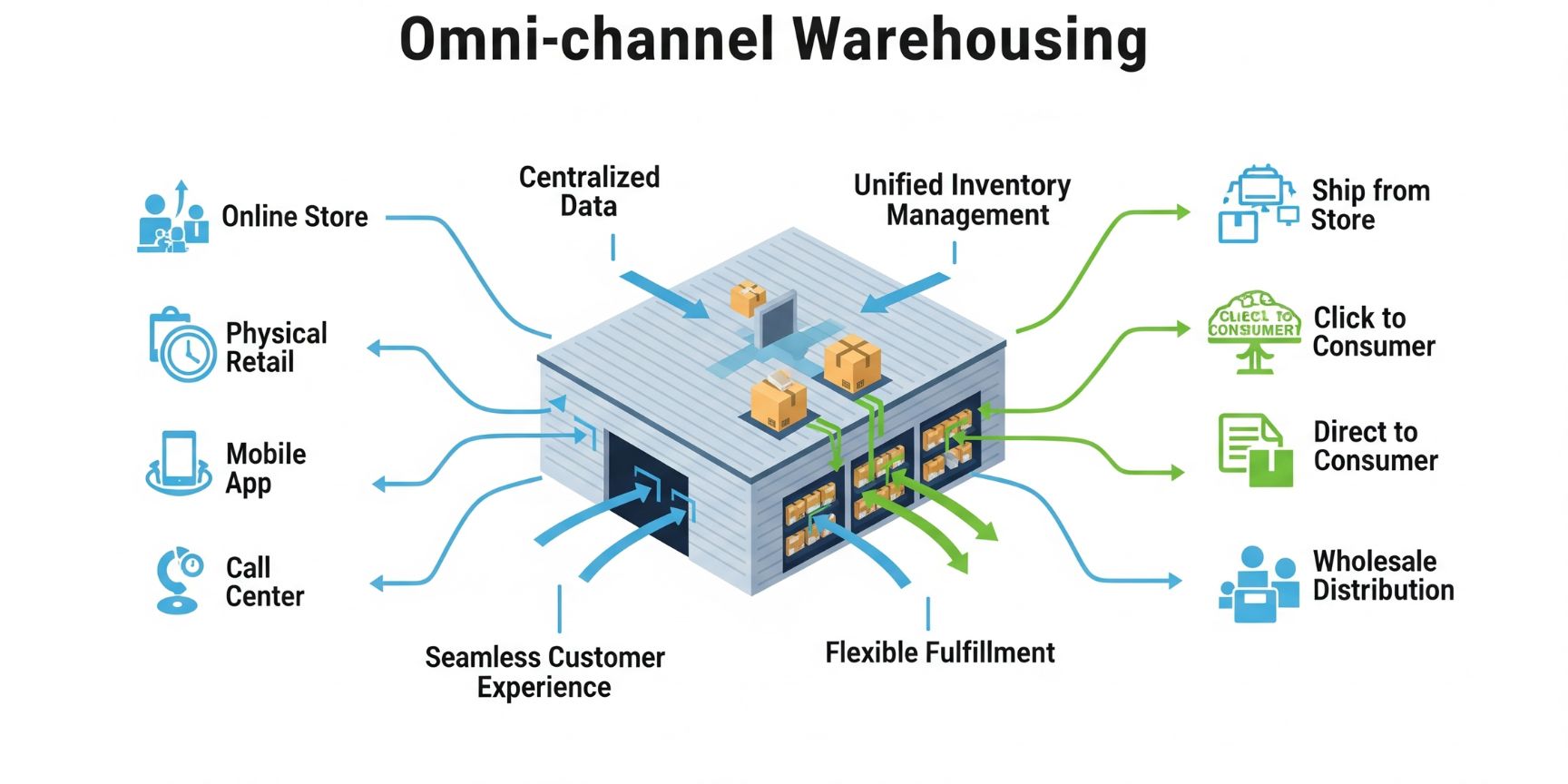
Omni-channel warehousing is a strategic approach to inventory and warehouse management that aims to enable a fully integrated and seamless customer experience across all sales channels. In contrast to the multi-channel strategy, in which channels such as e-commerce, brick-and-mortar retail or mobile apps often operate in separate silos with their own inventories, the omni-channel approach breaks down these barriers. The goal is a single, centralized, and real-time transparent inventory (Single Pool of Inventory) that can be accessed by all channels. For the customer, this means that he can, for example, research a product online, check availability in a nearby store, buy it via app and pick it up on the same day (Click & Collect).
The Core Principle: The Uniform, Cross-channel Inventory
At the heart of omni-channel warehousing is the elimination of information asymmetries in inventory. In traditional models, the e-commerce warehouse often doesn't know what's in stock in the stores – and vice versa. This leads to missed sales opportunities and customer frustration. The omni-channel approach creates a "single truth" about inventory. Every inventory movement – be it an online sale, a purchase at the checkout, a return or a delivery of goods – is immediately recorded in a central system and is visible to all touchpoints. This transparency is the indispensable prerequisite for modern logistics services such as "ship-from-store" (shipping from the store), "return-to-store" (return of online orders in the store) and precise availability displays in the online shop.
Challenges in Practice: Complexity and Synchronization
Implementing an omni-channel strategy in the warehouse is challenging and poses significant hurdles for companies. The biggest challenge is technological integration. The Warehouse Management System (WMS) must be able to communicate seamlessly and in real-time with the ERP system (merchandise management), the store's POS system (POS) and the e-commerce platform. Other challenges include:
- Process complexity: The picking processes for a single online order are fundamentally different from pallet picking for store delivery. Both processes often have to be handled efficiently in the same warehouse.
- Inventory accuracy: A deviation of just a few percentage points can lead to "out-of-stock" situations or false availability indicators, directly eroding customer trust.
- Returns management: The processing of returns from different channels is logistically complex. Should an online return that is handed in at the store be returned to the sales inventory there or sent back to the central warehouse?
Technological Basics: The Interaction of WMS and AI
A high-performance warehouse management system (WMS) is the operational backbone of any omni-channel warehousing. It must be able to prioritize and dynamically control orders from all channels. Modern systems use rule-based algorithms to decide from which location (central warehouse, store) an order can be fulfilled in the most cost-efficient and fastest way.
The WMS is increasingly being expanded by artificial intelligence (AI). AI applications are taking warehousing to a new level:
- Predictive analytics: AI models predict demand at the local level and enable proactive inventory allocation (predictive stocking).
- Inventory optimization: Algorithms determine the optimal storage location for each item based on sales frequency, seasonality, and return rates.
- Dynamic slotting: The arrangement of goods in the warehouse is permanently and automatically adapted to changing demand patterns in order to minimize picking routes.
Strategic warehouse models in the omni-channel context
There is no one, perfect warehousing model. The choice of strategy depends on the product range, customer structure and geographical distribution. Common models are:
- Centralization: A large, central distribution center handles all channels. This simplifies inventory management, but can lead to longer delivery times and higher transport costs.
- Decentralization through store integration: The stores become mini-distribution centers (micro-fulfillment centers). This enables very fast local deliveries and services such as Click & Collect, but requires excellent processes and inventory discipline in the stores.
- Hybrid models: A combination of a central warehouse for slow-moving and B-goods and the use of store stocks for fast-moving goods (A-goods). So-called "dark stores" – branches closed to customers that serve purely as urban logistics hubs – are also a growing trend.
Conclusion: The Path to a Seamless Customer Experience and Increased Efficiency
Omni-channel warehousing is much more than a logistical adjustment; it is a strategic necessity for companies that want to remain competitive in modern commerce. The successful integration of warehouse processes across all channels not only leads to a significantly improved and seamless customer experience, but also to tangible business benefits: higher conversion rates, reduction of safety stocks, reduction of capital commitment and a significant increase in operational efficiency. The path to this goal requires investment in technology and processes, but the reward is the future viability of the entire business model.