




Outgoing goods in the warehouse
Table of Contents
- What is outgoing goods? (Definition)
- The core processes of outgoing goods in warehouse logistics
- Focus on contract logistics: More than just standard processing
- Focus on logistics real estate: How should a hall for outgoing goods be designed?
- Facts, figures, data: The most important KPIs in outgoing goods
- Questions & answers from practice
- Conclusion: Outgoing goods as a "moment of truth"
What is outgoing goods?
Outgoing goods is the collective term for all processes that involve the physical and administrative completion of a warehouse order. It forms the direct counterpart to the goods receipt and is the last point at which warehouse logistics has control over the goods before they are handed over to an external service provider (freight forwarder, CEP service) or the customer himself.
In modern logistics, outgoing goods is much more than just "loading a truck". It is a critical control point that validates the quality of the entire previous intralogistics (storage, picking) and has a significant influence on customer satisfaction . Errors in outgoing goods (wrong quantity, wrong item, damage) have a direct impact on the recipient.
In terms of system technology, goods issue is the process in which the goods are posted as "dispatched" from the warehouse management system (WMS/WMS) and often also from the ERP system (e.g. SAP). This posting reduces inventory, triggers invoicing (invoicing), and updates the order status for the customer (tracking).

The core processes of outgoing goods in warehouse logistics
Outgoing goods is not a single step, but a process chain that usually begins immediately after picking.
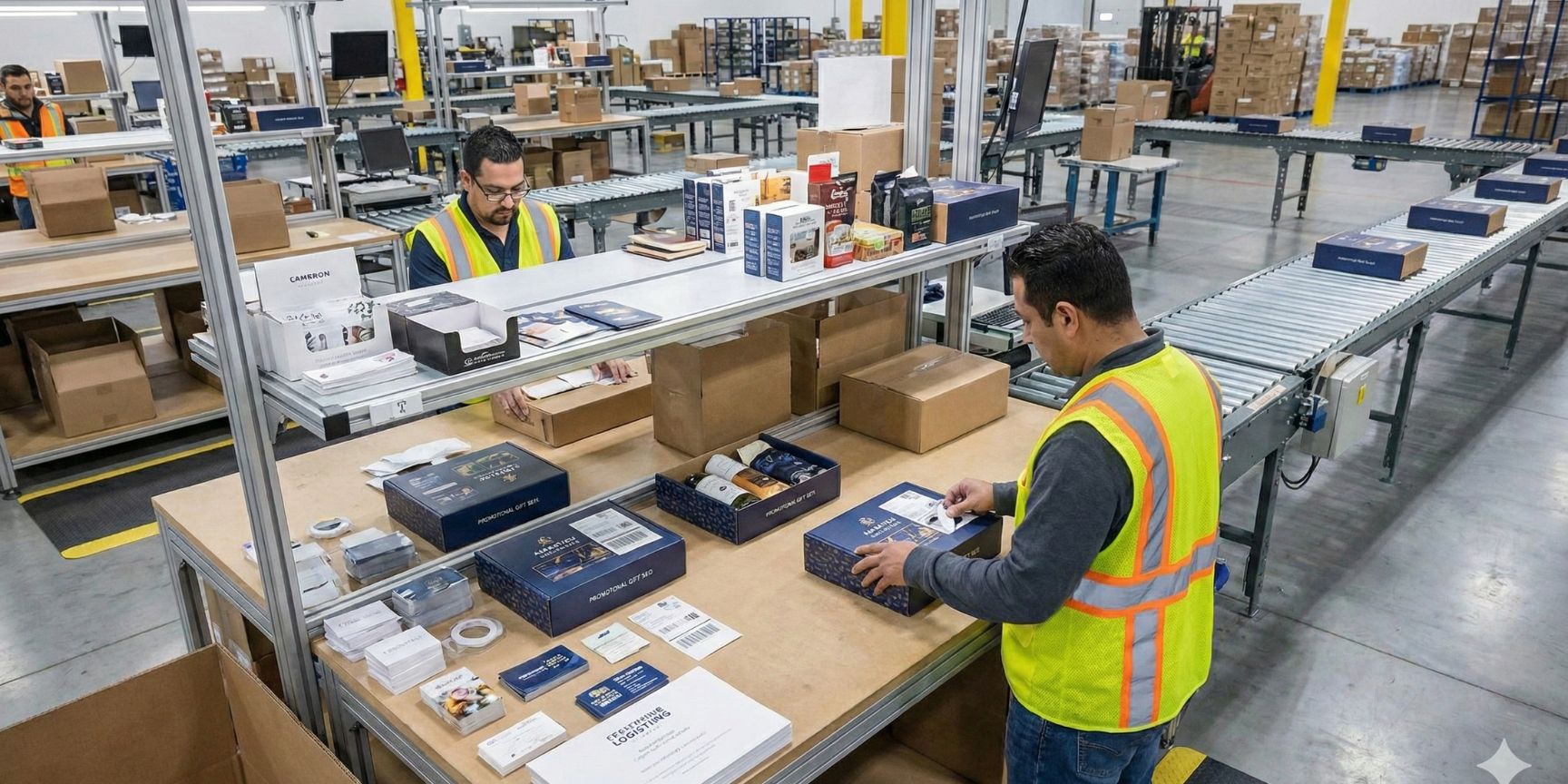
- Consolidation & Packaging: The items of an order picked (often from different storage areas) are merged (consolidated). This is followed by packaging. This is where the decision is made: Is a standard box sufficient? Is filling material required? Does the goods have to be secured on a pallet (e.g. by stretching)?
- Outgoing goods inspection: This is a crucial quality assurance step. This is where the following is checked:
- Identity: Is it the right article? (Scan Matching)
- Quantity: Does the quantity match the delivery note?
- Quality: Is the product or packaging damaged?
- Labeling: Are all necessary shipping labels (address labels, NVE/SSCC labels) correctly attached?
- Staging: The fully packed and controlled shipments (parcels, pallets) are provided in a dedicated staging area . This zone is often sorted by route, freight forwarder or postcode area in order to speed up later loading.
- Loading: The truck or transporter is brought up to the gate (ramp). The goods provided are physically loaded into the vehicle. Load securing is of crucial importance in order to avoid transport damage.
- Documentation & Handover: The driver acknowledges the acceptance of the goods on the freight documents (e.g. delivery note, consignment note/CMR). These documents are the legal proof of the handover.
- System posting (WA posting): As soon as the truck leaves the premises ("yard management"), the final goods issue posting takes place in WMS/ERP. The process has been completed.
Focus on contract logistics: More than just standard processing
In the field of contract logistics (outsourcing of logistics processes), outgoing goods is gaining greater strategic importance. The logistics service provider (3PL) acts as an "extended workbench" of its customer (client).
Outgoing goods is often the point at which Value Added Services (VAS) are provided that go far beyond pure packaging:
- Customer-specific labeling: Application of specific price, promotion or brand labels of the client.
- Set formation & display construction: Putting together promotional sets (e.g. "3 for 2") or equipping sales displays for the point of sale (POS).
- Insert management: Adding marketing material, warranty cards or specific user manuals.
- Customs clearance: For export, the necessary customs documents (e.g. export declaration, EUR.1) are created in the outgoing goods area and attached to the goods.
The Service Level Agreements (SLAs) in contract logistics precisely define the performance of outgoing goods. For example, a common SLA is: "All orders received by 2:00 p.m. must post outgoing goods on the same day (same-day shipping)." This places extreme demands on the efficiency of the processes from picking to loading.
Focus on logistics real estate: How should a hall for outgoing goods be designed?
The efficiency of outgoing goods is largely determined by the design of the logistics property (hall). An incorrectly planned hall can slow down even the best processes.
Key real estate factors:
- Gates (docks): The number and type of gates is the most critical factor.
- Quantity: The rule of thumb in modern logistics is often 1 door per 800–1,200 m² of hall space. A lack of gates inevitably leads to traffic jams, waiting times for carriers and delayed departures.
- Type: Standard truck gates (for semi-trailers) require dock levelers to compensate for the difference in height between the ramp and the loading area. Drive-level gates for special loading or smaller CEP vehicles (Sprinter doors) are also becoming increasingly important.
- Staging Area: This is the buffer area between packaging and loading.
- Size: The zone must be large enough to collect complete truckloads (tour shipments) in advance without blocking internal traffic routes. A staging area that is too small forces direct loading from the packaging into the vehicle, which is slow and provokes errors.
- Location: The zone must be located directly at the gates to minimize the travel distances for forklifts or pallet trucks.
- Building Layout (Flow):
- U-Flow: Incoming and outgoing goods are located on the same side of the building. This saves yard space, but can lead to conflicts between delivering and collecting traffic at high throughput.
- I-Flow (cross-docking): Incoming goods on one side, outgoing goods on the opposite side. This is ideal for high throughput and cross-docking business as traffic flows do not intersect.
- Yard & Yard Management: The WA process begins on the farm. Sufficient truck waiting areas (parking spaces) are needed to enable time slot management. The manoeuvring area in front of the gates (apron) must be deep enough (at least 35 metres) so that semi-trailers can dock without any problems.
Facts, figures, data: The most important KPIs in outgoing goods
Outgoing goods is not a "blind flight", but is controlled and optimized via clear key performance indicators:
| KPI (KPI) | Definition | Goal (example) |
| On-time shipping | Percentage of orders leaving the warehouse on the agreed date. | > 99.5% |
| Shipping Accuracy | Percentage of orders that were shipped completely AND correctly (correct item). | > 99.8% |
| Throughput time for outgoing goods | Time span from provision after picking to WA booking (truck departure). | < 2 hours |
| Cost per shipment | Total cost of outgoing goods (personnel, packaging) divided by the number of shipments. | (Strongly dependent on industry) |
| Dock Utilization | Time during which a door is actively used for loading, in relation to the time available. | > 80 % (in shift work) |
Questions & answers from practice
Question: Our outgoing goods zone is constantly overcrowded and blocked. What are the most common causes?
Answer: This is a classic symptom. The causes are usually:
- Lack of time slot management: Trucks arrive uncoordinated instead of using booked slots.
- Provision too early: Picking provides tours whose trucks arrive hours later. The goods "stand in the way".
- Lack of IT support: The WMS/WMS does not dynamically control the staging areas, so that space is used inefficiently.
- Real estate problem: The staging area is structurally too small for the current volume. This is a strategic planning error of the hall.
Question: We have a high error rate (wrong items at the customer's site), although the picking department checks by scan. What's the problem?
Answer: If the picking is correct, the error is often in the consolidation or packing process. If several orders are processed at the same time at a packing station, swaps can occur ("cross-shipping"). One solution is a final control scan at the packing table: The employee scans the item before placing it in the shipping box. The system checks the item against the delivery note and only then releases the shipping label.
Question: Truck loading takes an extremely long time for us, the freight forwarders complain.
Answer: Provided that the goods are ready correctly, this is often due to inefficient loading processes or a lack of equipment. Are pallets loaded individually with the pallet truck? Could a forklift (with double fork) cut the loading time in half? Are the dock levellers defective or too slow? Is the staff sufficiently trained in the optimal loading (stowage plan) and fast but safe load securing?
Conclusion: Outgoing goods as a "moment of truth"
Outgoing goods is the last "moment of truth" in the physical logistics chain. It is the calling card of the camp and the entire company. While perfect goods receipt and efficient storage go unnoticed by the customer, any error in the goods issue – be it a delay, a wrong item or damage – is immediately visible and leads to complaints. The optimization of these processes, supported by smart IT and a tailor-made logistics property, is therefore not a pure cost factor, but a direct lever for increasing customer satisfaction and competitiveness.