




Throughput in Warehouse Logistics
Table of Contents
What is throughput performance?
Question: What exactly does throughput measure?
Answer:Throughput performance, often referred to simply as throughput , is a fundamental metric that measures the amount of units (e.g., packages, pallets, parts, data) that a system or process can process or move within a given period of time. It is a direct indicator of the capacity and efficiency of a system. The formula for the calculation is:
Throughput = Number of units processed / Unit of time
High throughput signals high performance, while low throughput indicates bottlenecks or inefficient processes. The primary goal in logistics is to maximize throughput without compromising the quality of processes, such as picking accuracy, and increasing costs disproportionately.
The relevance in warehouse logistics
Question: Why is warehouse throughput so critical?
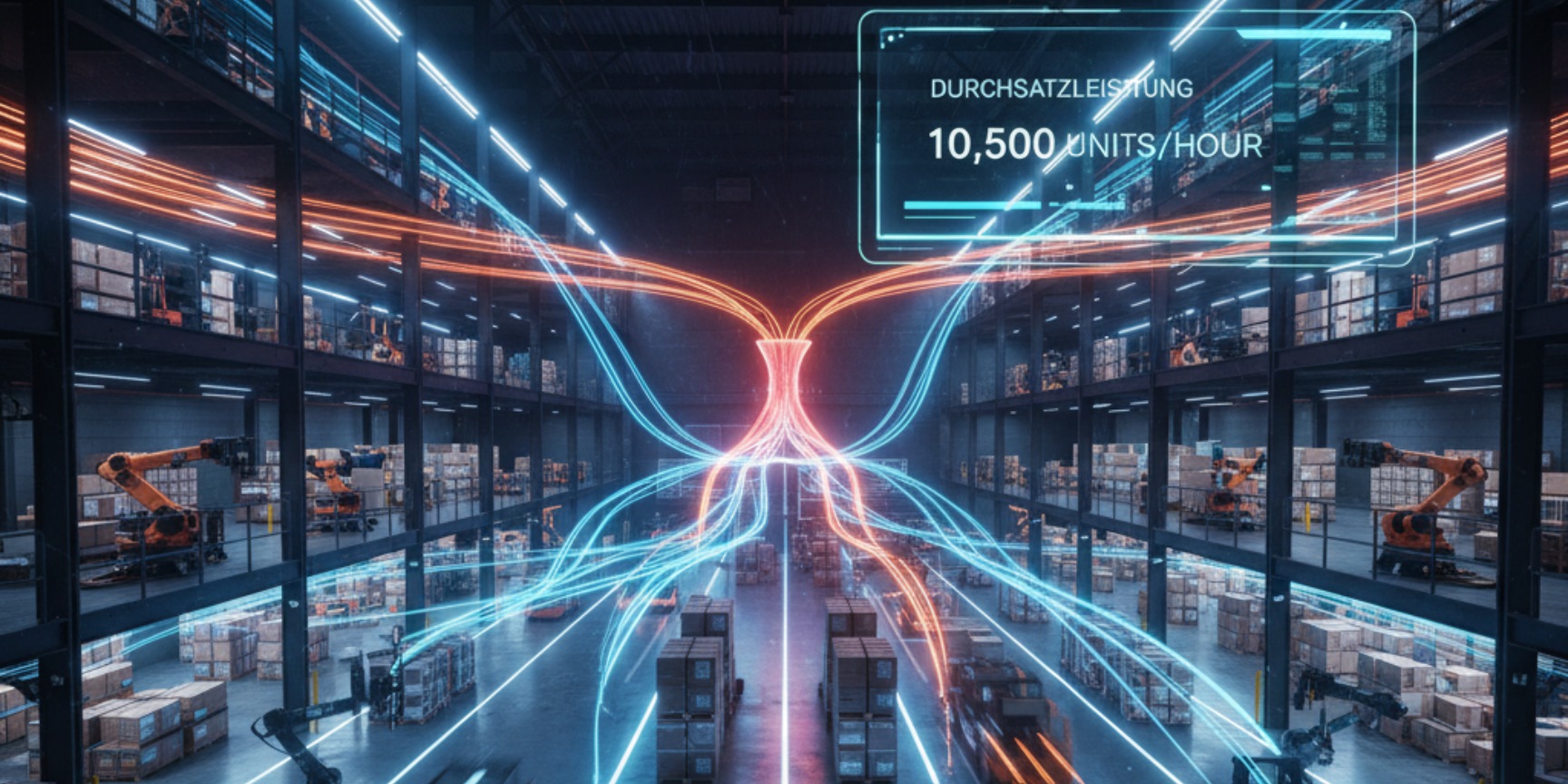
Answer: In warehouse logistics, throughput is the central key figure for evaluating performance. It determines how quickly goods can be received, stored, picked and prepared for shipping. A high-throughput warehouse can process more orders in less time, which directly affects customer satisfaction and profitability.
A distinction is made between different areas:
- Goods receipt: The number of pallets or items that are unloaded, inspected and posted to the system per hour.
- Putaway: The speed at which goods are moved from the receiving area to their designated locations.
- Picking: The number of picks (picks) or order lines that an employee or automated system creates per hour. This is often the most critical and cost-intensive area.
- Outgoing goods: The volume of shipments prepared for dispatch and loaded per day.
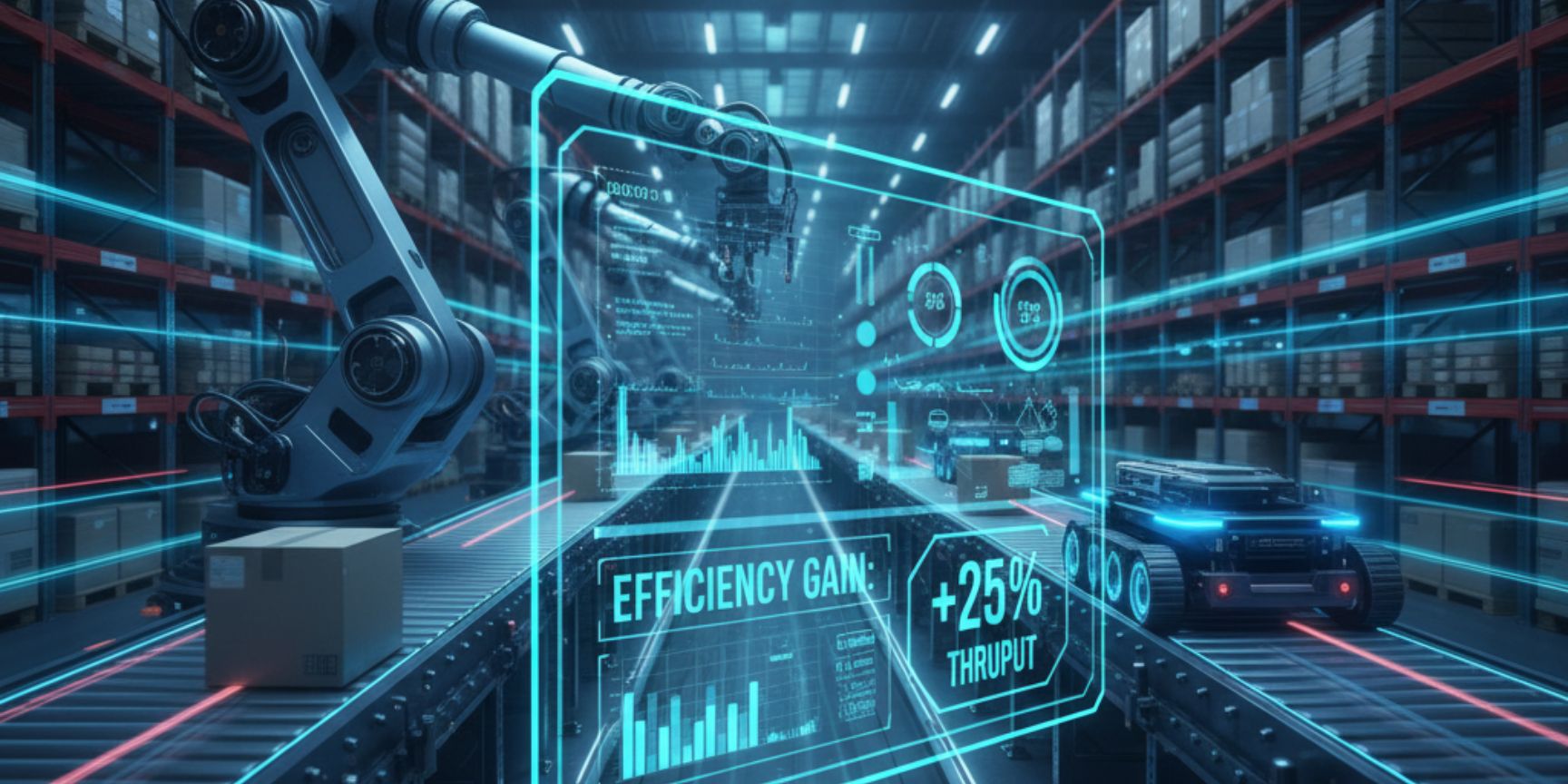
Modern warehouses strive to increase throughput through automation. For example, automated guided vehicles (AGVs) can speed up the transport of goods and increase throughput by 20-30% compared to manual processes .
Throughput in contract logistics
Question: What are the special features for throughput in contract logistics?
Answer:Contract logistics goes beyond just warehousing and transport services and includes complex, individualized logistics solutions for a customer, often over a longer contract period. Here, the throughput becomes a contractually agreed service level agreement (SLA).
The challenge is that the customer's requirements can fluctuate greatly (seasonal peaks, promotions). A contract logistics provider must therefore be able to flexibly scale its resources – personnel, technology and space – in order to guarantee the agreed throughput at all times. Failure to reach them can lead to contractual penalties. The planning of throughput capacity is therefore not only an operational obligation, but also a strategic and contractual obligation. One example is e-commerce processing, where 5,000 parcels may be shipped on a normal day, but up to 25,000 parcels per day have to be handled during the holiday season.
The role of logistics real estate
Question: How does the property itself influence the possible throughput?
Answer: The logistics property or hall is the physical foundation for throughput performance. Their design and equipment determine the maximum possible efficiency. The following factors are decisive:
- Layout and space efficiency: An intelligent layout with short distances, clear processes and optimal use of space is essential. Poor planning leads to traffic jams and bottlenecks.
- Number and type of gates: The number of ramp gates (for trucks) and their equipment (e.g. with hydraulic dock levellers) limit the throughput in incoming and outgoing goods. A ratio of one door per 800–1,000 m² of storage space is considered a good guideline.
- Hall height: Higher halls (today often 12 m lower edge truss or more) enable a higher storage density due to high racks and thus more potential transshipment points on the same floor space.
- Soil conditions: A highly resilient and extremely flat floor is the prerequisite for the use of modern, fast industrial trucks and automation technology. Bumps force slower travel speeds and reduce throughput.
A property that is not designed to meet the user's specific throughput requirements will always remain a limiting factor.
Methods to increase throughput
Question: What concrete measures are there to increase throughput?
Answer: Optimizing throughput is a continuous process. Proven approaches are:
- Process analysis and optimization: Identification of bottlenecks using methods such as value stream mapping. Often it is small administrative hurdles or poorly organized handovers that slow down the flow.
- Automation and technology: Use of conveyor technology, automatic small parts warehouses, sorter systems or robots (e.g. for order picking). A sorter can increase the throughput in outgoing goods from a few hundred to over 10,000 units per hour.
- Employee training and motivation: Well-trained and motivated employees work more efficiently and carefully. Performance-based incentive systems can further promote throughput.
- Data analysis and software: The use of a modern warehouse management system (WMS) is essential. It optimizes the storage strategy (e.g. ABC analysis), the routing during picking and ensures transparent control of all processes in real time.
Conclusion: Throughput as the nervous system of logistics
Throughput is much more than just an abstract metric. It is the heartbeat of operational logistics and a decisive factor for profitability. From the physical nature of the logistics property to strategic planning in contract logistics to operational excellence in the warehouse – all areas must mesh optimally to ensure maximum and at the same time flexible throughput and thus meet the requirements of the modern market.