




The LIFO (Last-In, First-Out) in warehouse
Table of Contents
- Logistics chain management in transition: From 1PL to 5PL – strategies, opportunities and challenges for modern companies
- Differences and areas of application of the individual PL levels
- Criteria for selecting the right model
- Advantages of integrated logistics chain management solutions
- Future-proof logistics strategies for entrepreneurs
- Regional Differences in Rental and Operating Costs
- Technological Equipment and Automation in Warehouses
- Sustainability and Energy Efficiency in the Modern Warehouse
- What are the security aspects of a warehouse?
- Key Success Factors for Entrepreneurs in Choosing the Optimal Warehouse
The LIFO (Last-In, First-Out) Principle: A Guide to Warehouse Logistics
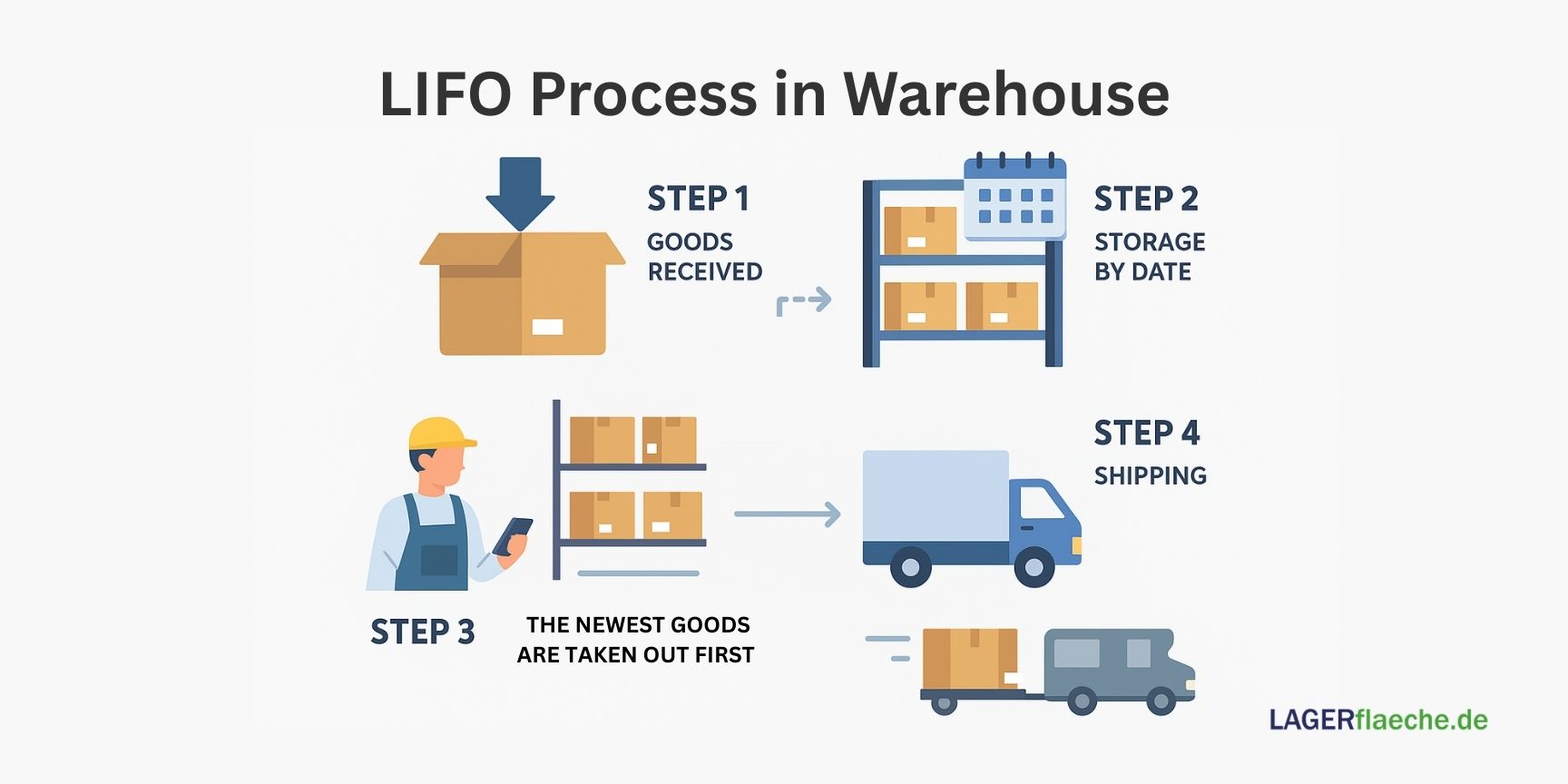
The LIFO principle is a widely used method for organizing and evaluating inventories. In contrast to the FIFO principle (first-in, first-out), the last stored goods are the first to be removed. This approach has a significant impact on the design of warehouse processes and the requirements for the structural conditions of a logistics hall. For companies, understanding the pros and cons is crucial to choosing the right warehouse strategy for their specific products and processes.
Basics and areas of application of the LIFO method
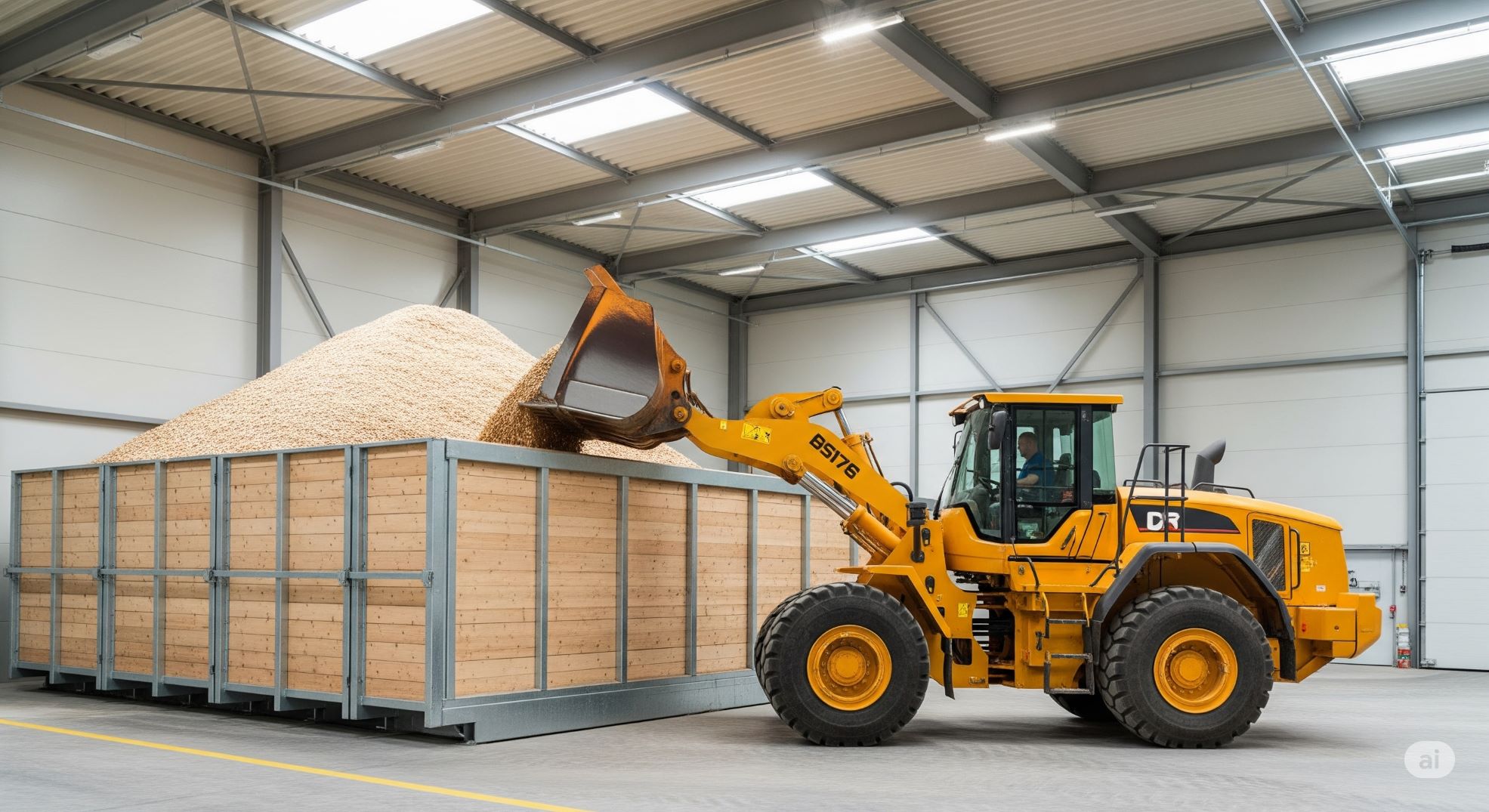
In the last-in, first-out process, items that were last added to the inventory are the first to be removed for sale or production. You can think of it like a stack of plates: the plate that was last placed on top is also the first to be taken down again.
This method is particularly suitable for homogeneous goods or bulk goods where the individual batches or deliveries are indistinguishable or where storage time does not play a role in product quality. Typical application examples are building materials such as sand, gravel or bricks, but also certain types of coal, glass or other raw materials. However, the LIFO principle is unsuitable for products with a best-before date (BBD) or those that quickly lose value or become technically obsolete.
Storage Techniques and Shelving Systems for LIFO Storage
The practical implementation of LIFO requires special storage techniques to ensure efficient access while making the most of the storage space. Since only one side of the shelf or stack is used, this is referred to as compact storage. Common systems are:
- Drive-in racks: Forklifts drive directly into the racking channels to place pallets one after the other. The pallet that was last moved in is the first to be removed again. This enables an extremely high storage density.
- Satellite racking (shuttle systems): Here, a remote-controlled satellite (shuttle) takes over the storage and retrieval of the pallets within the racking channel. The forklift only sets the shuttle down at the beginning of the channel, which further increases efficiency and safety.
- Block storage: The simplest form of LIFO storage, in which pallets or lattice boxes are stacked directly on the floor on top of each other and one after the other. This is cost-effective, but requires a high level of stability of the load units.
Advantages of the LIFO method in practice
The biggest advantage of the LIFO principle is the outstanding use of space and space. Since no aisles are needed between the racks for access from both sides, the storage capacity of a hall can be increased by up to 90% compared to FIFO systems (e.g. with pallet racks). This directly translates into lower costs per storage space and makes LIFO particularly attractive in regions with high real estate prices. In addition, the distances for the industrial trucks are often shorter, which can improve handling performance.
Disadvantages and operational challenges
Despite the efficiency advantages, LIFO also has disadvantages. Direct access is only possible to the last stored unit. If an older batch has to be accessed, this requires time-consuming relocation of the entire channel contents, which is time-consuming and costly. In addition, if stored for a longer period of time, there is a risk that the "lower" stocks will become obsolete, lose quality or be damaged. Exact batch tracking is difficult, which can be an exclusion criterion in industries with strict regulatory requirements (e.g. pharmaceuticals).
Requirements for the logistics property and the hall
A logistics property that is to be used for LIFO processes must meet certain criteria. Soil condition and load-bearing capacity are crucial, especially in high-density block storage. The hall should have a sufficient height to make full use of vertical storage systems. In the case of drive-in racks, good and uniform lighting within the rack channels is also important for occupational safety. The arrangement of the gates (often on only one side of the hall for incoming and outgoing goods) and the design of the circulation areas must be coordinated with the concentrated handling processes.
Accounting effects of the LIFO procedure
From an accounting point of view, LIFO also has an important function. According to the German Commercial Code (HGB), the LIFO procedure is permissible as a valuation simplification procedure. In phases of rising prices (inflation), the use of LIFO leads to the fact that the last (and most expensive) purchased goods are consumed first. This results in a higher reported cost of goods sold and thus a lower profit and a lower tax burden. The older and cheaper stocks remaining in the warehouse lead to a hidden reserve in the balance sheet. According to the International Financial Reporting Standards (IFRS), however, the LIFO method is not permissible, as it is not intended to give a true and fair view of the financial position.