


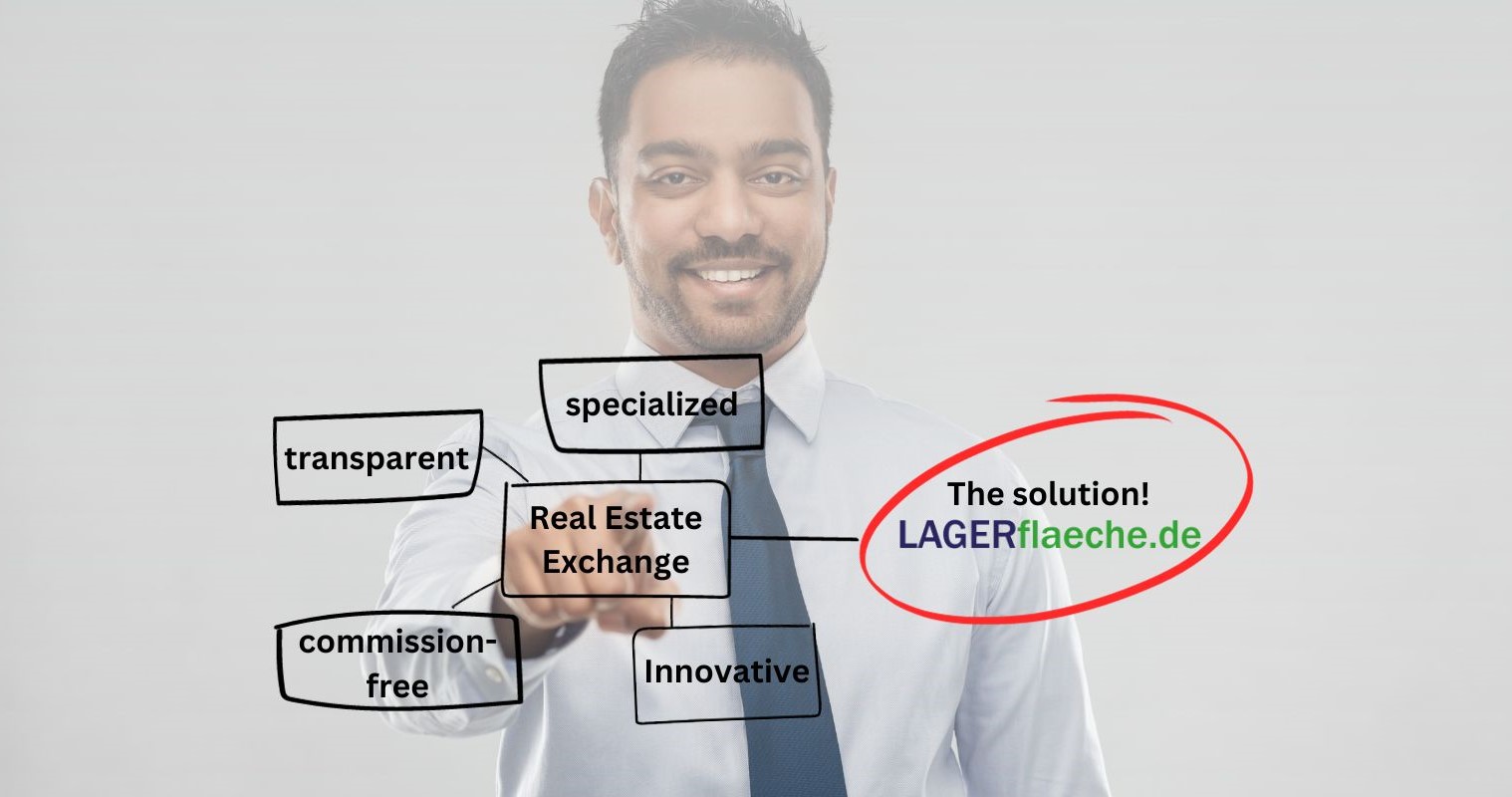

Online portals-Specialised in logistics real estate
Table of contents
- Evolution: From a general marketplace to a niche portal
- The strategic added value of focused logistics portals
- Key functions: What is important in a specialist portal
- Focus on the target groups: An ecosystem for logistics
- The market for logistics real estate: dynamics and challenges
- Conclusion and outlook: The central role of specialists
Evolution: From a general marketplace to a niche portal
For a long time, the search for suitable warehouse and logistics space was a fragmented and non-transparent process, dominated by local brokerage networks and general real estate platforms. Although these general portals offer a wide range of properties, they quickly reach their limits when it comes to the specific requirements of logistics. Filter options are often limited to simple criteria such as area and price. Detailed logistical key figures such as floor load capacity, hall height, number of ramp gates or the type of delivery (side/rear) are usually missing. This information gap led to inefficient search processes and many unqualified queries. In response to this need, specialized Internet portals have developed that concentrate exclusively on the logistics and industrial real estate segment, thus bridging the gap between the specific requirements of the seekers and the offers of the providers.

The strategic added value of focused logistics portals
Specialised online portals offer a considerable strategic advantage for both suppliers and buyers of logistics space. For seekers (companies from logistics, production, trade):
- Efficiency: Precise search filters enable quick identification of suitable properties. Criteria such as ceiling height (clear height), column grid, floor load capacity in t/m², existing crane runways or temperature control options (e.g. for refrigerated logistics) are standard.
- Market transparency: A bundled presentation of the available supply in a specific region improves market overview and comparability.
- Quality of information: The exposés are tailored to logistical needs and contain essential data that is missing on general portals.
For providers (owners, project developers, brokers):
- Targeted approach: The offers are presented to a highly qualified target group, which minimizes the number of irrelevant inquiries.
- Reduced wastage: Marketing budgets are used more effectively as the platform is used exclusively by industry players.
- Professional presentation: Structured data collection ensures that all relevant logistical features of the property are communicated clearly and professionally.
Key functions: What is important in a specialist portal
A high-quality specialist portal for logistics real estate is characterised by a well-thought-out functionality that goes beyond a mere listing of properties. Must-have features include:
- Detailed search mask: In addition to the criteria already mentioned, filters for the type of property (e.g. transshipment hall, distribution centre, high-bay warehouse), equipment (e.g. sprinkler system, shelving systems) and transport connections (proximity to motorways, container terminals, airports) are also decisive.
- Geodata and map integration: An interactive map that shows not only the location but also the logistical infrastructure in the surrounding area is essential for site assessment.
- Qualitative content offering: A glossary that explains technical terms, market reports that analyze current developments, and advice texts offer the user real added value and underline the competence of the portal.
- Direct contact options: Simple and direct ways to contact the provider are essential for a quick and straightforward process.
Focus on the target groups: An ecosystem for logistics
Special portals are not only used for pure mediation, but also function as a digital ecosystem for a large number of players. These include:
- Logistics service providers and freight forwarders: The core of the customers who need operational space for warehousing, contract logistics or transshipment.
- Manufacturing companies: Need storage space for raw materials, semi-finished and finished goods, often with very specific requirements for storage technology.
- Retail companies (e-commerce & brick-and-mortar): Look for fulfillment centers and distribution warehouses to optimize their supply chains.
- Project developers and investors: Use the platforms for market analysis, to identify trends and to market their newly developed or revitalised properties.
- Portfolio holders and asset managers: rely on the portals for the efficient letting of their portfolios and for minimizing vacancies.
The market for logistics real estate: dynamics and challenges
The logistics real estate market is highly dynamic. Drivers such as booming e-commerce, globalization and the growing need for resilient supply chains have led to a sharp increase in demand in recent years. At the same time, a shortage of space in prime locations is leading to rising rents and intense competition. In this environment, specialized portals help to react quickly to market changes. They enable companies to find space available at short notice (e.g. for seasonal peaks) or to make long-term strategic location decisions on the basis of a well-founded database.

Conclusion and outlook: The central role of specialists
The complexity and specific requirements of the logistics real estate market make specialized online portals indispensable. They offer the necessary level of detail, efficiency and target group orientation that general platforms cannot provide. Providers such as www.lagerflaeche.de have established themselves as central points of contact that professionalize the market and make it more transparent. Future developments are expected to rely even more heavily on data-driven services, such as AI-based matching of supply and demand, automated location assessments and the integration of sustainability criteria (e.g. ESG compliance) as fixed search parameters. For all players in warehouse logistics, such portals are therefore not only a tool, but a strategic partner in the competition.