




Commercial brokers, brokers in logistics
Table of contents
- What is a commercial broker for logistics real estate?
- The core tasks in logistics real estate brokerage
- Change in the job profile: From mediator to strategic consultant
- Who uses the services of a specialized broker?
- The concrete added value: Why a commercial broker is indispensable
- How much does a commercial broker cost? The broker's commission explained
- Future prospects: Digitalisation and sustainability as drivers
What is a commercial broker for logistics real estate?
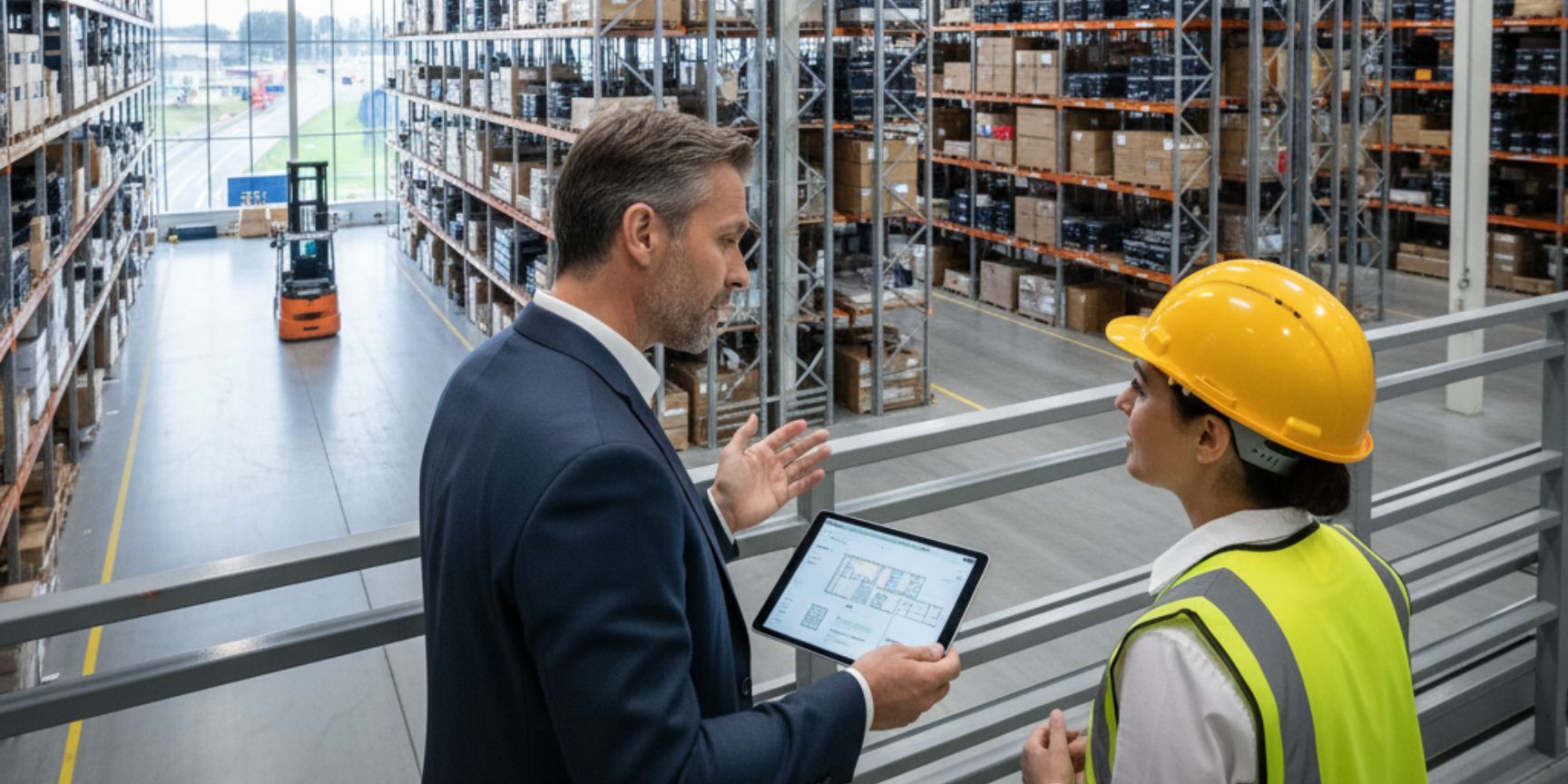
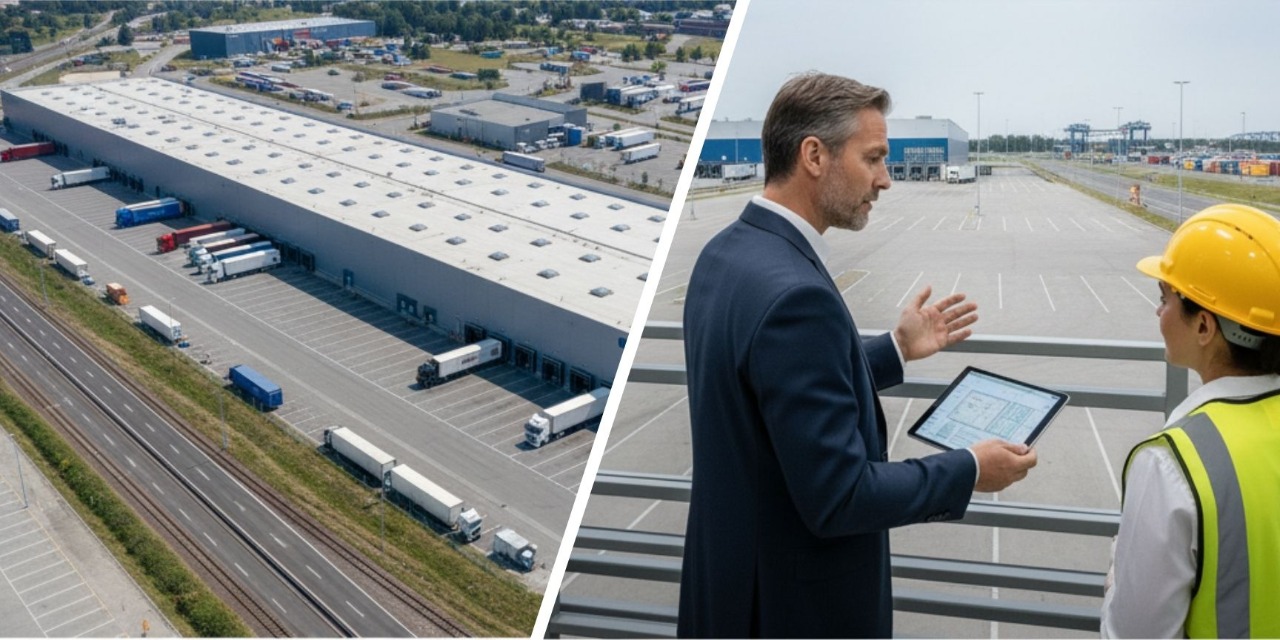
A commercial broker is a specialized real estate expert who focuses on the brokerage of commercially used real estate. In the context of warehouse logistics, he acts as a specialist for the asset class of logistics real estate. Unlike a real estate agent for residential real estate, he deals exclusively with properties that are used for business purposes. These primarily include warehouses and logistics halls, distribution centres, cross-docks and production facilities. His core competence lies not only in the pure bringing together of prospective tenants or buyers and owners, but also in the in-depth knowledge of the market, the operational requirements and the technical specifics of these special properties. He understands the key figures such as floor load capacity, ceiling height, number of ramp gates or the connection to trimodal transport routes (road, rail, water).
The core tasks in logistics real estate brokerage
The activity of a commercial broker goes far beyond the mere inspection and includes a complex service process that is oriented towards the needs of his clients:
- Needs analysis (profiling): In the first step, the broker records the requirements of the searching company in detail. Does the customer need a cold store for pharmaceutical products, a hazardous materials warehouse or an e-commerce returns center? How many pallet spaces are required and what automation technology should be implemented?
- Market screening and location analysis: Based on the profile, the broker searches the market for suitable properties. He uses professional databases, his personal network and often accesses off-market offers that are not publicly available. In addition, it evaluates locations according to their logistical quality (e.g. proximity to motorway junctions, parcel hubs or container terminals).
- Property valuation and advice: The broker evaluates the properties offered not only according to the price, but also according to their functionality, efficiency and future viability (third-party usability). He advises his customer objectively about advantages and disadvantages and examines the structural conditions.
- Contract negotiation and conclusion: He acts as a moderator and negotiator between the parties. His goal is to achieve a balanced rental or purchase agreement that optimally protects the interests of his client and avoids legal pitfalls.
Change in the job profile: From mediator to strategic consultant
The role of the commercial broker has changed dramatically over the past two decades. In the past, his business model was mainly based on an information advantage. He knew which hall was empty and was able to monetize this knowledge advantage.
Due to the digitization and transparency of online portals, this gatekeeper function has largely disappeared. Today, the modern logistics broker is a highly specialized consultant. His value lies in interpreting data, analyzing supply chains, and understanding complex business processes. They need to understand the impact of trends such as e-commerce, urbanization (last-mile logistics) or sustainability (ESG criteria) on real estate requirements. Instead of just brokering space, he offers strategic advice on how to optimize logistics networks and helps companies find the right property as an integral part of their value chain.
Who uses the services of a specialized broker?
The expertise of a commercial broker is used by both sides of the market, although the motives are different:
- User side (tenants & buyers): These are companies from a wide range of industries. These include third-party logistics (3PL) service providers, retail and e-commerce companies that need storage capacity for their goods, and manufacturing companies that need to store raw materials or distribute finished goods. They use the broker to save time, gain market access and benefit from their negotiation expertise.
- Owner side (landlords & sellers): This page includes project developers, institutional investors such as funds or insurance companies and private owners. They hire the estate agent to find a solvent and suitable user for their property. The broker helps with market-driven pricing, develops marketing strategies and carries out the entire brokerage process professionally.
The concrete added value: Why a commercial broker is indispensable
Hiring a specialized broker is not just a question of cost, but a strategic investment. The value for companies lies in several areas:
- Efficiency: The search for the right logistics property is extremely time-consuming. The broker takes care of this process and allows the company to focus on its core business.
- Market access: He knows not only the publicly advertised properties, but also properties that are discreetly offered "off-market" or are still in the planning phase.
- Negotiation skills: Through his daily practice, he knows the usual market rental prices, incentives (e.g. rent-free periods) and contract clauses. This often leads to significantly better conditions, which more than justify his commission.
- Risk minimization: It helps to avoid costly mistakes in site or property selection that could disrupt operations in the long term.
How much does a commercial broker cost? The broker's commission explained
The service of a commercial broker is usually remunerated on a pure performance basis. This means that a payment, the so-called commission or brokerage fee, is only due if a rental or purchase contract is successfully concluded through the activity of the broker. In the commercial real estate sector, the principle predominantly applies: Whoever commissions (appoints) the broker also pays him. The exact amount and payment modalities are transparently regulated in advance in a brokerage contract.
The calculation of the commission differs depending on the type of transaction:
- In the case of renting: The commission is usually based on the monthly net cold rent. In Germany, a brokerage fee of 2 to 3 net monthly rents plus the statutory VAT is customary in Germany. In the case of contracts with long terms (e.g. over 10 years) or special agreements, deviating regulations may also be made. In most cases, the commission is borne by the owner (landlord), as he instructs the broker to find a suitable tenant for his property.
- When selling: Here, the commission is calculated as a percentage of the notarized purchase price . The amount of the commission is freely negotiable, but depending on the region and the value of the property, it is usually in a corridor of 3% to 7% of the purchase price, also plus VAT. Depending on the agreement in the brokerage contract, the commission can be borne in equal parts by the seller alone, by the buyer alone or by both parties.
Investing in a broker's commission is justified by the benefits it achieves, such as time savings, access to a wider market, and professional negotiation, which often leads to better contract terms.
Future prospects: Digitalisation and sustainability as drivers
The future of commercial brokerage is shaped by two megatrends: PropTech (Property Technology) and ESG (Environmental, Social, Governance). Digital tools such as drones for site analyses, virtual reality tours or AI-supported site assessments are becoming standard equipment. At the same time, sustainability aspects are becoming increasingly important. The broker must be able to provide customers with sound advice on the advantages of green buildings (e.g. DGNB or BREEAM certification), energy efficiency and the installation of photovoltaic systems. Specialization will continue to increase, for example in brokers for temperature-controlled logistics or urban city hubs.