




City Logistics - What's behind it?
Table of Contents
- What exactly does the term city logistics mean?
- What are the key challenges that characterize modern city logistics?
- What role do warehouse and contract logistics play in this concept?
- How is city logistics changing the requirements for logistics properties?
- What innovative solutions will shape the future?
- What is the biggest lever for successful city logistics?
What exactly does the term city logistics mean?
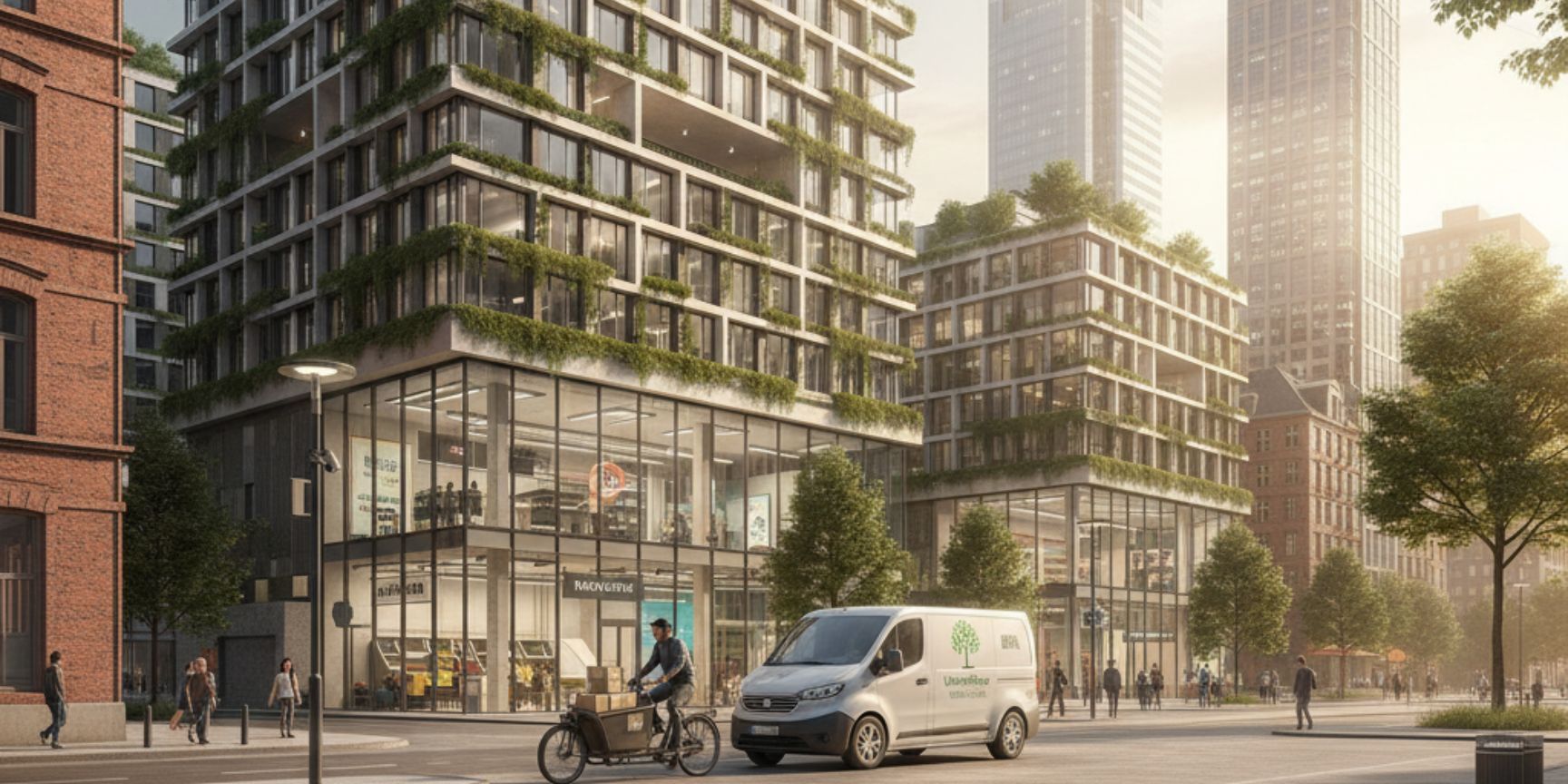
City logistics, often referred to as urban commercial transport or urban logistics, refers to the planning, management, implementation and control of all goods and commodities movements in urban areas. The primary goal is to make freight transport in cities more efficient, environmentally friendly and socially acceptable. It encompasses much more than just pure transport from A to B. Rather, it is an integrated concept that considers the entire value chain from procurement to storage and picking to final delivery on the "last mile". In view of the booming e-commerce and increasing urbanization, city logistics has become a critical success factor for retail companies, CEP services (courier, express and parcel services) and the manufacturing industry.
What are the key challenges that characterize modern city logistics?
Logistics in urban areas is confronted with a number of specific and complex challenges:
- Traffic gridlock and emissions: Urban infrastructures are often at the limit of their capacity. Increasing delivery traffic leads to traffic jams, noise and high levels of CO₂, nitrogen oxides and particulate matter.
- Last mile costs: Delivery to the end customer is the most expensive and inefficient part of the entire supply chain. It can account for up to 50% of the total transport costs.
- Regulatory hurdles: Cities are increasingly introducing access restrictions (e.g. environmental zones, diesel driving bans) and time windows for delivery, which makes it difficult to plan.
- Customer requirements: The customer expects ever faster, often even same-day delivery, high flexibility in delivery options and at the same time low or no shipping costs.
- Shortage of space: Suitable and affordable space for logistics properties such as transshipment points or depots is extremely rare in city centres.
What role do warehouse and contract logistics play in this concept?
Warehouse logistics is the backbone of any functioning city logistics. Without decentralised storage and transhipment points close to the city, efficient and fast delivery to city centres would be unthinkable. Here, the focus is shifting from large central warehouses on greenfield sites to smaller, multifunctional properties on the outskirts of cities or even in urban districts.
Question: Why are micro-hubs and urban depots so important?
Answer: Micro-hubs are small, inner-city logistics areas that serve as a transshipment point for the last mile. Here, shipments are delivered by larger trucks, consolidated and then finely distributed using environmentally friendly vehicles such as cargo bikes or electric transporters. This significantly reduces the number of truck journeys in the city centre. Contract logistics goes one step further here: An external service provider not only takes care of storage and transport, but also complex value-added services such as returns management, picking, packaging or even the assembly of products directly in the depot near the city. This enables maximum flexibility and needs-based, timely supply to retailers or end customers.
How is city logistics changing the requirements for logistics properties?
The classic, large-scale warehouse with a height of 12 meters and dozens of truck gates is unsuitable for city logistics. The market for logistics real estate in urban areas is becoming very differentiated. Innovative and flexible concepts are in demand:
- Multifunctional properties: Properties that not only offer storage space, but also integrate offices, showrooms or pick-up points.
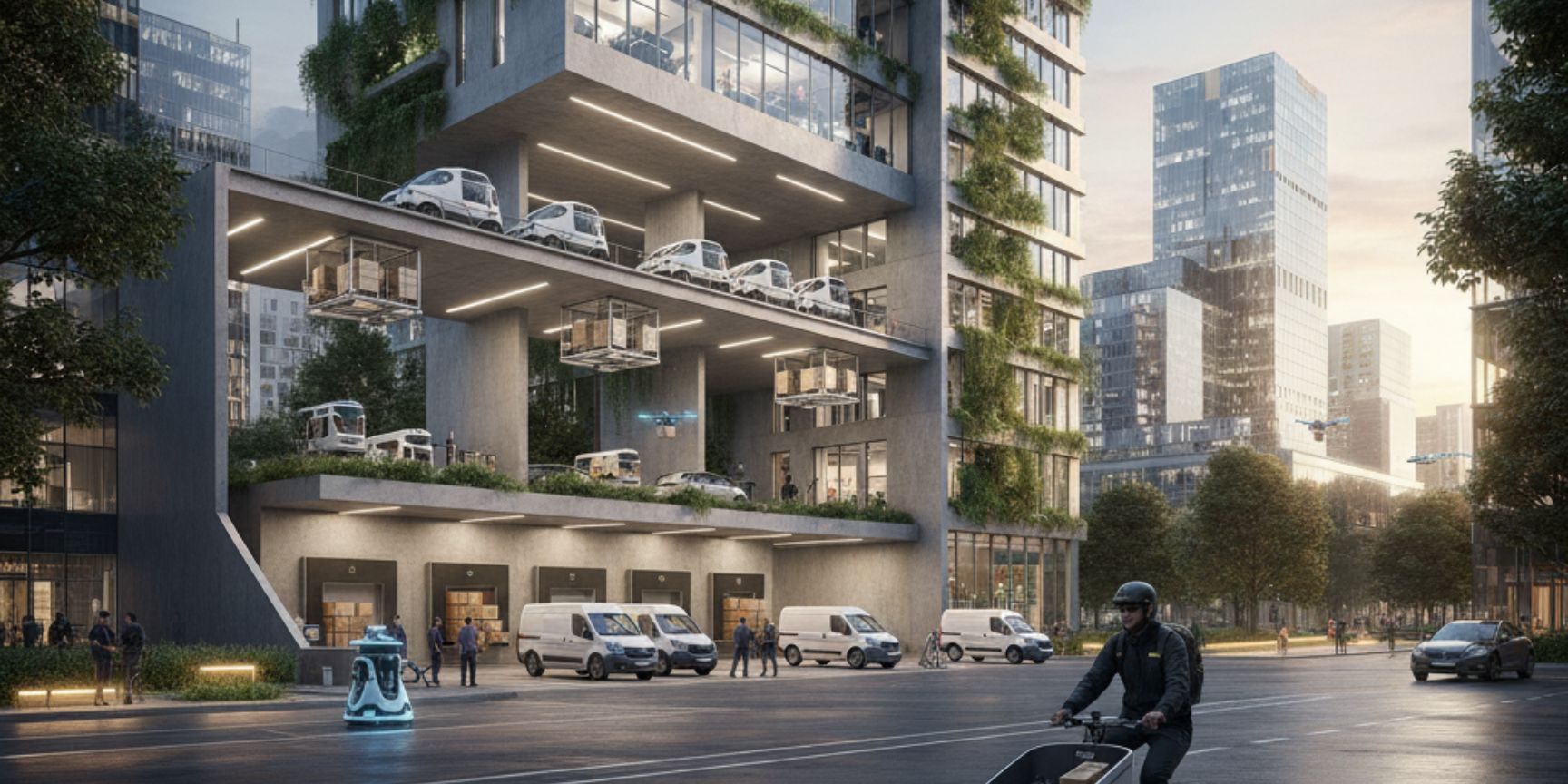
- Vertical logistics: In view of high land prices, construction is being carried out upwards. Multi-level logistics properties ("multi-level warehouses") are already standard in Asia and are increasingly coming to Europe.
- Conversion and revitalisation: Existing inner-city areas such as old multi-storey car parks, supermarkets or industrial wastelands are being converted into logistics hubs. These brownfield developments are sustainable and use existing infrastructure.
- Location, location, location: The decisive criteria are proximity to the end customers and excellent connections to the transport infrastructure, especially public transport for employees.
What innovative solutions will shape the future?
The future of city logistics lies in intelligent networking and automation. Cooperative approaches, in which different logistics service providers share a common infrastructure (e.g. parcel stations open to providers or joint micro-depots), are gaining in importance. Digitalization is the key to increasing efficiency: Intelligent route planning systems optimize routes in real time, taking traffic data into account, and IoT sensors (Internet of Things) enable seamless shipment tracking. Autonomous delivery robots and drones will continue to revolutionize last-mile delivery in the future, even if their widespread use still has to overcome regulatory and technical hurdles.
What is the biggest lever for successful city logistics?
Question: What is crucial for city logistics to really work?
Answer: The biggest lever is not in a single technology, but in collaboration. Successful city logistics can only succeed in the interaction of business, municipalities and research. Cities must create the regulatory framework for new concepts, for example by designating charging zones for electric vehicles or simplifying approval procedures for new logistics properties. Logistics companies must be willing to invest in sustainable fleets and innovative technologies and to collaborate across company boundaries. Only a holistic approach that combines infrastructure, technology and cooperation can secure the supply of cities in the long term and at the same time make them more livable.