




Cross-docking in logistics
Table of Contents
- What is cross-docking and what are the principles?
- Historical development and relevance
- What are the different cross-docking models?
- What is the most important function of a cross-docking warehouse?
- What are the risks and typical stumbling blocks when operating a cross-docking warehouse?
- What are the technological requirements for successful cross-docking?
- Cross docking in practice
What is Cross-docking and What are the Principles?
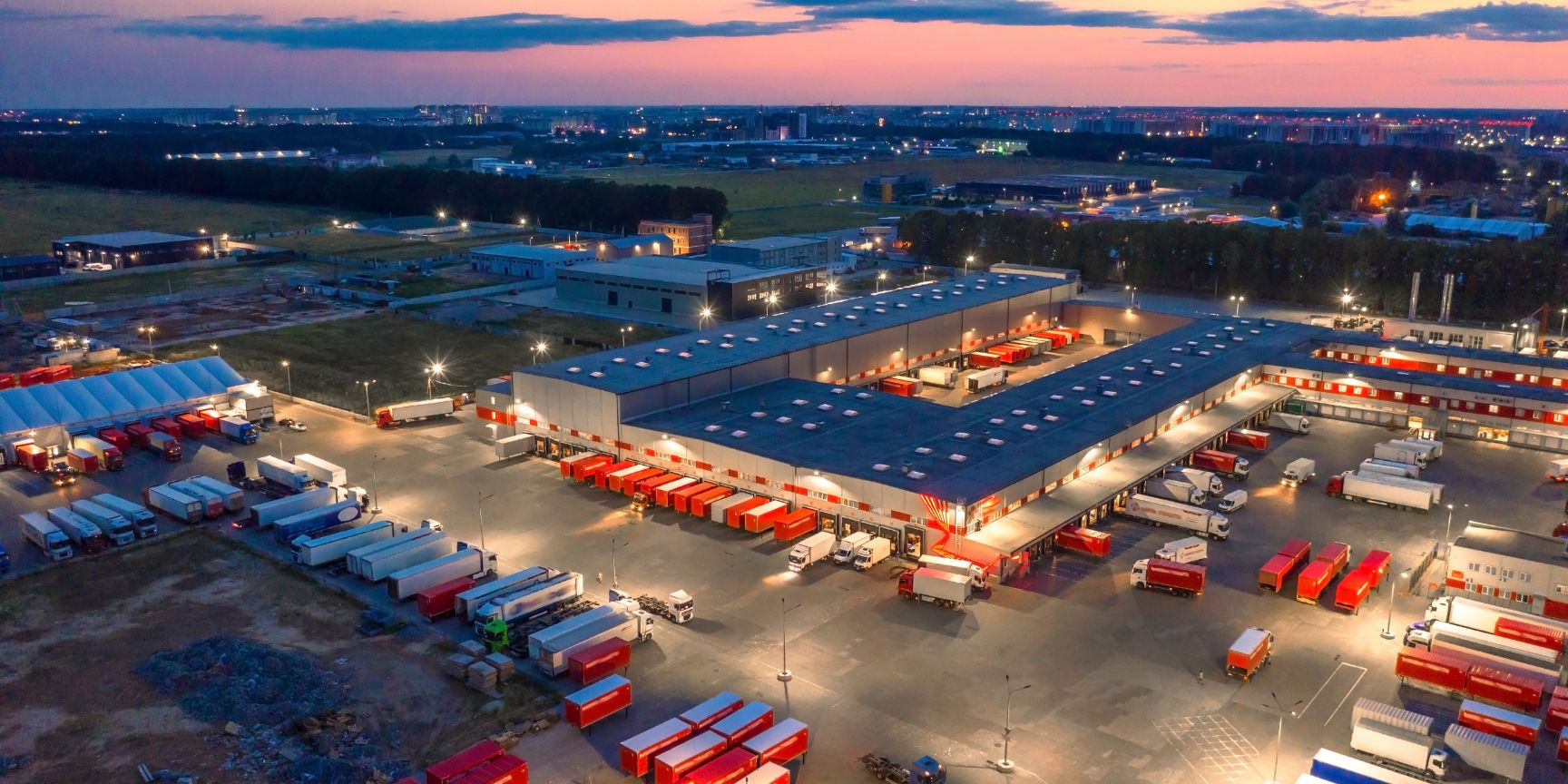
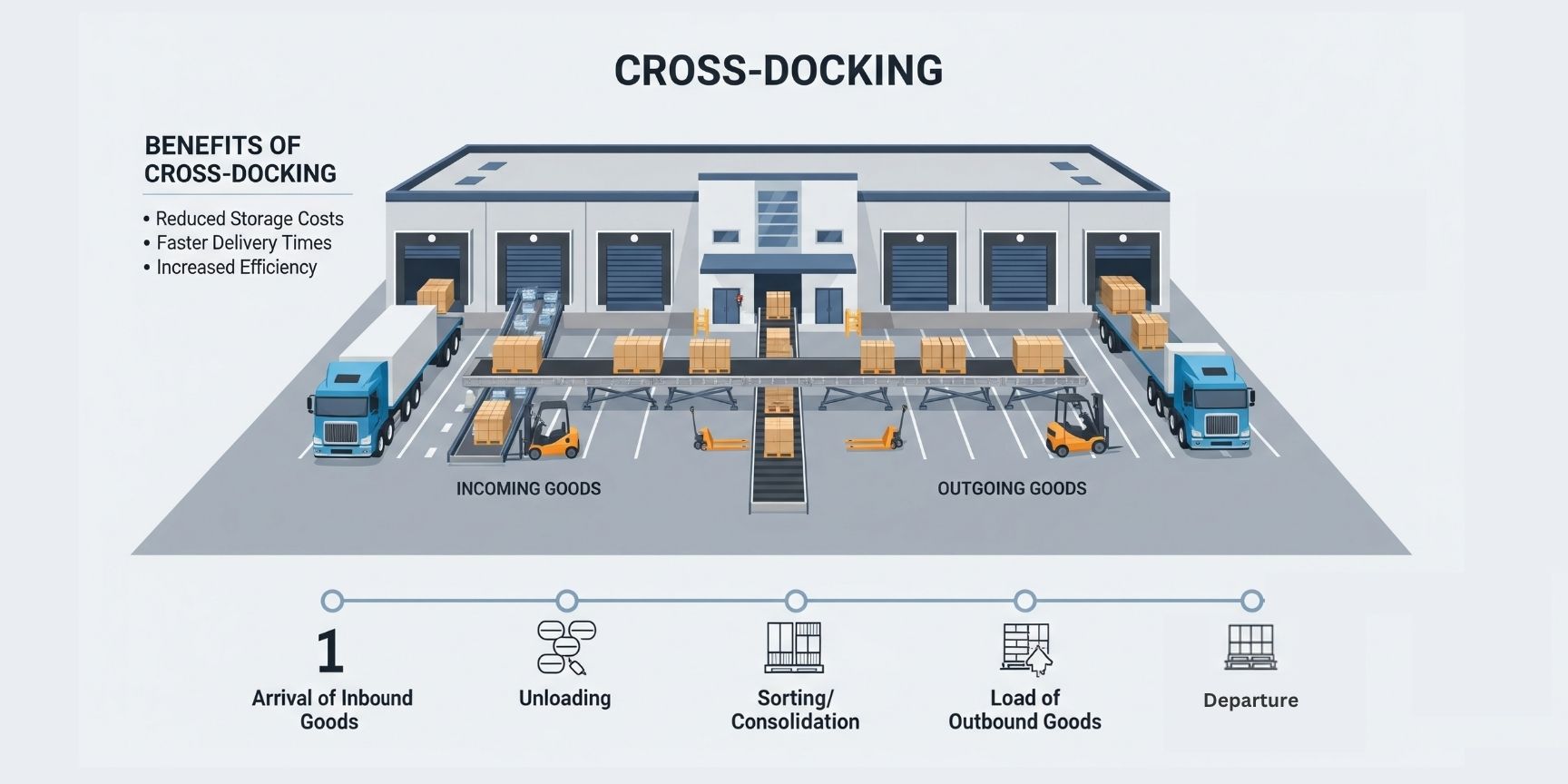
Cross-docking is a logistics concept in which goods go directly from incoming goods to dispatch without prolonged storage. This reduces storage costs, shortens throughput times and increases the flexibility of the supply chain. Different models allow individual adaptation to market requirements. Modern IT systems such as SAP ensure transparent control and automation of processes. The prerequisites for success are close coordination between suppliers, logistics service providers and internal management as well as continuous process optimization. Cross-docking increases efficiency, sustainability and competitiveness in dynamic markets through faster flows of goods, lower costs and improved customer satisfaction.
Historical development and relevance
Cross-docking was born out of the need to make supply chains more efficient and reduce storage costs. Since the 1930s, this method has accelerated the handling of goods in distribution centers and gained traction with global supply chains and just-in-time processes. Especially in the retail, automotive and consumer goods industries, cross-docking optimizes logistical processes, reduces costs and increases flexibility in the face of fluctuating demand. Modern systems use real-time monitoring, automated picking, and digital platforms to integrate logistics partners, minimizing errors and increasing customer satisfaction. Various models allow individual adaptation to industry-specific requirements.
What are the Different Cross-docking Models?
Two-step cross-docking involves collecting, sorting, and, if necessary, repacking goods in the warehouse before distributing them to the final recipients. It is particularly suitable for complex orders or when products from different sources need to be merged. In contrast to single-stage cross-docking, in which the goods arrive pre-picked and are only handled, the two-stage model allows for more flexibility and individual compositions. The choice of the right model depends on the type of product, the number of suppliers and the requirements for speed and flexibility. In addition to single-stage and two-stage cross-docking, there are specialized models such as transshipment and consolidation, which are primarily used to optimize international transports or bundle several deliveries. Successful cross-docking requires close cooperation between purchasing, logistics and IT as well as the use of modern systems for process control and automation.
What is the most Important Function of a Cross-docking Warehouse?
Cross-docking reduces storage times and costs by handling and transporting goods directly after receipt. This minimises inventories, reduces capital commitment and expenditure on space, energy and personnel. Close coordination between suppliers, logistics and transport avoids idle times and makes optimal use of transshipment points, which creates flexibility, especially with high throughput. Modern IT systems ensure transparency, automate processes and increase reliability in customer service. In addition, cross-docking helps to reduce CO₂ emissions by reducing transport distances and promotes sustainable logistics.
What are the Risks and Typical Stumbling Blocks when Operating a Cross-docking Warehouse?
Cross docking requires careful planning, as it relies heavily on on-time deliveries and smooth communication. Delays or errors in picking can lead to disruptions and customer complaints. In addition, powerful IT systems are necessary to map all processes seamlessly and avoid information loss. Flexibility in management and well-trained employees are crucial to cope with fluctuations and short-term changes. If these challenges are addressed at an early stage, cross-docking can fully develop its efficiency potential.
What are the Technological Requirements for Successful Cross-docking?
Cross-docking requires modern IT systems and precise process synchronization to efficiently control goods from delivery to shipping. Powerful warehouse management systems (WMS), automation technologies such as conveyor technology and mobile devices, as well as big data and artificial intelligence improve transparency, control and responsiveness. The integration of all partners via digital interfaces such as EDI or APIs ensures a smooth exchange of information and minimizes errors. Networked systems enable flexible, transparent and timely handling of complex supply chains in cross-docking.
Cross-docking in Practice
The prerequisite for success is close cooperation between all parties involved as well as modern IT systems for process control. Risks arise from delays and communication problems. Technologically, powerful warehouse management systems and automation are important. Cross-docking increases efficiency and sustainability through faster flows of goods and lower inventories. This means that cross-docking can also be a competitive advantage in your company.