




Sustainability in Warehouse Logistics
Table of Contents
- What does Sustainability Encompass?
- Sustainability as a Competitive Advantage in Warehouse Logistics
- How can Logistics be made more Sustainable?
- What are some Examples of Sustainability in Logistics?
- How do Modern Technologies support Sustainability?
- Value-based Leadership as a Catalyst for Sustainable Change
- Social Commitment as an Expression of Active Responsibility
What does Sustainability Encompass?
Sustainability encompasses much more than just environmental protection. It includes ecological, economic, and social aspects. For entrepreneurs, this means conserving resources, reducing emissions, creating fair working conditions, and acting economically in the long term. The goal is to achieve a balance between economic success, social responsibility, and environmental protection—and thus to make one's own company fit for the future.
Sustainability in warehouse logistics is the key to future security, growth, and competitive advantage: Companies that consistently implement sustainable processes, efficient use of resources, renewable energies, social responsibility, and employee participation strengthen their economic power and meet social expectations.
Innovative technologies, circular economy, and transparent communication combine ecological, social, and economic goals – this creates resilience, promotes a value-oriented corporate culture, and positions companies as powerful pioneers for sustainable development in a future-oriented economy.
How do companies succeed in not only protecting the environment with sustainable warehouse logistics, but also securing growth, future security, and a real competitive advantage? Those who are prepared to see social developments and new expectations from people and business partners as an opportunity will discover that sustainable solutions are the key to a strong, resilient economy.
In this article, you will learn how sustainable processes in the warehouse not only save resources and costs, but also transform your corporate culture – and how every step towards sustainability lays the foundation for long-term success.
Sustainability as a Competitive Advantage in Warehouse Logistics
Companies that implement sustainable warehouse logistics secure decisive competitive advantages through more efficient use of resources, cost reduction, and increased resilience. Sustainability is now a key success factor that combines ecological, social, and economic aspects and is increasingly demanded by customers and regulations. Transparent processes, intelligent inventory management, and digital control minimize environmental impact and strengthen trust in the brand. In this way, sustainable warehouse logistics becomes a driver of innovation, future viability, and long-term corporate success.
How can Logistics be made more Sustainable?
Sustainable logistics begins with the optimization of transport routes and means of transport: Shorter distances, better vehicle utilization, and the use of low-emission means of transport are key levers. A lot can also be achieved in the warehouse itself—for example, through energy-efficient lighting, smart warehouse management systems, the use of recyclable packaging, and the use of renewable energies. Entrepreneurs who invest in these areas not only save costs but also strengthen their competitiveness and image.

What are some Examples of Sustainability in Logistics?
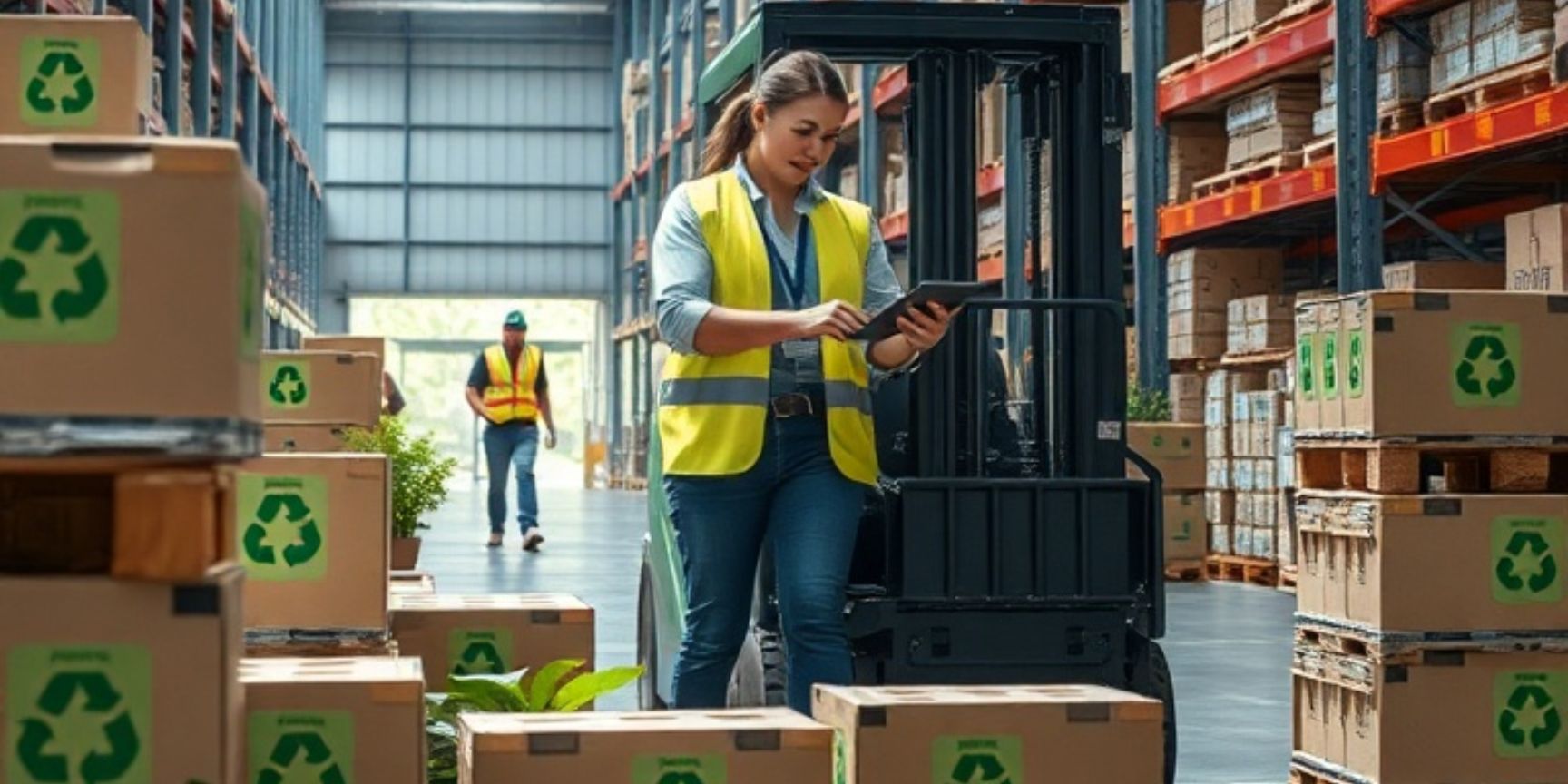
Specific examples of sustainability in warehouse logistics include: the use of electric forklifts, avoiding single-use packaging, implementing digital tools for inventory optimization, and using photovoltaic systems on warehouse roofs. Social initiatives such as continuing education programs for employees and fair working time models also contribute to sustainable practices. Entrepreneurs who implement such measures demonstrate responsibility—and send a powerful signal for the future.
How do Modern Technologies support Sustainability?
Modern technologies such as automated warehouse systems and intelligent lighting significantly reduce energy consumption and create sustainable warehouse processes. The use of renewable energies, such as photovoltaics and wind power, improves the ecological balance and makes companies crisis-resilient.
Sustainable packaging and transport solutions reduce resource consumption and emissions through less packaging, reusable materials, smart route planning, and alternative drive systems.
Circular economy concepts promote the recycling of materials and meet increasing environmental requirements. Transparent communication and certifications strengthen the trust of customers and partners. The active involvement of employees is crucial, as participation promotes innovation, a sense of responsibility, and a corporate culture that firmly anchors sustainability. In this way, companies contribute holistically to sustainable development and secure their long-term competitiveness.
Value-based Leadership as a Catalyst for Sustainable Change
Managers are key role models for sustainable warehouse logistics by exemplifying values, communicating transparently, and promoting sustainable behavior through recognition and clear objectives. Their attitude builds trust, motivates continuous improvement, and strengthens the sense of community. At the same time, targeted training is essential: training courses on resource efficiency, environmental management, and social responsibility create a common understanding and promote the acceptance of new technologies. In this way, companies ensure long-term sustainable innovation and increase their attractiveness as employers.
Social Commitment as an Expression of Active Responsibility
Sustainability in warehouse logistics goes beyond conserving resources and encompasses social commitment and a value-oriented corporate culture. Companies that take on social responsibility and actively involve their employees not only promote innovation and efficiency, but also strengthen their market position through trust and loyalty.
Sustainable warehouse processes—from energy savings and circular economy to optimized transport routes—are crucial for competitiveness and future security today. Regulatory requirements make sustainability mandatory, but at the same time offer opportunities for growth and differentiation. Those who act boldly can shape their warehouse logistics as a driver of sustainable economic development.