




Shippers in logistics
Table of contents
Guide: The shipper in the focus of warehouse logistics and logistics real estate
Definition and demarcation: Who is the shipper?
In logistics, the term shipper is often used synonymously with the sender or the contracting company from industry and trade. From a legal and operational point of view, however, this equation is not always true and carries risks. The shipper is the natural or legal person who hands over goods for transport in his own name or for another person (e.g. the sender) and is responsible for loading them safely for transport. This can be the manufacturer of the goods, but also a commissioned logistics service provider or a warehouse keeper.
The decisive differentiation lies in the responsibility for the physical loading process. While the consignor is the contractual partner of the carrier according to the freight contract, the shipper is the executing and responsible authority at the interface between the warehouse and the means of transport. In practice, the sender and shipper may or may not be identical. This distinction is of fundamental importance, especially in processes based on the division of labour and in liability issues. The shipper operates directly in the logistics hall and his activity is inextricably linked to the physical infrastructure.
Core tasks and processes in warehouse logistics
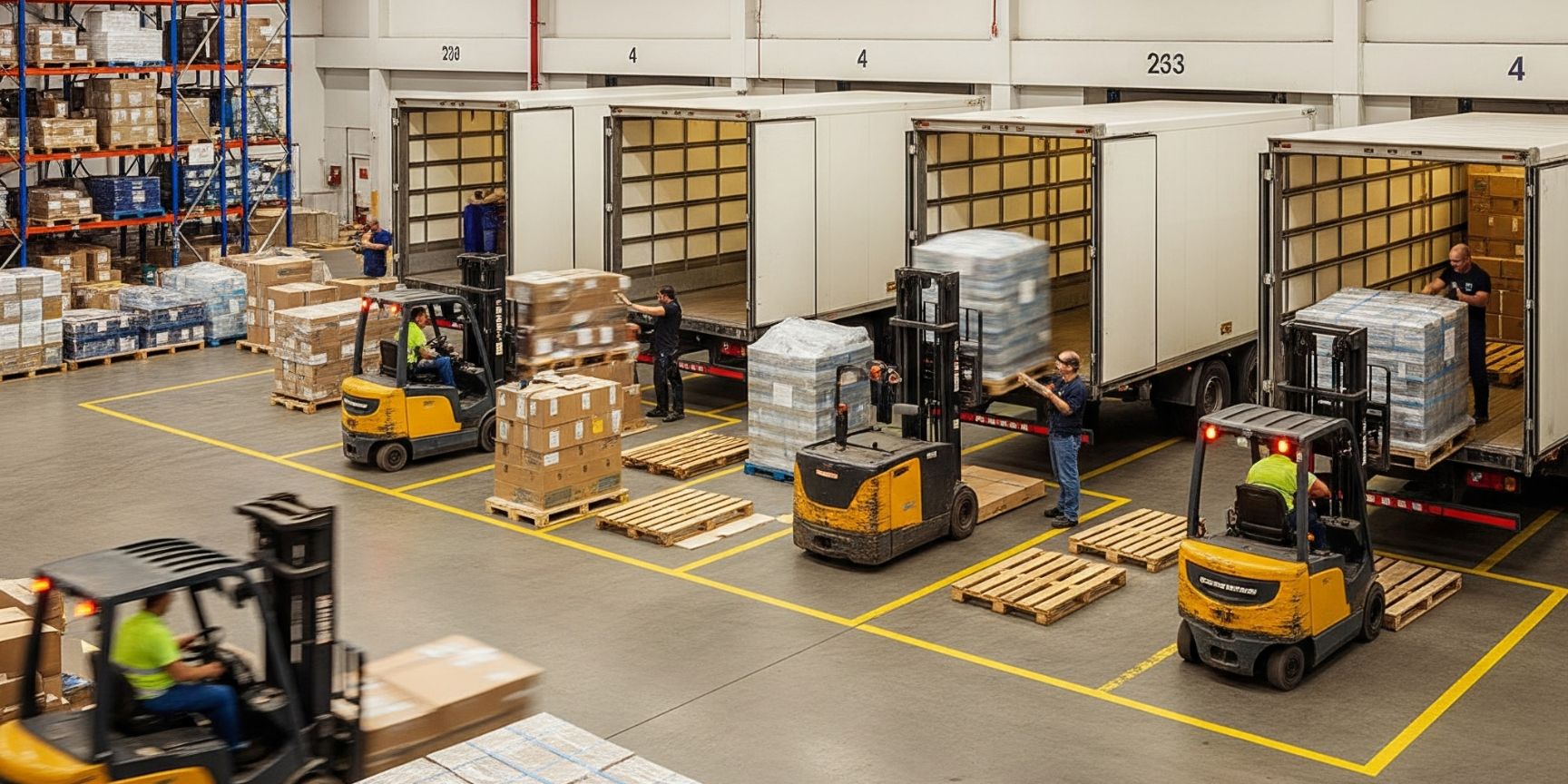
The main task of the shipper is to ensure safe loading. This is a complex process that goes far beyond lifting pallets onto a loading area and is deeply integrated into warehouse logistics operations.
Core tasks include:
- Provision and inspection of goods: The shipper ensures that the right goods are picked and made available for transport in the correct quantity and quality. This includes testing the packaging for suitability for the upcoming transport.
- Stowage planning: Based on knowledge of the characteristics of the goods (weight, centre of gravity, sensitivity) and the characteristics of the means of transport (permissible axle loads, total weight, load distribution plan), the loader or the loadmaster commissioned by him creates a stowage plan. This plan is crucial to ensure the stability of the vehicle and prevent damage to the cargo.
- Physical loading: The actual transfer of goods to the means of transport (trucks, containers) by means of industrial trucks such as forklifts or pallet trucks.
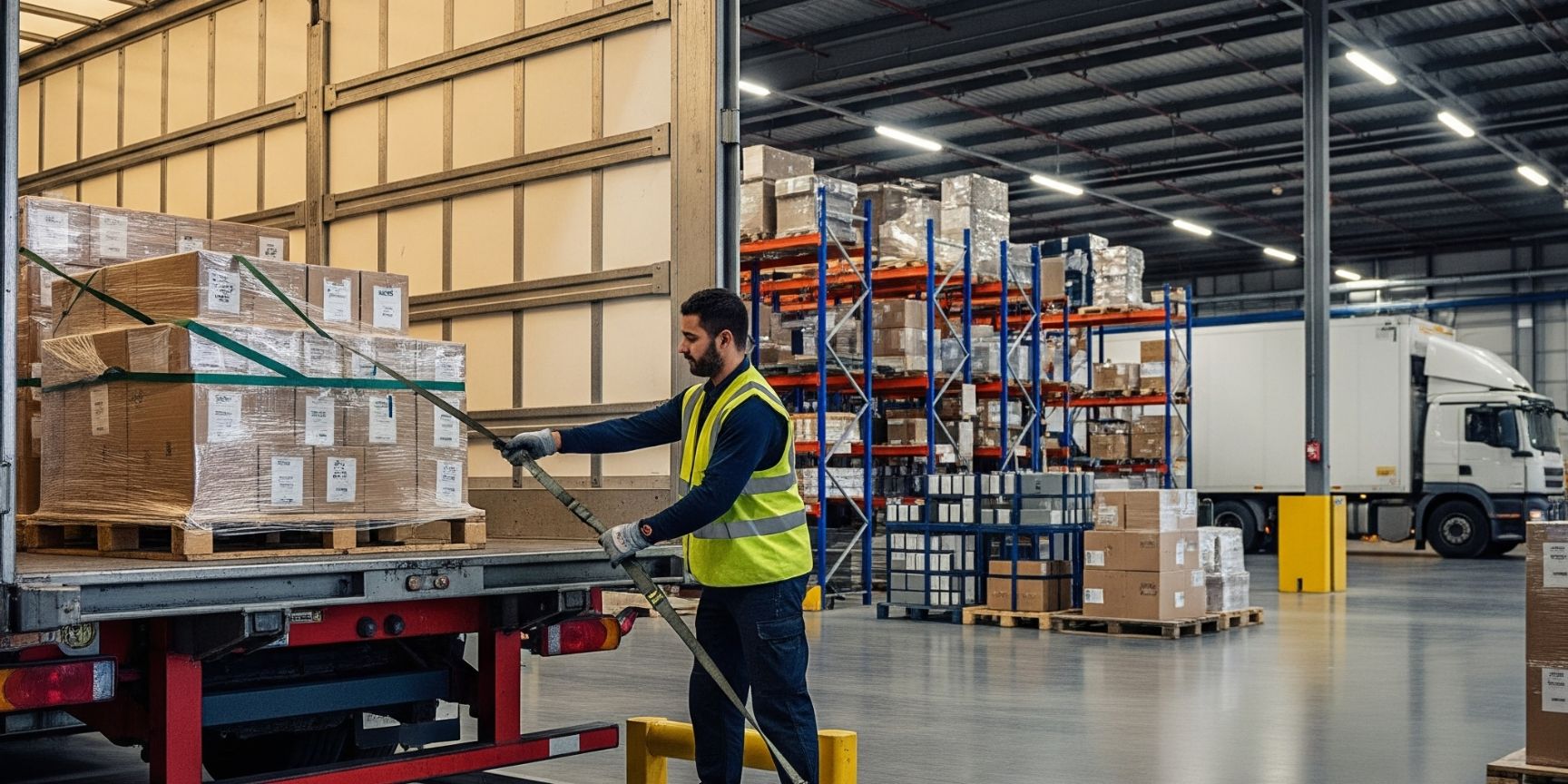
- Load securing: This is the most critical task. The loader must arrange, stow and secure the load on the loading area (e.g. by means of a tight fit, traction with lashing straps, anti-slip mats) in such a way that it can withstand the normal forces that occur during transport (braking, accelerating, cornering). He must select the appropriate load securing equipment and monitor their correct use.
The logistics property as the shipper's working environment
The efficiency, safety and quality of the loading processes are directly dependent on the nature of the logistics property . The hall and its equipment define the framework conditions for the shipper.
- Loading ramps and gates: The design of the loading zone is crucial. The height of the ramp must match the typically used fleet (approx. 1.20 m for standard trucks). Dock levellers are necessary to compensate for height differences and to enable safe access with industrial trucks. Sufficiently wide doors and weatherproof dock seals (attachment locks) protect goods and personnel and enable smooth operation.
- Hall layout and manoeuvring areas: An intelligent hall layout with clearly defined zones for picking, provision and loading minimises distances and the risk of accidents. Sufficiently dimensioned manoeuvring and waiting areas in front of the gates are essential to ensure a quick and safe truck change and not to block operations.
- Technical equipment: Modern logistics properties support the shipper with technology. These include automatic or semi-automated loading systems (e.g. roller conveyors, transfer cars), digital ramp management systems for time slot control and bright, glare-free lighting of the loading zone, which enables safe working even in the dark.
Legal Responsibility and Liability of the Shipper
The shipper's responsibility is enshrined in various legal texts and the liability risks are considerable. Ignorance does not protect against punishment here.
- Commercial Code (HGB): According to § 412 HGB, unless otherwise contractually agreed, the sender is obliged to load, stow, fasten and unload the goods in a way that is safe for transport. In practice, however, this obligation is often transferred to the shipper (who can also be the sender). This is then responsible for safe loading. The carrier, on the other hand, is responsible for reliable loading, which includes compliance with axle loads and total weight. Both parties have a mutual duty to check and inform.
- Road Traffic Regulations (StVO): Section 22 of the Road Traffic Regulations explicitly places an obligation on the shipper in addition to the driver. He must ensure that the load is secured in such a way that it cannot slip, fall over or fall down, even in the event of emergency braking or sudden evasive movements. Violations can lead to fines, points in Flensburg and, in the event of accidents, criminal consequences.
- Documentation obligation: Clean documentation of the loading process (e.g. by means of loading sketches, photos, checklists) is essential for the shipper in order to be able to prove that he has fulfilled his obligations in the event of damage.
The interface to the carrier and driver
The collaboration between the shipper (or their staff at the ramp) and the truck driver is a daily challenge and a critical point in the chain. Clear communication and defined processes are crucial here. The shipper must provide instructions to the driver on how to place the vehicle on the ramp. The driver, in turn, must properly secure his vehicle (e.g. with wheel chocks) and provide a broom-clean loading area. While the loader secures the load, the driver has a duty to check. If he discovers defects in load securing, he must complain about this and is not allowed to start the journey. In practice, this often leads to conflicts that can only be resolved by clear contractual arrangements and trained personnel on both sides.
Conclusion: A key role with far-reaching significance
The shipper is much more than just a "warehouse worker". He is a key figure who combines operational know-how in warehouse logistics with a high level of legal responsibility. His work is significantly influenced by the quality and equipment of the logistics property. A modern hall with well thought-out processes enables the shipper to perform his tasks not only efficiently, but above all safely and in compliance with the law. For all actors in the supply chain – from shippers to logistics providers to carriers – a deep understanding of the shipper's role, duties and liability is essential to minimise risk and ensure a smooth supply chain.