



Project development – What is it, especially in logistics?
Table of contents
What is a project development in logistics real estate?
Project development in the context of logistics real estate is the entire value creation process, which includes the design, planning, financing, realisation and marketing of logistics objects such as warehouses, distribution centres or transhipment halls. It is the crucial interface between land, capital and users. In contrast to residential or office properties, the focus here is on the specific requirements of the supply chain and logistical processes. The life cycle of a project development begins with the acquisition of a suitable plot of land and ends with the sale or long-term lease of the completed and ideally already fully occupied property. The aim is to create a marketable, profitable and functional real estate product for the user.

The role of the warehouse logistics project developer
A project developer for warehouse logistics is the initiator, coordinator and risk carrier of the entire project. He acts as a "temporary entrepreneur" and bundles the necessary know-how from various disciplines. His core tasks include the location analysis, securing the property, the creation of building rights and the development of a user-specific or market-oriented concept. In addition, he is responsible for the entire financing structure, project management during the construction phase and subsequent marketing. In logistics, the developer must have a deep understanding of operational processes, such as intralogistics, ramp delivery (number of gates), space efficiency (column grid) and the requirements for floor load-bearing capacity. He is the central point of contact for all parties involved: from municipalities to investors and construction companies to future tenants or buyers.
The phases of the project development of a logistics hall
The development process of a logistics hall is typically divided into four core phases:
- Initiation and conception: This phase begins with the project idea, which can be either property-driven or demand-driven. This is followed by an initial feasibility study, a location and market analysis and a rough profitability calculation. This is where the foundation for the entire project is laid.
- Conception and approval planning: In this phase, the concept is refined. The developer secures the property, clarifies the planning legal framework (development plan) and has the first drafts drawn up. The goal is to obtain a legally binding building permit. At the same time, financing partners and potential users (tenants) are being sought.
- Realization: This is the actual construction phase, which begins with the groundbreaking ceremony. The project developer controls and monitors the architects, specialist planners and the general contractor. Stringent project and cost controlling is crucial here in order to keep to the time and budget framework.
- Marketing and operation: Intensive marketing begins during the implementation phase. After completion and handover of the property to the user (tenant or buyer), classic project development ends. Depending on the business model, the developer can hold and manage the property in its own portfolio or sell it to an end investor.
Location factors and land acquisition
Choosing the right location is crucial to the success of a logistics property. In contrast to other asset classes, the absolute focus here is on macro- and micro-location-related transport connections. Proximity to motorways, container terminals, airports or freight transport centres (GVZ) is essential. Other criteria are the availability of workers, the willingness of the municipality to cooperate (e.g. in the approval of 24/7 operation) and the topographical nature of the property. Land acquisition itself is a highly competitive process in which the project developer must use its network and market knowledge to identify and secure suitable land.
Structural and technical features of logistics properties
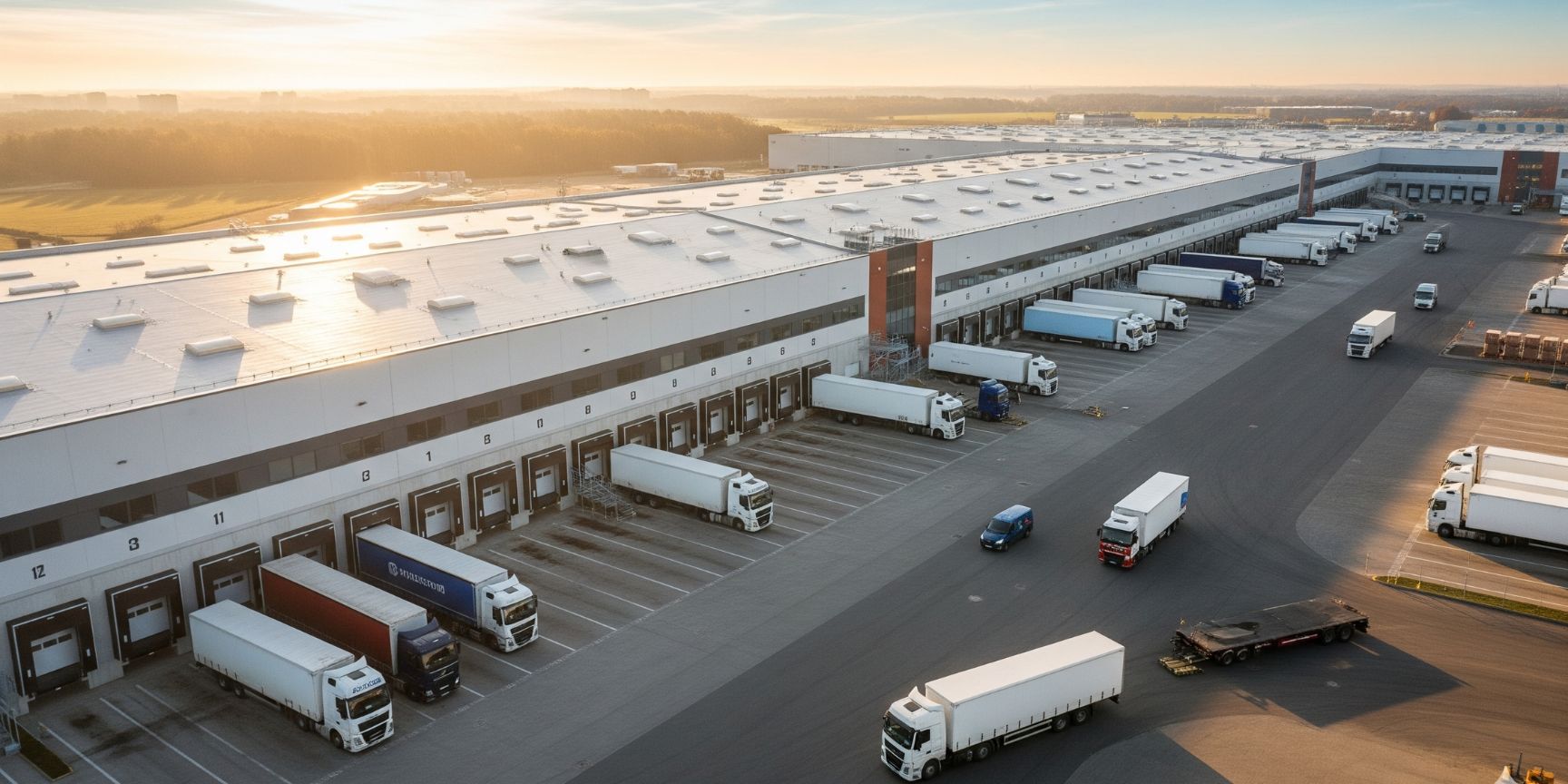
Logistics properties are highly specialized and process-oriented buildings. Your planning must take into account aspects that play a subordinate role in other real estate segments. These include free hall heights (at least 10-12 metres UKB – lower edge of truss), a high floor load capacity (usually >5 t/m²), an optimised column grid for maximum use of space and a sufficient number of truck docking doors (ideally one door per 800-1,000 m² of hall space). Sustainability aspects such as the installation of photovoltaic systems on the large roof areas, LED lighting and e-charging stations for trucks and cars, which are often certified according to standards such as DGNB or BREEAM, are also becoming increasingly important.
Risk management and profitability
Project development is a capital-intensive business with long implementation periods and is therefore exposed to various risks. These include approval risks (delays in building law), construction risks (cost increases, construction delays), marketing risks (lack of demand) and interest rate risks. A professional project developer is characterized by proactive risk management . It minimizes risks through detailed analyses in advance, a solid financing structure, the early involvement of users through pre-letting and the selection of reliable partners. The profitability is ultimately determined by the difference between the total project costs (land, construction costs, ancillary costs) and the market value achieved (based on the rental income).