




Pay-per-Pick in Warehouse Logistics
Table of contents
- Pay-per-Pick: The Gamechanger for Flexible Warehouse and Contract Logistics
- What is pay-per-pick? A definition for the professional world
- The breakthrough in contract logistics: Risk minimization through variability
- The logistics property as a "service platform"
- Figures, data, facts: Focus on profitability
- Technical requirements: Data as a lubricant
- Challenges and stumbling blocks
- FAQ – Frequently asked questions about pay-per-pick
- Conclusion: The future belongs to usage-based models
Pay-per-Pick: The Gamechanger for Flexible Warehouse and Contract Logistics
In a world of volatile markets and ever shorter product life cycles, flexibility is the most important currency of logistics. While classic rental and management models are often tied to rigid capacities, pay-per-pick (PPP) breaks up these structures. But what does this term mean technologically and economically, and why is it groundbreaking for logistics properties and contract logistics companies alike?
What is pay-per-pick? A definition for the professional world
At its core, pay-per-pick is a billing model from the field of usage-based logistics (pay-per-use). Instead of paying for a fixed storage space, permanent staff or invested hardware (CAPEX), the customer pays a fee per item actually removed (pick).
This model typically includes not only the physical gripping process, but the entire deployment process chain. It transforms the shipper's investment risks into variable operating costs (OPEX) and shifts the utilization risk to the logistics service provider or technology provider.
The breakthrough in contract logistics: Risk minimization through variability
For contract logistics companies, pay-per-pick is the instrument to make tailor-made offers to customers with fluctuating sales figures – for example in e-commerce or seasonal items.
- Scalability: The customer pays the same proportional rate for 1,000 picks as for 100,000 picks.
- Transparency: The "cost per unit" is defined from the outset, which massively simplifies the calculation for marketing and sales (e.g. contribution margin per package).
- Competitive advantage: Service providers who offer PPP signal confidence in their own process efficiency. Since they earn per pick, they have a vested interest in maximum optimization and automation.
The logistics property as a "service platform"
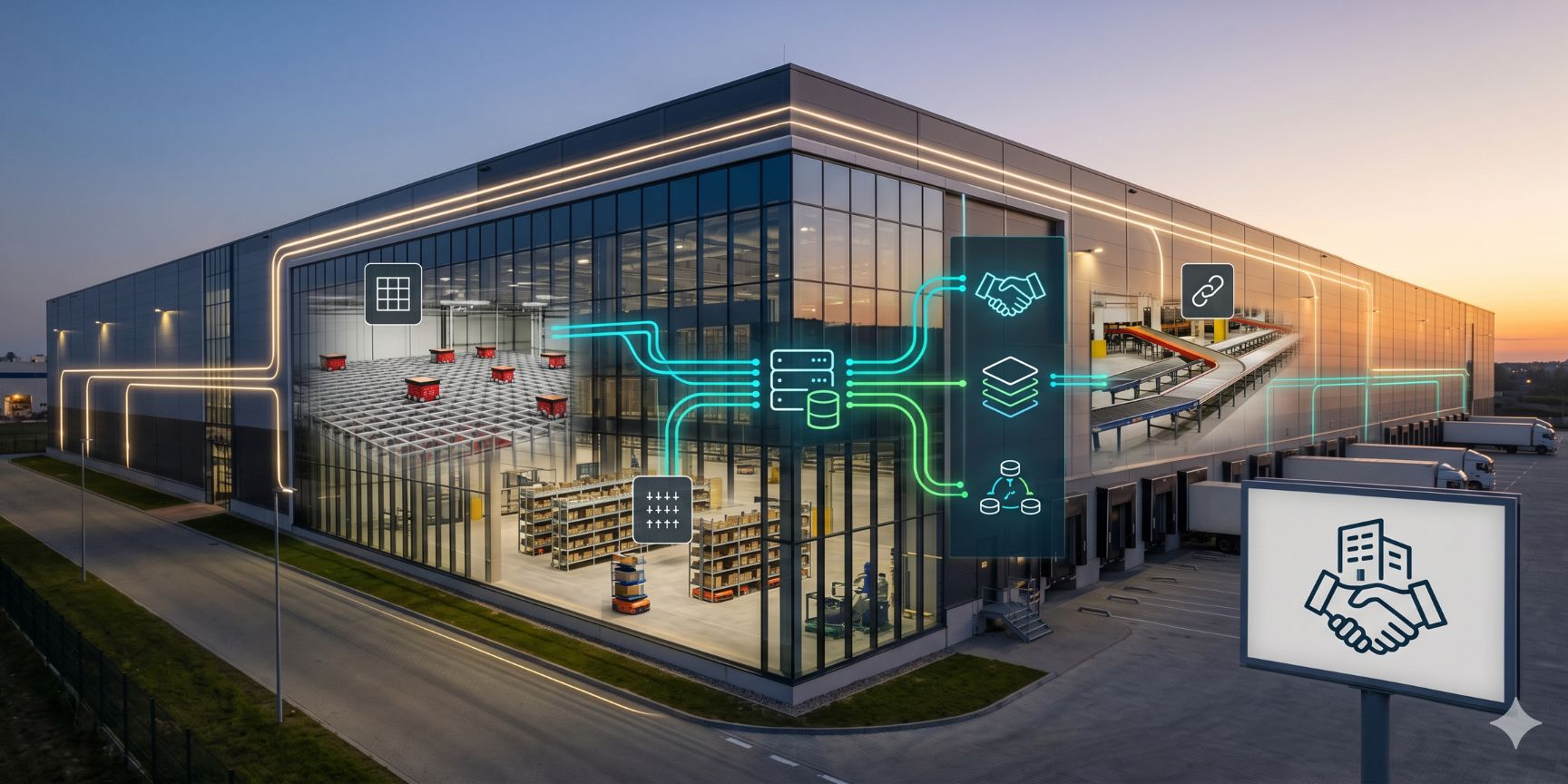
The pay-per-pick model fundamentally changes the requirements for the logistics property and the hardware inside. In the past, halls were often tailored to a single tenant. Today, they are developing into multi-user centers in which the infrastructure is flexibly shared.
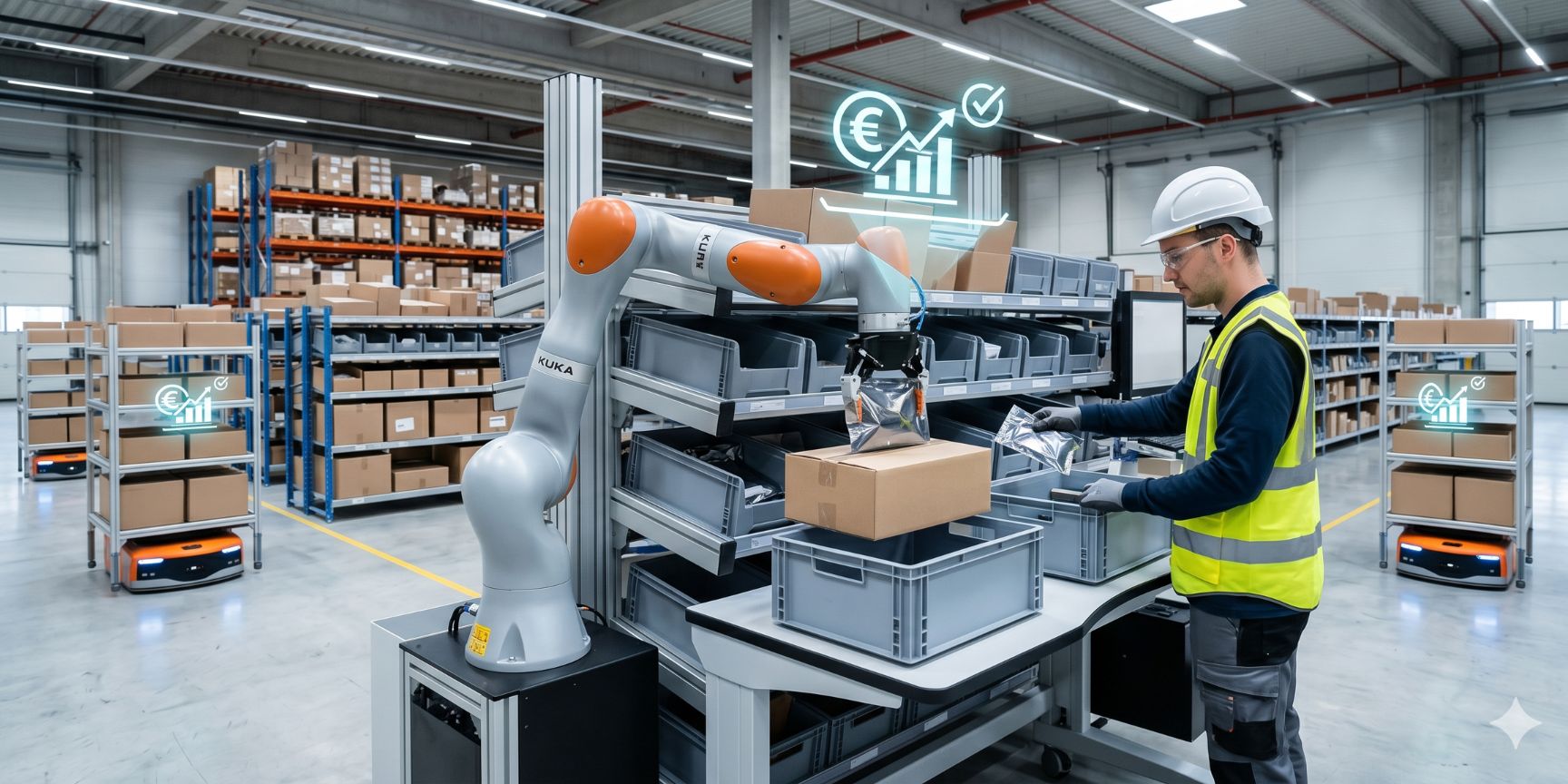
In modern halls, PPP is often flanked by Robotics-as-a-Service (RaaS). Here, for example, a third-party provider places an AutoStore system or AMRs (Autonomous Mobile Robots) in the hall. The hall operator or tenant does not pay for the system, but for the performance of the robots. This massively lowers the barriers to entry for high technology in logistics real estate, as no high initial capital is tied up.
Figures, data, facts: Focus on profitability
When does pay-per-pick pay off? The answer lies in the volatility curve.
- Cost structure: While classic models often have a fixed cost ratio of 60-80%, PPP shifts this ratio towards 10-20%.
- Benchmark prices: Depending on the industry (fashion, pharmaceuticals, FMCG) and degree of automation, pick fees in the market often range between €0.50 and €2.50 per pick (purely operational handling). Including storage and packaging, "all-in" prices in fulfillment can be significantly higher.
- Space efficiency: PPP-controlled automation in the hall can often increase the throughput rate per square meter by 30-50% compared to manual shelving.
Technical requirements: Data as a lubricant
For pay-per-pick to work, a seamless digital mapping of the logistics chain is imperative. A powerful warehouse management system (WMS) must be able to:
- Track and assign picks in real time.
- Different pick types (single-item, multi-item, bulky goods) can be priced differently.
- To provide interfaces to ERP systems for automated billing.
Without a clean database, PPP quickly leads to billing conflicts between shipper and service provider.
Challenges and stumbling blocks
Despite the advantages, there are critical aspects that are often underestimated in practice:
- Minimum quantities (deadfreight): Many service providers agree on "minimum pick guarantees" to cover their basic costs. If the volume falls below this, the variabilization effect for the customer fizzles out.
- Item complexity: Not every pick is created equal. A 20 kg bag of pet food has a different cost than a lipstick. A PPP model that is too simple can lead to imbalances in the margin.
FAQ – Frequently asked questions about pay-per-pick
Question: Is pay-per-pick more expensive than classic self-management?
Answer: Per unit often considered yes, as the service provider assumes the capacity utilization risk and the cost of capital and calculates a risk premium. However, if you look at the total cost of ownership (TCO), including unused space and idle staff during off-peak hours, PPP is usually more economical.
Question: Who is the model best suited for?
Answer: Especially for start-ups in scaling mode, companies with strong seasonal peaks (e.g. Black Friday) and companies that prefer to tie up their capital in product development rather than warehouse technology.
Question: How does pay-per-pick influence the design of logistics halls?
Answer: It drives the demand for "smart" halls with high power capacity and fast data lines, as PPP often goes hand in hand with high automation. The real estate is changing from a passive space to an active production factor.
Conclusion: The future belongs to usage-based models
Pay-per-pick is more than just a billing method; it is a strategic instrument for making the supply chain more flexible. For contract logistics companies, it offers the opportunity for higher margins through efficiency gains, and for shippers it offers maximum security in uncertain markets. In combination with modern logistics real estate and robotics solutions, pay-per-pick will define the standard for the warehouse of the future: agile, data-driven and radically customer-oriented.
Your Ideal Logistics Warehouse
Browse listings for warehouse space, logistics real estate, industrial land, and contract logistics solutions.
Browse Exposés
Maximize Exposure for Your Warehouse Space
Showcase your logistics properties and attract qualified inquiries.
Discover Products