



BREEAM in logistics
Table of Contents
- BREEAM for Logistics Real Estate: A Comprehensive Guide
- What is BREEAM? A basic definition
- Why is BREEAM crucial for warehouse and contract logistics?
- The BREEAM evaluation categories from the perspective of a logistics hall
- The certification process in practice
- Questions and Answers (FAQ) about BREEAM in logistics real estate
- The BREEAM rating levels: From "Good" to "Outstanding"
- SConclusion: More than just a "green label"
BREEAM for Logistics Real Estate: A Comprehensive Guide
This guide examines the BREEAM system from the perspective of the logistics industry. It serves as a reference work for project developers, investors, operators of logistics facilities and all experts who deal with the future viability of logistics real estate.
What is BREEAM? A basic definition
BREEAM stands for Building Research Establishment Environmental Assessment Method and is the oldest and most widely used certification system in the world for the environmental and socio-cultural sustainability of buildings. Developed in the UK in 1990, the system provides a holistic framework for assessing buildings throughout their entire life cycle – from design and construction to use and demolition. In contrast to pure energy certificates, BREEAM evaluates a wide range of factors that go far beyond the carbon footprint.
Why is BREEAM crucial for warehouse and contract logistics?
The logistics industry has a significant ecological footprint. Large roof and façade areas, high energy requirements for lighting, heating, cooling and intralogistics, 24/7 operation and a high volume of traffic are typical features. A BREEAM certification addresses exactly these points and converts them into measurable benefits:
- Investment security: Certified properties meet ESG criteria (Environmental, Social, Governance), which are increasingly becoming a condition for financing, banks and investors to finance and purchase.
- Reduction of operating costs: The focus on energy and water efficiency significantly reduces ancillary costs for tenants and operators.
- Market value increase: Sustainable buildings achieve higher rental and sales prices and have lower vacancy rates.
- Employee well-being: Aspects such as daylight, air quality and noise control improve the working environment, which can lead to reduced sick leave and higher productivity.
The BREEAM evaluation categories from the perspective of a logistics hall
BREEAM evaluates buildings in nine (or ten for certain schemes) categories. For a logistics property, these are to be interpreted as follows:
- Management: Efficient construction processes, early involvement of all stakeholders and well-thought-out building management after completion. Practical example: A detailed plan for waste prevention on the construction site.
- Health and well-being: quality of interiors. Practical example: Maximum use of daylight through skylights in the hall, glare-free lighting and high air quality in the picking and office areas.
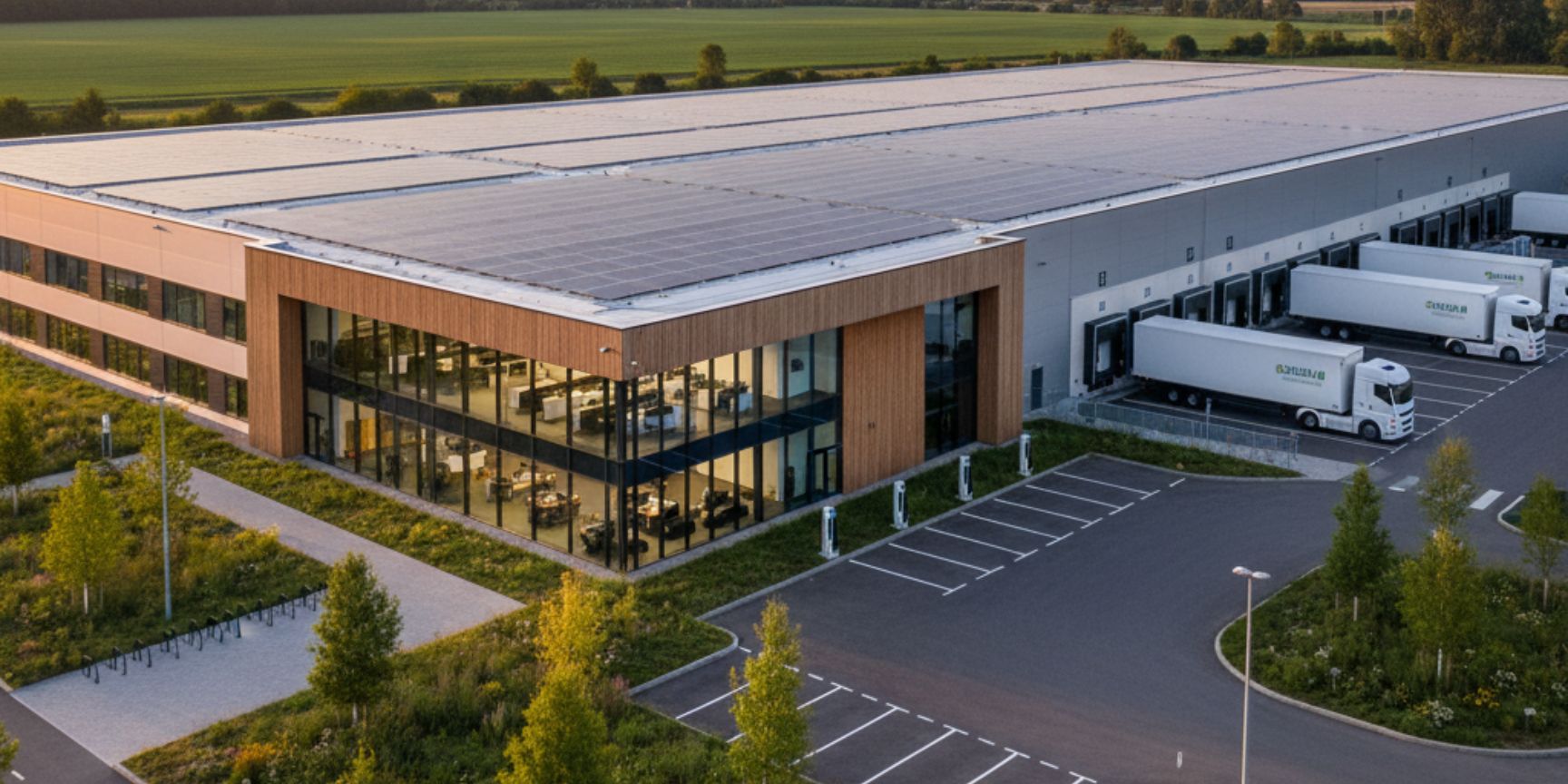
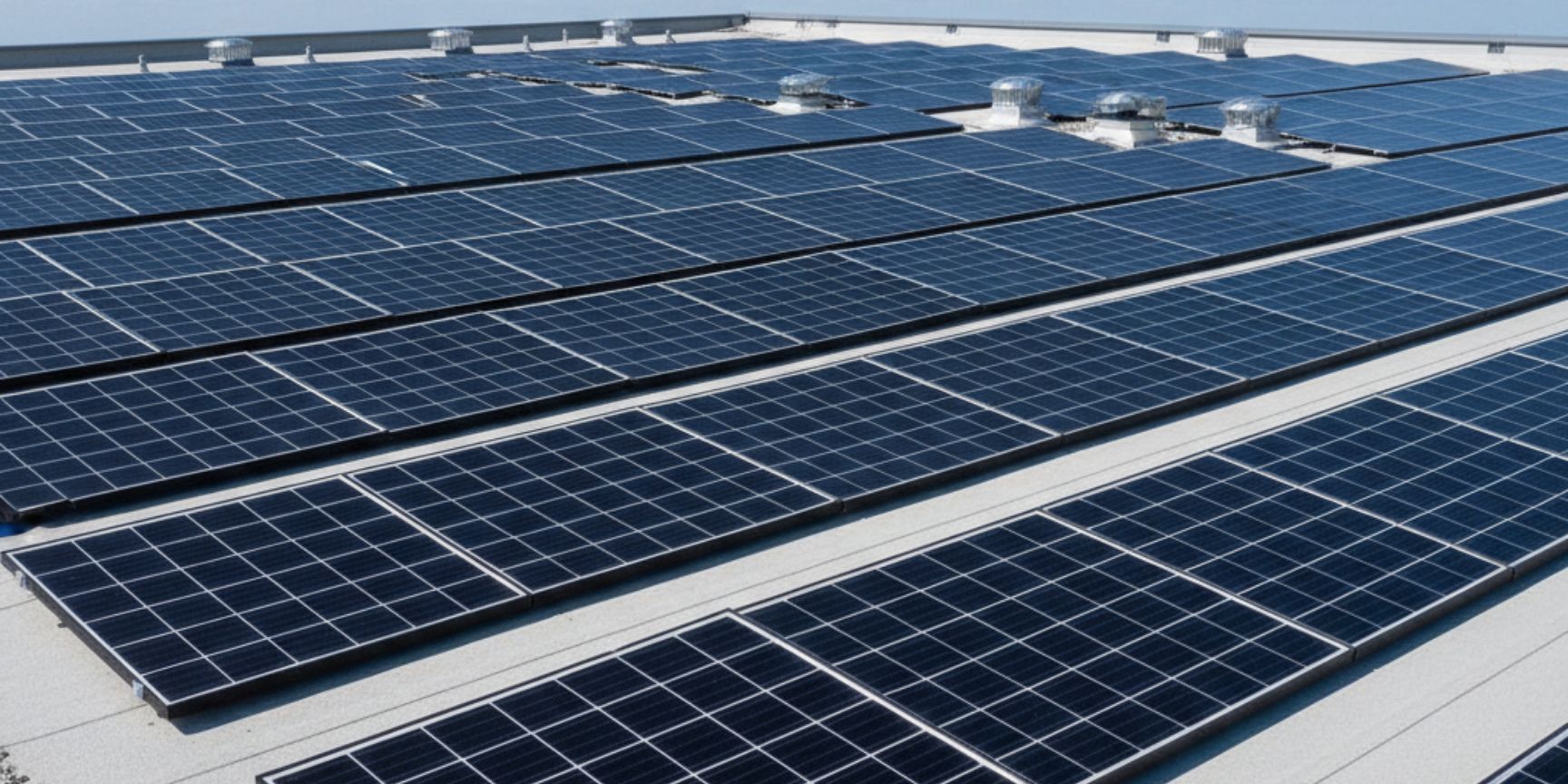
- Energy: This is one of the most important categories. The reduction of energy demand and the use of renewable energies are evaluated. Practical example: A highly insulated building envelope, LED lighting with motion detectors and a photovoltaic system on the roof that supplies the electricity for the e-charging infrastructure of trucks and employee cars.
- Transportation: Connecting the site and promoting sustainable transportation. Practical example: proximity to intermodal hubs (rail, water), safe bicycle parking spaces and showers for employees, charging stations for e-vehicles.
- Water: Measures to reduce water consumption. Practical example: rainwater harvesting for flushing toilets or cleaning outdoor facilities, water-saving fittings.
- Materials: Use of responsibly sourced, durable and low-emission building materials. Practical example: Use of recycled steel, wood from certified forestry (FSC/PEFC) or the documentation of the origin of all main building materials.
- Waste: Reducing waste during construction and promoting the circular economy in operations. Practical example: A clear concept for waste separation for the future tenant, use of components that are easy to dismantle and recycle.
- Land use and ecology: protection and enhancement of biodiversity on the property. Practical example: Green roofs, the creation of flowering meadows instead of sterile lawns and the avoidance of sealing by water-permeable surfaces in parking areas.
- Pollution: Reduction of light, noise and environmental pollution. Practical example: Use of lights shielded from the outside to prevent light pollution, oil separators in the drainage system of the truck parking spaces.
The certification process in practice
The path to a BREEAM certificate is a structured process that is accompanied by a licensed BREEAM auditor. It is typically divided into the following phases:
- Pre-assessment: An early analysis in the planning phase to determine the potential and goals.
- Design Stage: The submission and review of the planning documents. After successful testing, a provisional certificate will be issued.
- Post-construction stage: The verification of the implementation on the construction site on the basis of evidence (photos, invoices, measurement protocols).
- Certification: After successful completion of the final examination, the final certificate is issued with the assessment level reached.
Questions and Answers (FAQ) about BREEAM in logistics real estate
Question: Does BREEAM certification make sense for every logistics hall?
Answer: In principle, yes. While certification (usually "Very Good" or "Excellent") is virtually part of the market standard for new buildings in the premium segment (Grade A), it is also becoming increasingly important for existing properties. The "BREEAM In-Use" scheme can be used to evaluate existing halls and improve them in a targeted manner, which secures their value.
Question: How much does BREEAM certification cost?
Answer: The costs are made up of the registration fees with the BRE, the auditor's fee and any additional costs for more sustainable construction measures. Experience has shown that the additional costs for the construction measures to achieve a "very good" level are approx. 1-3% of the pure construction costs. However, this investment often pays for itself after just a few years through the saved operating costs.
Question: BREEAM or DGNB – which is better for the German logistics market?
Answer: Both systems are highly recognized. BREEAM is more widely used internationally and is therefore often preferred by internationally active investors and users. The German DGNB system (German Sustainable Building Council) places a stronger focus on life cycle cost analysis. The choice often depends on the preferences of the project stakeholders and the target market.
The BREEAM rating levels: From "Good" to "Outstanding"
The total performance of a building is expressed as a percentage and assigned to one of the following evaluation levels. For logistics properties, at least the level "Very Good" should usually be strived for.
| Rating | Required Score | Market importance in logistics |
| Outstanding | ≥85% | Rarely achieved, lighthouse projects |
| Excellent | ≥70% | Premium standard, very high demand |
| Very Good | ≥55% | Common market standard for new buildings |
| Good | ≥45% | Solid standard, often for renovations |
| Acceptable (passport) | ≥30% | Basic requirements met |
Conclusion: More than just a "green label"
A BREEAM certification is much more than a marketing badge for a modern logistics property. It is a structured guideline for quality, an instrument for minimizing risk and tangible proof of the future viability of an investment. It not only takes ecological aspects into account, but also promotes economic efficiency over the entire life cycle and creates a better working environment for the people who work in logistics. This turns sustainability from a cost factor into a strategic competitive advantage.
Your Ideal Logistics Warehouse
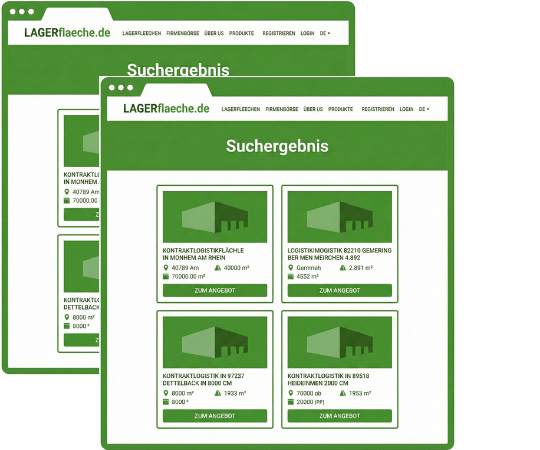
Browse listings for warehouse space, logistics real estate, industrial land, and contract logistics solutions.
Browse Exposés
Maximize Exposure for Your Warehouse Space
Showcase your logistics properties and attract qualified inquiries.
Discover Products