




Intermodal transport in logistics
Table of Contents
What exactly is intermodal transport? A definition
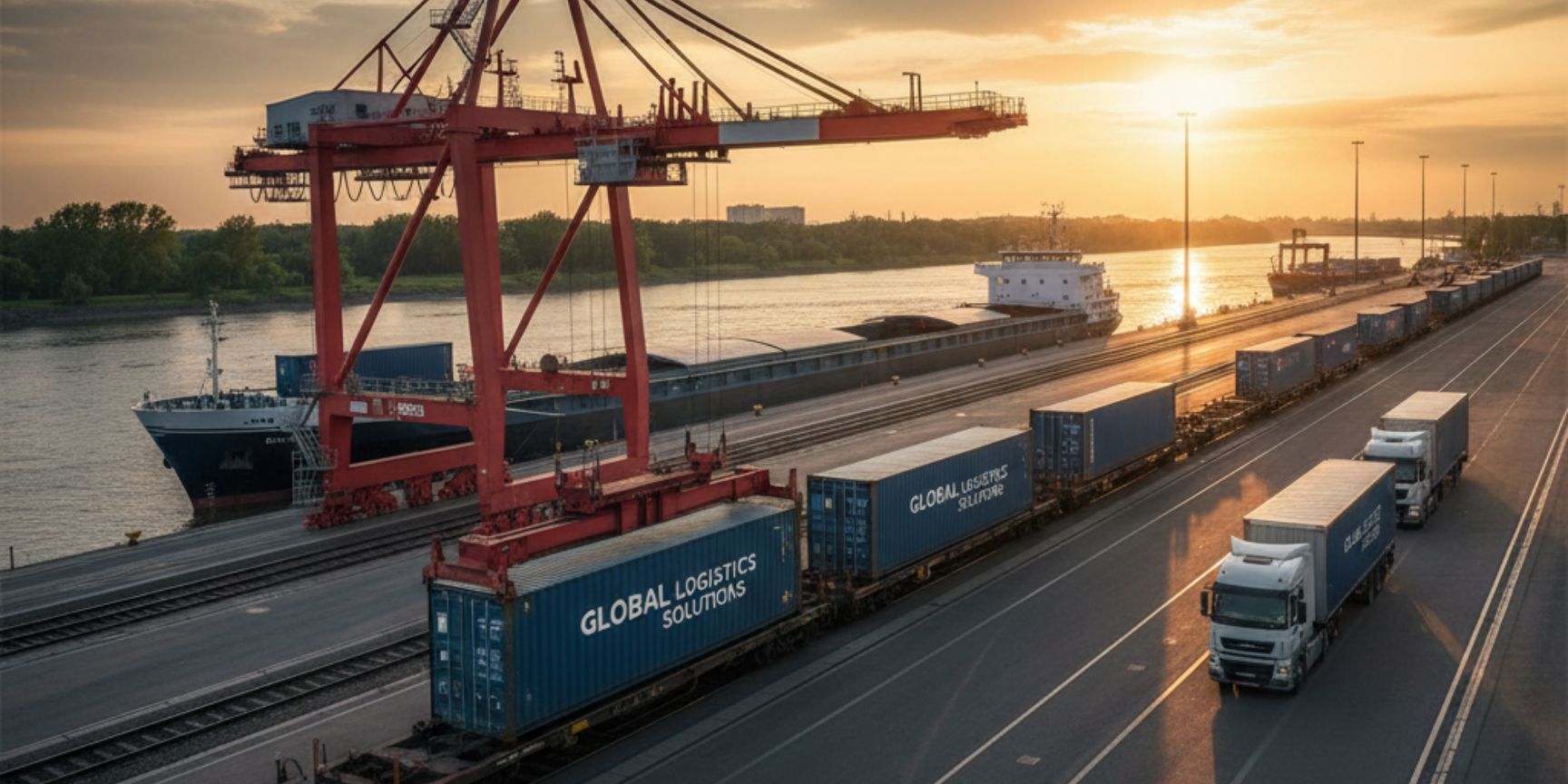
Intermodal transport (also known as intermodal transport) is a transport chain in which goods are transported in one and the same loading unit – for example a container or swap body – with at least two different modes of transport (e.g. truck, train, ship). The decisive feature is that the goods are not reloaded even during the change of modes of transport (transshipment); the loading unit remains closed throughout. The process usually includes a short pre-carriage by truck to the transhipment terminal, a main leg over a long distance by rail or ship, and a short on-carriage by truck to the recipient.
Question: What is the difference to multimodal and combined transport?
Answer: Although the terms are often used interchangeably, there are subtle differences. Multimodal transport is the generic term for any transport with at least two modes of transport. However, the goods can be reloaded. Combined transport (CT) is a specific form of intermodal transport in which the main leg (most of the route) is carried out by rail, inland waterway or seagoing vessel and the pre-carriage and onward carriage by road are kept as short as possible. Thus, every combined transport is also intermodal, but not every intermodal transport is necessarily combined transport (e.g. if the main leg is by plane).
The load unit: the standardised heart
The key to the functioning of the intermodal system is the standardization of the loading units. Without them, efficient and fast transhipment between modes of transport would be impossible. The main types are:
- ISO containers: The globally standardised steel boxes in the standard sizes 20 feet (TEU - Twenty-foot Equivalent Unit) and 40 feet (FEU). They are stackable and optimized for sea, rail and road transport.
- Swap bodies: Mainly used in Europe, they are optimized for the dimensions of truck loading areas and often offer more volume than containers. They are usually not stackable and require special gripping edges for handling.
- Craneable semi-trailers: Specially reinforced truck trailers that can be loaded as a whole onto railway wagons by crane. This makes it possible to transport non-containerized freight intermodally.
The logistics property as an intermodal gateway
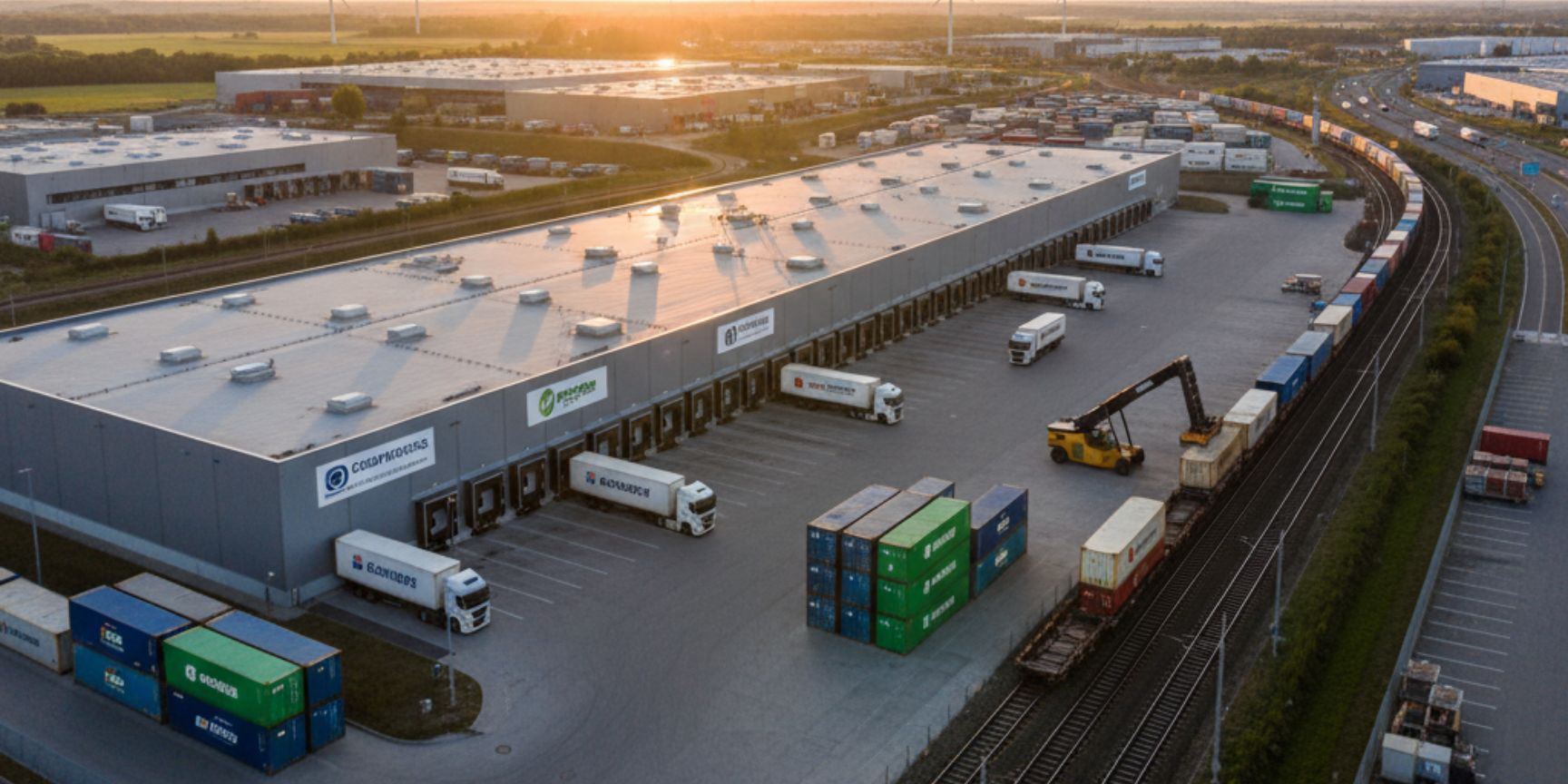
For warehouse and contract logistics, the location and equipment of a logistics property is crucial for the ability to use intermodal transport efficiently. A pure high-bay warehouse on a motorway is no longer sufficient. A location gains enormous strategic value if it is located near a transshipment terminal (container terminal) or even has its own rail siding. We speak of trimodal locations here if they offer a connection to road, rail and waterways.
Question: What structural and infrastructural features does a logistics property need for intermodal transport?
Answer: In addition to excellent road connections, the following features are crucial:
- Proximity to terminals: Short distances for pre-carriage and onward carriage by truck reduce costs and time.
- Sufficient manoeuvring and parking areas: There must be enough space for manoeuvring trucks and temporarily parking containers and swap bodies (container depot function).
- Own siding: This is the premium solution. It enables the direct loading and unloading of wagons on the company premises and completely eliminates pre-carriage or onward carriage by truck.
- Robust floor plates: The surfaces must be designed for the high point loads of reach stackers (container handlers) and parked containers.
Benefits for contract logistics and the warehouse
The integration of intermodal transports into contract logistics offers significant strategic advantages that go beyond pure cost savings.
- Cost efficiency on long distances: For distances of more than 400-500 km, the main leg by rail or ship is usually much cheaper than continuous truck transport.
- Sustainability and ESG: Rail freight transport emits up to 80% less CO₂ per tonne-kilometre than road freight transport. This is a decisive factor in achieving climate targets and a strong argument in customer communication (ESG reporting).
- Planning security and reliability: Rail and shipping traffic are less susceptible to traffic jams, driving bans or driving time violations. This leads to higher adherence to deadlines, which is essential in contract logistics with its service-level agreements (SLAs).
- Capacity bypass: In times of driver shortages and scarce truck loading capacities, intermodal transport offers a reliable alternative and secures the flow of goods.
Challenges and when the switch is not worthwhile
Despite the many advantages, intermodal transport is not a panacea. The biggest challenges lie in complexity and fixed costs.
- Time factor: Handling in the terminals takes time. For time-critical shipments (e.g. just-in-time production with very short delivery windows), pure truck transport can be faster.
- Flexibility: The departure times of trains and ships are fixed. Short-term changes are more difficult to implement than in more flexible road transport.
- Costs on short distances: The costs for handling and pre-carriage and onward carriage make intermodal solutions on short distances uneconomical.
- Infrastructure dependency: The availability and performance of terminals varies greatly from region to region. Without a terminal within reach, the approach is not practical.
Conclusion: A strategic course
Intermodal transport is more than just a transport alternative; it is a strategic necessity for sustainable logistics concepts. For operators of logistics properties, warehouse and contract logistics companies, this means reassessing the value of locations. Proximity to intermodal terminals is becoming just as important a criterion as motorway connections. The conscious choice of intermodal supply chains not only enables cost reductions and a massive reduction in the carbon footprint, but also increases the resilience of the entire supply chain against the growing challenges in pure road freight transport.