




IFS Certification in Warehouse Logistics
Table of Contents
- IFS Certification: The Foundation for Excellence in Warehousing and Contract Logistics
- What is IFS Logistics at its core?
- Requirements for logistics real estate: More than just four walls
- Contract logistics: Deep integration of processes
- Facts, figures, data: Focus on the audit
- FAQ: Frequently asked questions from practice
- The role of hall equipment: technology and hygiene
- The economic utility: Why it's worth the effort
- Conclusion: A dynamic process
IFS Certification: The Foundation for Excellence in Warehousing and Contract Logistics
In the world of logistics, IFS (International Featured Standards) certification is the "gold standard" when it comes to handling food, home and personal care products. For logistics service providers, it is often the ticket to cooperation with the food retail trade. But what does this mean in concrete terms for the hall, the processes and the strategic orientation of contract logistics?
What is IFS Logistics at its core?
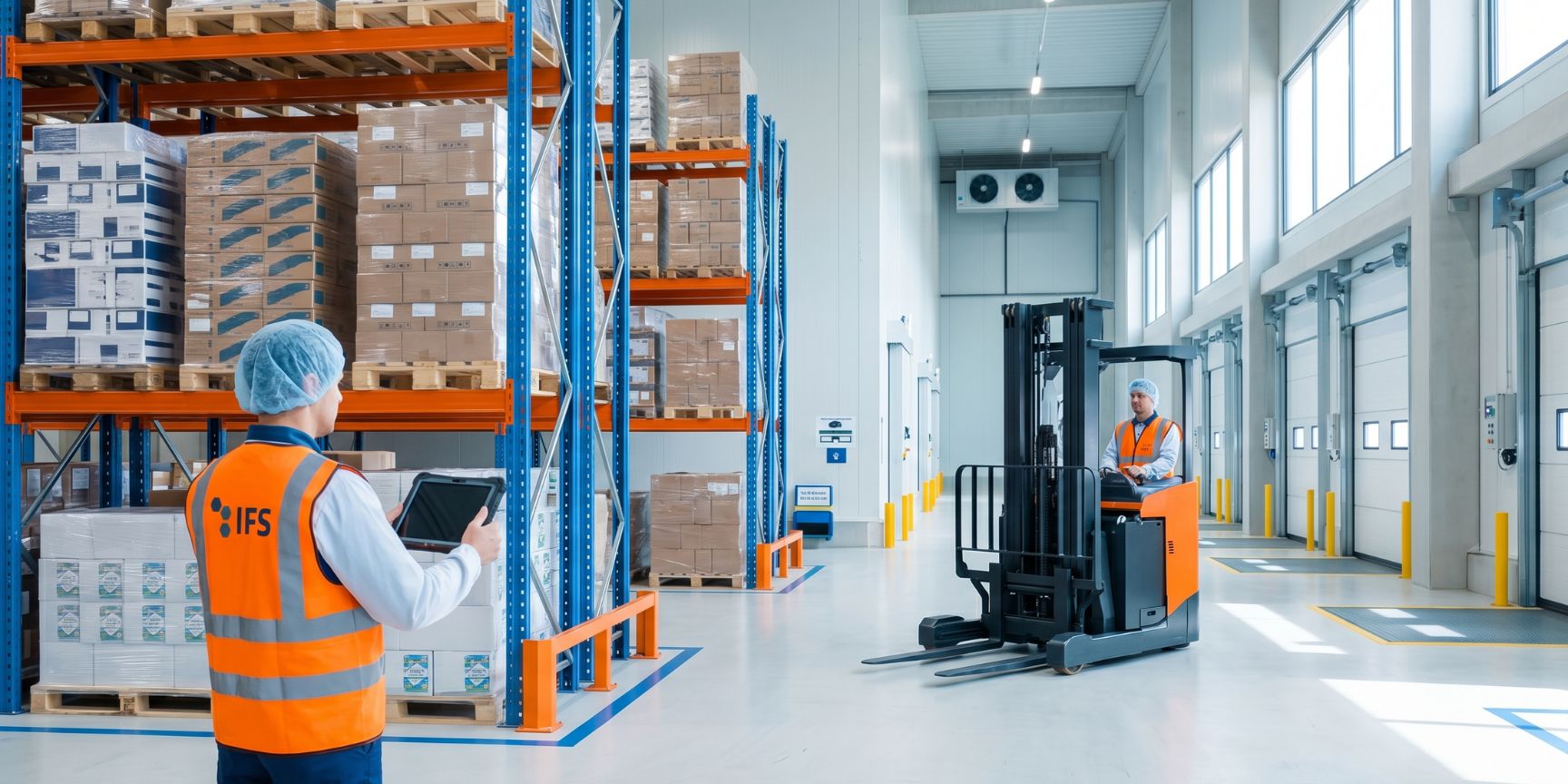
IFS Logistics is specially tailored to companies that provide logistics services such as storage, transport and loading and unloading. Unlike IFS Food (which is aimed at producers), the focus here is on maintaining product integrity. The aim is to ensure that the goods leave the hall in the same condition in which they were received – without contamination, spoilage or damage.
Requirements for Logistics Real Estate: More than just Four Walls
An "IFS-capable" logistics property must meet specific structural and technical criteria. Anyone who prepares a hall for certification has to go deep into the substance:
- Surface finish: Walls and floors must be easy to clean, water-repellent and abrasion-resistant. Cracks in concrete are not only an aesthetic problem, but a nest for microorganisms.
- Pest prevention: The building must be "tight". This applies in particular to sectional doors, dock levellers and cable ducts. Professional monitoring (Pest Control) according to HACCP standards is mandatory here.
- Lighting & breakage protection: All light sources must be equipped with splinter protection to prevent glass splinters from getting into the goods in the event of a defect.
- Temperature management: In refrigerated or frozen logistics, seamless, validated temperature monitoring (mapping) is required. The property must have redundant cooling systems and alarm chains.
Contract logistics: Deep Integration of Processes
In contract logistics, IFS certification goes beyond pure storage. Value-added services (VAS) such as repackaging or display construction are often taken over.
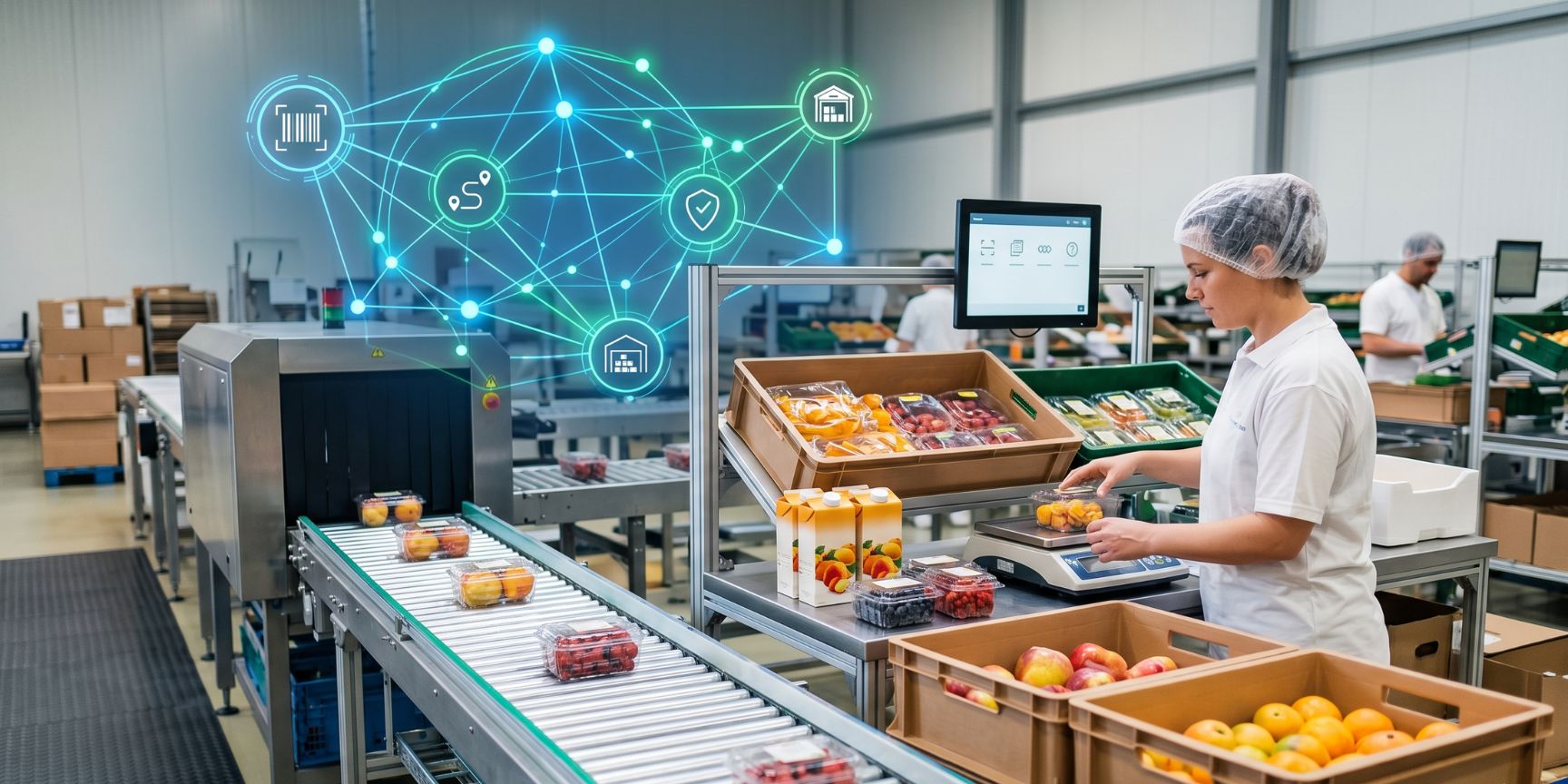
Strict traceability requirements apply here. An IFS-certified logistician must be able to provide complete proof of the whereabouts of each batch within a maximum of four hours. This places high demands on the Warehouse Management System (WMS) and the scanning discipline of the employees. Food defense (product protection) also plays a role: the company premises must be secured against unauthorized access to rule out acts of sabotage.
Facts, figures, data: Focus on the audit
To get a feel for the dimensions, here are the hard facts of certification:
| Parameters | Details |
| Audit Duration | Usually 1.5 to 2 days (depending on the size of the location and the number of employees). |
| Validity | 12 months (annual recertification required). |
| Rating system | Points-based (A, B, C, D). A "knock-out" (KO) leads to immediate failure. |
| Requirements | Over 100 checklist items in the current version. |
Companies must score at least 75% of the points to receive a certificate at the "basic level". More than 95% is necessary for the "Higher Level ".
FAQ: Frequently Asked Questions from Practice
Do we also need IFS for pure non-food storage?
Answer: Not mandatory, but often demanded. Many drugstores also require IFS Logistics for logistics companies that only handle cosmetics or cleaning agents in order to ensure a uniform level of quality in the chain.
Is cross-docking included in the IFS scope?
Answer: Yes. As soon as the goods leave the truck and touch the ramp, the IFS requirements for hygiene and product protection take effect, even if the downtime is only a few hours.
What is the most common mistake in initial audits?
Answer: The documentation. Often, the processes are operationally excellent, but the written fixation (e.g. cleaning protocols, employee training, hazard analyses) is incomplete. In the IFS audit, the following applies: "What is not written has not been done."
The Role of Hall Equipment: Technology and Hygiene
An often underestimated point is technical building equipment (TGA). Ventilation systems must be designed in such a way that no dust can rain down on open containers (if permitted). In the field of logistics real estate , this often means retrofitting filters or adjusting the air flow. The social rooms for employees (black and white separation) must also meet hygienic standards to avoid cross-contamination.
The Economic Utility: Why it's Worth the Effort
The implementation of the IFS standards is cost-intensive (consulting, conversion, audit fees). Nevertheless, it is a strategic investment:
- Liability minimization: Strict processes massively reduce the risk of loss of goods or recalls.
- Market access: Without IFS, many tenders in the FMCG (Fast Moving Consumer Goods) sector remain closed.
- Efficiency: The standardization of processes often leads to a reduction in the error rate and thus to lower process costs.
Conclusion: A Dynamic Process
IFS certification is not a static document on the wall, but a lived system. For warehouse logistics specialists and owners of logistics properties, this means a constant examination of risks and optimization potential. Those who understand the depth of the standard – from the floor coating of the hall to the IT interface in the WMS – secure a decisive competitive advantage in the highly competitive logistics market.
Glossary of Key Terms
- HACCP: Hazard Analysis and Critical Control Points.
- Food Defense: Protecting the food chain from deliberate interference.
- CP (Control Point): A point at which a check can be carried out, but there is no critical risk to security.
- Traceability: The ability to track a product's journey through all stages of production and distribution.