




HACCP in warehouse logistics
Table of contents
- HACCP in Logistics: Strategic Hazard Control from the Ramp to the Shelf
- The 7 pillars of HACCP in the logistics context
- Requirements for the logistics property and the hall
- Specific Challenges of Contract Logistics
- Practical check: Hazard focus on warehouse processes
- Expert Questions & Answers (Q&A)
- Facts, figures, data: HACCP in logistics metrics
- Digitization of HACCP: The "Smart Warehouse"
- Conclusion for decision-makers
HACCP in Logistics: Strategic Hazard Control from the Ramp to the Shelf
HACCP stands for Hazard Analysis and Critical Control Points. Originally developed for manned spaceflight, it is now mandatory for all companies that handle food by EU Regulation (EC) No. 852/2004. In logistics, this is less about processing, but primarily about preserving product properties, avoiding contamination and continuously monitoring the temperature chain.
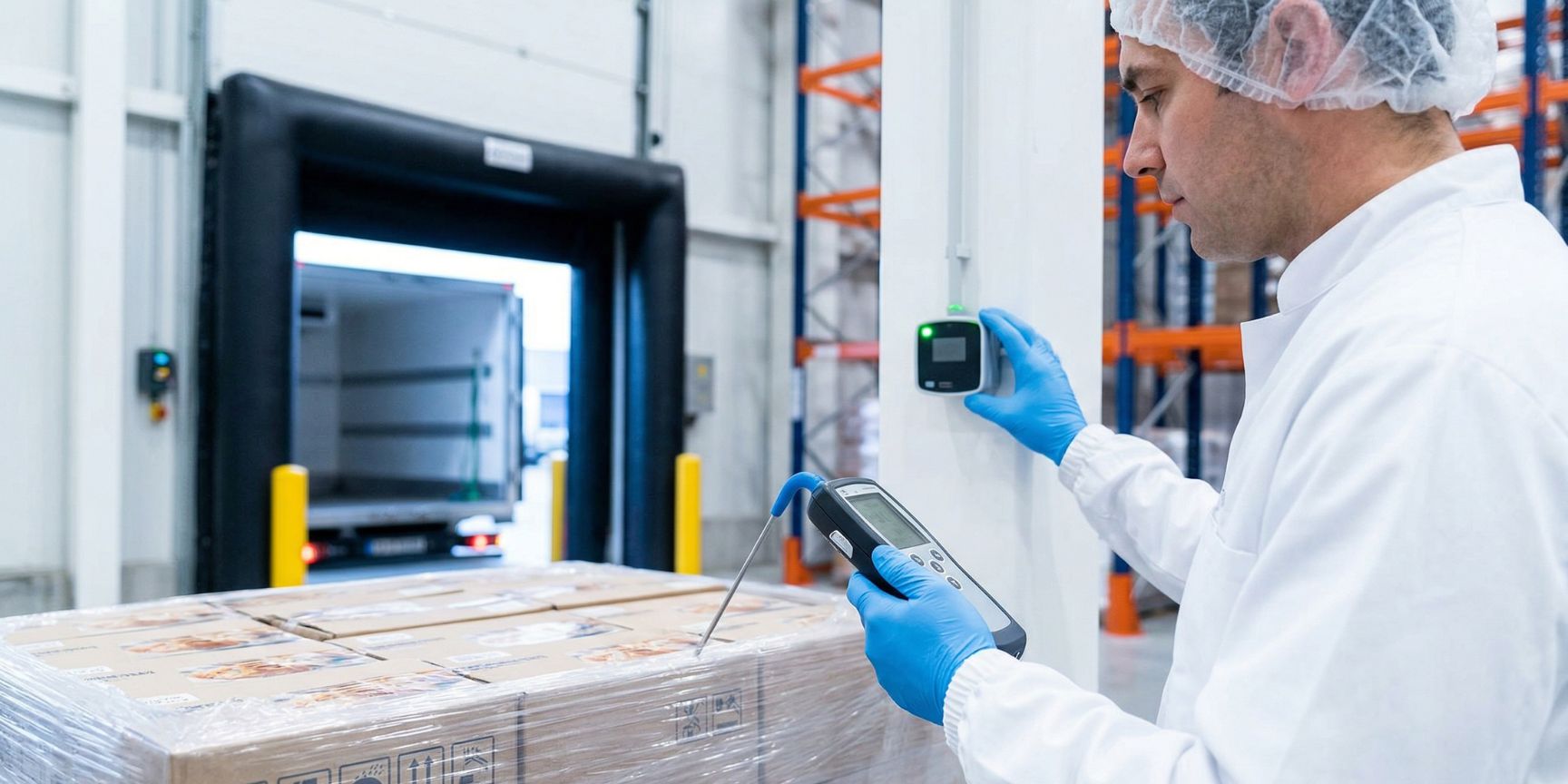
The 7 pillars of HACCP in the logistics context
A well-founded HACCP system is based on seven principles that must be interpreted specifically in a logistics center:
- Hazard analysis: Identification of risks (microbiological, chemical, physical) during goods receipt, storage and shipping.
- Determination of CCPs (Critical Control Points): Points at which a hazard can be eliminated (e.g. the core temperature measurement of frozen goods).
- Setting limit values: For example, the temperature of dairy products must not usually exceed +7 degrees to a maximum of +8 degrees.
- Monitoring system: installation of sensors and execution of manual checks.
- Corrective actions: What happens if the cooling system fails? (Blocking of the goods, transshipment to replacement warehouse).
- Verification: Regular audits and calibration of the measuring instruments.
- Documentation: Verifiability vis-à-vis authorities and auditors (e.g. IFS Logistics or BRC).
Requirements for the logistics property and the hall
The property is the housing of the HACCP concept. A "HACCP-compliant" hall must be structurally designed in such a way that risks are proactively minimized:
- Pest monitoring (Pest Control): The building envelope must be tight. Sectional doors require brush seals; Flights for birds must be prevented by structural measures.
- Surface finish: Walls and floors must be easy to clean, low-dust and abrasion-resistant. Coves at the transitions between wall and floor prevent dirt from accumulating.
- Lighting: Splinter protection is mandatory for all light sources to avoid physical contamination by glass breakage.
- Temperature zones: In contract logistics, different climate zones (ambient, chilled, frozen) are often necessary in a hall, which must be thermally strictly separated to avoid cold bridges.
Specific Challenges of Contract Logistics
In contract logistics, value-added services (VAS) are often provided, such as repackaging or display construction. This is where the goods often leave their protective secondary packaging.
- Hygiene zones: Definition of areas where hairnets or protective clothing must be worn.
- Cross-contamination: Strict separation of food and non-food items (e.g. cleaning products), especially in the case of odour transmission.
- Traceability: IT (WMS - Warehouse Management System) must be able to manage batches and best-before dates (FEFO principle: First Expired – First Out).
Practical check: Hazard focus on warehouse processes
What are the real dangers in everyday work?
- Ramp (interface): The greatest temperature increase threatens during loading. The use of inflatable gate seals and tunnel solutions minimizes this effect.
- Forklift fleets: Electric industrial trucks are standard in food warehouses. Hydraulic oils must – if technically possible – be food-safe (H1 lubricants) if there is a risk of contact.
- Cleaning concept: A written cleaning and disinfection plan (RDP) is essential and must specify the cleaning cycles for shelves, floors and evaporators of the refrigeration system.
Expert Questions & Answers (Q&A)
Question: Is HACCP also mandatory for non-refrigerated dry assortments (ambient)?
Answer: Yes. Even if the temperature risk is eliminated, risks such as pest infestation, glass breakage or chemical contamination remain. A HACCP concept is required by law for all food logistics companies.
Question: What is the difference between a CCP and a CP?
Answer: A CCP (Critical Control Point) is a point at which a food safety hazard must be absolutely controlled (e.g. refrigeration stop). A CP (Control Point) is an important control point in the process (e.g. cleanliness of the truck), but its failure does not necessarily lead to an immediate health hazard.
Question: How often do employees need to be trained?
Answer: The legal requirement according to the IFSG (Infection Protection Act) and EU regulation provides for initial training before starting work and then regular refreshers (at least once a year).
Facts, figures, data: HACCP in logistics metrics
The following key performance indicators (KPIs) help to measure the effectiveness of a HACCP system:
- Temperature Deviation Rate: Number of alarms per 1,000 hours of storage. Target: < 0.5%.
- Pest Control Finds: Monitoring of the bait stations. An increase of more than 10% requires immediate structural investigation.
- Audit score: Achieved over 95% in IFS Logistics audits as an industry standard for high-level service providers.
- Calibration cycle: Sensors in the logistics property should be calibrated every 12 months by external specialist companies.
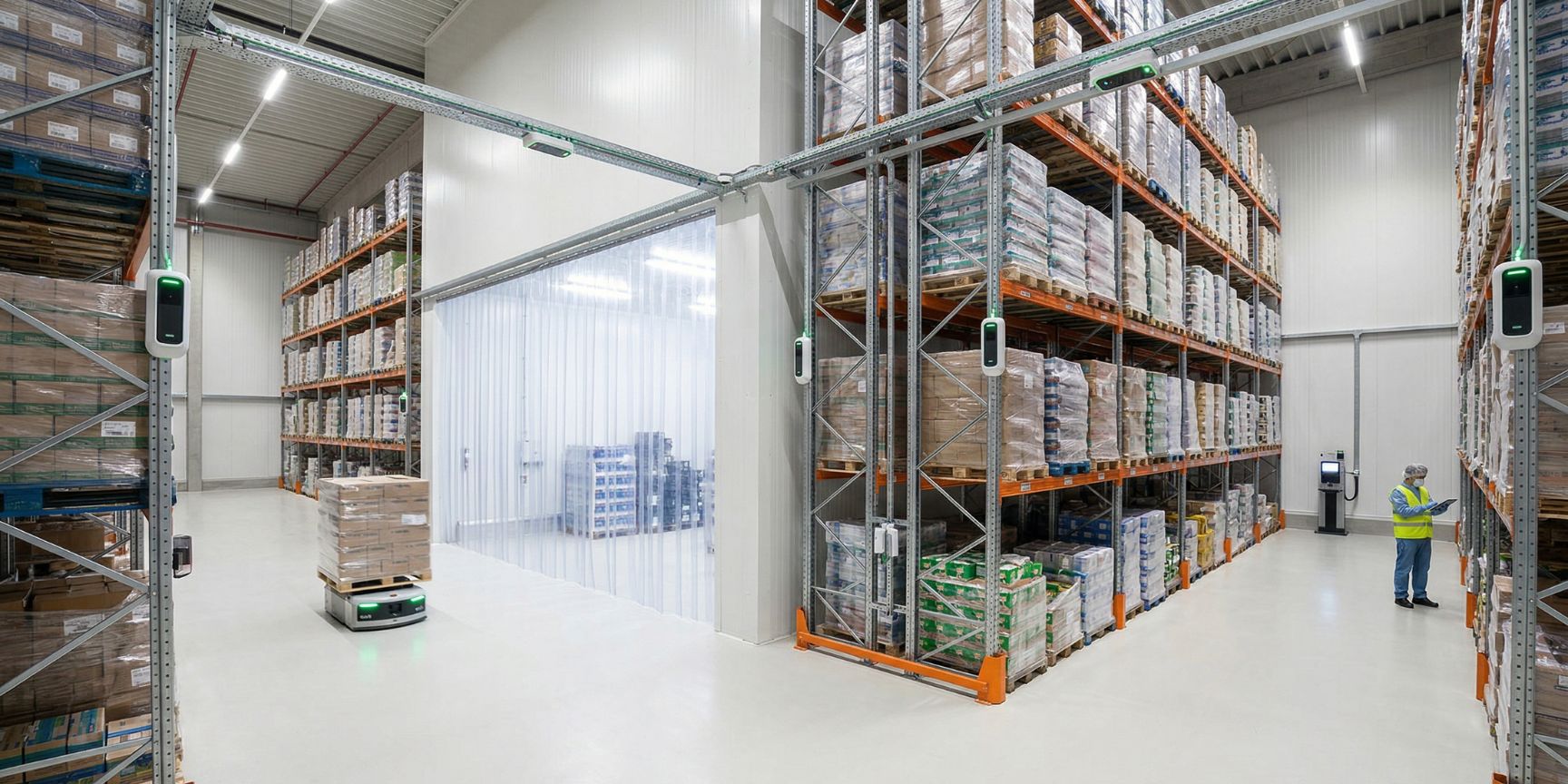
Digitization of HACCP: The "Smart Warehouse"
The future of HACCP compliance lies in automation.
- IoT sensor technology: Wireless sensors at the pallet spaces transmit real-time data to the cloud. If the limit value is exceeded, an automatic alarm is sent to the warehouse manager's smartphone.
- Digital HACCP logbook: Checklists are no longer kept on paper, but on a tablet. This ensures revision security and prevents "add-ons" at the desk.
- Blockchain: For seamless documentation of the cold chain across several players (producer, logistics provider, retailer).
Conclusion for decision-makers
HACCP is not an annoying bureaucratic monster in logistics, but a promise of quality. For investors and developers of logistics properties, HACCP compliance means a higher third-party usability of the hall. For contract logistics companies, it is the ticket to the lucrative food market. Anyone who skimps on structural quality or process discipline risks not only fines, but also the loss of the operating license and massive liability damages.