




High rack in the warehouse
Table of Contents
What exactly is a high rack? A definition
A high rack is a racking system that significantly exceeds a height of 12 meters and can be up to 50 meters high. It is designed for storing large quantities of goods on pallets or in other load units. The decisive feature is the extreme utilization of the vertical dimension of a hall, which leads to an enormous compression of the storage capacity. In contrast to conventional racks, high racks are usually not operated manually, but with specialized, often automated stacker cranes (SRMs) or rail-guided forklifts.
Question: At what point do we speak of a high rack?
Answer: There is no fixed standard, but in logistical practice, a shelf height of about 12 meters or more is considered a common limit. This is often due to the fact that from this height onwards, the use of special, rail-guided conveyor technology becomes economically and technically necessary.
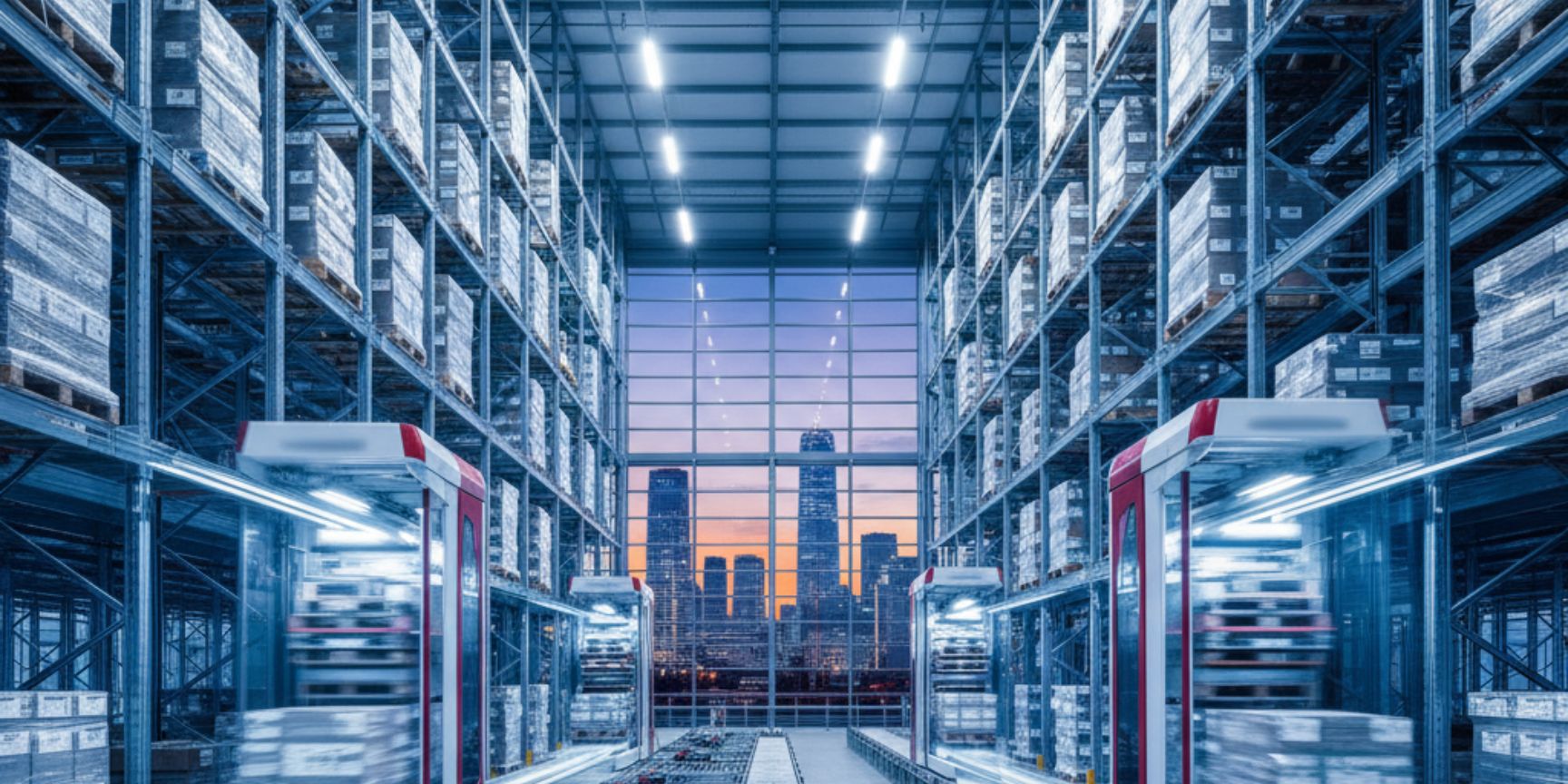
Structure and technology: The inner workings of a giant
The construction of a high rack is a masterpiece of engineering and must be precisely tailored to the requirements of the stored goods, the handling capacity and the entire process chain.
- Steel structure: The load-bearing element is a solid framework made of cold-formed or hot-rolled steel profiles. The statics must not only support the pure weight of the goods, but also withstand the dynamic forces generated by the acceleration and deceleration of the storage and retrieval machines. The design is based on strict standards such as DIN EN 15512.
- Silo construction vs. free-standing construction: In silo construction, the shelving construction is also the load-bearing framework for the roof and façade of the hall. This is an extremely space-efficient and cost-efficient construction method for new construction projects, as the classic building envelope is no longer required. The free-standing high rack is integrated into an existing or newly built hall. This variant offers greater flexibility in the event of a subsequent conversion of the logistics property.
- Stacker cranes (SRMs): In automated high-bay warehouses, stacker cranes are the heart of the system. These rail-guided, often curved devices move through the aisles at high speed (up to 6 m/s) and precision to store and retrieve pallets fully automatically. They are controlled by a warehouse management system (WMS).
- Conveyor technology: Storage and retrieval zones at the head of the warehouse are connected to the high rack via complex conveyor technology (roller conveyors, chain conveyors, transfer cars) to ensure a seamless and high-performance flow of goods.
The high rack in warehouse and contract logistics
For logistics service providers, especially in demanding contract logistics, high-bay warehouses are a decisive competitive factor. They are the technical basis for efficiently handling the complex and large-volume outsourcing projects of industry and trade.
Question: Why do contract logistics companies rely on high racks?
Answer: The high storage density significantly reduces the space-related costs per pallet space. Automation leads to a consistently high handling rate, minimal error rates and enables 24/7 operation. This is ideal for handling high-volume logistics orders with strict service-level agreements, such as those common in the automotive, consumer goods or pharmaceutical industries. In addition, precise, system-controlled warehousing enables seamless batch tracking and strict adherence to storage strategies such as FIFO (First-In, First-Out) or FEFO (First-Expired, First-Out).
Requirements for the logistics property and the hall
A high-bay system places specific and very high demands on the logistics property and its structural fabric, which go far beyond those of a standard warehouse.
- Floor Plate: The point loads transferred from the narrow shelf supports to the floor plate are immense and can be several tons per support. A standard warehouse is not designed for this. A specially dimensioned and often pile-based sole with an extremely high level of flatness (in accordance with DIN 18202, Table 3, Line 4) is required to ensure the safe and trouble-free operation of the high-precision storage and retrieval machines.
- Hall height: In free-standing systems, the clear height (lower edge of the truss) must be precisely matched to the planned shelving system and the necessary distances for sprinklers and lighting.
- Fire protection: Due to the enormous fire load and poor accessibility, high-bay warehouses are considered to be at high risk of fire. An automatic sprinkler system, usually as an in-rack sprinkler directly in the shelf levels, and fire alarm systems are mandatory. Oxygen reduction systems are also increasingly being used, which permanently reduce the oxygen content in the air to a level (approx. 15-17%) at which most materials are no longer flammable.
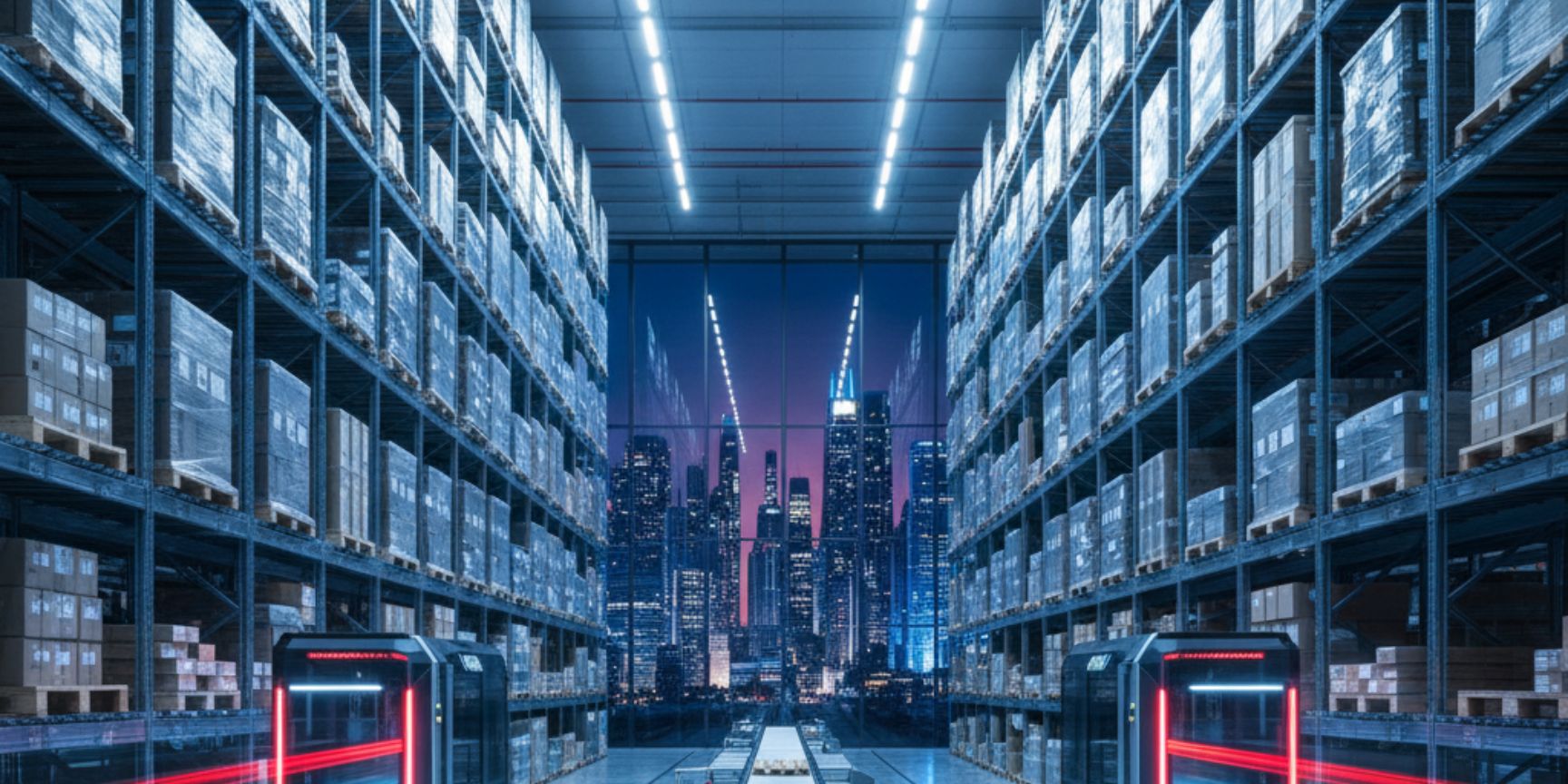
Figures, data, facts: The dimensions of efficiency
- Storage density: A high-bay rack can easily offer 50,000 to over 100,000 pallet spaces on a floor space of 10,000 m². A conventional wide-aisle warehouse would require many times the expensive land area.
- Degree of automation: Modern high-bay warehouses achieve a degree of automation of over 90%. Manual intervention is limited to connecting to upstream and downstream processes (incoming goods, picking, outgoing goods) as well as maintenance and troubleshooting.
- Investment costs: The construction of an automatic high rack is a capital-intensive investment. Depending on the size, technology and degree of automation, the costs are in the double-digit million range. However, the amortization is achieved through the massively reduced operating costs (personnel, space costs) and the high, constant output.
Advantages and disadvantages at a critical overview
| Advantages 👍 | Disadvantages 👎 |
| Maximum use of space and space | Very high initial investment |
| High, constant handling capacity | Low flexibility in assortment and process changes |
| Low error rate through automation | High technical dependence and maintenance effort |
| Significantly reduced personnel costs | Specific, expensive requirements for the property |
| Optimal suitability for 24/7 operation | Long planning and implementation phase |
| Secure and transparent processes | Susceptibility to failure can paralyze the entire system |