



ISO 9001 in Logistics
Table of Contents
- ISO 9001 as the backbone of modern logistics
- What is ISO 9001:2015 at its core?
- Application in warehouse logistics: From goods receipt to shipping
- Specifics of contract logistics: Tailor-made service
- The logistics property and infrastructure (hall & technology)
- Risk management: facts instead of gut feeling
- Facts, figures, data: Costs and benefits of certification
- Questions and Answers (Q&A) on Practical Implementation
- Conclusion: A tool for sustainable success
ISO 9001 as the backbone of modern logistics
DIN EN ISO 9001:2015 is much more than just a certificate on the wall of the reception area. For the logistics industry, it is the de facto standard for proving process reliability, customer satisfaction and risk minimization. But how can this generic standard be applied to the dynamic world of warehousing, complex contract logistics and the static world of logistics real estate? This text sheds light on the depth of the topic.
What is ISO 9001:2015 at its core?
ISO 9001 is the most important national and international standard for quality management systems (QMS). The current revision from 2015 follows the so-called "High Level Structure" (HLS), which facilitates integration with other standards (such as the ISO 14001 environmental standard).
Key points are:
- Process-oriented approach: Away from departmental thinking and towards end-to-end process chains.
- Risk-based thinking: Preventive detection of faults instead of pure error correction.
- Customer orientation: Focus on meeting customer requirements.
In logistics, this means that a parcel does not "somehow" arrive on time, but because the process is designed in such a way that delays are systemically minimized.
Application in warehouse logistics: From goods receipt to shipping
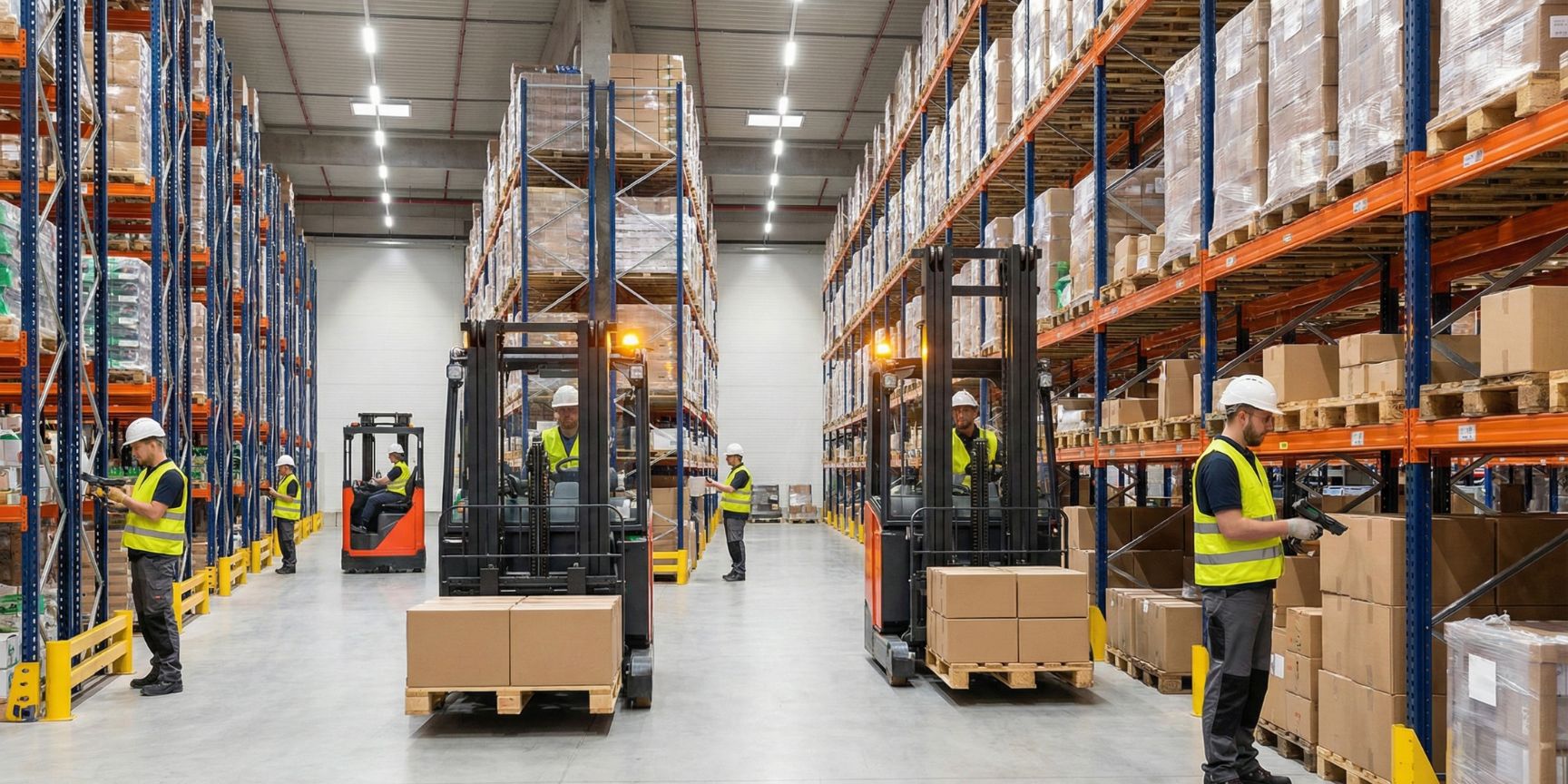
In operational warehouse logistics, ISO 9001 has a deep impact on daily processes. This is not about bureaucratic documentation, but about the controllability of quantities and movements.
Important standard aspects for the warehouse:
- Traceability: The standard requires products to be identifiable. In practice, this means the seamless use of SSCC (Serial Shipping Container Code) and barcode/RFID systems. An ISO-compliant warehouse must be able to say at all times: Who has moved when, which pallet, where?
- Error management: How do you deal with broken goods or incorrect deliveries? ISO 9001 requires a defined restricted storage process and a root cause analysis (CAPA – Corrective and Preventive Actions) to avoid repetition.
- Key performance indicators (KPIs): The standard requires the measurement of process performance. Typical warehouse KPIs in audits are the picking accuracy (often required >99.5%) or the throughput time from goods receipt to storage.
Specifics of contract logistics: Tailor-made service
Contract logistics differs from pure warehousing through long-term contracts and complex value-added services. This is where ISO 9001 becomes a contractual link.
Question: How does ISO 9001 help with complex service provider-customer relationships? Chapter 8.2 of the standard requires a clear definition of the requirements for products and services. For contract logistics companies, this means that service level agreements (SLAs) must not only be signed, but monitored . For example, if a contract logistics company takes over the pre-assembly for an automotive manufacturer, this assembly process is subject to the same strict quality criteria as the production at the manufacturer itself. The QMS serves as a "common language" between the client and the logistics provider.
The logistics property and infrastructure (hall & technology)
Often overlooked, but essential: The "hardware", i.e. the logistics hall itself, is also subject to ISO 9001. Chapter 7.1.3 is dedicated to "infrastructure".
An auditor checks the following:
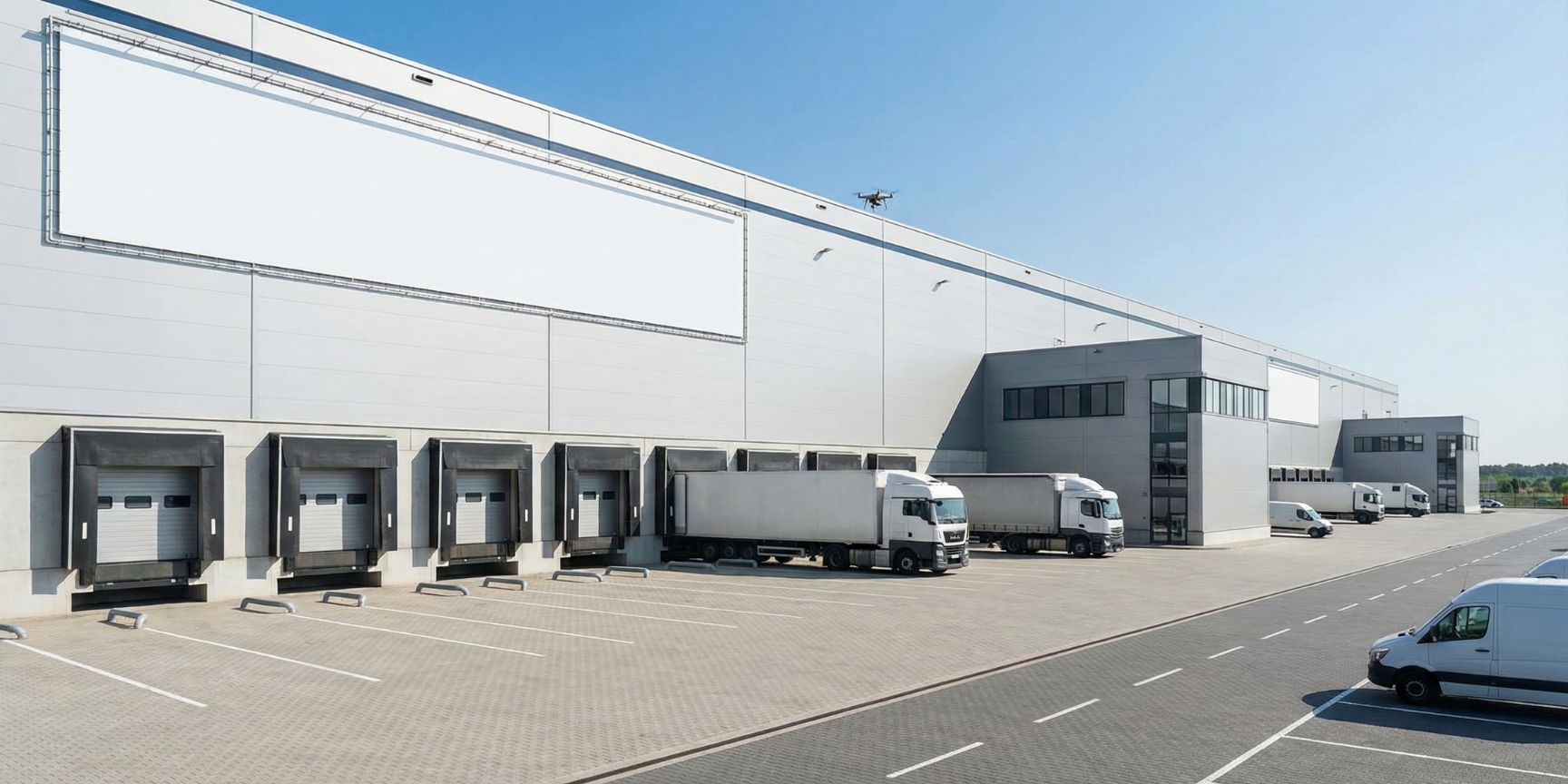
- Maintenance: Are there maintenance plans for roller shutters, dock levellers and fire protection systems? A defective door that delays the outgoing goods is a quality defect.
- Environmental conditions: The property is particularly critical in niches such as pharmaceutical or food logistics (HACCP / GDP). Are temperature and humidity monitored? Is the hall secured against the penetration of pests (Pest Control)?
- Cleanliness and order: The 5S principle (sorting, systematizing, cleaning, standardizing, self-discipline) is often used to prove the conformity of the infrastructure. A dirty hall increases the risk of goods contamination and accidents.
Risk management: facts instead of gut feeling
The 2015 revision has brought risk-based thinking to the fore. For logistics companies, this means that they cannot wait for damage to occur.
Exemplary risk analysis in the logistics QMS:
- Risk: Failure of the Warehouse Management System (WMS).
- Evaluation: Probability of occurrence: Low / Extent of damage: Catastrophic.
- Measure: Emergency concept (paper picking process or redundant servers) that is tested regularly.
Without such a documented plan, the standard requirement is often considered not met.
Facts, figures, data: Costs and benefits of certification
For managing directors and decision-makers, hard facts count.
- Duration: The introduction of an ISO 9001 system in a medium-sized logistics company (approx. 50-150 employees) realistically takes 6 to 12 months.
- Costs: In addition to internal personnel costs, the external costs for consulting and certification (by TÜV, DEKRA, DNV, etc.) are often between €10,000 and €25,000 initially, depending on the number of locations and employees.
- Re-certification: The certificate is valid for 3 years, with annual surveillance audits.
Questions and Answers (Q&A) on Practical Implementation
Question: Does every single process step have to be documented?
Answer: No. ISO 9001:2015 has relaxed the documentation requirement ("documented information"). As much must be documented as is necessary to control the process safely. An experienced forklift driver does not need written instructions on how to start the forklift, but he does need instructions on how to store dangerous goods.
Question: Does ISO 9001 also apply to subcontractors (carriers)
Answer: Indirectly, yes. The company is responsible for externally provided processes (Chapter 8.4). The logistics provider must evaluate and select its subcontractors. If the carrier does not maintain the quality, this falls back on the certified logistics provider.
Conclusion: A tool for sustainable success
ISO 9001 in logistics – whether in the hall, in the contract logistics office or in the management of the property – is the foundation for scalability. Without defined standards, growth and increasing complexity inevitably lead to chaos. Those who understand the standard not as a constraint but as a management tool demonstrably increase their efficiency and customer loyalty.