



Inbound Logistics Processes
Table of contents
- Definition: What is meant by inbound logistics at its core?
- The Operative Heartbeat: Goods Receipt (GR)
- The role of contract logistics in the inbound phase
- Requirements for the logistics property: The "inbound hall"
- FAQ: Frequently asked questions about inbound logistics
- Key performance indicators (KPIs) to manage success
- Sustainability in the inflow: "Green Inbound"
- Conclusion: The strategic importance of inbound excellence
Definition: What is meant by inbound logistics at its core?
Inbound logistics (often used synonymously with procurement logistics) encompasses all processes that control the flow of goods from the supplier to the company's own warehouse or production. While classic logistics often focuses on shipping (outbound), the inbound phase is dominated by capital commitment and process stability. This is not only about transport, but also about the synchronization of information and goods flows.
The Operative Heartbeat: Goods Receipt (GR)
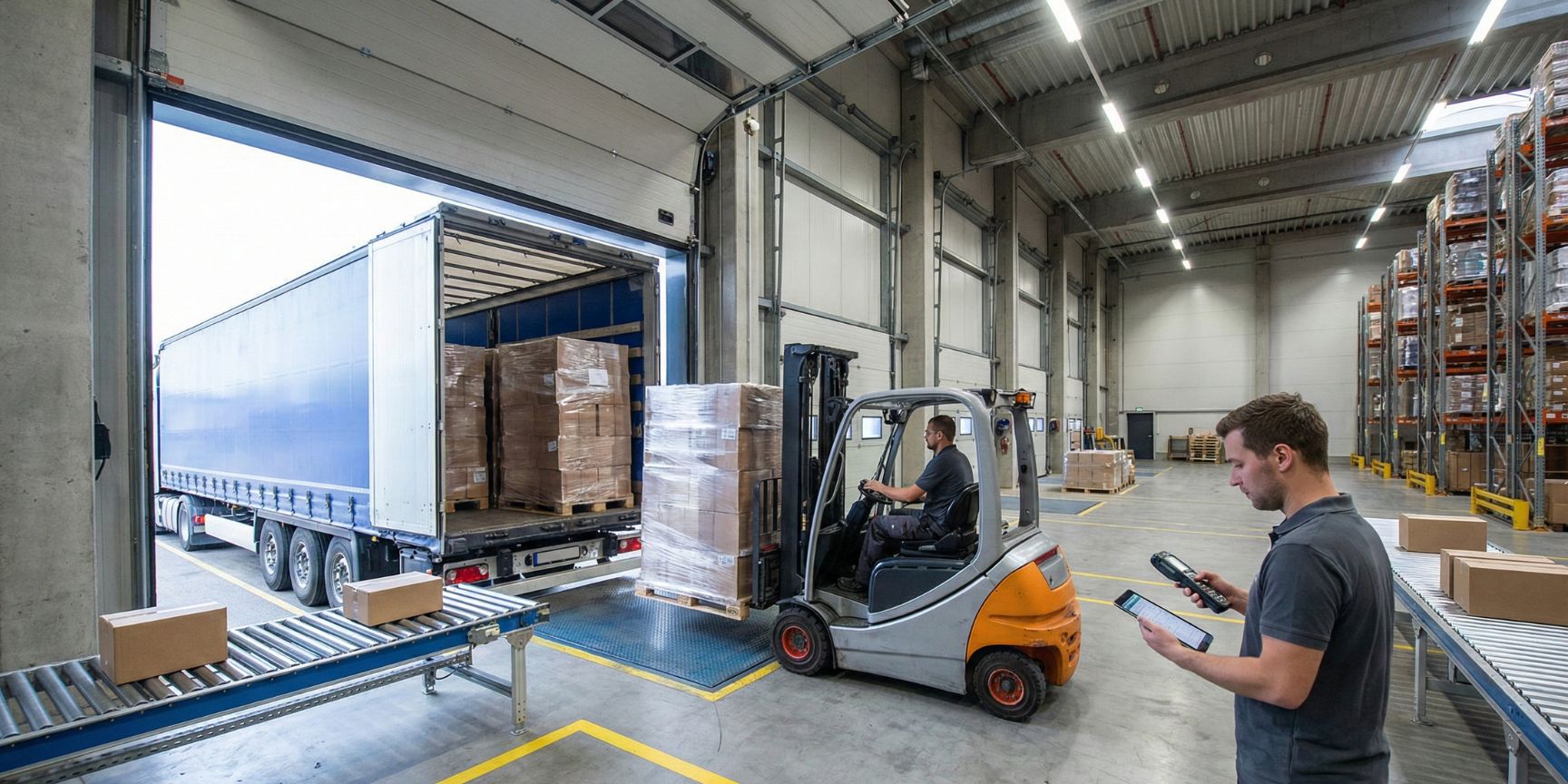
In warehouse logistics, incoming goods is the interface between external transport logistics and internal intralogistics. An efficient goods receipt process usually follows this sequence:
- Notification: Advance notification of the shipment via EDI (Electronic Data Interchange).
- Unloading & rough inspection: Comparison of freight documents and check for transport damage.
- Identification & quality inspection: Recording of the items (scanning of SSCC barcodes) and comparison with the order in the WMS (Warehouse Management System).
- Storage: Moving the goods to the destination (e.g. high rack, shelf or direct cross-docking).
Practical tip: Use time slot management systems to avoid traffic jams at the ramps. A reduction in downtimes of 15-20% is often possible here through digital coordination alone.
The role of contract logistics in the inbound phase
Many companies outsource their inbound processes to contract logistics service providers (3PLs). This is often done through multi-year contracts (hence "contract") that go beyond pure transport.
- VMI (Vendor Managed Inventory): The service provider or supplier assumes inventory responsibility.
- Consolidation: Inbound flows from different suppliers are bundled in a multi-user center to optimize transportation costs (Full Truck Load vs. Less than Truck Load).
- Value Added Services (VAS): Repacking, labeling or kitting directly after goods receipt saves time in production.
Requirements for the logistics property: The "inbound hall"
A property that is primarily used for inbound processes must have specific structural characteristics. This is where modern multi-channel systems differ significantly from pure storage sheds.
- Ramp configuration: For inbound, generous pre-zones (buffer areas) are often required to sort pallets before they are stored.
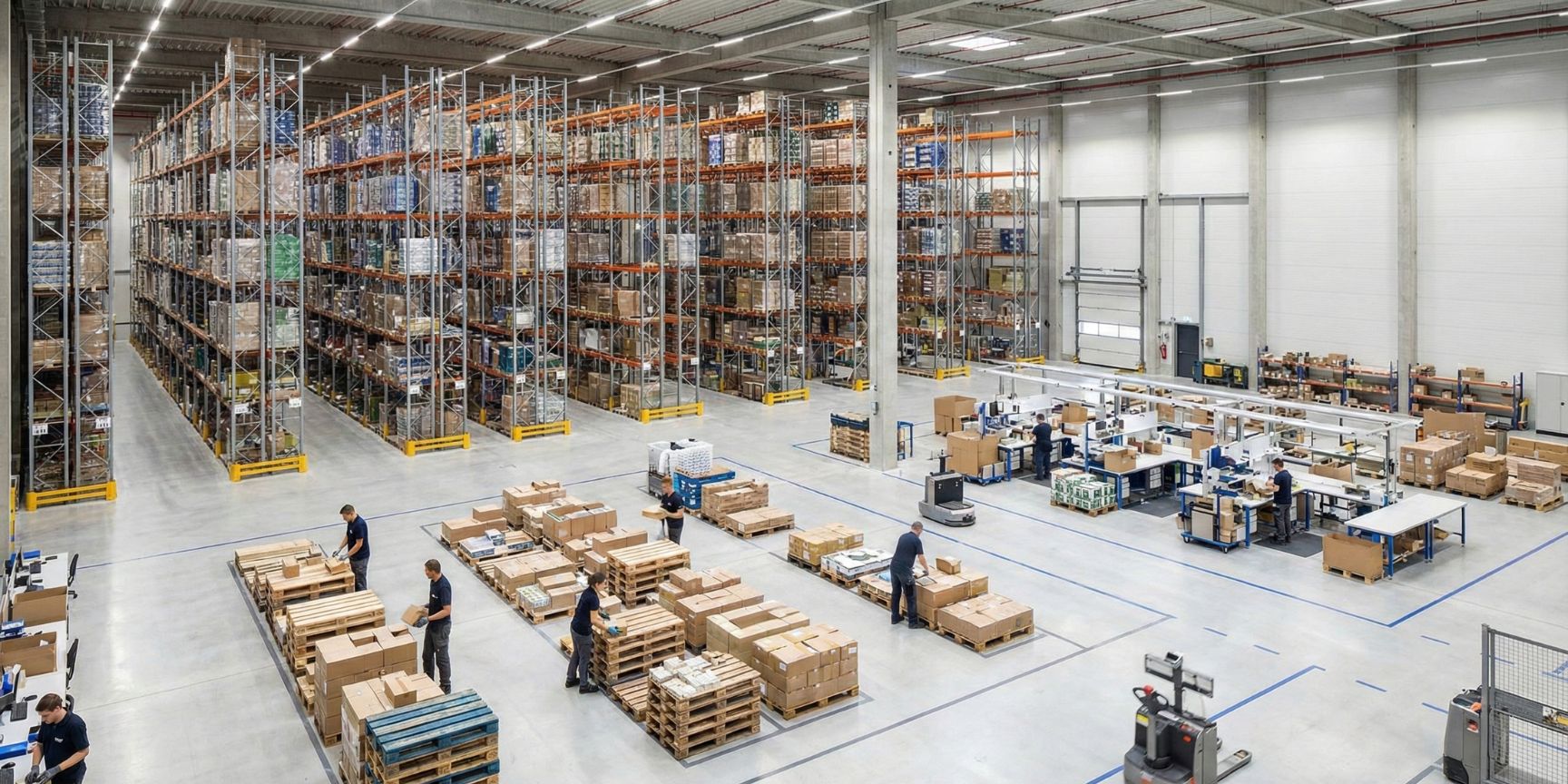
- Hall height: Modern logistics properties rely on a clear height of 12.20 m to 14.00 m in order to maximise volume utilisation (Bottom of truss).
- Floor conditions: High-strength industrial floors with a load capacity of usually 5-7 tonnes per square metre are standard for accommodating heavy industrial trucks and shelf loads.
FAQ: Frequently asked questions about inbound logistics
Question: Why is inbound logistics often more expensive than distribution?
Answer: Inbound shipments are often more fragmented and less predictable than outbound flows. Irregular delivery times of upstream suppliers lead to load peaks in personnel requirements.
Question: What influence does Industry 4.0 have on inbound logistics?
Answer: IoT sensors and RFID tags are making the "transparent supply chain" a reality. Not only do you know that the goods are coming, but you also know the exact GPS location and the condition (e.g. temperature of refrigerated goods) in real time.
Question: What is the difference between inbound logistics and procurement?
Answer: Procurement is the commercial process (negotiation, order), while inbound logistics takes over the physical handling and control.
Key performance indicators (KPIs) to manage success
To measure the depth of inbound performance, the following data should be collected:
- Goods receipt lead time: Time from truck arrival to "available in stock" booking. Target value: < 4-8 hours.
- Capture error rate: Difference between delivery notification and actual inventory.
- Ramponage rate: Percentage of damaged goods during the unloading process.
- Dock-to-stock time: This metric is crucial for liquidity because it measures how quickly invested capital (commodity) is ready for sale again.
Sustainability in the inflow: "Green Inbound"
An often underestimated aspect is the CO2 balance of inbound logistics. The concept of the milk run (a truck drives several suppliers in a loop) can massively reduce empty runs. The choice of property also plays a role: halls with DGNB Gold certification use photovoltaics for the intralogistics fleet, which reduces the operating costs of inbound processes.
Conclusion: The strategic importance of inbound excellence
Inbound logistics is much more than unloading pallets. It is the link between purchasing and sales. In a world of volatile supply chains, the ability to efficiently filter, inspect and provide flows of goods at the "gateway" is a real competitive advantage. Specialist portals should focus more on the integration of software (WMS/ERP) and the physical conditions of the property.