



DGNB in Logistics
Table of contents
- What exactly is DGNB certification?
- Why is sustainability so crucial, especially in logistics real estate?
- Questions & Answers: DGNB in Logistics Practice
- The economic added value: focus on life cycle costs
- Socio-cultural aspects: People at the centre of warehouse logistics
- Technical Quality and Process Quality: The Basis for Durability
- Location quality: More than just the motorway connection
- Conclusion: DGNB as a strategic instrument in logistics
What exactly is DGNB certification?
The German Sustainable Building Council (DGNB) has developed a holistic certification system that comprehensively assesses the sustainability of buildings. Unlike other systems, which often focus strongly on ecological aspects, the DGNB pursues a three-pillar approach that considers ecology, economy and socio-cultural aspects to be given equal weight. The aim is to make the entire life cycle of a building – from planning to construction and use to dismantling – sustainable. The evaluation is based on a detailed catalogue of criteria, which is divided into various subject areas and can ultimately lead to an award in platinum, gold, silver or bronze.
Why is sustainability so crucial, especially in logistics real estate?
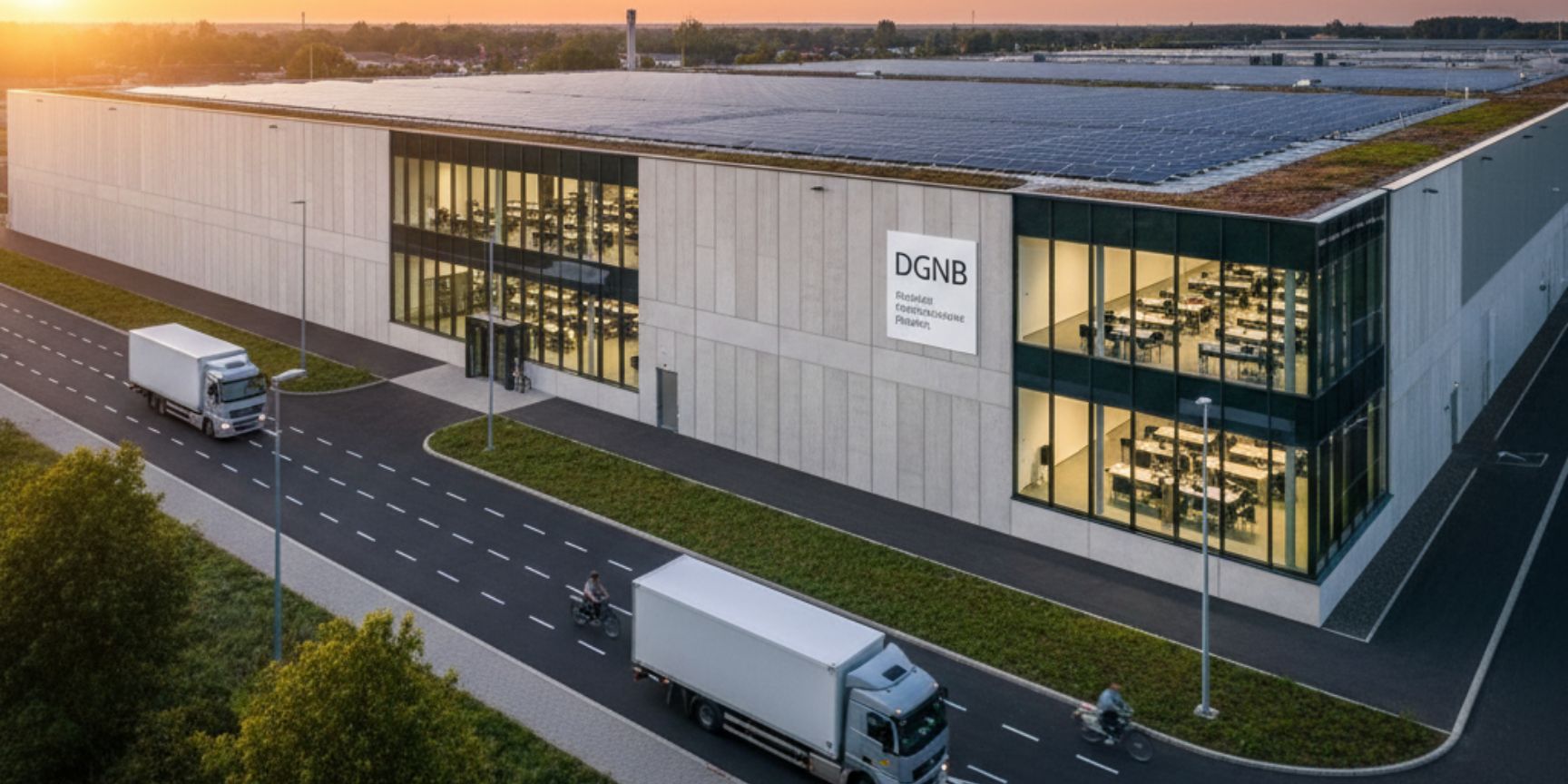
Logistics real estate is by definition resource-intensive. They are characterized by immense surface sealing, large enclosed volumes with high energy requirements for heating, cooling and lighting, and a high volume of traffic. At the same time, they are the backbone of the economy and a central place of work for many people. Sustainable construction in accordance with DGNB standards addresses these challenges directly: it reduces operating costs, improves working conditions, minimises the ecological footprint and, last but not least, increases the value of the property. In times of rising energy costs and stricter ESG (environment, social, governance) requirements, DGNB certification is thus turning from a "nice-to-have" into a tough competitive advantage.
Questions & Answers: DGNB in Logistics Practice
Question: What is specifically valued for a logistics property?
Answer: The DGNB uses specific usage profiles, e.g. for logistics buildings. Among other things, the energy efficiency of the hall (heating, LED lighting), the quality of the building envelope, the use of low-emission and recyclable materials, the flexibility of the building for future uses, the comfort for employees (daylight, air quality, noise protection) and the optimized life cycle costs instead of pure construction costs are evaluated.
Question: Is the effort also worthwhile for smaller logistics companies?
Answer: Yes. Although the certification process is associated with costs, the savings in operating costs (e.g. through lower energy consumption) are often amortized after just a few years. In addition, more and more large customers (shippers) are demanding proof of sustainability efforts from their logistics partners (contract logistics) – certification can become a decisive criterion when awarding contracts.
Question: Can you also have an existing hall certified?
Answer: Yes, the DGNB also offers a system for "buildings in operation". The focus is on optimising ongoing operations. This also enables owners and users of existing properties to measure, improve and make their sustainability performance visible to the outside world.
The economic added value: focus on life cycle costs
A central and often underestimated aspect of DGNB certification is the consideration of life cycle costs (LCC). Traditionally, the focus of construction projects is on the pure construction costs. However, the DGNB requires a holistic calculation that also includes the follow-up costs over a period of 50 years. These include:
- Operating and energy costs: heating, cooling, lighting, water.
- Maintenance and cleaning: Costs for maintenance, repairs and replacement of components.
- Dismantling and disposal costs: Value of materials at the end of their life cycle.
Practical fact: An investment in higher-quality insulation or more efficient system technology may slightly increase construction costs, but can result in savings in energy costs of up to 40% over the service life . This leads to higher profitability, more stable cash flows and a better rating with banks and investors.
Socio-cultural aspects: People at the centre of warehouse logistics
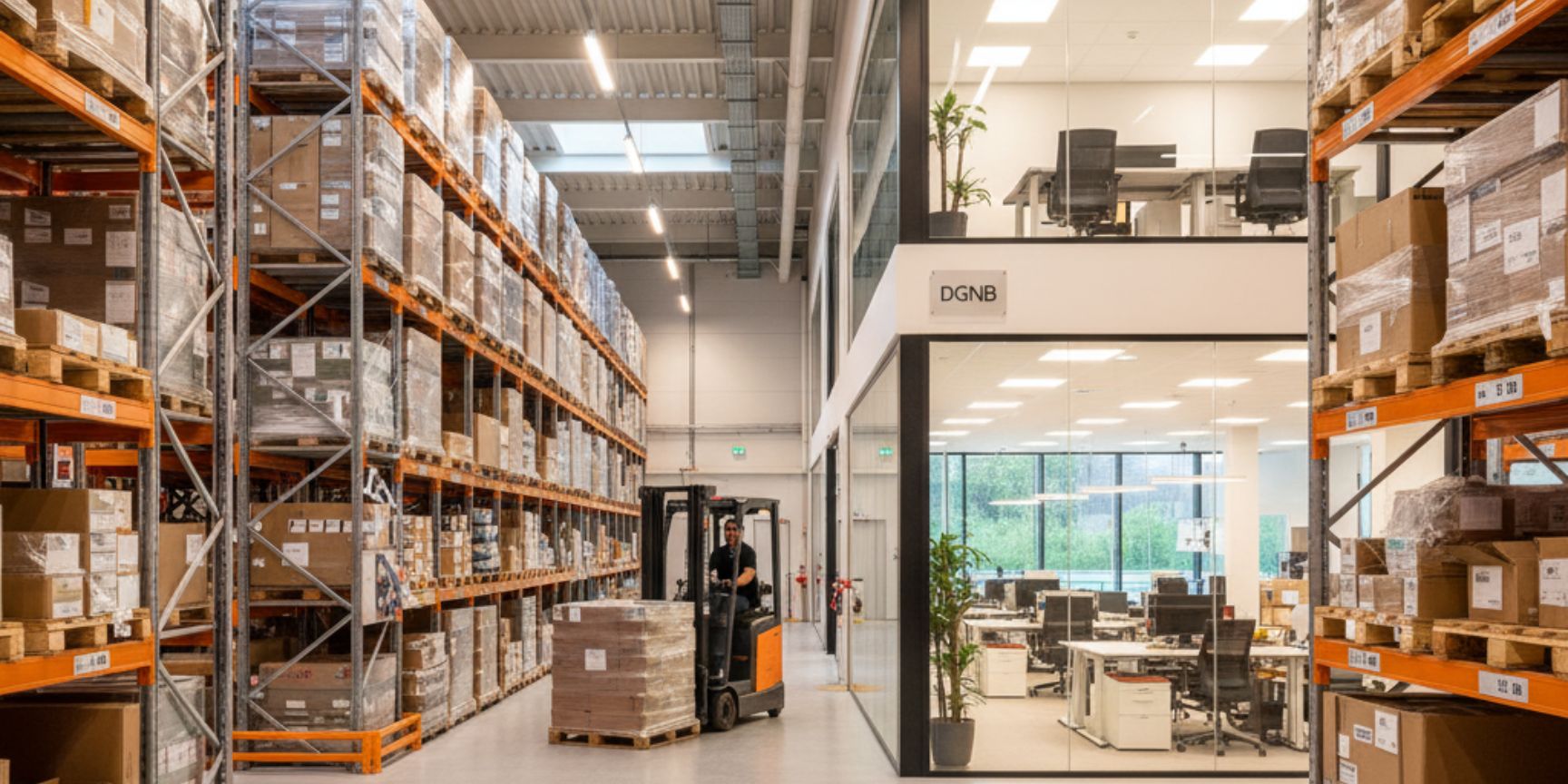
A modern logistics hall is more than just a transshipment point for goods; it is a workplace. The DGNB attaches great importance to socio-cultural and functional quality. For warehouse and contract logistics, this means in concrete terms:
- Visual comfort: Maximum use of daylight through skylights and window fronts reduces the need for artificial lighting and has been shown to increase employee well-being and productivity.
- Thermal comfort: A well-insulated building envelope and smart air conditioning technology ensure pleasant temperatures in summer and winter.
- Indoor air quality: The use of low-emission building materials (e.g. solvent-free floor coatings) protects the health of the workforce.
- Accessibility: Not only in the social and office wings, but also in the operational areas.
Technical Quality and Process Quality: The Basis for Durability
The technical quality ensures the long-term performance of the property. This involves the quality of the building envelope, the efficiency of the technical systems (e.g. sprinkler systems, heating systems) and the ease of cleaning and maintenance of the construction. Process quality , in turn, ensures the quality of the planning and construction itself. Integrated planning, in which all stakeholders – from the architect to the future user – sit at the same table from the very beginning is crucial to creating a building that is precisely tailored to the needs of the logistics processes.
Location quality: More than just the motorway connection
Of course, the connection to higher-level transport networks is essential for a logistics property. However, the DGNB assesses the location much more comprehensively. Points that are included here are:
- Connection to public transport: Important for accessibility for employees without their own car.
- Infrastructure at the location: Are there shopping facilities or gastronomic offers for employees nearby?
- Risks at the site: Are natural risks such as flooding or heavy rainfall events taken into account?
- Impact on the environment: measures to reduce noise and light emissions.
Conclusion: DGNB as a strategic instrument in logistics
DGNB certification is a strategic tool for the logistics industry to make real estate future-proof, economical and attractive. It provides objective evidence of high construction and operational quality and addresses the key ESG requirements of investors, customers and legislators. A certified building is not only ecologically responsible, but above all economically intelligent and socially valuable – a real added value for owners, users and employees alike.