




Depot in warehouse logistics
Table of contents
- The Depot: Strategic hub of modern logistics
- Definition: What exactly is meant by a custody account?
- Depot vs. warehouse: What are the subtle differences?
- The role of the depot in warehouse and contract logistics
- Requirements for the logistics property: More than just a hall
- Facts, figures, figures: What makes a top portfolio
- FAQ: The most important questions about the custody account
- Practical check: What should companies pay attention to when making a selection?
- Conclusion: The portfolio as an enabler of global trade
The Depot: Strategic hub of modern logistics
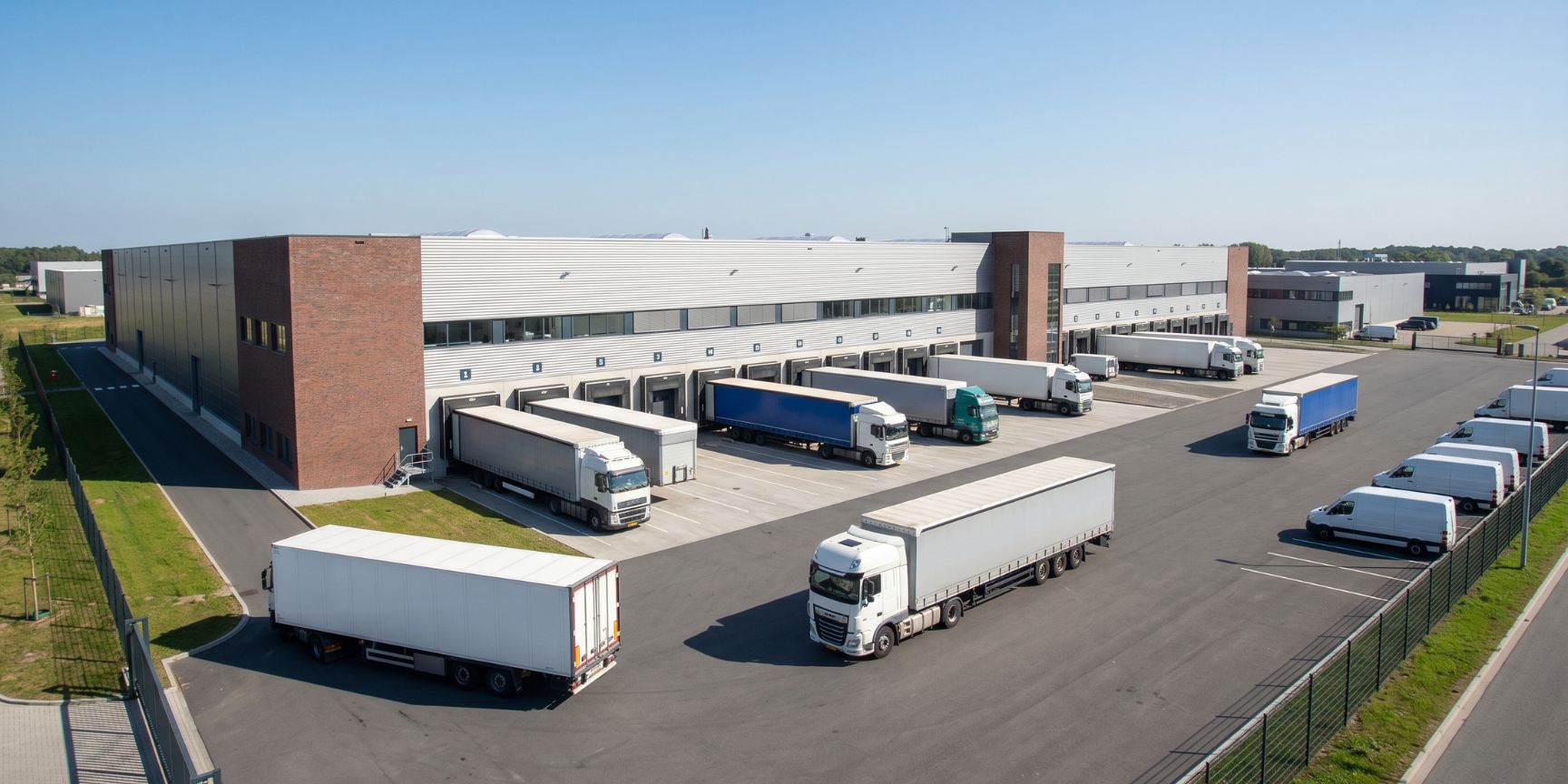
In the world of logistics, the term "depot" is ubiquitous, but its meaning varies significantly depending on the context. While the layman often thinks only of a parking facility, experts understand it to be a highly complex junction. A depot is a permanent establishment that is primarily used for the short- to medium-term storage, handling and distribution of goods. It forms the backbone of the "last mile" and is crucial for a company's speed of delivery and cost efficiency.
Definition: What exactly is meant by a custody account?
In logistics, a depot (French for "filing" or "place of custody") is a specialized property or a demarcated area within a network. In contrast to a central warehouse, which often buffers huge stocks over long periods of time, the depot is usually decentralized. It serves as a buffer station in which flows of goods are consolidated (groupage) or dissolved for fine distribution (break-bulk).
In transport logistics, the depot also refers to the location where vehicles (trucks, buses, trains) are maintained, cleaned and made available for the next use. For this guide, however, we will focus on the area of goods and warehouse logistics.
Depot vs. warehouse: What are the subtle differences?
Although the terms are often used synonymously, there are clear nuances in technical jargon:
- Warehouse: Focus on long-term stockpiling, inventory management and high storage capacity.
- Depot: Focus on high throughput, turnover frequency and speed.
A depot is characterized by a short storage period. Here, the focus is not on "lying" the goods, but on "moving". In the logistics chain, the depot often acts as a cross-docking point, where goods are transported directly from incoming goods to outgoing goods without significant intermediate storage.
The role of the depot in warehouse and contract logistics
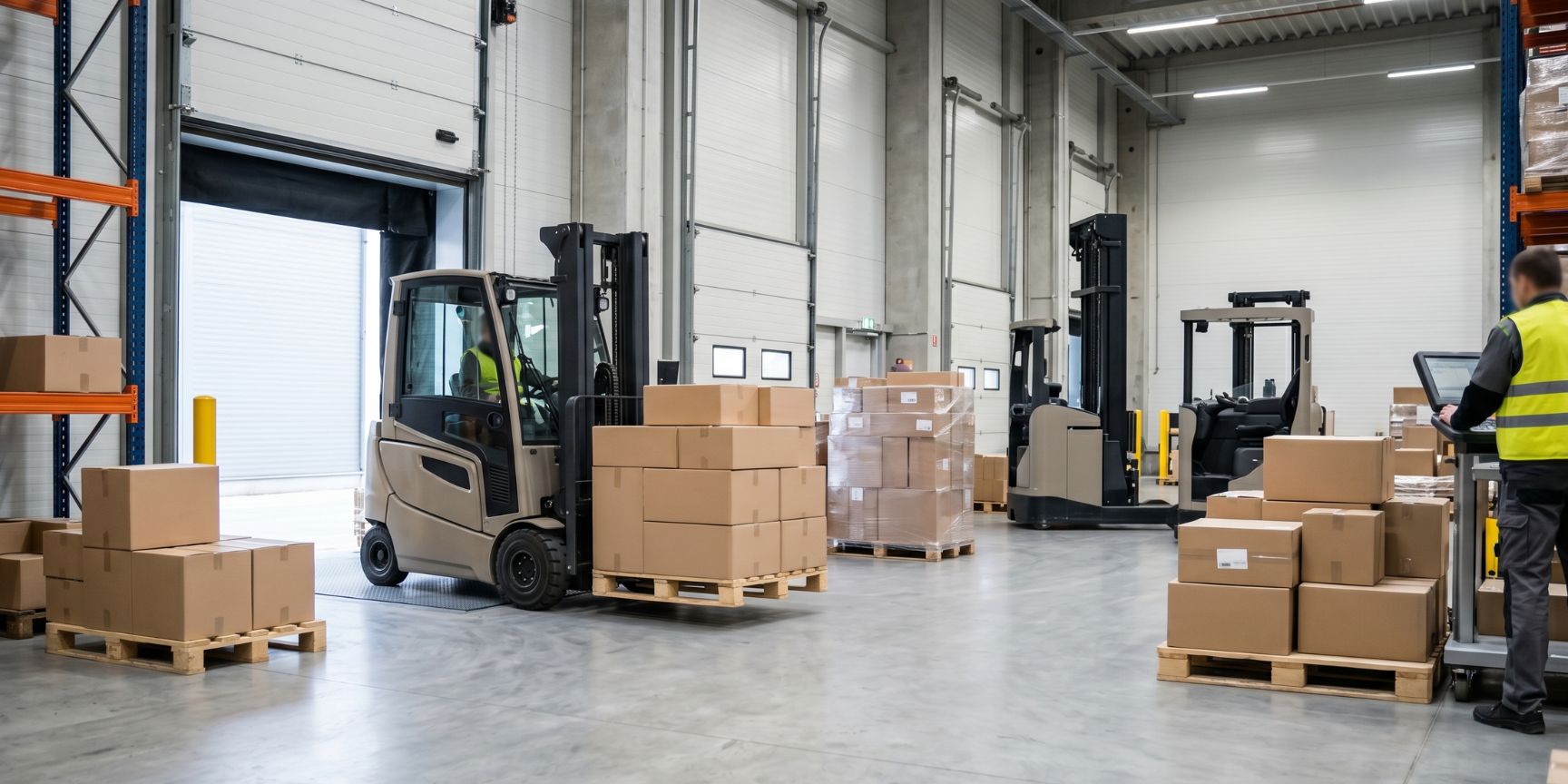
In contract logistics, the depot plays a key role as a value creation centre. Not only pallets are moved here, but often complex value-added services (VAS) are provided. These include:
- Picking: The compilation of orders from partial stocks.
- Packaging: The repackaging or labeling of goods for the end customer.
- Returns management: The inspection and reintegration of returned goods.
An efficient depot massively reduces throughput times. In times of e-commerce and "same-day delivery", the geographical location and the internal organisation of the depot are decisive for market success.
Requirements for the logistics property: More than just a hall
In order for a depot to fulfil its function, the logistics property must meet specific technical criteria. A simple "hall" is no longer sufficient today.
- Floor loading: Modern depots require industrial floors with a load capacity of at least 5 to 7 tons per square meter to support high-bay systems and heavy industrial trucks.
- Hall height: For optimal use of space, usable heights (lower edge of truss) of 10 to 12 metres are standard.
- Delivery: A large number of dock levellers is essential to avoid truck congestion and to enable parallel loading and unloading processes.
- Fire protection: Sprinkler systems (ESFR) and fire compartments are mandatory due to the high value of goods and insurance requirements.
Facts, figures, figures: What makes a top portfolio
Efficiency can be measured. Professionals use hard KPIs (Key Performance Indicators) to evaluate the performance of a portfolio:
- Turnover frequency: How many times is the entire inventory rotated in a period (e.g. year)? A value of >10 is not uncommon in fast-moving portfolios.
- Land use rate: The ratio of used parking space to the total area (target: >85%).
- Pick rate: Number of items removed per employee per hour.
- Rental prices: Depending on the location (e.g. metropolitan regions such as Hamburg or Munich), rents for first-class depot space vary between €6.50 and €10.50 per m².
FAQ: The most important questions about the custody account
Question: What role does digitization play in the portfolio?
Answer: Without a modern warehouse management system (WMS), a depot today is hardly competitive. RFID tracking, paperless picking (pick-by-voice or pick-by-light) and automated conveyor technology ensure an error rate of almost zero.
Question: What is an "Urban Depot"?
Answer: These are smaller logistics units directly in inner-city locations. They serve as micro-hubs for delivery by cargo bike or electric transporter in order to bridge the "last mile" emission-free and quickly.
Question: How sustainable do portfolios have to be today?
Answer: The topic of ESG (Environmental, Social, Governance) is central. Photovoltaics on the roof, heat pumps instead of gas heating systems and LED lighting are now standard in new logistics real estate construction, also to reduce operating costs (OPEX).
Practical check: What should companies pay attention to when making a selection?
When renting or building a depot, you should follow the following checklist:
- Transport connections: close to the motorway (< 5 km) and accessibility for 40-ton trucks.
- Flexibility: Is the area modularly expandable? Can office space be booked flexibly?
- Staff availability: Are there enough skilled workers in the catchment area (warehouse logistics specialists, forklift drivers)?
- IT infrastructure: Is there a fast fiber optic connection for data exchange with the ERP system?
Conclusion: The portfolio as an enabler of global trade
The depot has been transformed from a dusty warehouse into a technologically highly equipped logistics hub. In contract logistics, it is the tool that service providers use to master complex supply chains. Those who understand the requirements for the property and have the processes digitally under control use the custody account not only as a cost center, but also as a real competitive advantage. In a world where availability is the new currency, the depot remains the gold deposit of logistics.
Your Ideal Logistics Warehouse
Browse listings for warehouse space, logistics real estate, industrial land, and contract logistics solutions.
Browse Exposés
Maximize Exposure for Your Warehouse Space
Showcase your logistics properties and attract qualified inquiries.
Discover Products