




Data warehouse in logistics
Table of contents
- The data warehouse: Where bits and bytes meet pallets
- What is a data warehouse in logistics?
- The logistics property as a data source
- Data Warehouse in Contract Logistics: The Added Value for Customers
- Q&A: The most important questions about the data warehouse
- Figures, data, facts: The measurable benefits
- From the hall to the "digital twin"
- Challenges: Safety and quality
- Conclusion: The data warehouse as a strategic asset
The data warehouse: Where bits and bytes meet pallets
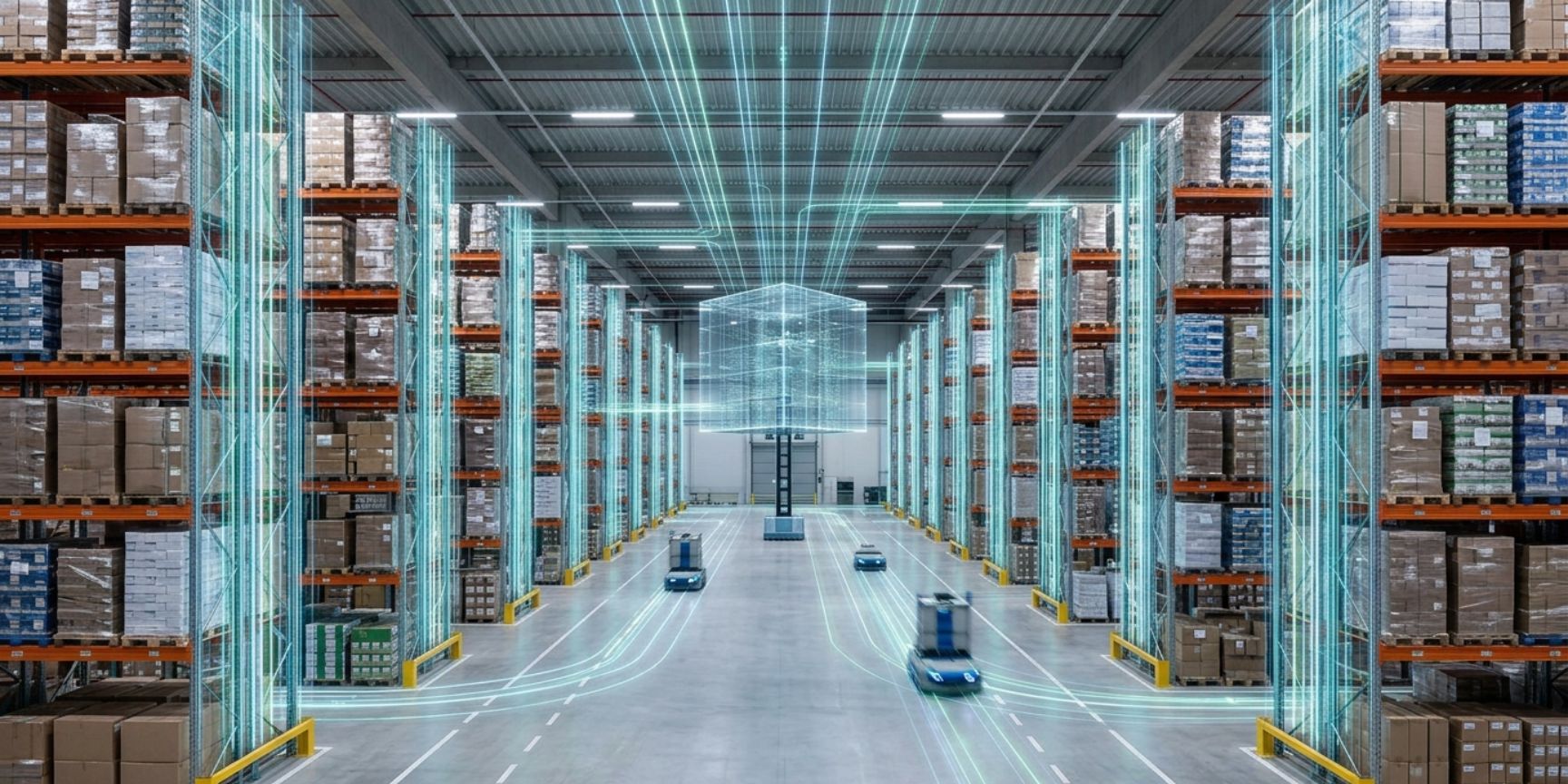
In classic warehouse logistics, the term "warehouse" was used for decades to refer to steel racks, concrete floors and forklifts. But in the era of Industry 4.0, a second, invisible warehouse has been placed over the physical halls: the data warehouse. It is much more than a mere database; it is the digital image of all movements, states and potentials within a logistics property.
What is a data warehouse in logistics?
A data warehouse (often referred to as a data warehouse) is a central system that brings together data from various sources – such as the warehouse management system (WMS), transport management systems (TMS) and IoT sensors of the hall – in a structured way and stores it for the long term.
While the operational system controls the "day-to-day business", the data warehouse is used for strategic analysis. It enables a look into the past (reporting) and into the future (predictive analytics).
The logistics property as a data source
In the past, a logistics hall was a "shell". Today, the property itself is becoming a data supplier. Through smart building technologies, the hall continuously generates data:
- Energy management: Consumption data from photovoltaic systems and lighting.
- Building condition: Sensors measure humidity and temperature (essential for pharmaceutical logistics or food storage).
- Space utilization: Thermal images and movement profiles show which zones of the hall are overloaded or underused.
A modern data warehouse integrates this real estate data with the logistics data to reduce the total cost of ownership (TCO) of the property.
Data Warehouse in Contract Logistics: The Added Value for Customers
In contract logistics, the data warehouse is the most important link between the service provider and the customer. This is not just about "storage and outsourcing", but also about information logistics.
- Transparency: The customer wants to know in real time how high their inventory is (inventory accuracy).
- KPI management: The data warehouse allows key figures such as the pick rate, the complaint rate or the throughput time to be visualized at the touch of a button.
- Interface competence: A high-performance data warehouse can harmonize different data formats (EDI, API, XML), which drastically accelerates the connection of new customers.
Q&A: The most important questions about the data warehouse
Question: Why is my normal WMS not enough?
Answer: A WMS is optimized for processing. It often deletes historical data or archives it in a way that complex queries would slow down the system. The data warehouse, on the other hand, specializes in analyzing huge amounts of data without disrupting operations.
Question: What influence does the data warehouse have on intralogistics?
Answer: It is the basis for automation. Automated guided vehicles (AGVs) or AutoStore systems require historical order data to feed algorithms for route optimization.
Question: Is the topic also relevant for small halls?
Answer: Yes. Even with an area of 5,000 m², data analysis helps to identify slow sellers and shorten picking distances. Data sovereignty is not a question of hall size, but of competitiveness.
Figures, data, facts: The measurable benefits
According to industry analyses, the implementation of professional data management in warehouse logistics leads to impressive results:
| Area | Potential improvement |
| Inventory costs | Reduction of 15–20% through optimized storage. |
| Pick Efficiency | Increase by up to 25% through path optimization (heat maps). |
| Energy costs | 10-30% reduction with AI-driven building management. |
| Error rate | Reduction of incorrect deliveries by 12% through pattern recognition in the data warehouse. |
From the hall to the "digital twin"
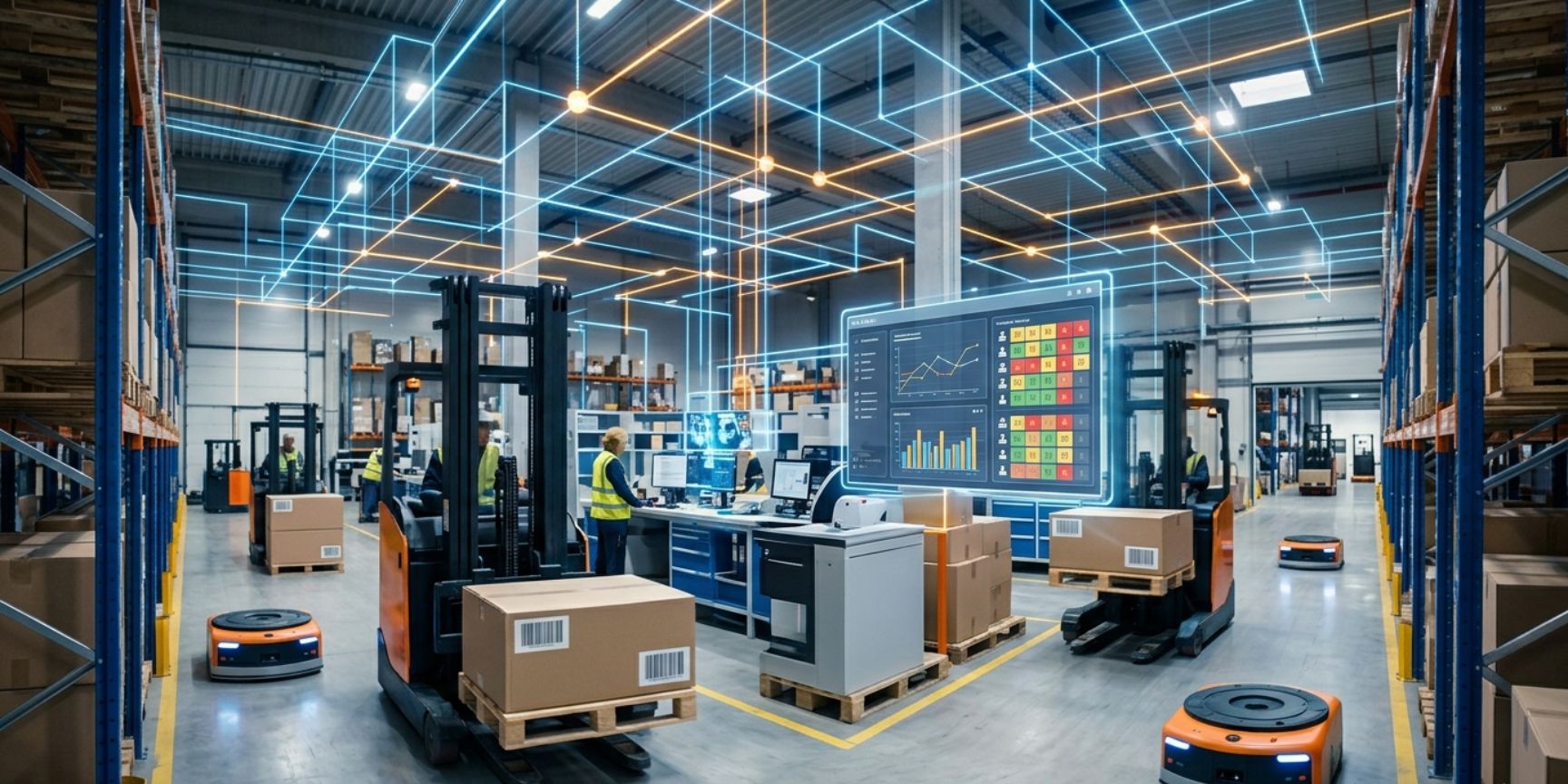
The next step in development is the digital twin. Here, the data from the warehouse is used to create a virtual copy of the logistics property. Simulations in the data warehouse make it possible to test conversion measures or new picking strategies virtually before expensive mistakes are made in the physical hall. This is particularly invaluable in the planning of logistics real estate (BIM – Building Information Modeling).
Challenges: Safety and quality
"Garbage in, garbage out" – this principle also applies here. A data warehouse is only as good as the data quality.
- Master data maintenance: Correct dimensions and weights are the foundation.
- Data security: Logistics data is highly sensitive. An attack on the data warehouse can paralyze the entire supply chain.
- Shortage of skilled workers: Personnel are needed who both understand logistics and can "read" data (data analysts in logistics).
Conclusion: The data warehouse as a strategic asset
The data warehouse is not an IT project, but a strategic tool for logistics managers, real estate developers and contract logistics specialists. It transforms a passive hall into an intelligent ecosystem. If you invest in the structure of your data today, you will secure the flexibility that the market will demand tomorrow. In a world in which delivery times are getting shorter and shorter and margins are becoming increasingly scarce, knowledge from the data warehouse is often the decisive centimetre ahead of the competition.