



DUSS terminals in logistics
Table of Contents
- What is a DUSS terminal? A basic definition
- The central role in combined transport (CT)
- Frequently asked questions and answers about operations
- The strategic importance for logistics real estate and warehouse logistics
- Benefits and systemic challenges
- Conclusion and outlook: Digitization as the next step
What is a DUSS terminal? A basic definition
A DUSS terminal is a highly specialised combined transport (CT) facility. The name DUSS stands for "Deutsche Umschlaggesellschaft Schiene-Straße mbH", a subsidiary of Deutsche Bahn AG. These terminals are strategically placed transport hubs where goods are transshipped in standardised loading units (such as containers or swap bodies) between the modes of transport rail and road, i.e. loaded.
Their primary function is to shift the main route of goods transport over long distances from road to the more environmentally friendly and often more efficient rail. The truck only takes care of the short pre- and onward carriage, i.e. the collection from the sender to the terminal and the delivery from the terminal to the recipient. In Germany, DUSS operates a network of around 25 transhipment terminals, which form the foundation for intermodal freight transport.
The central role in combined transport (CT)
Combined transport is the intelligent linking of different modes of transport in a single transport chain. A DUSS terminal is the heart of this system, which makes this system change possible in the first place. Without such transshipment points, a container arriving by truck could not be loaded onto a freight train and vice versa.
The following load units are typically handled:
- ISO containers: The globally standardized sea freight containers in sizes such as 20, 40 or 45 feet.
- Swap bodies: Loading containers specially designed for European land transport that can be quickly separated from the truck chassis and placed on a rail wagon.
- Cranable semi-trailers: Specially reinforced truck trailers that can be picked up and loaded in their entirety by a crane.
A DUSS terminal thus acts as a bridge that makes optimal use of the respective strengths of the modes of transport: the mass capacity and environmental friendliness of rail for long distances and the flexibility of the truck for fine distribution on the "last mile".
Frequently asked questions and answers about operations
To illustrate the practical relevance, we answer two central questions about the operation of a DUSS terminal here.
Question: What exactly is handled in a DUSS terminal – the goods themselves or something else?
Answer: A crucial clarification: In a DUSS terminal, the goods themselves are never touched or repacked. Handling refers exclusively to the entire loading unit (container, swap body, etc.). The contents remain sealed and untouched throughout the process. This ensures a high level of safety, efficiency and speed, as there is no time-consuming handling of individual pallets or packages.
Question: How does the handling process work technically?
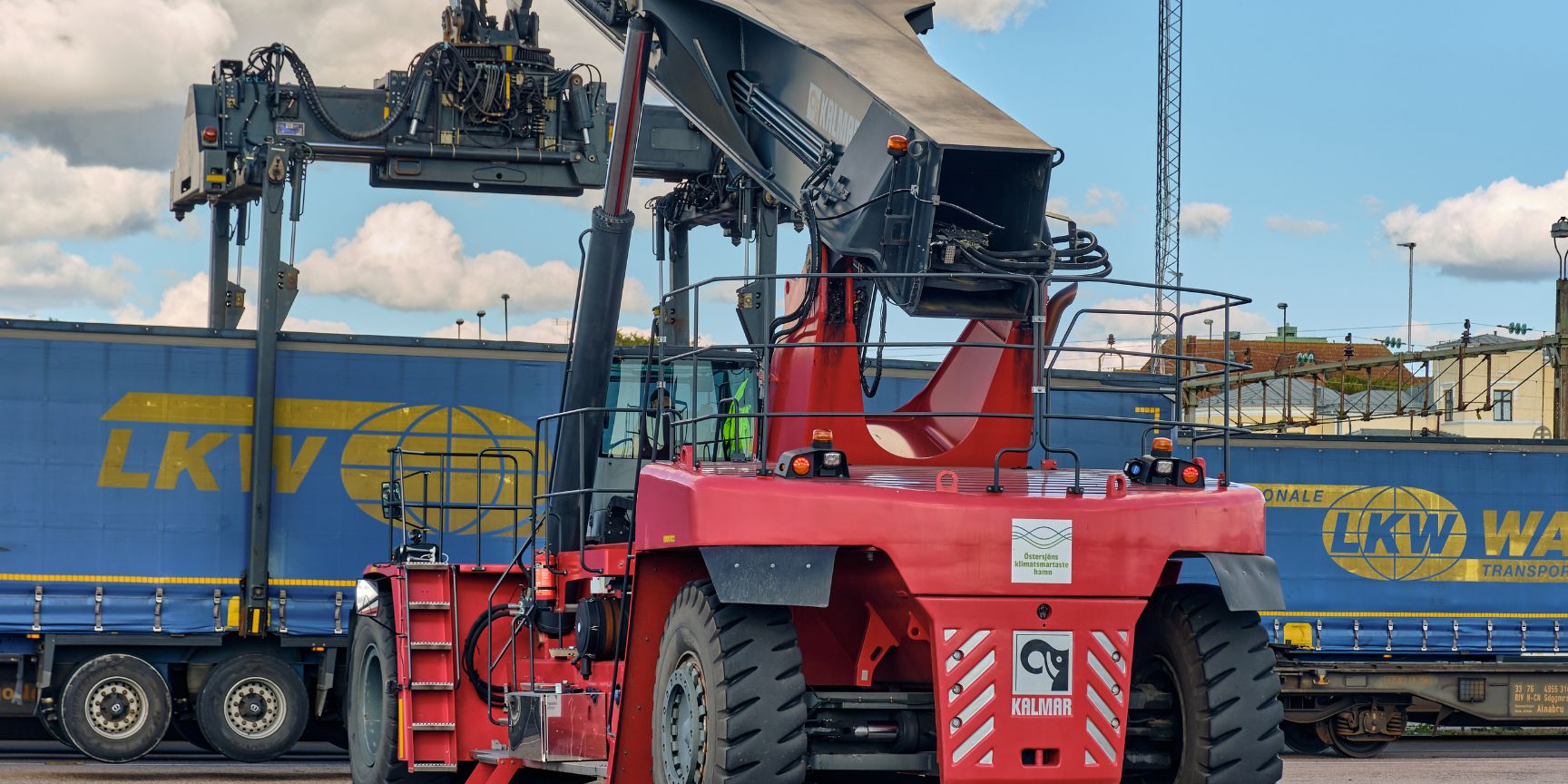
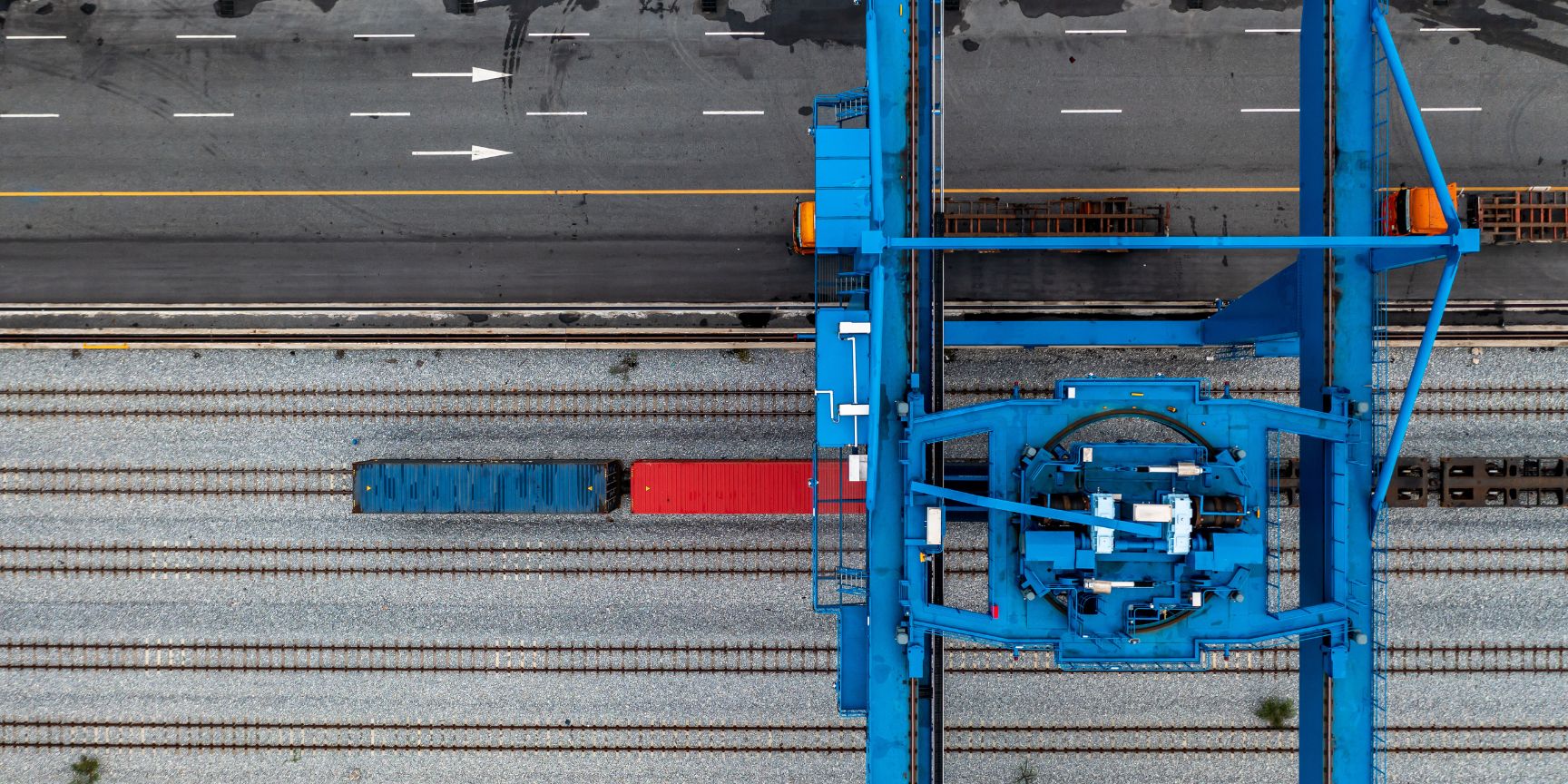
Answer: The process is highly standardized. A truck drives into a marked lane under one of the huge gantry cranes that span the terminal. The crane operator or an automated system lowers the gripping gear (spreader), which locks at the corners of the loading unit. Within a few minutes, the unit is lifted, moved over the tracks and placed precisely on a waiting pocket or flat car of a freight train. In addition, mobile reach stackers are often used, which can act more flexibly. The entire process per lifting unit often takes only two to four minutes.
The strategic importance for logistics real estate and warehouse logistics
This is where the greatest utility value for professionals from real estate and contract logistics lies. Today, proximity to a DUSS terminal is one of the most important location factors for modern logistics properties.
- From the perspective of logistics real estate: A plot of land or a hall in the immediate vicinity of a CT terminal experiences a massive increase in value. It will have a bimodal (rail/road) or, ideally, even trimodal (additionally waterway) connection. Such locations are known as "freight transport centres" (GVZ) and attract tenants with strong credit ratings. Companies that move large quantities of goods over long distances are specifically looking for such locations in order to reduce their transport costs and their CO₂ footprint. The connection to a DUSS terminal is therefore a hard, value-determining criterion in the acquisition and development of logistics space.
- From the perspective of warehouse and contract logistics: For a logistics service provider, a warehouse at a DUSS terminal is a strategic asset. He can offer his customers (shippers) an integrated, cost-efficient and sustainable supply chain solution. Instead of transporting goods over 800 km by truck through Germany, the container is filled in the warehouse, driven a few kilometers by truck to the terminal and the main leg is covered by train. This results in:
- Calculable transit times: Train schedules are usually more reliable than forecasts in congested road traffic.
- Cost savings: Lower toll and fuel costs as well as better utilization of truck drivers.
- Sustainability goals: The shift to rail is an essential building block for "Green Logistics" concepts, which are demanded by many clients.
Benefits and systemic challenges
No system is perfect. A neutral view shows both clear strengths and challenges.
Advantages:
- Ecological footprint: A freight train emits significantly less CO₂ per tonne-kilometre than a truck.
- Relief on the roads: Every loading unit shifted to rail reduces traffic on motorways.
- Circumvention of bottlenecks: Driver shortages, driving and rest times as well as traffic jams are avoided on long-haul routes.
- Efficiency: A single freight train can transport the cargo of over 50 trucks.
Challenges:
- Dependence on the last mile: Without a functioning pre- and on-carriage by truck, the system is useless.
- Less flexibility: Trains run according to fixed schedules, while a truck can theoretically start at any time.
- Infrastructural bottlenecks: Terminals can be overloaded at peak times, leading to waiting times.
- Handling costs: The handling itself incurs costs that are only amortized over longer distances.
Conclusion and outlook: Digitization as the next step
DUSS terminals are much more than just transshipment points. They are strategic assets that define the value of logistics real estate and have a significant impact on efficiency in warehouse and contract logistics. They are the physical prerequisite for a modern, sustainable freight transport strategy.
The future of these terminals lies in digitization and automation. The introduction of digital platforms for booking arrival and departure time slots (slot management), the automation of cranes and the seamless digital linking of all stakeholders (freight forwarder, terminal, railway company) will further increase efficiency and further consolidate the role of DUSS terminals as an indispensable backbone of the logistics industry.