




Bimodal transport in logistics
Table of Contents
- What exactly is bimodal transport?
- What is the strategic importance of bimodal transport for logistics?
- Bimodal transport from the perspective of warehouse and contract logistics
- The impact on logistics real estate: More than just four walls and a roof
- Facts, figures, data: The economic relevance
- Challenges and outlook in practice
What exactly is bimodal transport?
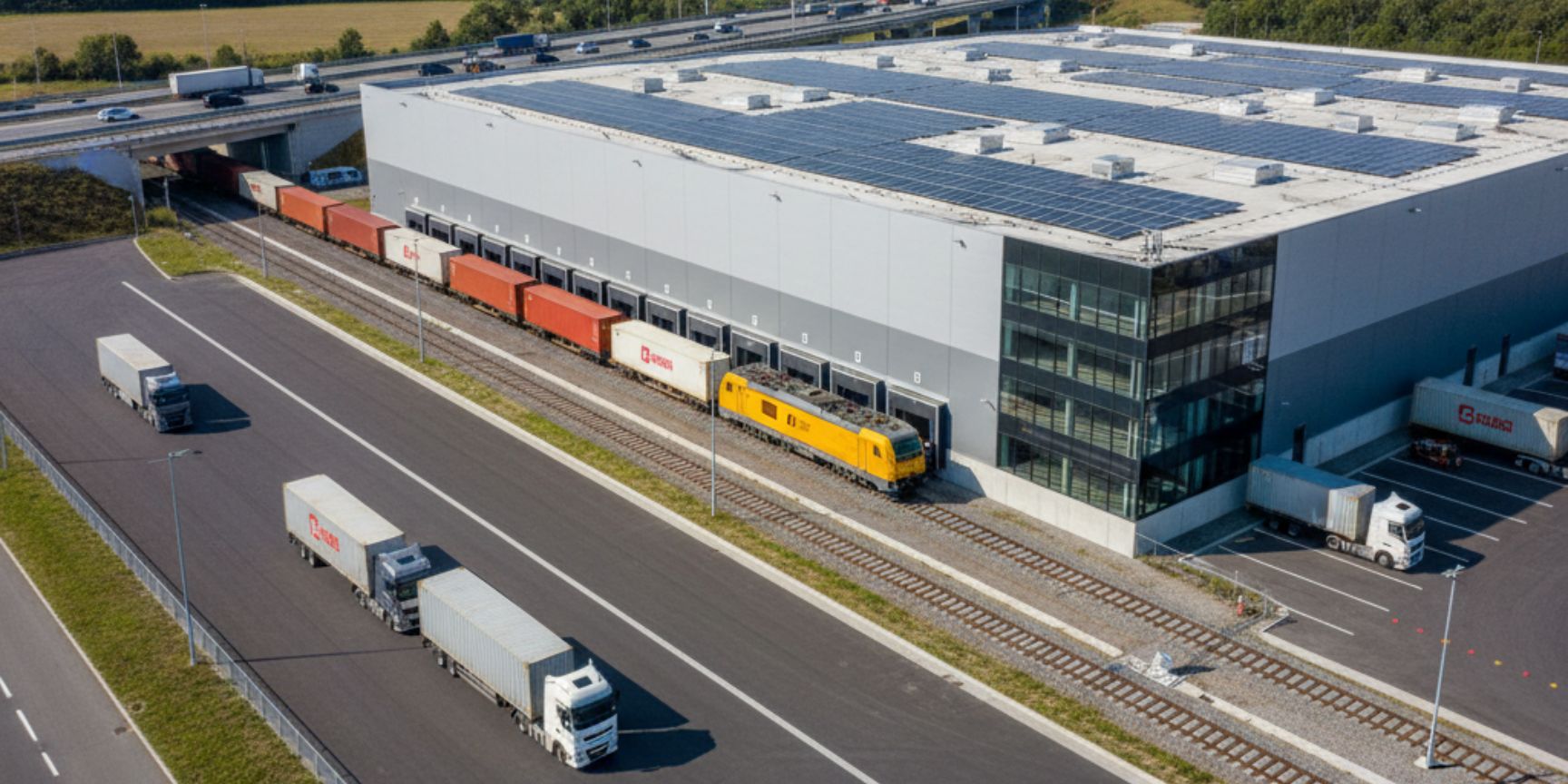
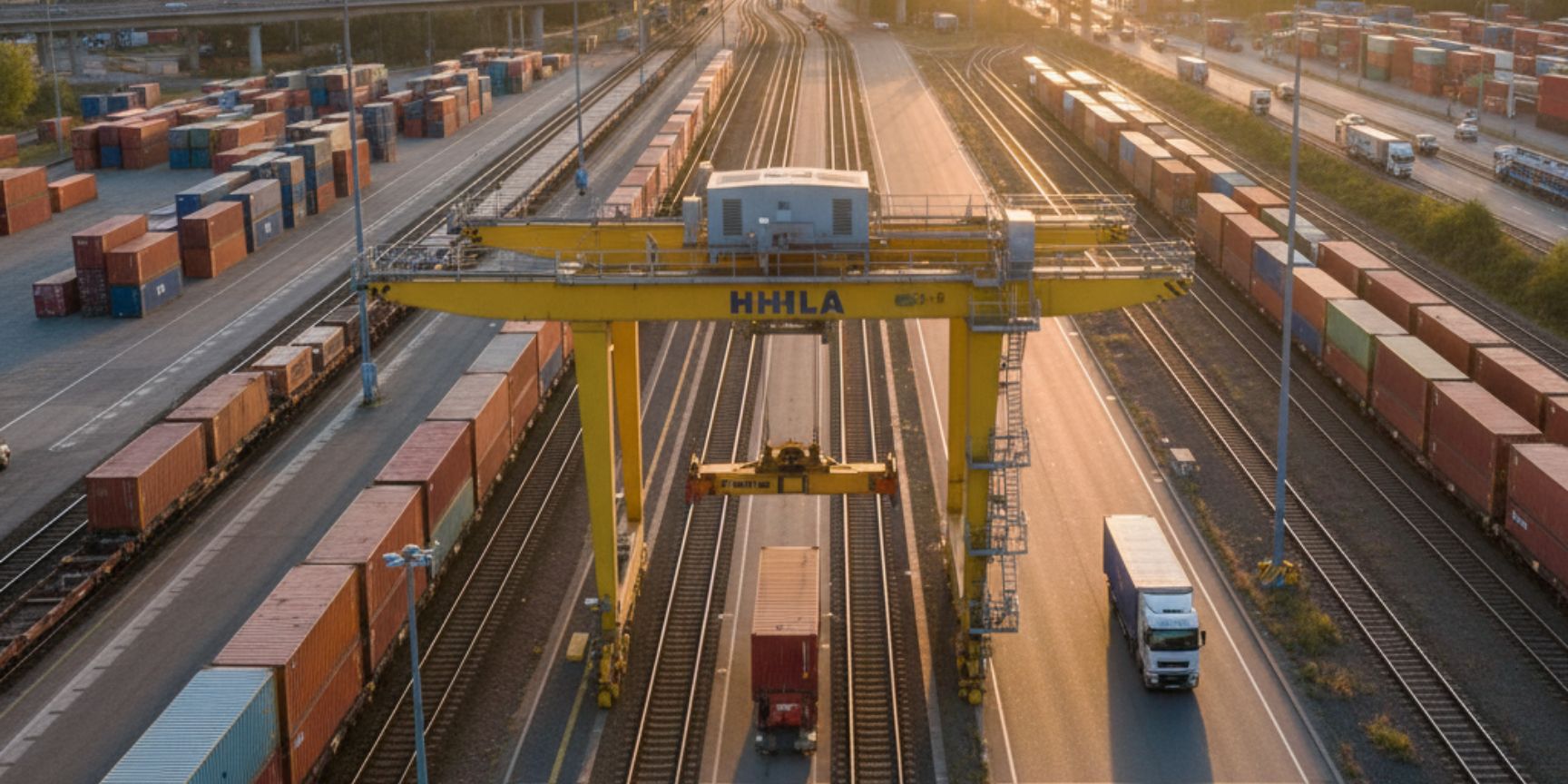
Bimodal transport, often used synonymously with the term combined transport (CT), refers to a transport chain in which goods are transported in one and the same loading unit (e.g. containers, swap bodies or semi-trailers) with two different modes of transport without the goods themselves having to be handled. The main leg of the route is usually covered by rail or ship, while the pre-carriage and onward carriage – i.e. the first and last mile – is flexibly covered by truck. The core principle is to bundle long-haul transports to increase efficiency and reduce environmental impact.
What is the strategic importance of bimodal transport for logistics?
In an economic world characterized by global supply chains, increasing cost pressure and growing environmental awareness, bimodal transport is more than just an alternative – it is a strategic necessity. It addresses key challenges of modern logistics:
- Traffic relief: The shift of goods from road to rail or waterway reduces congestion and relieves the highly frequented motorways.
- Sustainability: Rail and shipping transport have significantly lower CO₂ emissions per tonne-kilometre than trucks. This enables companies to better achieve their climate goals and improve their CSR (Corporate Social Responsibility) balance.
- Cost efficiency: Despite higher fixed costs for handling, significant cost savings can be achieved over long distances compared to pure road transport.
- Reliability: Rail and inland waterway transport is less susceptible to traffic jams, weekend or night driving bans, which leads to greater planning and scheduling reliability.
Bimodal transport from the perspective of warehouse and contract logistics
For players in warehouse and contract logistics, the integration of bimodal concepts is a decisive competitive advantage. A logistics service provider that is able to offer its customers efficient and sustainable bimodal supply chains positions itself as a future-proof partner.
Question: How does bimodal transport change the requirements for a contract logistics provider?
Answer: A contract logistics provider has to think beyond pure storage and picking. He becomes the manager of complex transport chains. This requires know-how in the coordination of different modes of transport, in the management of interfaces (terminals) and in the use of appropriate IT systems for shipment tracking across the entire chain. In addition, it must adapt its processes to the timing of trains or ships, which requires more precise time slot control.
The impact on logistics real estate: More than just four walls and a roof
The decision for or against a logistics location is largely determined by its transport connections. A bimodal connection is a value-enhancing asset that makes a property future-proof.
Question: What specific features does a logistics hall for bimodal transport have to have?
Answer: A location purely close to the motorway is no longer sufficient. Ideal logistics properties for bimodal transport are characterised by the following characteristics:
- Location: The immediate proximity to an intermodal terminal (rail) or an inland port is the decisive criterion. Locations that also offer good road connections are referred to as trimodal and are particularly sought after.
- Property layout: Larger manoeuvring and parking areas for trucks are required in order to efficiently synchronize the delivery and delivery of the loading units. Areas for the temporary temporary storage of containers or swap bodies are also essential.
- Infrastructure: A direct rail connection on your own property is the premium solution. It enables transhipment directly at the hall and minimizes the use of trucks to an absolute minimum.
- Building design: The number of gates and their arrangement must be designed for fast turnover. The statics of the hall floor and the clear height must be suitable for handling heavy load units.
Facts, figures, data: The economic relevance
The importance of combined transport in Germany is significant and growing steadily. According to the Federal Statistical Office, around 100 million tonnes of goods were transported in combined transport in 2023. Rail freight transport has the lion's share of this. A study by the International Union of Railways (UIC) shows that rail freight transport emits up to nine times less CO₂ per tonne-kilometre compared to road freight transport . These figures illustrate the enormous ecological and economic potential that lies in the modal shift.
Challenges and outlook in practice
Despite the undeniable advantages, there are still hurdles in practice. The "last mile" from the terminal to the warehouse remains a challenge, especially with scarce truck capacity and driver shortages. The harmonization of IT systems between the various actors (freight forwarder, terminal operator, railway company) is often complex and crucial for a smooth flow of information.
However, the future clearly lies in the expansion and optimization of these systems. Investments in the digital infrastructure of the terminals, the automation of handling processes and the expansion of the rail network will further increase efficiency. For the logistics real estate industry, this means that properties without bimodal connections could lose their attractiveness in the long term.
Your Ideal Logistics Warehouse
Browse listings for warehouse space, logistics real estate, industrial land, and contract logistics solutions.
Browse Exposés
Maximize Exposure for Your Warehouse Space
Showcase your logistics properties and attract qualified inquiries.
Discover Products