




Business parks interesting for logistics
Table of Contents
- What is a business park? A precise definition
- The Critical Infrastructure for Warehouse Logistics
- The most important location factors: macro and micro location
- Greenfield vs. Brownfield: Uncharted Territory or Second Chance?
- What does a location in the business park really cost?
- Current trends and the future of the business park
What is a business park? A precise definition
An industrial park is a spatially contiguous and planned area that has been specially designed for the settlement of commercial companies. In contrast to traditional, often heterogeneously grown industrial areas, business parks are usually developed, managed and marketed by a single sponsor (private or municipal). It is characterized by a high-quality and uniform design, a modern infrastructure and a service concept that is intended to promote synergies between the local companies. They are of central importance for warehouse logistics due to their optimized framework conditions.
The Critical Infrastructure for Warehouse Logistics
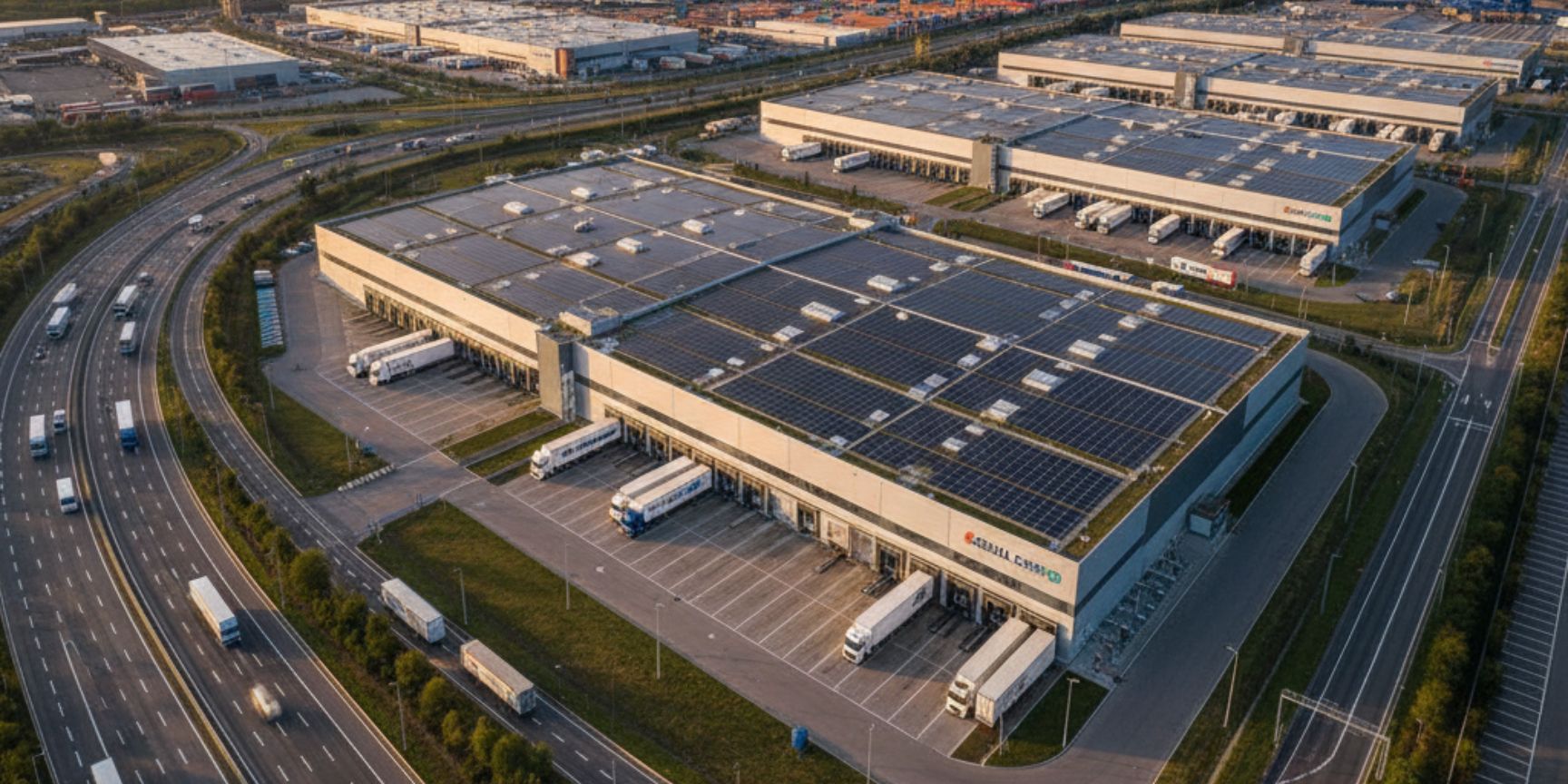
The efficiency of a logistics location is largely determined by the existing infrastructure. Modern business parks offer decisive advantages here that go far beyond the mere provision of space.
- Transport connections as the be-all and end-all: A direct, intersection-free connection to a motorway, ideally to a motorway junction, is essential for long-distance traffic. The proximity to freight transport centres, container terminals (for combined rail/waterway transport) or cargo airports maximises logistical flexibility. A well-developed connection to the regional road network also ensures fine distribution.
- Areas and buildings: The plots must allow for generous layouts in order to be able to realise modern logistics halls (so-called "big-box properties") with 10,000 m² and more. Sufficiently dimensioned truck manoeuvring areas (a yard depth of at least 35 metres is ideal), separate car parking spaces and a high number of doors for loading and unloading (approx. one gate per 1,000 m² of hall space) are also crucial here.
- Technical building equipment (TGA): For warehouse logistics, a clear hall height of at least 10 to 12 meters (lower edge of truss), a floor load capacity of at least 5 tons per square meter for the operation of forklift trucks and the storage of heavy goods, as well as a powerful sprinkler system (ESFR – Early Suppression Fast Response) are standard.
The most important location factors: macro and micro location
Choosing the right business park is a strategic decision that will affect costs and delivery capability for years to come. The analysis must include both the supra-regional (macro) and the local (micro) situation.
Question: Which supra-regional factors are most important for a logistics company?
Answer: The three key macro factors are:
- Centrality: The geographical location in relation to the procurement and sales markets. The aim is to minimise the total transport kilometres.
- Workforce: The availability of skilled personnel – from warehouse workers to logistics managers – in the catchment area is a critical factor.
- Economic environment: The general economic strength of the region and the proximity to production clusters or large conurbations.
Question: What needs to be paid attention to at the local level?
Answer: In the case of the micro layer, the following count:
- 24/7 operating license: An essential prerequisite for the shift work that is common in logistics.
- Trade tax rate: This rate, set by the municipality, has a direct influence on profitability.
- Land availability and prices: There must be an opportunity for expansion and costs must be competitive.
Greenfield vs. Brownfield: Uncharted Territory or Second Chance?
There are two basic approaches to the development of commercial space, each of which has specific advantages and disadvantages for logistics companies.
- Greenfield: Development on a "greenfield" site, i.e. on previously untouched areas. This allows planning according to the most modern logistical requirements without compromise. The disadvantage is the high land consumption and often lengthy approval procedures.
- Brownfield: The revitalization and conversion of former industrial, commercial or military areas. In view of the increasing shortage of land in Germany, this approach is becoming increasingly important. According to the "Logistics Real Estate Seismograph" by Berlin Hyp and the real estate consulting firm CBRE, brownfields already accounted for a significant share of new developments in 2023. The advantage lies in the often already existing infrastructure and the better space efficiency. Challenges can be contaminated sites in the soil and the necessary dismantling.
What does a location in the business park really cost?
To find out whether a location in a business park is worthwhile, it is not enough to just look at the rent. Companies have to add up all costs in order to evaluate the actual profitability .
Here are the four most important cost blocks simply explained:
- The rent (or the purchase price): This is the price for the pure area of the hall and the offices. This can vary greatly depending on the region. In top locations near large cities such as Hamburg or Munich, people were already paying over €8.00 per square metre at the end of 2023. In less central areas, it is often much cheaper.
- The ancillary costs: You can see them as a kind of "second rent". This includes property tax, insurance for the building and costs for services that the park offers to everyone – for example, winter maintenance, maintenance of green spaces or a security service.
- Personnel costs: A large item is the wages for the employees in the warehouse and in the office. Depending on the state and region, the wage level can vary greatly and must therefore be calculated precisely.
- The cost of transportation: The location of the park has a direct impact on the cost of truck rides. A location directly on the motorway and close to your own customers saves money on fuel, tolls and driver time.
Only when you add up all these points does it become clear which location is the best and cheapest solution at the end of the day.
Current trends and the future of the business park
Business parks are constantly evolving, driven by technological, economic and social changes.
- ESG (environmental, social, corporate governance): Sustainability is no longer a niche topic. Certifications (e.g. DGNB, BREEAM), photovoltaic systems on roofs for self-supply, e-charging infrastructure for cars and trucks as well as green outdoor facilities are becoming standard.
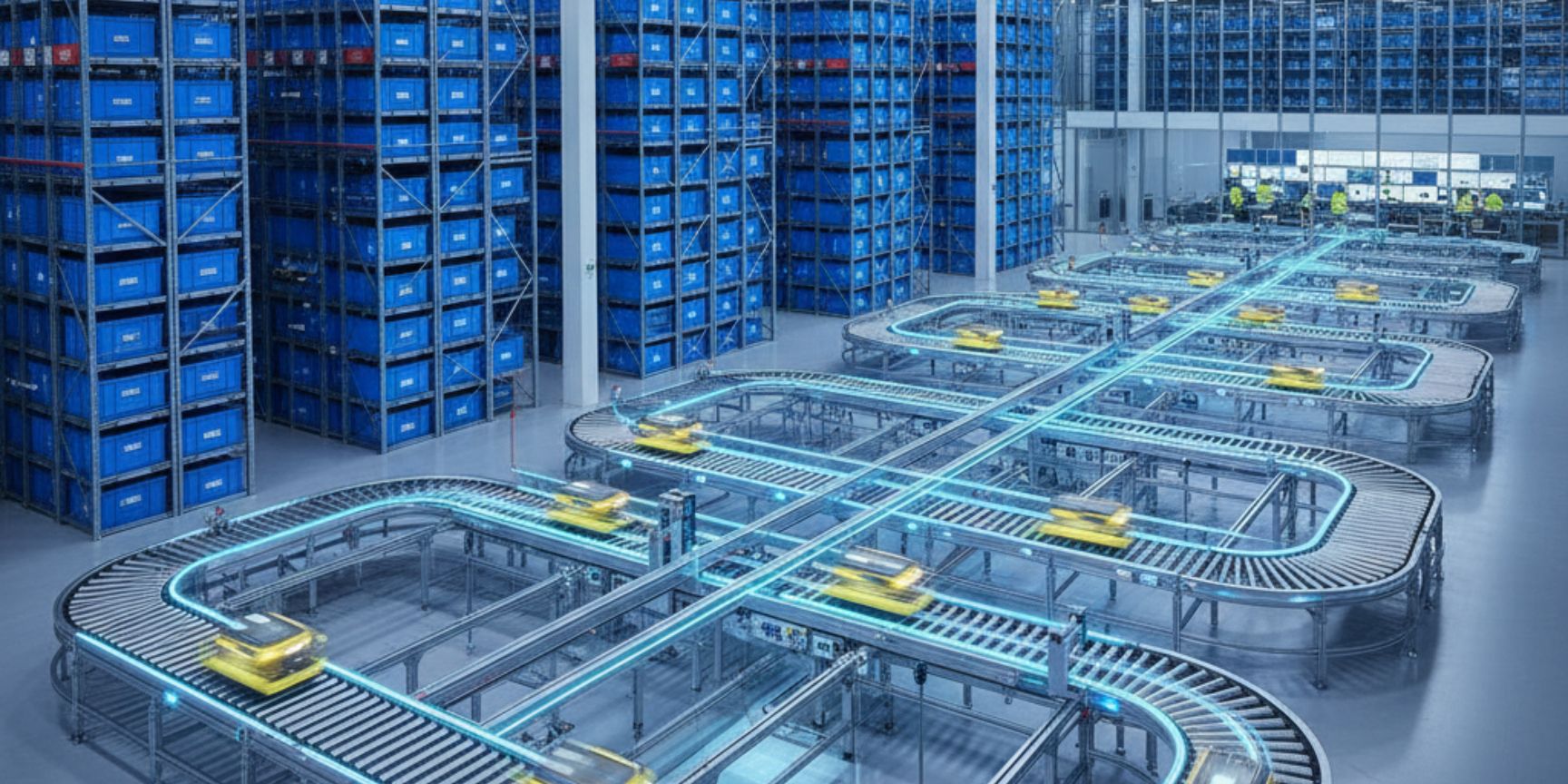
- Automation and digitalization: Building infrastructure must support the implementation of modern warehouse automation and robotics. These include extremely flat ground conditions (according to DIN 18202), comprehensive 5G or WLAN illumination and a high-performance power supply.
- City logistics and multi-level warehouses: In urban areas with an extreme shortage of space, multi-storey logistics properties are becoming increasingly relevant to ensure supply on the last mile.
- Employee focus: In the competition for skilled workers, the quality of stay is becoming more important. Attractive social and office spaces, canteen facilities and good public transport connections are important arguments for a location today.