




Bascule wedge bridge in warehouse logistics
Table of Contents
- The bascule wedge bridge: The heart of efficient ramp logistics
- Definition and functional principle of the bascule wedge bridge
- Technical components and design depth
- Integration into logistics real estate and hall planning
- Facts, figures, data: The performance matrix
- The role of the bascule wedge bridge in contract logistics
- Safety and standardization (EN 1398)
- Comparison: folding wedge vs. telescopic lip
- FAQ – Frequently asked questions from practice
- Conclusion for investors and operators
The Bascule Wedge Bridge: The Heart of Efficient Ramp Logistics
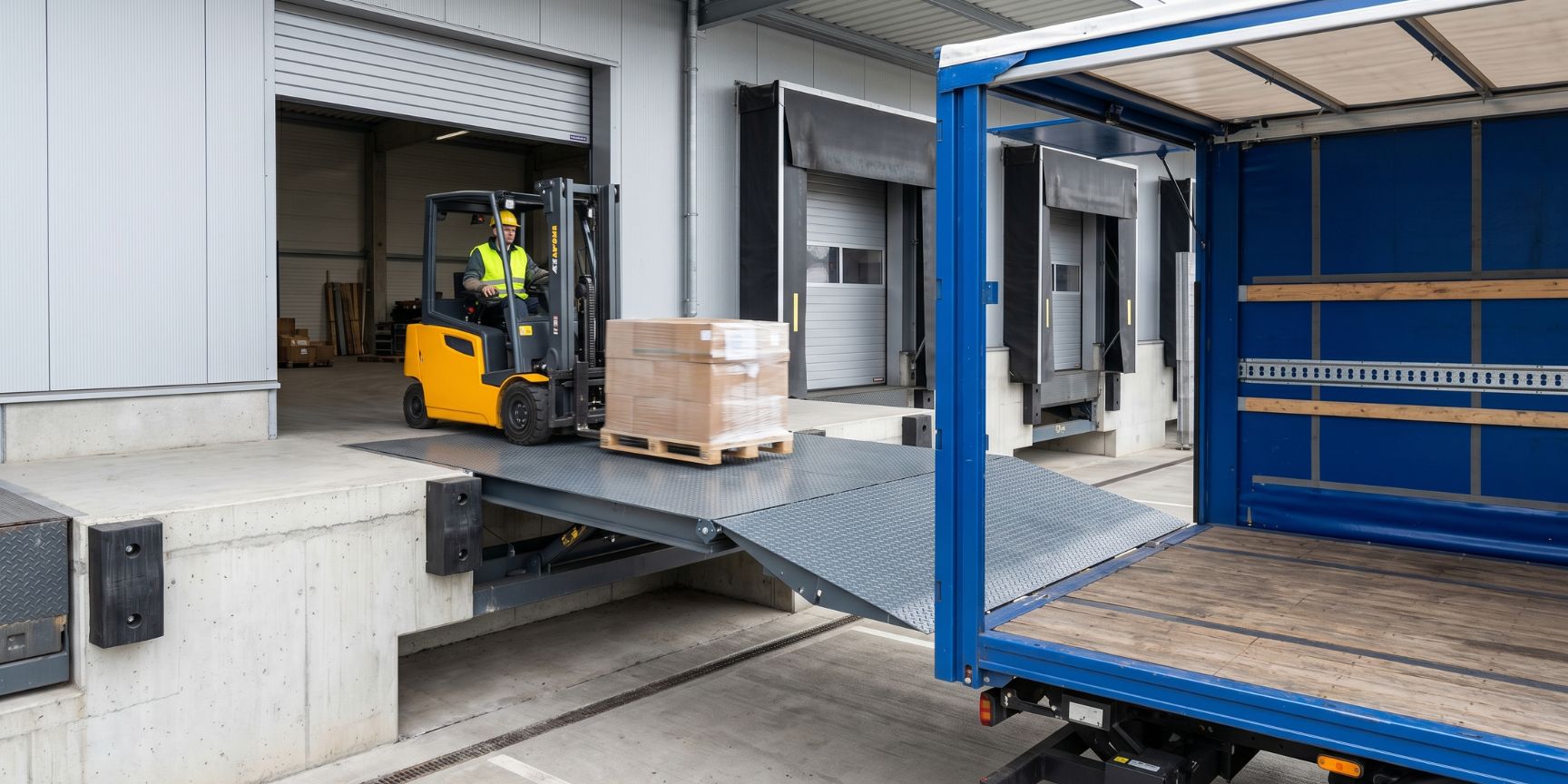
In the world of warehouse logistics and logistics real estate, the interface between the stationary warehouse and the mobile means of transport is the most critical point. The bascule wedge bridge (also known as dock leveller with folding lip) is the classic solution for safely bridging height differences and distances between the edge of the ramp and the truck loading area.
Definition and functional principle of the bascule wedge bridge
A bascule wedge bridge is a permanently installed or recessed construction consisting of a steel platform and a swivelling lip (the folding wedge). After docking the truck, the hydraulics lift the platform; at the highest point, the lip folds out and rests gently on the loading area of the vehicle when lowered.
In contrast to the telescopic lip (moving bridge), the reach of the folding lip is fixed due to the design. This requires precise approach of the truck, but offers extremely high robustness and lower maintenance intensity.
Technical components and design depth
In order to meet the requirements of contract logistics with a high turnover of goods, a high-quality folding wedge bridge consists of the following core components:
- Platform: Usually made of anti-slip tear plate (S235 steel), reinforced by beams to absorb torsional fractures (twisting) when the truck is loaded on one side.
- Hydraulic system: Usually a two-cylinder system. A master cylinder lifts the platform, a lip cylinder controls the unfolding of the wedge.
- Control: A control cabinet with a dead man's switch, often combined with gate and traffic light controls for maximum process reliability.
- Trailing Edge Hinge: A critical point that allows the horizontal movement of the platform under load without forming shear edges.
Integration into logistics real estate and hall planning
When building or renovating a logistics property, the choice of installation form is crucial for later flexibility:
- Frame model (W-frame): Cast directly into the concrete. Very stable, but difficult to replace.
- Feed model (box model): The bridge is placed in a prepared pit and welded. Ideal for quick installation.
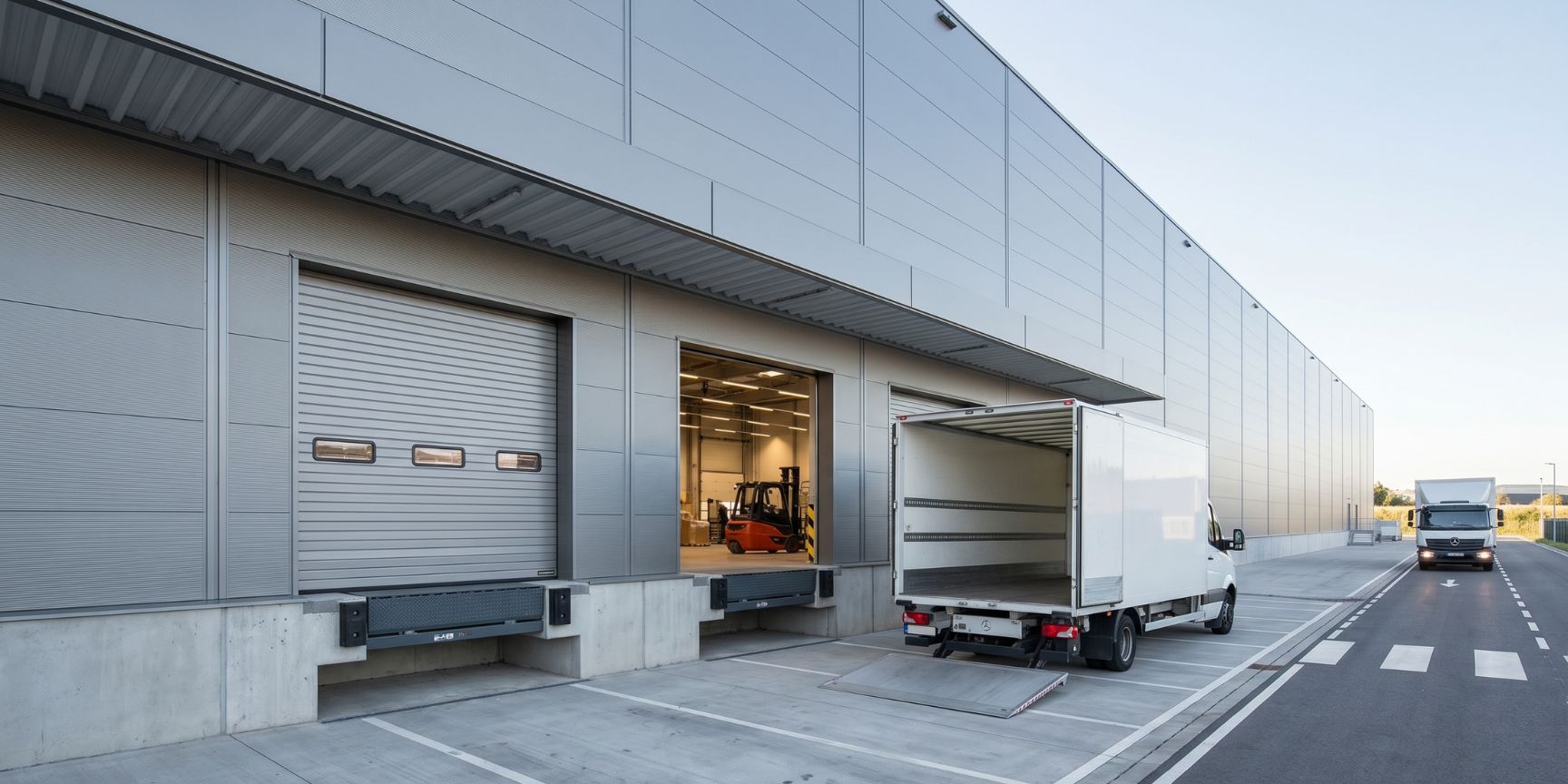
- Underpassability: For logistics centres that work with tail lifts (lift loader at the rear of the truck), a free space must be planned under the bridge so that the tail lift can retract under the ramp.
Facts, figures, data: The performance matrix
In specialist portals, technical resilience is the most important currency. Here are the common industry standards for bascule wedge bridges:
| Parameters | Standard Value (Industry) | High Load Options |
| Nominal load (EN 1398) | 60 kN (approx. 6 tons) | up to 100 kN or more |
| Standard widths | 1,750 mm / 2,000 mm | up to 2,250 mm |
| Lip length | 400 mm | up to 500 mm |
| Max. incline | approx. 12.5 % (7°) | Depends on industrial truck |
| Steel grade | S235JR | S355 for extreme loads |
Important note on the load capacity: The nominal load according to DIN EN 1398 refers to the individual load of a forklift including load on one axle. In practice, the bridge should always be designed with a safety factor in mind, especially when using electric stackers with small rollers.
The role of the bascule wedge bridge in contract logistics
In contract logistics, where margins are often tight and time windows are strict, the bascule wedge bridge scores with its speed. The simple operation minimizes the instruction time for personnel. An essential aspect is the floating position: as soon as the bridge is in place, it follows the truck's upward and downward movements during loading and unloading (compression). This prevents damage to the vehicle structure and bridge mechanism.
Safety and standardization (EN 1398)
Every dock leveller in Europe must comply with the EN 1398 standard. Essential security features are:
- Emergency stop function: Immediately block the hydraulics in the event of a power failure or activate the emergency stop.
- Foot protection strips: Side mudguards prevent feet from getting between the ramp and the platform.
- Shut-off valve: Prevents the bridge from sagging if the truck leaves prematurely while a forklift is still on the platform (fall protection).
Comparison: folding wedge vs. telescopic lip
When is the bascule wedge bridge the better choice?
- Advantages of folding wedge: Cheaper to purchase (approx. 20-30% cheaper), lower maintenance costs, faster cycles for standard trucks.
- Disadvantages: Less precise placement of the lip, unsuitable for very tightly loaded trucks (final logistics) where the lip cannot reach far enough on the loading area without touching the goods.
FAQ – Frequently asked questions from practice
Question: How often does a bascule wedge bridge need to be serviced?
Answer: According to DGUV Rule 108-006 (formerly BGR 233), an annual inspection by a qualified person is mandatory. Hydraulic hoses, welds and safety valves are tested.
Question: Can a bascule wedge bridge be retrofitted into an existing hall?
Answer: Yes, via so-called attachment locks. The bridge is placed in a steel frame in front of the actual hall façade. This saves space in the interior and improves the thermal separation of the hall.
Question: What incline is still drivable for forklift trucks?
Answer: The standard recommends a maximum of 12.5%. In practice, however, 7% to 10% should be aimed for electric forklifts in order to preserve battery life and minimise the risk of slipping in wet conditions.
Conclusion for investors and operators
The bascule wedge bridge is the "workhorse" of logistics. For standard applications in distribution and contract logistics, it offers the best price-performance ratio. However, when planning a logistics property, savings should not be made at the wrong end: An investment in hot-dip galvanized versions or reinforced platforms pays off twice as much with a service life of often over 20 years. However, if extremely different vehicle types (from vans to mega trailers) are handled, a combination of folding wedge and telescopic lip solutions should be considered.
Your Ideal Logistics Warehouse
Browse listings for warehouse space, logistics real estate, industrial land, and contract logistics solutions.
Browse Exposés
Maximize Exposure for Your Warehouse Space
Showcase your logistics properties and attract qualified inquiries.
Discover Products