



Lifting platform in warehouse logistics
Table of Contents
- Lifts in Logistics: The Backbone of Vertical Efficiency
- Classification and Areas of Application in Logistics Real Estate
- The Scissor Lift: Workhorse of Contract Logistics
- Integration into the Logistics Property: Structural Requirements
- Security and Regulation: More than just an Obligation
- Cost-effectiveness: Rental vs. Purchase in Contract Logistics
- Expert Questions & Answers (Q&A)
- Figures, Data, Facts: A Quick Overview
- Conclusion for Practice
Lifting Platform in Logistics: The Backbone of Vertical Efficiency
In the world of contract logistics and warehouse management, space equals money. As logistics properties are increasingly growing in height to optimize floor space costs, the importance of aerial platforms is increasing. They are much more than just workshop accessories; they are strategic assets that determine the cycle time at the ramp and safety in the hall.
Classification and Areas of Application in Logistics Real Estate
In the context of a modern logistics hall, we primarily distinguish between stationary and mobile systems.
- Stationary lifting platforms (loading platforms/dock levellers): These are firmly integrated into the building fabric of the logistics property. They compensate for the difference in height between the truck loading area and the hall floor. Standard rated loads are often 60 kN (approx. 6 tonnes).
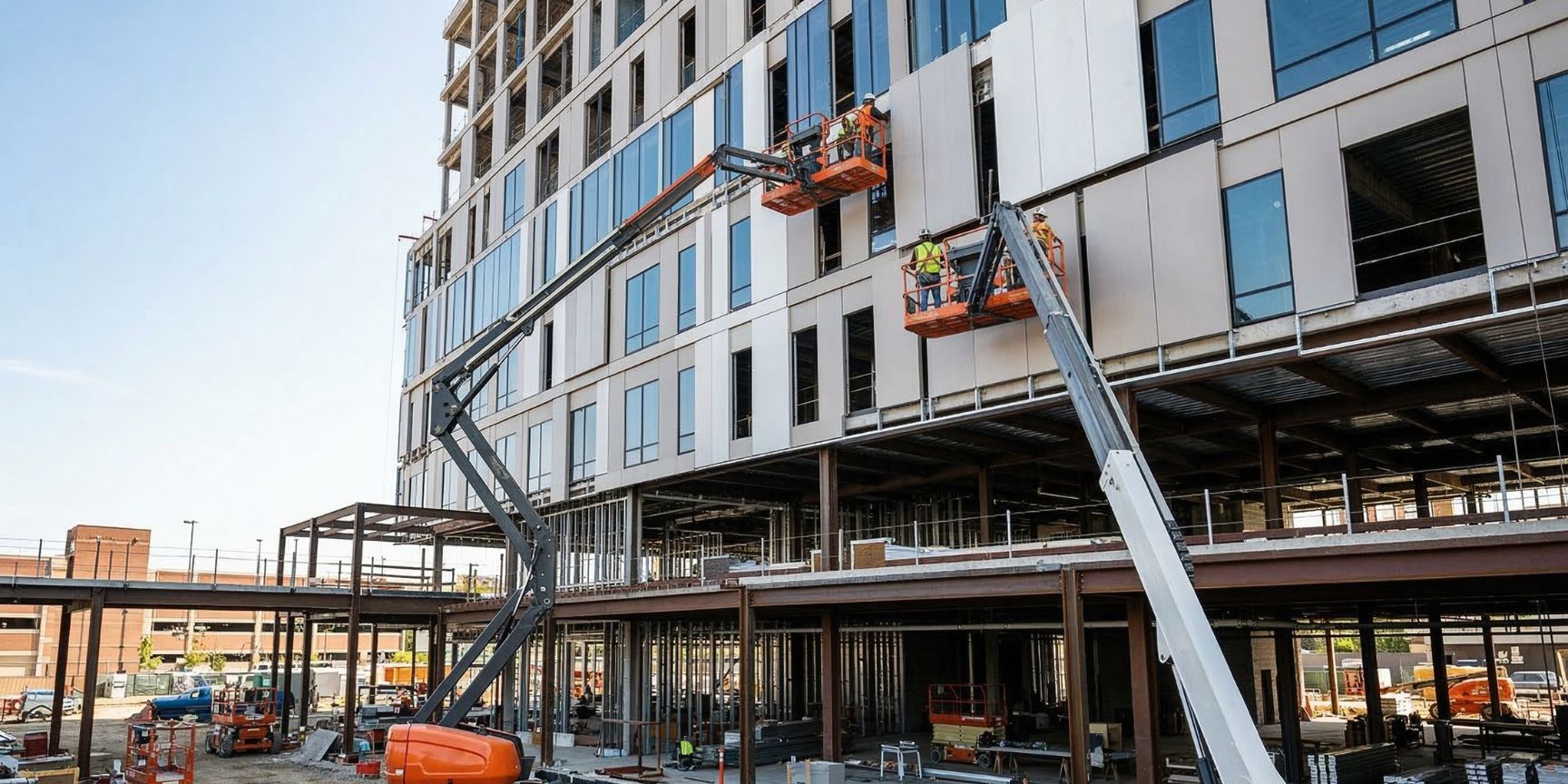
- Mobile scissor lifts: In intralogistics, they are used for order picking on high shelf levels or for maintenance work on the hall ceiling (lighting, sprinkler systems).
- Freight elevators/freight elevators: In multi-story warehouses, they are responsible for the vertical flow of goods between floors.
The Scissor Lift: Workhorse of Contract Logistics
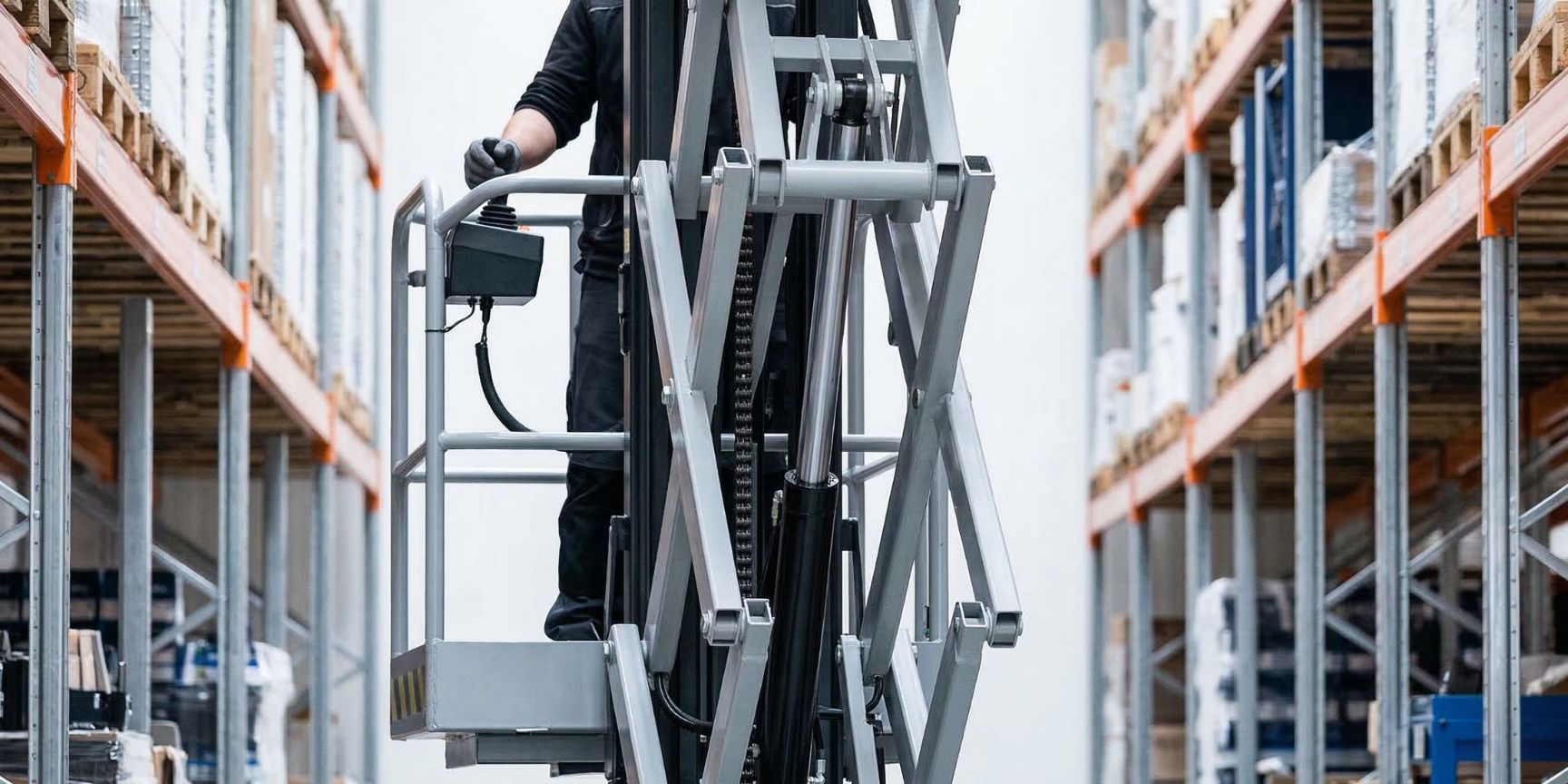
The scissor lift is the preferred device in the hall due to its stability. In contract logistics, where customer-specific requirements are often implemented, they enable the precise loading of display pallets or work at complex packing stations at ergonomic heights.
Technical key figures:
- Lifting height: In standard halls, usually up to 12–18 meters.
- Load capacity: Depending on the model, from 250 kg (passenger basket) to several tons (cargo platforms).
- Drive: Indoors, exclusively electric (emission protection), often with non-marking tires to protect the hall floor of the logistics property.
Integration into the Logistics Property: Structural Requirements
Anyone planning or operating a logistics property must include lifting platforms in the specifications at an early stage.
- Ground conditions: The point load of a fully extended platform is enormous. According to DIN 18202, industrial floors must be level in order to avoid tilting movements in height.
- Charging stations: For electric platforms, sufficient 230V or 400V connections must be planned in the charging bays, taking into account the fire loads.
- Pit assembly: Stationary platforms often require foundation recesses. Here, sealing against groundwater and integration into the hall drainage system is a critical factor.
Security and Regulation: More than just an Obligation
The operation of lifting platforms is subject to strict regulations, primarily DGUV Rule 100-500.
- UVV inspection: Once a year, an inspection by an expert is mandatory.
- Operating authorisation: Only persons with special instruction and written instructions are allowed to operate mobile stages. In Germany, the "stage license" (according to DGUV principle 308-008) is often the basis for this.
- PPE against falls: When working at heights, the wearing of collision protection systems is stipulated in many risk assessments.
Cost-effectiveness: Rental vs. Purchase in Contract Logistics
Contract logistics companies often calculate contract terms of 3 to 5 years. This is where the question of investment arises:
- Purchase: Worthwhile for permanent use (e.g. stationary loading platforms). The depreciation period (depreciation) for freight elevators is usually 15 years.
- Rental/Leasing: Ideal for peak periods (seasonal business) or project-related requirements. The advantage: Always state-of-the-art technology and outsourced maintenance liability.
Expert Questions & Answers (Q&A)
Question: What role do lifts play in workplace ergonomics (value-added services)?
Answer: In contract logistics, value-added services (VAS) such as repackaging or packaging are often offered. Lifting platforms (as lifting tables) prevent employees from having to bend down. Adjusting the working height to the individual measure reduces absenteeism due to back pain by up to 30%.
Question: What is the difference between an aerial work platform and a goods lift?
Answer: The aerial work platform is primarily designed for transporting people to carry out work (e.g. repairing the sprinkler system). A freight lift is designed for the pure transport of goods between levels and is often not allowed to be driven by people (except for special approval as a freight lift).
Question: How does e-mobility influence hall planning for lifting platforms?
Answer: Modern lithium-ion platforms allow opportunity charging. This requires a decentralised placement of charging points in the hall in order to avoid long distances and increase the availability of the fleet.
Figures, Data, Facts: A Quick Overview
| Parameters | Standard Scissor Lift (Indoor) | Dock leveller (ramp) |
| Load capacity | 250 kg - 1,000 kg | 6,000 kg (60 kN) |
| Max. height | 6 m - 18 m | +/- 30 cm (level compensation) |
| Power source | Battery (lead-acid / Li-ion) | Hydraulics / Electro-Hydraulics |
| Lifespan | 8 - 12 years | 15 - 20 years |
| Maintenance interval | Yearly (UVV) | Yearly |
Conclusion for Practice
Lifting platforms are the enablers of modern logistics real estate. Without precisely functioning dock levellers, the ramp stands still; without flexible scissor lifts, maintenance at a height of 12 meters remains an incalculable risk. For operators of logistics halls, the following applies: The choice of the right platform should not only be based on the purchase price, but also on the total cost of ownership (TCO) and seamless integration into the process chain.