




Land use plan in logistics
Table of Contents
- The land use plan: The strategic backbone of the logistics property
- Land use plan vs. development plan: What is the difference for logistics companies?
- The classification: Commercial or Industrial Area – An existential question for warehouse logistics
- Contract logistics and third-party usability: The land use plan trap
- Questions & Answers: What Professionals Need to Know
- Logistics halls and the extent of structural use
- Sustainability and ESG criteria in the land use plan
- Conclusion for practice: The due diligence of the site
The land use plan: The strategic backbone of the logistics property
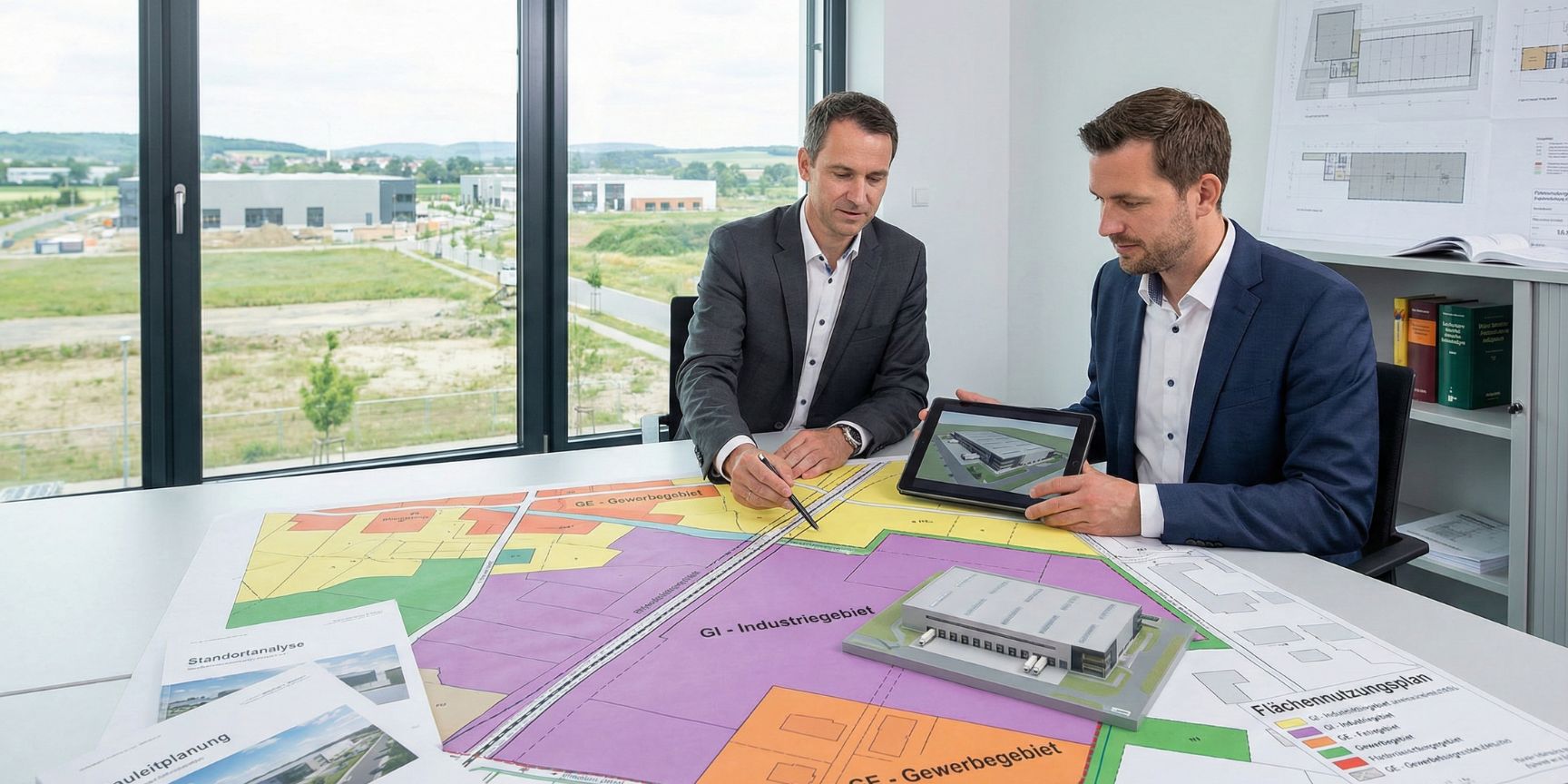
Anyone in Germany who wants to build a logistics hall or use an existing property for complex contract logistics will inevitably come across municipal land-use planning. The land use plan plays a key role in this. According to § 5 of the Building Code (BauGB), it is the graphic and textual representation of the intended urban development of a municipality for a time horizon of usually 10 to 15 years.
For players in the logistics industry, the land use plan is more than just a colorful map – it is an indicator of future competitive advantages, space availability and potential conflicts of use.
Land use plan vs. development plan: What is the difference for logistics companies?
These terms are often mixed, but the legal separation is crucial for investment security:
- The land use plan (Preparatory Urban Land Use Plan): It only binds the authorities and the municipality itself (self-commitment). A direct legal claim to a building permit for a logistics hall cannot be derived from the land use plan alone.
- The development plan (binding land-use plan): This is developed from the land use plan (development requirement). Only here are details such as the floor area ratio (FAR) or the maximum ridge height of a hall legally binding for the building owner.
The classification: Commercial or Industrial Area – An existential question for warehouse logistics
In the world of logistics real estate, the area category determines the type of processes allowed. The land use plan is preparing the following categories:
- Commercial estates: Logistics halls are usually permitted here, as long as they do not significantly disturb living in the neighborhood.
- Industrial Areas: For 24/7 logistics or heavy lift logistics, the Industrial area is the "Holy Grail". Only here are high noise quotas and unrestricted shift operation legally secured in the long term.
Practical fact: An land use plan that designates an area as a "commercial development land" gives the municipality leeway to specify either a commercial area or a industrial area in the subsequent development plan. Logistics developers prefer areas that are already clearly marked as industrial focal points in the land use plan.
Contract logistics and third-party usability: The land use plan trap
In contract logistics, requirements often change within 5 to 10 years. A hall that is currently only used for the storage of pallets (dry) may tomorrow receive a light industrial component or a hazardous goods station.
- The depth of the topic: If the land use plan designates the area as a "special area logistics", this can restrict the ability to use it for third parties. Experts therefore carefully check whether the presentation in the land use plan is flexible enough to also allow production-related logistics services.
Questions & Answers: What Professionals Need to Know
Question: Can a logistics hall be built if the land use plan still shows "agricultural land"?
Answer: No, not directly. In this case, a lengthy process of amending the land use plan must be initiated, which often takes 12 to 24 months. At the same time, a project-related development plan can be drawn up (parallel procedure according to § 8 para. 3 BauGB) in order to save time.
Question: What role do the distances play (distance decree)?
Answer: The land use plan already roughly outlines the spatial separation of residential and commercial. For logistics properties with a high volume of trucks (e.g. cross-docking), buffer zones (clearance areas) in the land use plan are crucial to prevent later complaints from residents due to noise emissions.
Logistics halls and the extent of structural use
Although the land use plan does not define exact heights, it does provide direction. In regions with a shortage of land, land use plans are increasingly calling for greater use of floor space.
- Figures & data: While classic existing halls often only have a ground area ratio (GAR) of 0.5 to 0.6, modern concepts push for a GAR of 0.8. The land use plan must already justify this "structural density" in its justification in terms of urban development.
Sustainability and ESG criteria in the land use plan
The "green logistics property" begins at the land use plan. Today, municipalities often demand the following as part of the zoning process:
- Compensation: Compensation areas for sealing by huge roof areas.
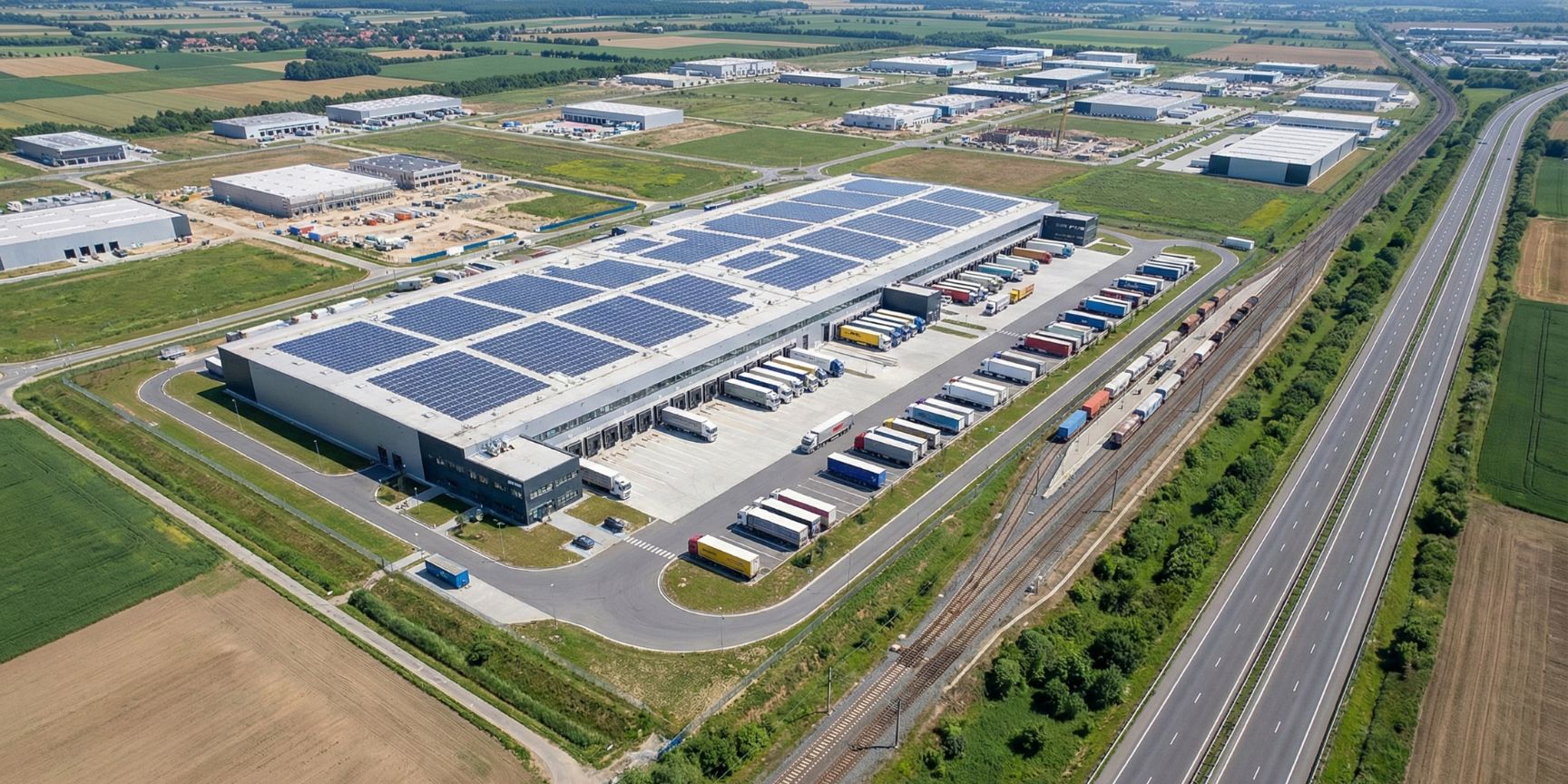
- Transport concept: A rail connection anchored in the land use plan or proximity to motorways to avoid search traffic in residential areas.
- PV obligation: The energetic use of hall roofs is often formulated as an urban development goal in the explanatory memorandum to the land use plan.
Conclusion for practice: The due diligence of the site
For investors and logistics companies, a look at the municipality's current land use plan is the first step in technical due diligence.
Checklist for the land use plan logistics check:
- Categorization: Is the area shown as commercial or industrial construction area?
- Environment: Which uses are adjacent to each other? (Danger of advancing residential development?)
- Infrastructure: Are the access routes for 40-tonne trucks already taken into account in the land use plan transport plan?
- Restrictions: Are there overlapping green corridors or water protection zones that could block a hall expansion?
The land use plan is not a static document, but a political control element. Those who understand the mechanisms of urban land-use planning can secure locations before the actual market hype arises.