




Legal zoning plan for logistics properties
Table of contents
- The foundation of the logistics property: What is a Zoning Plan?
- The Structural Figures: GAR, FAR and BMR Explained
- Territory Categories: Where Logistics is really at Home
- Focus on Contract Logistics: Third-Party Usability in the Zoning Plan
- Noise Protection and Immission Values: The Underestimated Factor
- Fire Protection and Water Balance in the Zoning Plan
- FAQ: Frequently Asked Questions from Logistics Practice
- Summary: Checklist for Logistics Decision-Makers
The foundation of the logistics property: What is a Zoning Plan?
A Zoning Plan or Development Plan is a municipal statute that determines in a legally binding manner how land may be built on and used. It is developed from the land use plan and is based on the Building Code (BauGB) and the Building Use Ordinance (BauNVO).
For warehouse and contract logistics, the Zoning Plan is the "fateful document": It determines not only the height of the hall, but also whether trucks are allowed to roll at night and which types of goods (Hazardous Incident Ordinance!) can be stored. Without a detailed examination of the Zoning Plan, there is a risk of bad investments in the millions.
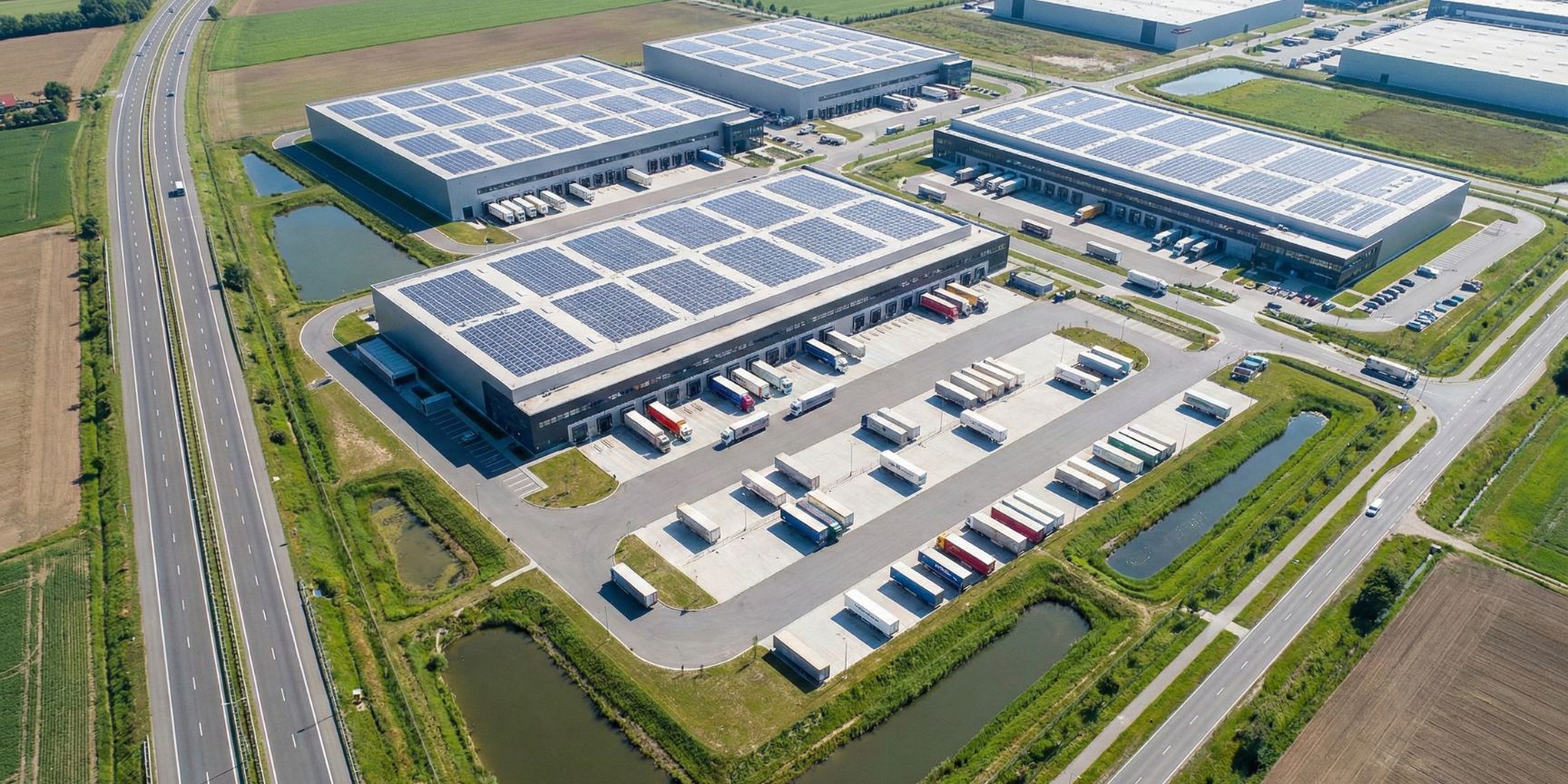
The Structural Figures: GAR, FAR and BMR Explained
In logistics, every cubic metre counts. The Zoning Plan sets the boundaries for this:
- Floor Area Ratio (GAR): This indicates how many square metres of floor space per square metre of land area may be built over. A value of 0.6 means that 60% of the property may be sealed. Practical check: Logistics properties often require high GAR values for marshalling areas and loading yards.
- Floor Area Ratio (FAR): The ratio of the total floor area to the land area.
- Building Mass Ratio (BMR): Particularly important for high-bay warehouses. It indicates how many cubic metres of building mass per square metre of land are permissible.
Expert tip: For modern multi-user halls, pay attention to the maximum ridge height. Automated warehouses often require 20 to 40 meters in height, which is often limited to 12 to 15 meters in standard commercial areas.
Territory Categories: Where Logistics is really at Home
Not every commercial area is the same. The BauNVO distinguishes in particular:
- Commercial estates: Mainly used to accommodate commercial enterprises that do not cause a significant nuisance. Here, 24/7 operation can lead to conflicts with adjacent residential buildings.
- Industrial areas: Companies that are not permitted in other areas are permitted here. For contract logistics with heavy transports or dangerous goods, the industrial area is often the only safe choice.
Question: Can I build a logistics hall in a mixed area?
Answer: In theory, yes, in practice, usually no. The noise immission values permissible for the night time are so low in mixed areas that an economic transhipment operation is hardly approvable.
Focus on Contract Logistics: Third-Party Usability in the Zoning Plan
A critical point of contract logistics is flexibility. A Zoning plan can restrict uses (e.g. "only for wood processing"). This is fatal for a logistics property, as it must be "suitable for third-party use".
Investors make sure that the Zoning Plan allows for a wide range of logistics services. This also includes Value Added Services (VAS). If the Zoning plan only says "storage", easy assembly or repackaging (production character) could already exceed the limits of use.
Noise Protection and Immission Values: The Underestimated Factor
The development plan often specifies noise quotas. A logistics centre causes specific noise emissions through reversing alarms, air brakes and aggregates (refrigerated trailers).
- Day value (Commercial areas): Mostly 65 dB(A)
- Night value (Commercial areas): Mostly 50 dB(A)
If the Zoning Plan provides for a "breakdown according to emission quotas", it must be calculated exactly how many truck movements are permissible per hour. For e-commerce logistics with peak times at night, this is the decisive criterion.
Fire Protection and Water Balance in the Zoning Plan
Logistics halls are usually large forms. The Zoning Plan makes indirect requirements here:
- Extinguishing water supply: Is it regulated in the Zoning Plan or in the development contract whether the municipality will supply enough pressure for a sprinkler system?
- Infiltration: Due to the high level of sealing, Zoning plans often require separate retention basins (retention volume often calculated according to the 100-year rain event). This costs valuable land space.

FAQ: Frequently Asked Questions from Logistics Practice
Question: What is the significance of the construction window?
Answer: The construction window (defined by building lines and building boundaries) determines where on the property the hall may be located. In logistics, this is critical for the arrangement of the loading gates (cross-docking vs. side-loading).
Question: What does "according to § 34 BauGB" mean if there is no ZoningPlan?
Answer: If there is no Zoning plan, the project must "fit into the character of the immediate surroundings". This is difficult for a 15-metre-high logistics hall when there are only small workshops around it. A project-related development plan is then often the only way out.
Question: Can photovoltaic obligations be included in the ZoningPlan?
Answer: Yes, more and more municipalities are prescribing the greening of roofs or the installation of PV systems in the Zoning Plan. For logistics halls with their huge roof areas, this is a massive cost and structural factor.
Summary: Checklist for Logistics Decision-Makers
Before signing a lease or purchase contract for a logistics space, the following points must be clear in the Zoning Plan:
| Feature | Logistics requirement (guideline) |
Type of area | Preferably industrial area |
Height | At least 12m UKB (lower edge of truss), better 15m+ |
Uptime | 24/7 Approval |
GAR | Ideally 0.8 (incl. parking spaces/airflow) |
Load limitation | No restriction on the permissible total weight of the access roads |
Your Ideal Logistics Warehouse
Browse listings for warehouse space, logistics real estate, industrial land, and contract logistics solutions.
Browse Exposés
Maximize Exposure for Your Warehouse Space
Showcase your logistics properties and attract qualified inquiries.
Discover Products