




Buffer zones in the warehouse
Table of Contents
What exactly is a buffer zone and why is it crucial?
In logistics, a buffer zone is a defined, physical or systemic area that is used to temporarily store goods, materials or loading units. Their primary function is to decouple successive process steps that differ in speed or frequency.
Question: Why can't you just work just-in-time without buffers?
Answer: While just-in-time (JIT) is a desirable ideal for reducing inventories, real-world logistics rarely operates under laboratory conditions. Unplanned events such as delivery delays, machine failures, sudden spikes in demand or staff shortages are commonplace. Buffer zones absorb the effects of these disruptions and prevent a local problem from bringing the entire flow of goods to a standstill. They are the built-in resilience of a supply chain.
Question: Isn't a buffer zone just wasted space?
Answer: A poorly planned buffer zone is wasted space. A strategically dimensioned and placed buffer zone, on the other hand, is an investment in process stability and efficiency. It increases overall throughput, improves delivery reliability and reduces stress for employees and machines. The benefits of avoiding bottlenecks and downtimes usually far exceed the costs for the space.
The strategic functions of buffer zones in detail
Buffers perform much more than just a simple waiting function. They are active instruments for controlling the flow of materials.
- Decoupling function: The most important function. The incoming goods department can unload trucks, even if the storage is busy for a short time. Picking can continue to work even if the packaging area has a bottleneck.
- Synchronization function: Processes with different cycle times are harmonized. A fast production line can produce continuously, while a slower packaging line processes the products at its own pace by accessing the buffer.
- Consolidation function: Items or orders are collected in buffer zones until a complete unit is ready for the next process step. A typical example is merging items from different warehouse areas for a pre-shipment sales order (order consolidation).
- Provision function: Goods are provided specifically for a specific purpose, e.g. for an upcoming marketing campaign, quality control or for the route-optimized loading of trucks in outgoing goods.
Typical types and areas of application in the warehouse
Buffer zones can be found along the entire intralogistics chain. Their design depends heavily on their position and task.
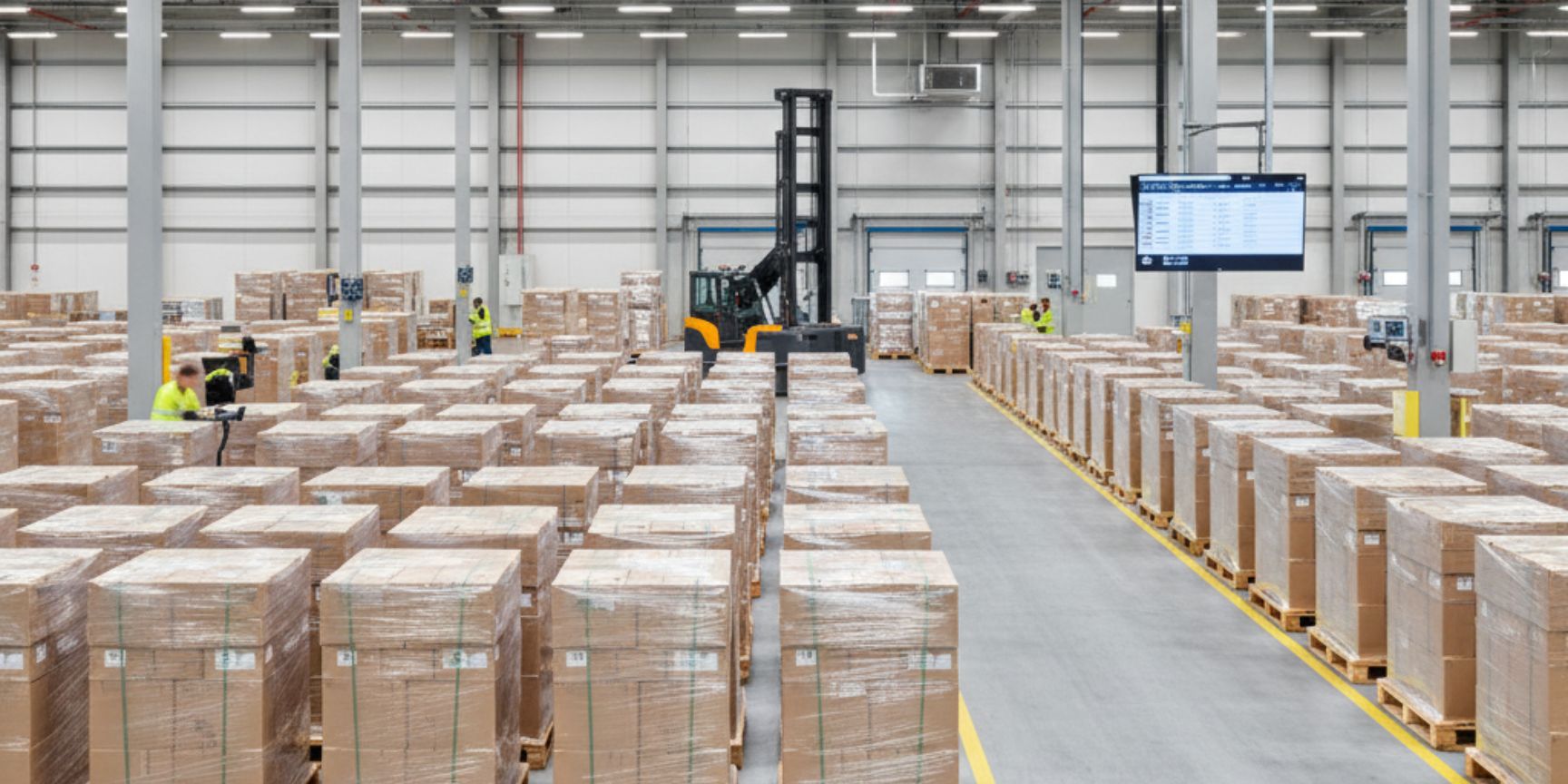
- Goods receipt buffer: Placed immediately after unloading to quickly handle trucks. This is where pallets are temporarily stored before they are checked, collected and stored. This prevents traffic jams at the gates.
- Production buffer: In production-related logistics areas, they are used for the temporary storage of raw materials, semi-finished products (work-in-progress) or finished goods in order to ensure a continuous supply or purchase.
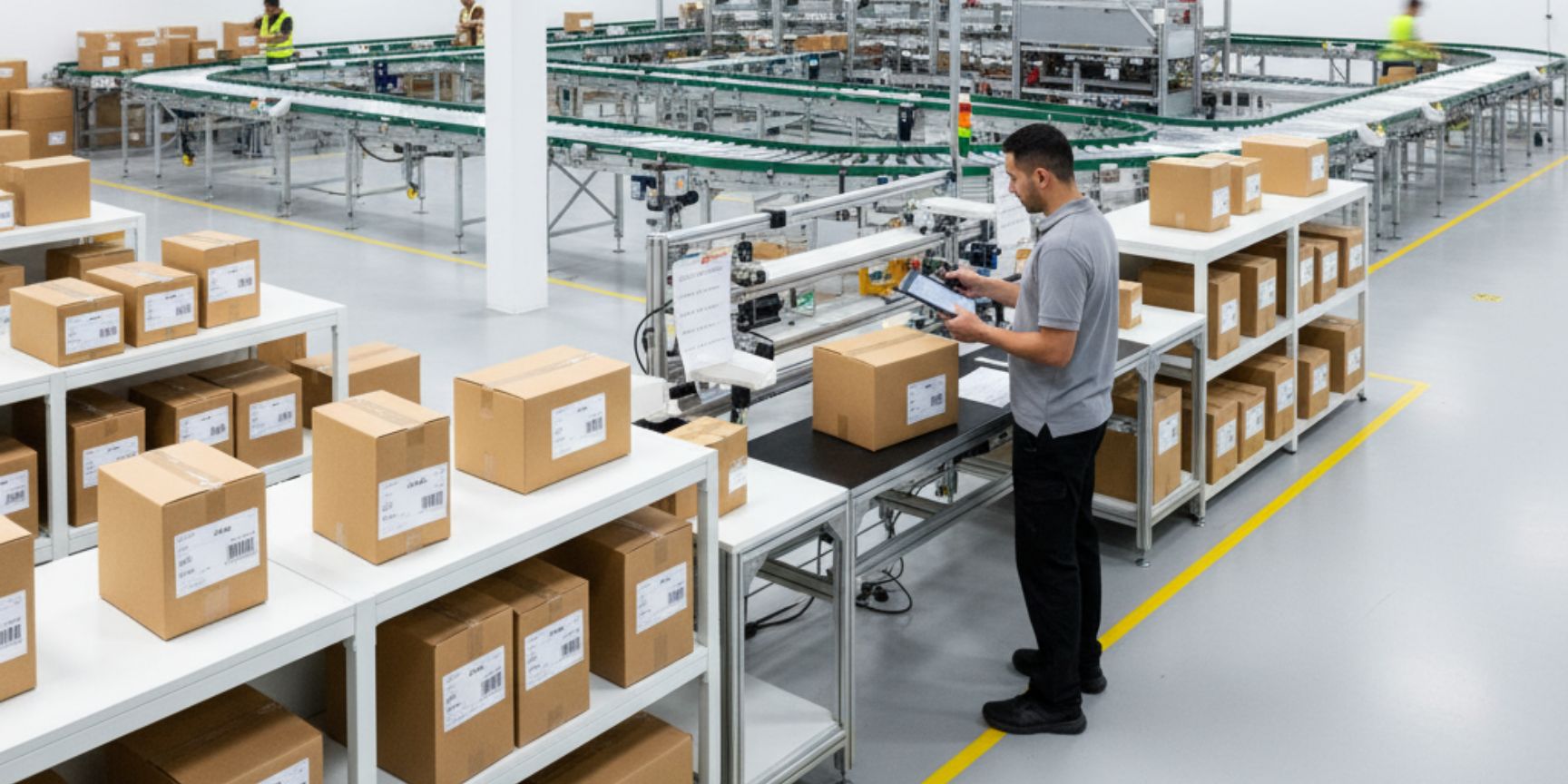
- Order consolidation: A critical zone, especially in e-commerce. Here, the individual items of an order, which have often been picked from different aisles or zones, are brought together before they are packed together.
- Shipping buffer / goods issue buffer: The last station before loading. Here, ready-packed and labeled shipments are sorted and made available according to CEP service provider, freight forwarder or delivery tour in order to enable fast and error-free loading.
The role in contract logistics
For contract logistics service providers (3PL/4PL), buffer zones are a key operational element. In multi-client halls, where different customers are working with different processes and service level agreements (SLAs), they are essential. Here, buffer zones often serve as areas for value-added services (VAS), such as:
The flexibility of these zones allows the service provider to respond quickly to new customer requirements without disrupting the core processes of other clients.
The perspective of logistics real estate
From the point of view of the logistics property, the buffer zone is not a waste product of planning, but a usable area to be strategically designed. The following zones must be taken into account when planning the hall:
- Space requirements: The proportion of buffer areas in the total area can be considerable (often 10-20%) depending on process complexity and industry.
- Floor load: In particular, incoming and shipping buffers must be designed for high forklift traffic and the parking of heavy pallets.
- Location and connection: Buffers must be logically placed in the material flow to minimize detours. Short distances to the gates, to the conveyor technology or to the packing stations are essential.
- Costs: Each buffer zone occupies expensive hall space. The costs (rent, operating costs) must be justified by the operational benefits (higher throughput, fewer errors). Modern logistics properties often offer flexible layouts that allow for dynamic adaptation of buffer areas.
How do you dimension a buffer zone correctly?
The right size is a classic conflict of goals between capital investment (area) and process reliability. Sizing depends on several factors:
- Throughput: How many units (pallets, packages) pass through the process per hour/day?
- Process fluctuations (variability): How much do the real throughput times deviate from the average?
- Reliability: What is the probability of disruptions in upstream and downstream processes?
- Delivery and pick-up frequencies: How often do new goods arrive or are collected?
Modern warehouse management systems (WMS) and simulation software help to determine the optimal demand instead of relying on rough estimates.
The formula is simplified: buffer capacity = max. expected backwater in a defined period of time.