




Mezzanine in the warehouse
Table of contents
What is a mezzanine? A definition
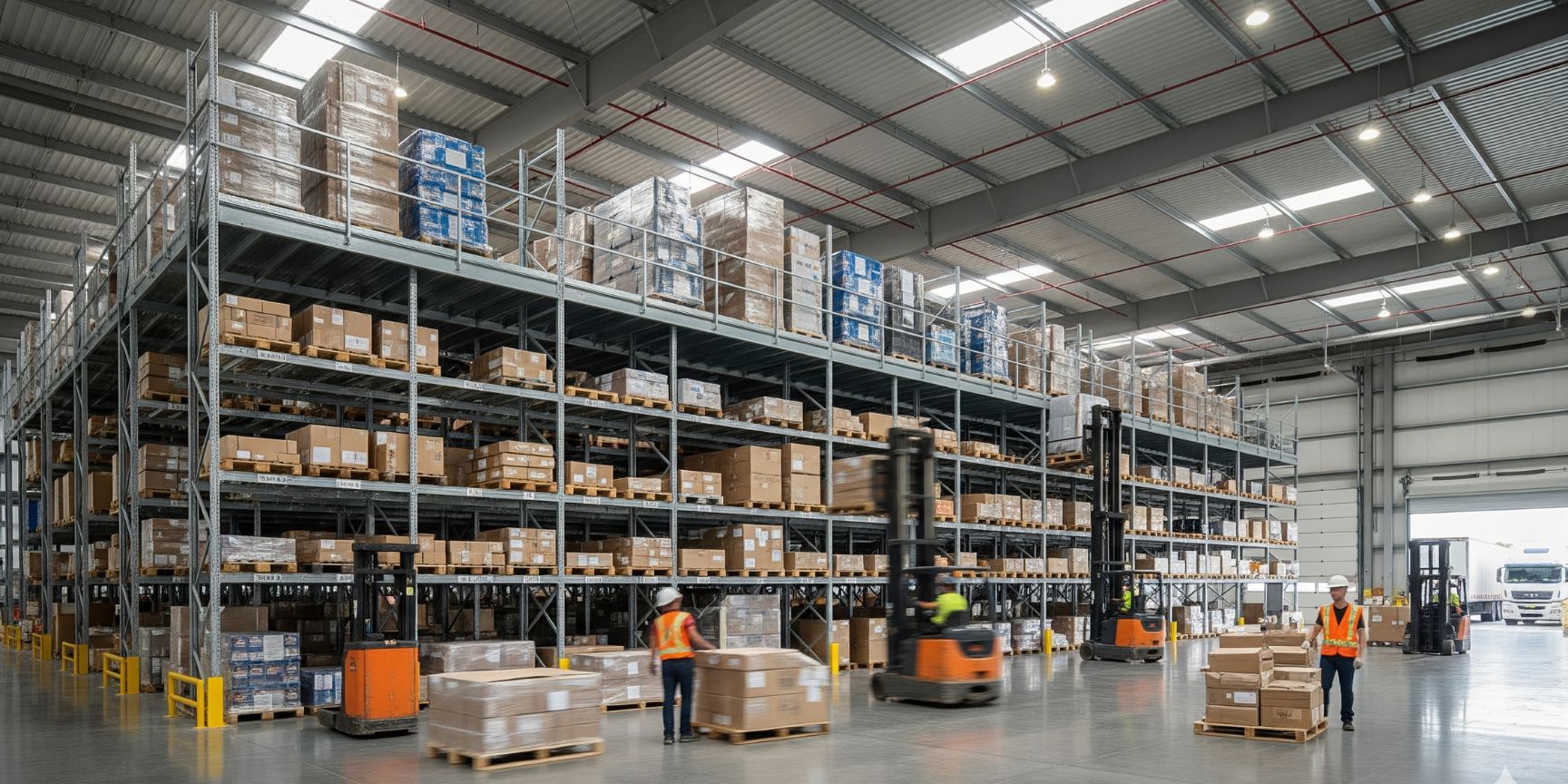
A mezzanine (from the Italian mezzano for "medium") is a self-supporting, dismountable steel structure that is inserted into an existing building, typically a warehouse or production hall, as a kind of false ceiling or second level. Unlike a fixed mezzanine, a mezzanine is not part of the primary building structure. It is anchored to supports in the hall floor and can therefore be flexibly assembled and dismantled or even moved to another location. This property makes it particularly attractive from a building law and investment point of view, as it is often considered a business facility and not an extension of the building.
Design and construction of mezzanines
The basic structure of a mezzanine consists of a steel structure consisting of vertical columns and horizontal main and secondary girders. The floor covering is applied to this support system. The choice of flooring depends heavily on future use:
- Particleboard: The most cost-effective and widely used variant for normal storage and picking activities with low to medium loads.
- Gratings: Ideal for areas where fire protection requirements play a role (sprinkler suitability) or where light and air permeability are required. They are robust, but louder when used with industrial trucks.
- Steel or aluminium checker plate: Extremely resilient and durable, often used in production areas or for heavy loads.
The construction is precisely adapted to the conditions of the hall, including the position of the supports, in order to disturb the operational process on the ground as little as possible. The spans between the columns can be optimized by choosing the beam profiles.
Areas of application in warehouse logistics
The possible uses of a mezzanine are diverse and offer a high practical benefit for optimising logistics processes. The newly gained space can be used for, among other things:
- Storage space: For storing pallets, containers or cardboard boxes, often in combination with shelving systems installed on the platform.
- Picking zones: By equalizing the storage areas, efficient, multi-level picking areas can be created ("multi-tier picking").
- Production and work surfaces: Light assembly, packaging or value-added service activities can be shifted to the mezzanine.
- Office and social rooms: It is common practice to build master offices, break rooms or light office units in lightweight construction on the mezzanine floor in order to maintain proximity to the operational area.
- Location for conveyor technology: The mezzanine can serve as a carrier platform for conveyor belts, sorters or other automation technology.
Planning and statics: What needs to be considered?
Careful planning is crucial for the success and safety of a mezzanine. The most important factor is the load-bearing capacity of the hall floor. A concrete floor slab must be able to absorb the point loads of the columns. A soil survey is therefore often unavoidable.
Other key planning points include:
- Surface load: This is given in kg/m² and depends on the planned use. Common values are between 250 kg/m² and 1,500 kg/m².
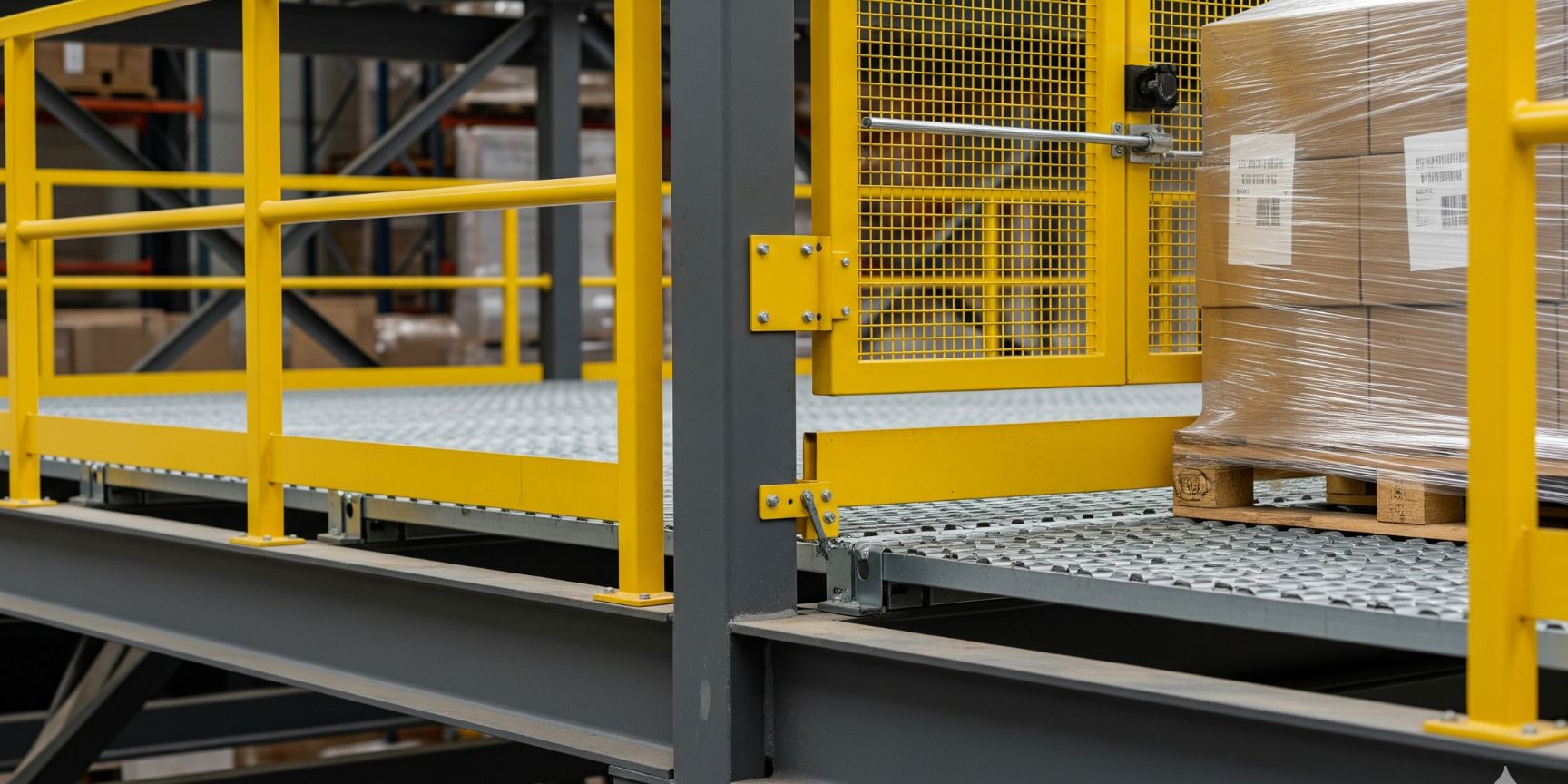
- Traffic routes: The positioning of stairs, railings and pallet transfer stations must be integrated into the logistical processes. Transfer stations with swivel or sliding railings are essential for the safe transfer of materials by forklift truck.
- Fire protection: Depending on the state building code and the size of the mezzanine, fire protection requirements such as fire-retardant cladding of the steel columns (F30/F90) or the installation of fire alarm and sprinkler systems may be necessary.
- Lighting and ventilation: Adequate lighting must be ensured below the mezzanine. The construction can also have an impact on air circulation in the hall.
Advantages and disadvantages at a glance
Advantages:
- Efficient use of space: Double or triple the usable area without expensive new construction or relocation.
- Flexibility: The modular design allows for easy disassembly, expansion or relocation.
- Investment security: Often considered business equipment and can be depreciated more quickly on the balance sheet than a structural measure.
- Fast implementation: Compared to a solid construction, the assembly time is significantly shorter.
- Cost-effectiveness: Significantly cheaper than a building extension or a new building.
Disadvantages:
- Load on the hall floor: Not every existing property is suitable for a mezzanine without further ado.
- Limited load-bearing capacity: The load-bearing capacity is limited compared to a solid concrete ceiling.
- Vertical material flow: Solutions must be created for the transport of goods to the level (forklifts, lifts, conveyors).
- Potential limitations: The supports can obstruct the flow of traffic on the ground, and the clear height under the stage is reduced.
Conclusion: The mezzanine as a strategic element
The mezzanine is much more than just a false ceiling. In modern warehouse logistics, it is a strategic tool for maximizing space productivity and flexibly adapting to changing process requirements. It enables companies to grow in existing logistics properties, optimize operations and intelligently manage investment costs. Professional planning, taking into account statics, material flow and safety regulations, is the key to successful implementation.