




Meso-Logistics in Logistics
Table of contents
- What is Meso-Logistics? A definition
- The three levels of logistics in direct comparison
- What role does meso-logistics play in warehouse and contract logistics?
- The logistics property as the heart of the meso-logistics level
- What characterizes a successful logistics location at the meso level?
- Conclusion: Why the meso-logistic perspective is crucial
What is Meso-Logistics? A definition
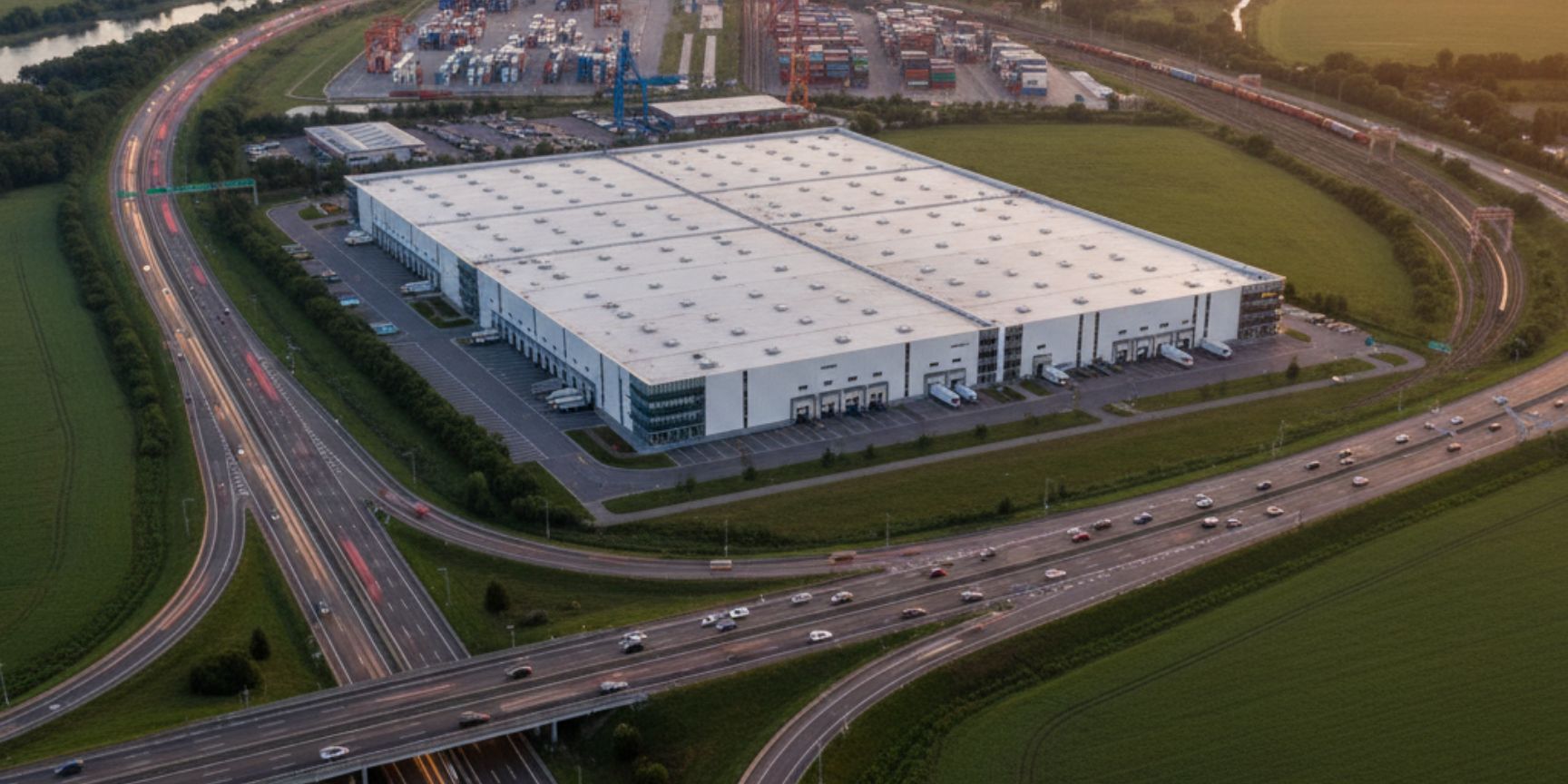
The term meso-logistics describes the middle level of consideration of logistical systems and networks. While micro-logistics looks at the processes within a single company (e.g. the intralogistics of a warehouse) and macro-logistics looks at the global and economic framework conditions (e.g. the entire transport infrastructure of a country), mesologistics focuses on the level in between. It analyses, designs and optimises logistics systems at regional or cooperative level. Typical examples of meso-logistics systems are logistics clusters, freight transport centers, industrial parks or the logistics networks of a specific region or metropolis. The aim is to create synergies and increase efficiency by bundling traffic flows, sharing infrastructure and cooperating with different stakeholders.
The three levels of logistics in direct comparison
In order to clearly classify the role of meso-logistics, a direct comparison of the three levels helps:
Micro level:
- Focus: The individual company.
- Topics: warehouse management, order picking, fleet management of one's own company, material flow within a hall.
- Goal: Process optimization and cost reduction in the company's own area of responsibility.
Meso level:
- Focus: Cross-company, regional networks.
- Topics: Choice of location for a new logistics hall, connection to a freight transport centre, regional courier express parcel services (CEP), cooperation between shippers and service providers in a cluster.
- The goal: to increase efficiency through networking, bundling and using regional locational advantages.
Macro level:
- Focus: Global and national systems.
- Topics: International supply chains, sea and air freight routes, national transport policy, tariffs and trade agreements.
- Goal: Creation and analysis of global and economic framework conditions for the movement of goods.
What role does meso-logistics play in warehouse and contract logistics?
For warehouse and contract logistics, the meso-logistics perspective is of fundamental importance, as it provides the strategic context for operations . A state-of-the-art warehouse (micro-level) cannot develop its potential if its location is poorly chosen from a meso-logistical point of view.
Question: "Why is it so important to connect my contract logistics site to a meso-logistics system such as a freight village?"
Answer: The connection to a freight transport centre offers decisive advantages. Firstly, the immediate proximity to combined transport terminals (rail/road) enables efficient and sustainable handling of main legs. Secondly, you benefit from the concentration of other logistics service providers, which facilitates cooperation (e.g. for the last mile) and access to a specialised labour pool. Thirdly, freight freight forwarders are often optimally connected to the motorway network, which minimises transport times to your customers. These synergies reduce costs and increase service quality, which is a clear competitive advantage.
The logistics property as the heart of the meso-logistics level
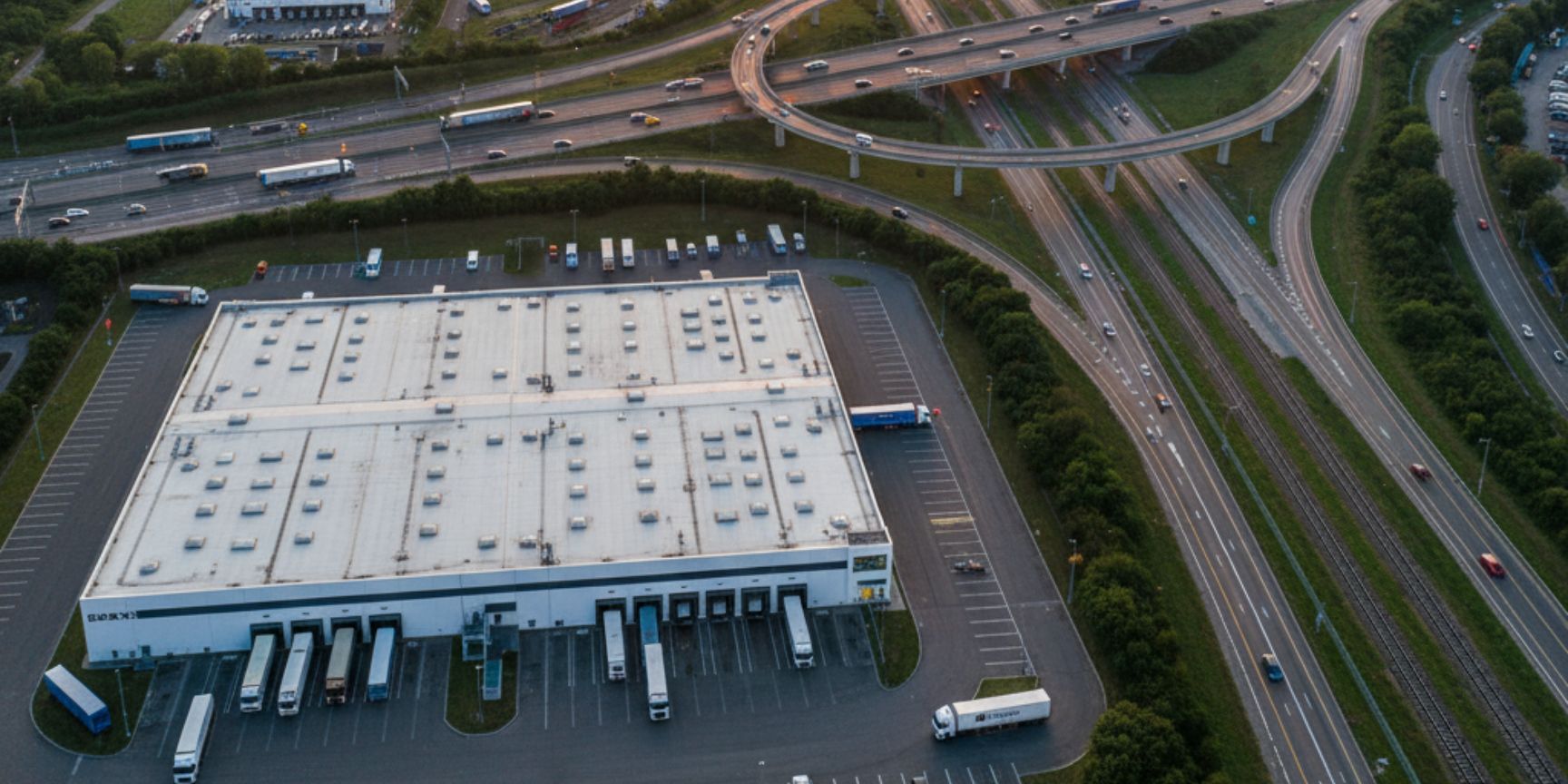
The logistics property – the hall, the distribution centre, the warehouse – is more than just a building. It is the physical hub where meso-logistical strategies become reality. Their performance is largely determined by their location in the regional network. The decision for or against a location is one of the most important meso-logistical decisions a company makes. Factors such as the availability of land, expansion possibilities and the quality of the local infrastructure are decisive here. In Germany, established logistics regions (e.g. Hamburg, the Ruhr area, Frankfurt) have emerged as top meso locations that offer a high density of modern infrastructure and a skilled workforce.
What characterizes a successful logistics location at the meso level?
A first-class meso-logistics location is characterized by an interplay of several hard and soft factors. These determine its attractiveness for the settlement of warehouse and contract logistics.
Checklist of the most important location factors:
- Infrastructural connections: Direct and congestion-free access to motorways (e.g. A1, A2, A7), proximity to container terminals (road/rail), cargo airports or inland ports.
- Labour availability: Sufficient potential of skilled and unskilled workers in the region at competitive labour costs.
- Centrality and market proximity: Geographical location that enables fast deliveries to important economic areas and conurbations (e.g. 20 million consumers can be reached within 3 hours).
- Availability of space and costs: Availability of developed, sufficiently large commercial space (often 50,000 m² and more) at competitive prices for land and rent.
- Regulatory environment: A business-friendly administration that enables fast building permits (e.g. for 24/7 operation) and actively supports settlements.
Conclusion: Why the meso-logistic perspective is crucial
Today, the sole optimisation of internal processes (micro-logistics) is no longer sufficient to survive in the competition. The success of a warehouse, a contract logistics company or the value of a logistics property is largely decided at the meso level. The strategic selection of the right location within a high-performance regional cluster that has an excellent infrastructure and synergy potential is the key to efficiency, resilience and future viability in logistics. A view beyond one's own hall is therefore not a luxury, but a necessity.