




Multi-user picking in the warehouse
Table of contents
- Definition and demarcation: What is multi-user picking?
- The Role in Contract Logistics: The "Breathing Factory"
- Requirements for the logistics property and hall layout
- Process Control and IT: Multi-Client Capability
- Questions and Answers (Q&A) on Multi-User Picking
- Risks and challenges in practice
- The impact on warehouse KPIs
- Conclusion and outlook
Definition and demarcation: What is multi-user picking?
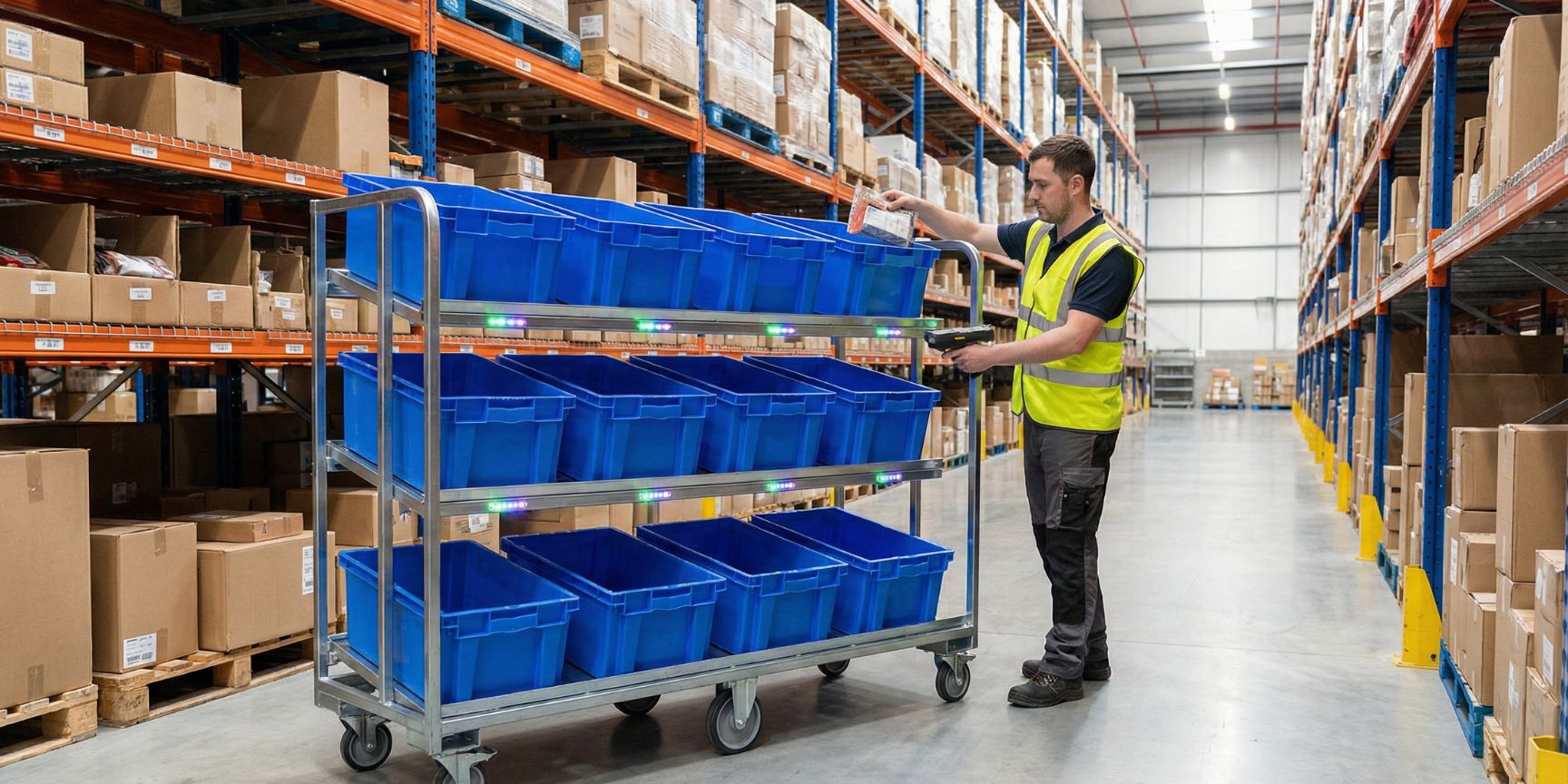
In essence, multi-user picking describes the organizational and process-related consolidation of picking activities for several different clients within a logistics facility. In contrast to the classic "single-user warehouse", in which personnel and equipment are stored exclusively for one customer, in the multi-user approach different customers share resources.
It is important to make a precise distinction here: While multi-order picking only describes the combination of several orders into one picking process, multi-user picking implies a cross-client logic. For example, an order picker can process articles in a wave for client A (e.g. automotive) and then or even in parallel for client B (e.g. retail), provided that the warehouse systems (WMS) and the layout structure allow this.
The Role in Contract Logistics: The "Breathing Factory"
For contract logistics companies, multi-user picking is the key to profitability. Since personnel costs in warehouse logistics often account for 50 to 60 percent of total operating costs, idle time is the biggest enemy of efficiency.
The concept enables the so-called "Breathing Factory":
- Seasonal smoothing: Client A has its peak business in summer (e.g. gardening supplies), client B in winter (e.g. toys). Through multi-user picking, the logistics service provider can utilize the same base of experienced employees all year round without having to acquire expensive temporary staff for peak times or dismiss permanent staff during sluggish periods.
- Synergy effects: Industrial trucks (FFZ) and MDE devices (Mobile Data Acquisition) achieve significantly higher utilization due to cross-client use, which accelerates the ROI of capital goods.
Requirements for the logistics property and hall layout
From the point of view of real estate development and asset management, multi-user picking places high demands on the physicality of the hall. A "tailor-made" property is often a hindrance here; what is needed is third-party usability.
- Zoning and flexibility: The hall must be designed in such a way that pick zones can be dynamically expanded or reduced. Rigid fixtures or physical fences between client areas hinder the flow of multi-user picking.
- Fire protection and WGK: Since different clients often bring in different risk classes (e.g. flammable liquids vs. textiles), the sprinkler system and the fire protection concept must be designed for the highest potential hazard class in order to ensure flexibility.
- IT infrastructure: Seamless Wi-Fi coverage and sufficient charging stations for FFZ at strategic hubs are essential, as the route relationships are more complex in multi-user operation than in the regular service of a single-user warehouse.
Process Control and IT: Multi-Client Capability
The heart of multi-user picking is the Warehouse Management System (WMS). It must be "multi-client capable". This means that the system must be able to logically strictly separate (Who owns which inventory?), while operationally linking (Which employee is currently near aisle X and can access?).
Challenges in IT:
- Data security: Client A must never be allowed to gain insight into Client B's inventories or order data.
- Labeling and documents: At the packing station or printer, the system must automatically pull the correct delivery note layout and the specific label specifications of the respective client as soon as the picker completes the order.
Questions and Answers (Q&A) on Multi-User Picking
Question: Is multi-user picking suitable for all product groups?
Answer: No. It is ideal for general cargo, retail goods and C-parts. In the case of highly sensitive goods (e.g. pharmaceuticals, hazardous goods) or extremely bulky goods (mechanical engineering), specialized, separate areas are often unavoidable in order to avoid contamination risks or damage.
Question: How is the error rate (picking for the wrong client) minimized?
Answer: Through strict system management. Technologies such as pick-by-voice or pick-by-vision do not tell the employee the client name, but guide him blindly to the storage location. The scan of the storage location and the goods verifies access. The employee does not have to "know" who he is picking for, he just has to carry out the process exactly.
Question: How are the costs calculated?
Answer: This is the most complex part. Transaction prices (pay-per-pick) are usually used. Overhead costs (lighting, heating, hall managers) are often passed on to the clients via a distribution key (e.g. occupied pallet spaces or square metres used).
Risks and challenges in practice
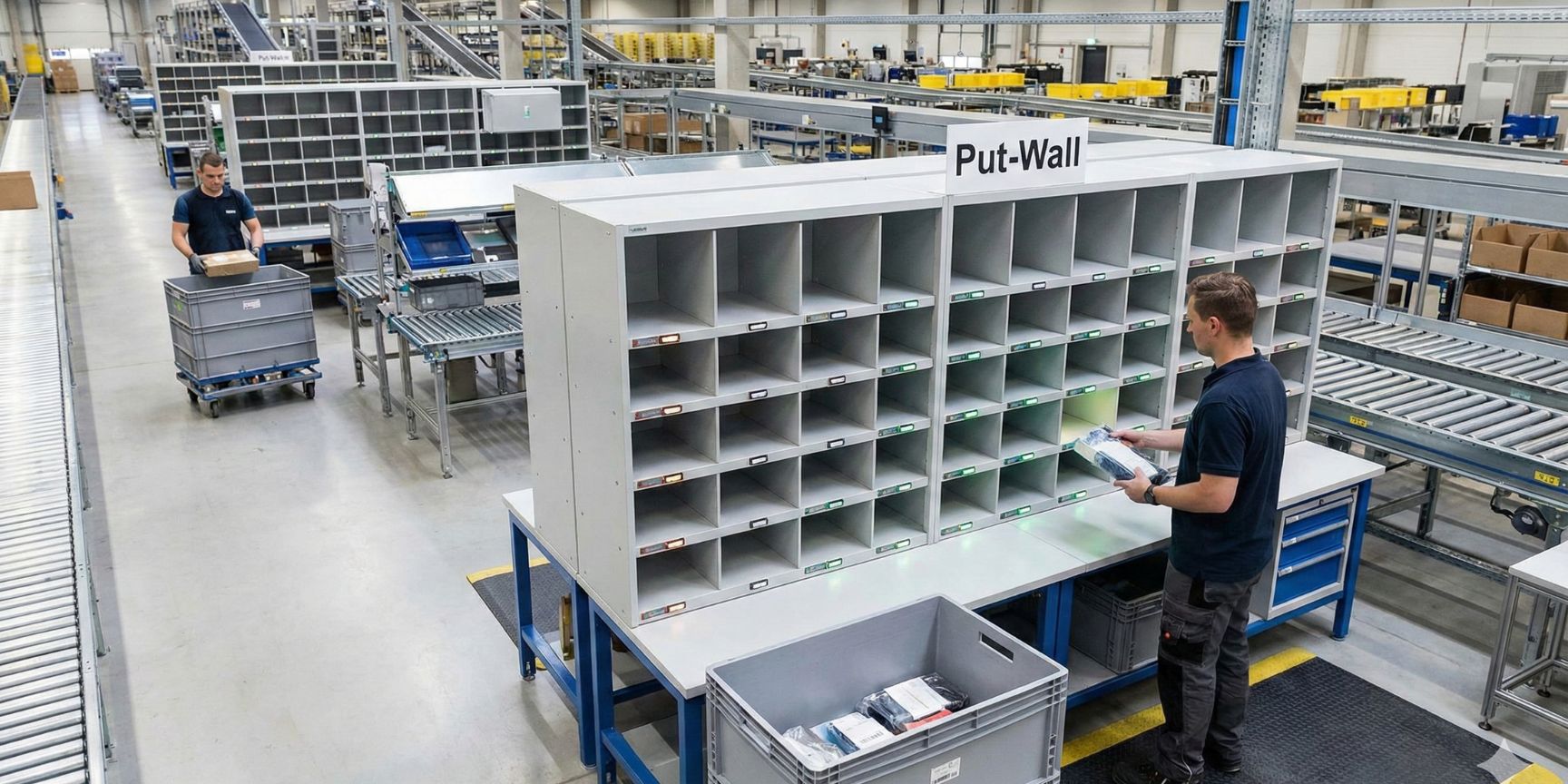
Despite the efficiency gains, the model is not risk-free. An often underestimated factor is the complexity of work instructions. In extreme cases, a picker must master the packaging regulations of five different customers (e.g.: customer A wants filling material made of paper, customer B only bubble wrap).
This requires an intensive training concept. Companies often counter this risk by using digital assistance systems at the packing stations, which visually (via screens) show exactly how the goods of the current order are to be packed.
The impact on warehouse KPIs
The introduction of multi-user picking significantly changes the key performance indicator landscape (KPIs) of a location:
- Land use rate: Usually increases because buffer areas can be divided.
- Pick performance (picks/hour): Can drop slightly at first, as the distances between the items of different clients may be longer than in an optimized single warehouse. However, this is compensated for by the higher overall occupancy rate throughout the day.
- Throughput time: Can be optimized by batch formation (combining orders from different clients for one tour).
Conclusion and outlook
Multi-user picking is the logistics industry's answer to cost pressure and the shortage of skilled workers. For logistics real estate developers, this means that "standard boxes" with a high degree of third-party usability are more stable in value than special buildings. For contract logistics companies, the future lies in intelligent IT systems that abstract the complexity of different clients to such an extent that the employee in the warehouse experiences a seamless, uniform process.
Service providers who master multi-user picking turn fixed costs into variable costs and offer their customers exactly the scalability required in modern e-commerce and the just-in-time industry.