




Multi-user warehousing or multi-user warehouse, shared warehousing
Inhaltsverzeichnis
- What is shared warehousing? A definition
- The Core Principle: Shared Resources for Maximum Efficiency
- The decisive advantages: flexibility, scalability and cost efficiency
- The downside: standardization and divided attention
- The billing model: variable costs and pay-per-use logic
- Conclusion: Who is the multi-user warehouse suitable for?
Guide: Shared Warehousing – Maximum Flexibility through Shared Resources
What is shared warehousing? A definition
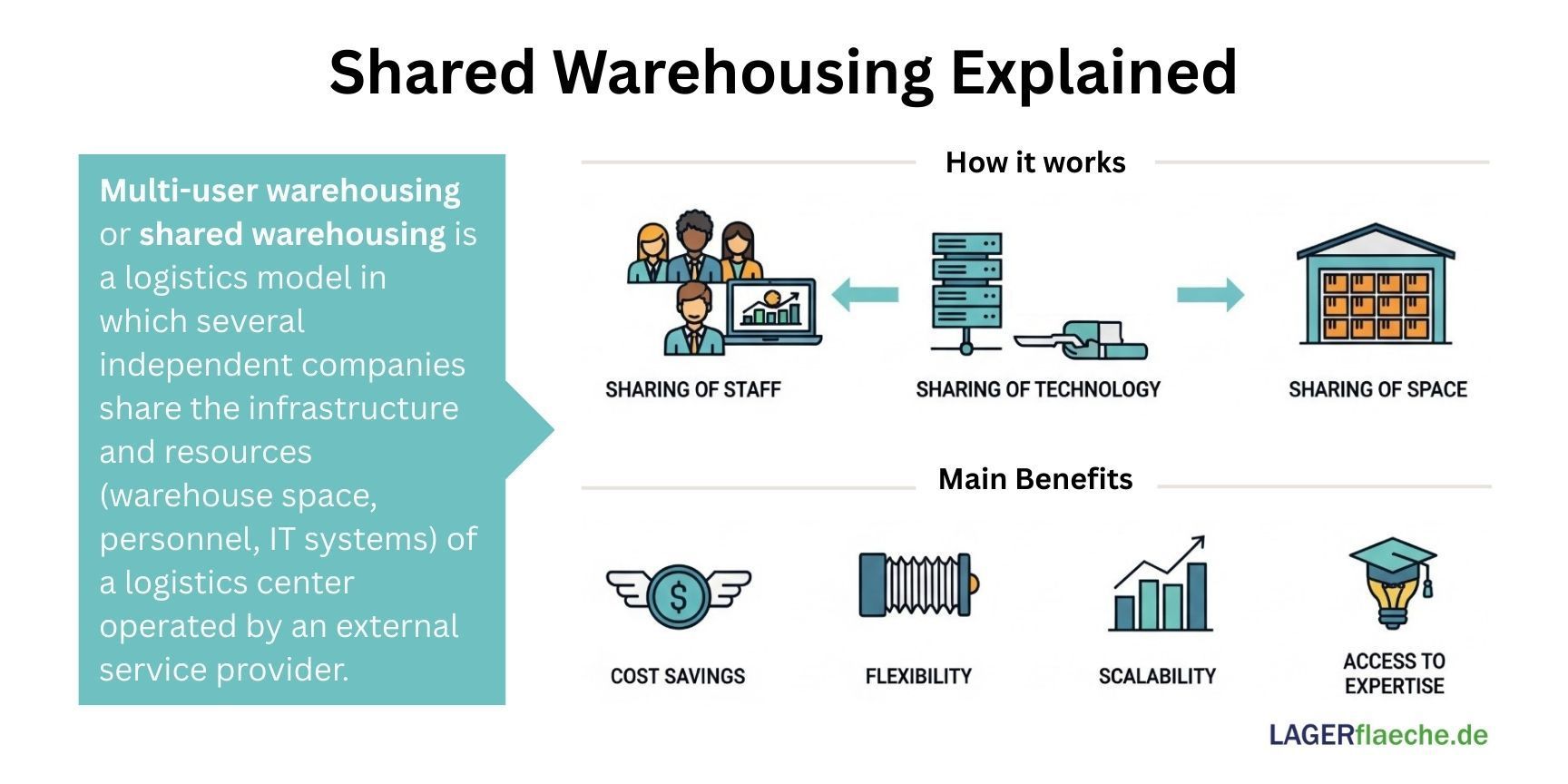
Shared warehousing, mainly known as multi-user warehousing , is a logistics outsourcing model in which several independent companies (clients) share the infrastructure and resources of a warehouse. An external logistics service provider (3PL) operates the facility and provides all clients with storage space, personnel, IT systems and equipment. Instead of renting an entire facility exclusively (dedicated warehousing), companies only book the capacities they actually need. This model is a cornerstone of modern contract logistics and also gives smaller companies access to highly professional logistics structures.
The Core Principle: Shared Resources for Maximum Efficiency
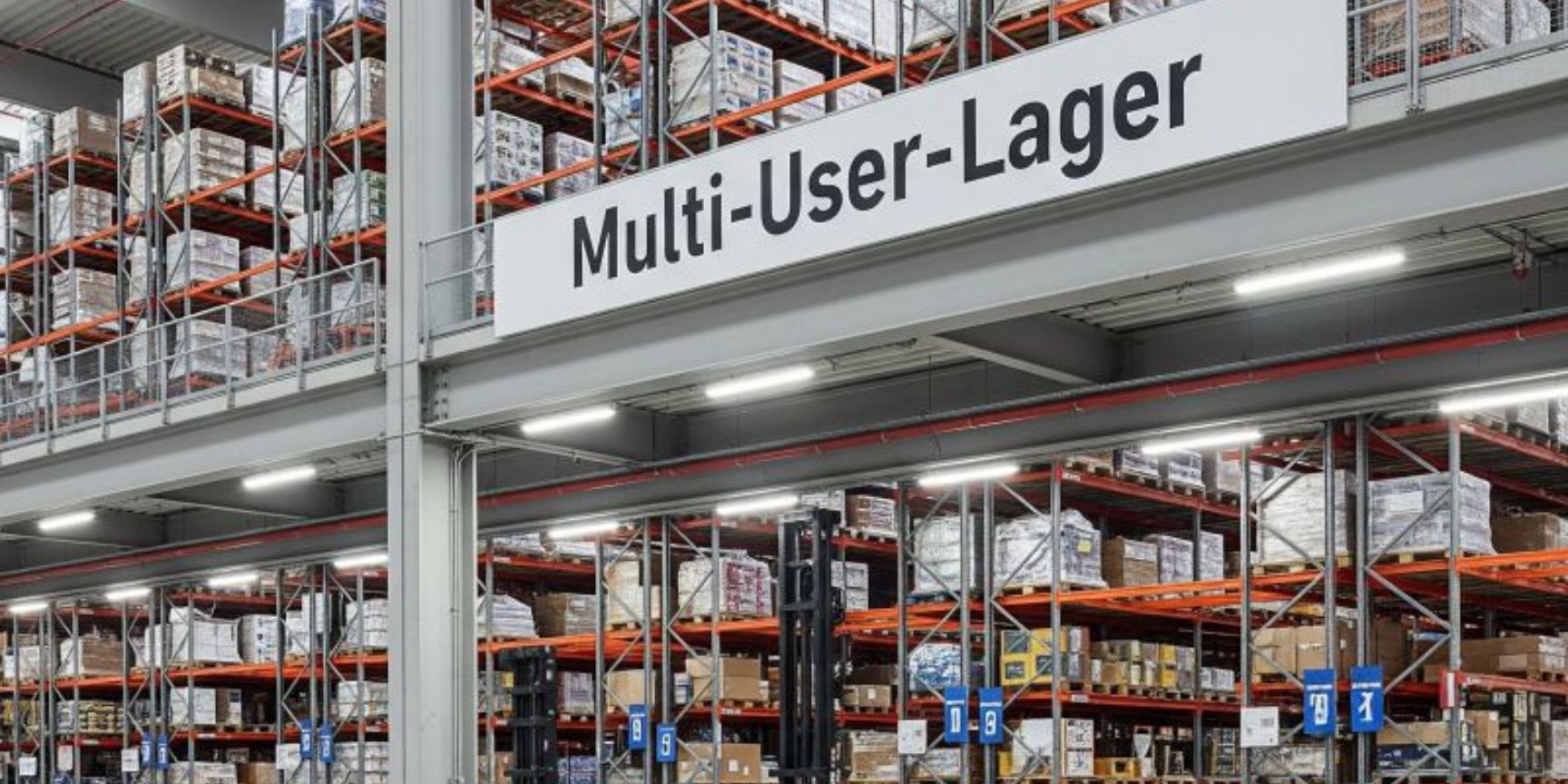
The secret to the success of shared warehousing lies in the bundling of volumes and the resulting economies of scale. By consolidating the needs of its various clients, the 3PL service provider can invest in expensive technologies, automation solutions and qualified personnel. These investments would often not be profitable for a single, smaller client. Clients benefit collectively from these advanced systems and efficient processes. A powerful warehouse management system (WMS) ensures the strict separation and precise management of the inventories of each individual client, even though they may be physically stored next to each other.
The decisive advantages: flexibility, scalability and cost efficiency
The popularity of multi-user warehouses is based on three key advantages that make them particularly attractive for dynamic markets:
- Flexibility & scalability: Companies can adapt their required storage space and services at short notice to their current business development. Seasonal peaks (e.g. Christmas business, Black Friday) or the introduction of new products can be cushioned without long-term contractual commitments to fixed storage capacities. The entrepreneurial risk is minimized.
- Cost-effectiveness: There is no high initial investment (CAPEX) required to build or equip a warehouse. The conversion of fixed costs into variable costs (OPEX) is a key lever. Companies only pay for the services actually used, which protects liquidity and enables a clear cost-benefit calculation.
- Access to professional infrastructure: Start-ups and small to medium-sized enterprises (SMEs) in particular gain immediate access to professional logistics, which they often would not be able to build up on their own. This accelerates growth and increases competitiveness.
The downside: standardization and divided attention
Despite the significant benefits, there are also aspects that companies need to consider when choosing a multi-user warehouse:
- Standardized processes: To ensure efficiency for all clients, multi-user warehouses work with largely standardized processes. Very individual or complex special requests that deviate from the standard are often difficult to implement or can be implemented for high surcharges. The adaptability lies with the client, not primarily with the service provider.
- Limited specialization: This model is less suitable for goods that require highly specific storage conditions (e.g. special climates, extreme safety precautions) that do not meet the standard of the warehouse.
- Shared resources: At peak times, all clients compete for the same resources (e.g., staff, loading gates). A good 3PL vendor will manage this through service level agreements (SLAs), yet no single customer has the sole priority as in a dedicated model.
The billing model: variable costs and pay-per-use logic
A practical understanding of the cost structure is crucial. In shared warehousing, billing is typically transaction-based. The invoice is made up of various variable items, such as:
- Goods receipt: Cost per pallet delivered, per box or per article.
- Storage fee: Costs per occupied parking space (pallet, shelf) per unit of time (day, week, month).
- Picking: Cost per order, per item or per part removed.
- Packaging & Shipping: Cost per shipment, including packaging material and postage.
- Value-added services: Costs for additional services such as labeling, set formation or returns processing.
Conclusion: Who is the multi-user warehouse suitable for?
Shared warehousing is the ideal solution for a broad group of companies, especially for:
- Start-ups and SMEs that are growing rapidly and need professional but flexible logistics without high initial investments.
- E-commerce merchants whose business is inherently characterized by fluctuating order volumes and seasonal peaks.
- Companies that want to expand into new geographic markets and test them with low risk and no long-term commitments.
- Companies with seasonal products (e.g. garden items, winter clothing, advertising materials) that only need storage capacity for a limited period of the year.