



Forward Logistics in Warehouse Logistics
Table of Contents
- What is forward logistics? A basic definition
- The core processes of forward logistics in detail
- The role of warehouse logistics at the heart of the project
- The importance of logistics real estate as a strategic factor
- Forward Logistics in Contract Logistics: Outsourcing as a Model for Success
- Frequently Asked Questions (FAQ) about Forward Logistics
What is forward logistics? A basic definition
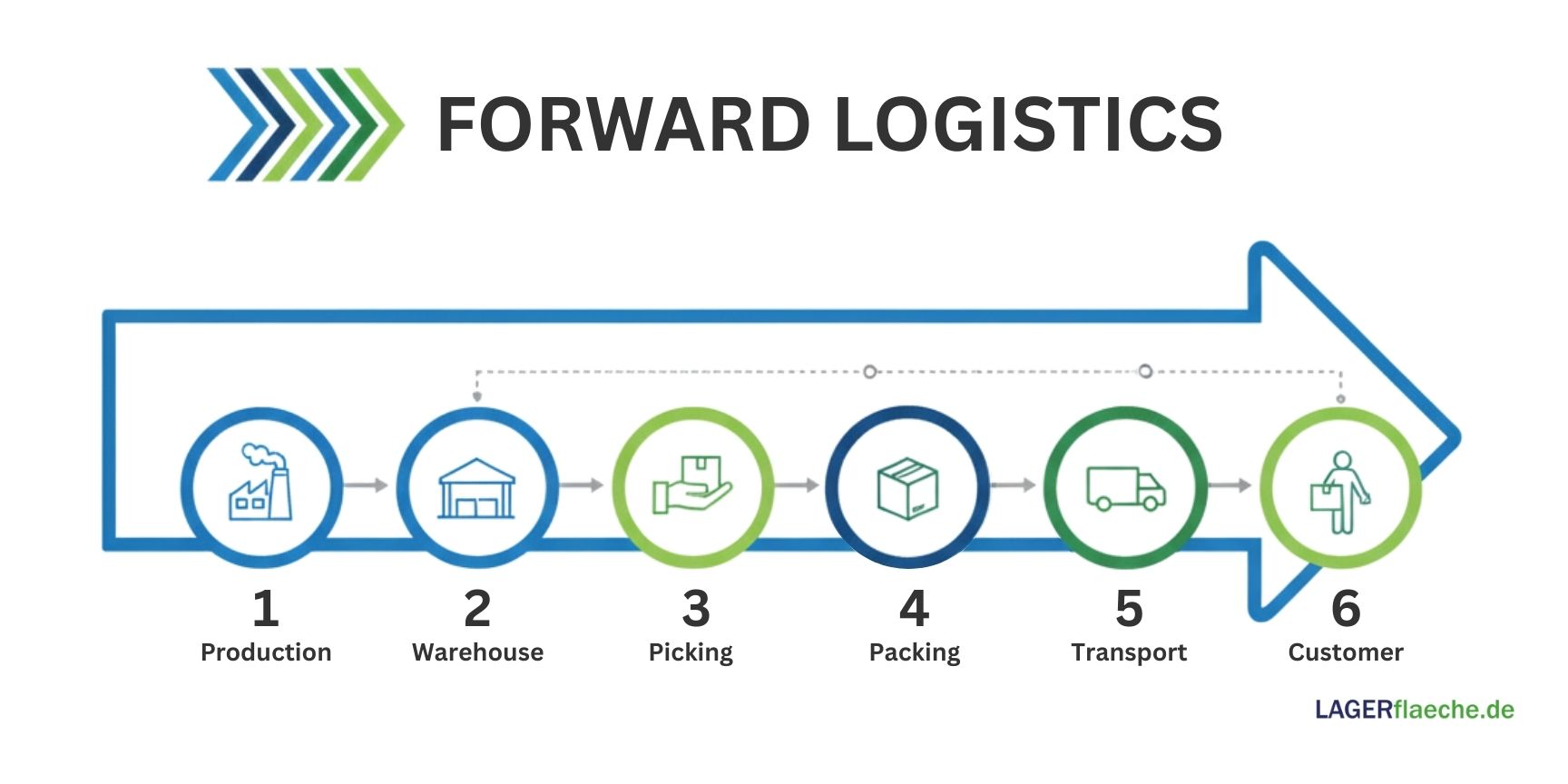
Forward logistics, often referred to as classic distribution logistics, includes all processes that control the flow of goods from production or supplier to the end consumer. It is the direct antithesis of reverse logistics, which deals with returns and the recycling of products. The chain of forward logistics is linear and targeted: a product is procured, stored, picked, packed and delivered. The primary goal is to provide the right product in the right quantity and quality at the right time in the right place at the best possible price. Every step in this chain must mesh precisely to ensure efficiency, customer satisfaction and ultimately the profitability of the company.
The core processes of forward logistics in detail
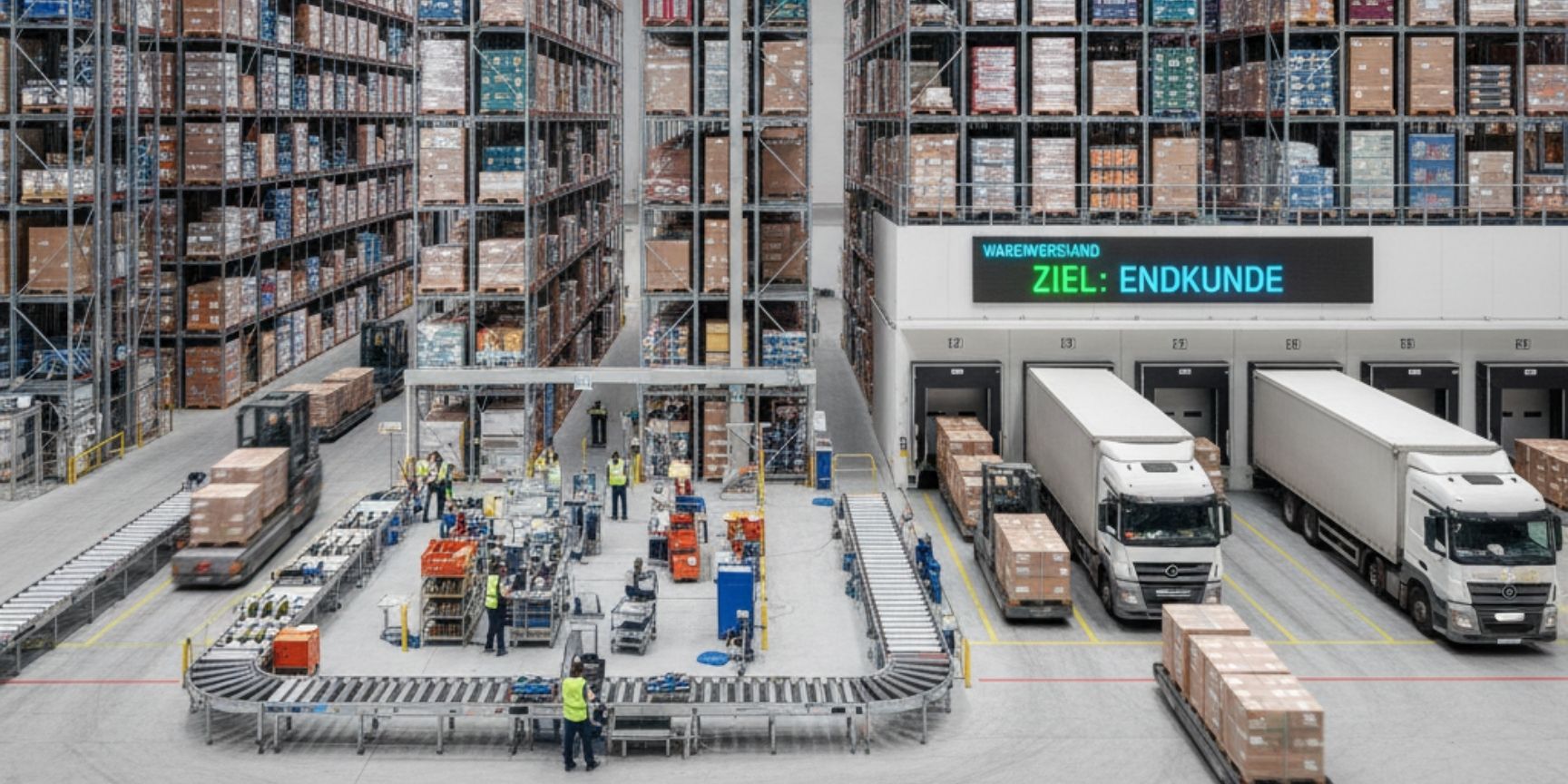
The process of forward logistics can be divided into several core processes, which in practice often run in parallel and networked. Each of these steps has a direct impact on costs and service quality.
- Procurement logistics: The process begins with the procurement of raw materials, components, or finished goods from the supplier.
- Warehousing: After goods have been received, the goods are systematically stored. This is more than just placing pallets; it includes inventory management, choosing the right storage technology (e.g. high-bay warehouse, automated small parts warehouse) and ensuring optimal storage conditions.
- Picking: As soon as a customer order is received, the corresponding items are assembled ("picked") from the warehouse. This process is one of the most labor-intensive and cost-intensive in warehouse logistics and plays a key role in determining delivery speed and accuracy.
- Packaging and consolidation: The picked goods are securely packed for transport, provided with shipping labels and, if necessary, combined (consolidated) with other shipments for the same destination.
- Transport and distribution: The last phase includes the physical delivery of the goods to the customer, be it a B2B recipient or the private end consumer (last-mile delivery).
The role of warehouse logistics at the heart of the project
Warehouse logistics is the operational center of forward logistics. A modern logistics property or warehouse is much more than just a transshipment point. It is a high-tech and strategic hub. Here, stocks are not only stored, but actively managed. With the help of warehouse management systems (WMS), the entire flow of goods is digitally mapped and optimized – from incoming goods scanning to chaotic or fixed storage location allocation to route-optimized picking. Efficiency in warehouse logistics reduces capital tied up in the warehouse, reduces process costs and increases delivery quality, which directly contributes to competitiveness.
The importance of logistics real estate as a strategic factor
Choosing the right logistics property is one of the most fundamental strategic decisions in forward logistics. The criteria go far beyond the mere number of square metres:
- Macro and micro location: The connection to motorways, ports or freight centres (GVZ) is crucial for fast transport times. The proximity to metropolitan areas reduces the cost and duration of the "last mile".
- Technical equipment: Modern halls offer a ceiling height of at least 10-12 metres (for high-bay warehouses), a high floor load capacity (approx. 5 t/m²), a sufficient number of truck docking doors and, ideally, ground-level access gates.
- Flexibility and third-party usability: The property should be designed in such a way that it can be adapted to changing processes (e.g. through mezzanine levels for value-added services) and also remains attractive to other users.
In Germany, the market for logistics and industrial real estate comprised take-up of several million square metres in 2023, underlining the continued high strategic importance of this asset class.
Forward Logistics in Contract Logistics: Outsourcing as a Model for Success
For many companies, it does not make economic sense to operate complex forward logistics themselves. This is where contract logistics comes into play. An external service provider (3PL – Third Party Logistics Provider) takes over the entire logistics processes – from storage to picking to distribution and sometimes even light assembly activities (value-added services). The advantage for the client is obvious: he benefits from the expertise, the existing networks and the scalability of the service provider, converts fixed costs into variable costs and can concentrate fully on his core business.
Frequently Asked Questions (FAQ) about Forward Logistics
Question: What is the key difference between forward and reverse logistics?
Answer: Forward logistics focuses on the predictable and efficient path of the new product to the customer. Reverse logistics, on the other hand, deals with the unpredictable return flow of goods (returns, recycling, repair), which entails greater complexity in process control.
Question: Why is efficient picking so critical for success?
Answer: Picking is the most personnel- and time-consuming process in the warehouse. Errors here lead to incorrect deliveries, customer dissatisfaction and expensive returns. High picking accuracy and speed are therefore direct levers for profitability, especially in e-commerce with its high requirements for fast delivery.
Question: What role does digitalization play in modern forward logistics?
Answer: A central one. Modern warehouse management systems (WMS), automation solutions (e.g. driverless transport systems, robotics) and data-driven forecasts (predictive analytics) are indispensable today in order to transparently control the complex chain, optimize inventories and be able to react quickly to the volatility of the markets.