




Fast-moving items in warehouse logistics
Table of Contents
- Definition and classification: What is a high-speed device?
- The role of the high-speed driver in ABC analysis and inventory management
- Requirements for the logistics property and hall layout
- High-speed in contract logistics: processes and SLAs
- Automation Technology: Dealing with High-Runners
- Frequently Asked Questions (FAQ) on the subject of high-speed vehicles
- Strategic Optimization: Data-Driven Decisions
- Conclusion
Definition and classification: What is a Fast-moving item?
In general logistical parlance, the term Fast Mover or Fast Moving Consumer Goods (FMCG in the retail context) refers to goods or articles that have a particularly high turnover rate. They leave the warehouse much faster and more often than the average of the range.
In the classic ABC analysis, fast-moving goods correspond to A goods. These items are often characterized by the following features:
- High value share of total sales (often ~80% of sales with only ~20% of the number of items – see Pareto principle).
- Short storage time: The goods are delivered and picked and shipped again promptly.
- Constant demand: In contrast to seasonal items, fast-moving products are often (but not always) in constant demand.
The counterpart to the fast-moving items is the slow-moving items (slow mover or "bum"), which ties up capital through a long storage period.
The role of the fast-moving item in ABC analysis and inventory management
The identification of fast-moving items is not a one-time process, but a dynamic process in inventory management. The key figure for determination is the turnover frequency.
Why is this distinction so important for specialist portals? Because fast-moving companies are the "bleeding heart" of liquidity. A stock-out (loss of inventory) for a fast-moving item is fatal, as it causes immediate loss of sales and damage to the customer's reputation. Conversely, safety stock must not be so high that it unnecessarily blocks the storage space needed for high throughput.
Real-world numbers: In a typical e-commerce warehouse, fast-moving goods often account for only 15-20% of stock keeping units (SKUs), but cause 60-80% of pick traffic.
Requirements for the logistics property and hall layout
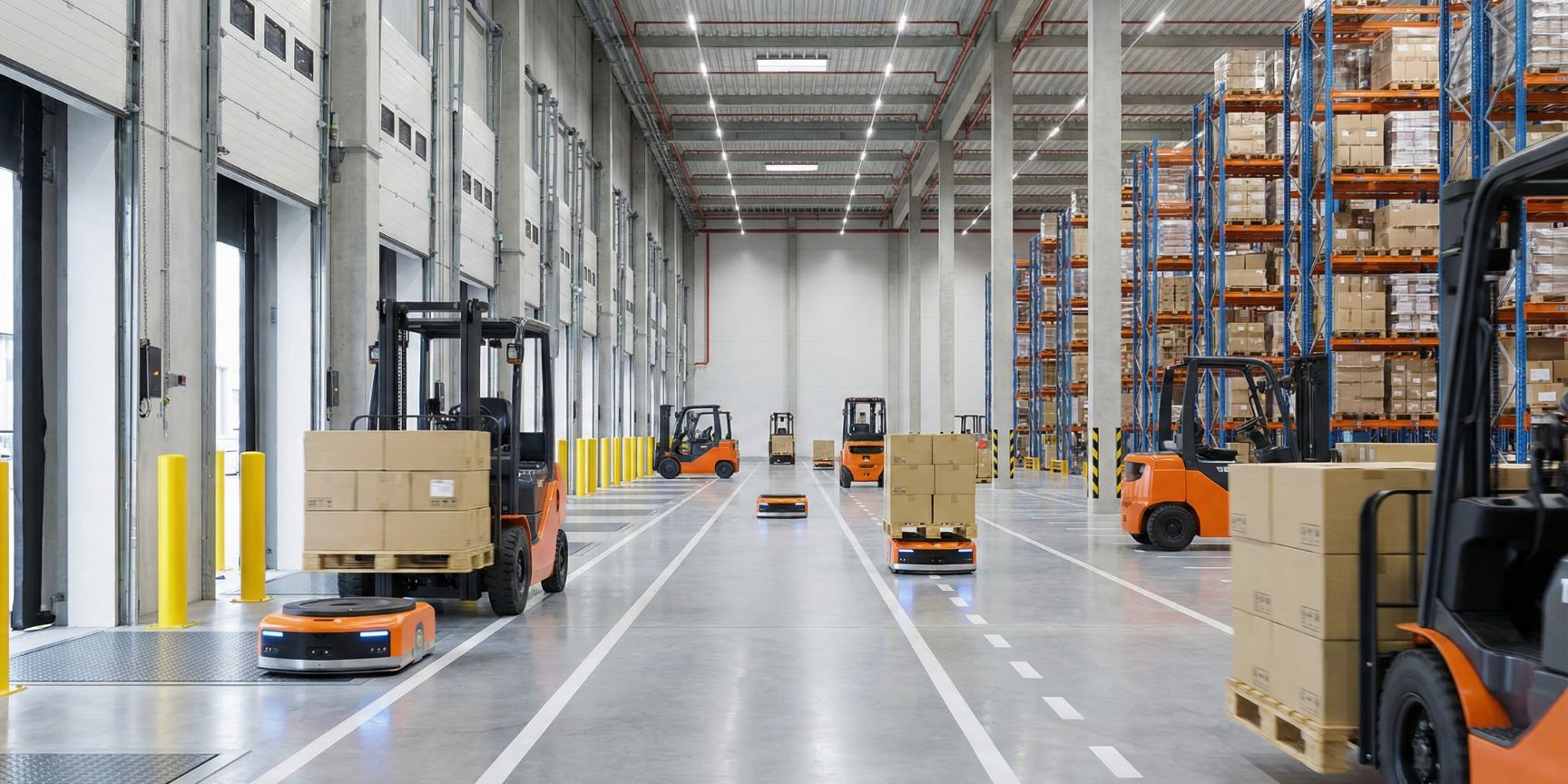
From the point of view of real estate economics and hall construction, fast-moving items place specific demands on the physical condition of the building. A logistics property must be designed to support the "high-speed flow" of these goods.
Zoning and walkways
Fast-moving items must be strategically placed. The technical term for this is distance-optimized storage.
- Location: Immediate proximity to the outgoing goods area (shipping zone) or at the front of the rows of shelves.
- The goal: To minimise travel times for order pickers and industrial trucks. Every meter that a fast-moving good is too far back in the hall costs money.
Soil Load and Gate Density
Since fast-moving goods are frequently moved, the frequency of forklift journeys in these zones is extremely high.
- Soil conditions: The industrial floor in high-speed zones must be particularly abrasion-resistant and withstand high point loads.
- Cross-docking capability: Many logistics properties today are planned with a high number of gates (dock levelers) per square meter (e.g. 1 door per 800–1,000 m²) in order to enable pure cross-docking (goods handling without actual storage) for absolute high-speed runners (fast-moving goods).
Fast-moving in Contract Logistics: Processes and SLAs
For contract logistics companies that provide warehousing services for third parties, fast-moving goods are the most critical factor in service level agreements (SLAs).
- Pick performance: Billing is often done per pick. Since fast-moving items are often picked, the processes here must be maximally standardized.
- Replenishment control: A critical bottleneck in contract logistics is replenishment from the reserve location to the picking station. In the case of fast-moving goods, this process often has to be automated or prioritized so that the picking station never runs empty (replenishment strategy).
In modern contract logistics centres, fast-moving items are often no longer stored in static shelving racks, but in flow racks or directly on pallet spaces in the block warehouse in order to minimise handling.
Automation Technology: Dealing with Fast-Runners
Is automation worthwhile for fast-moving items? The answer must be viewed in a differentiated way.
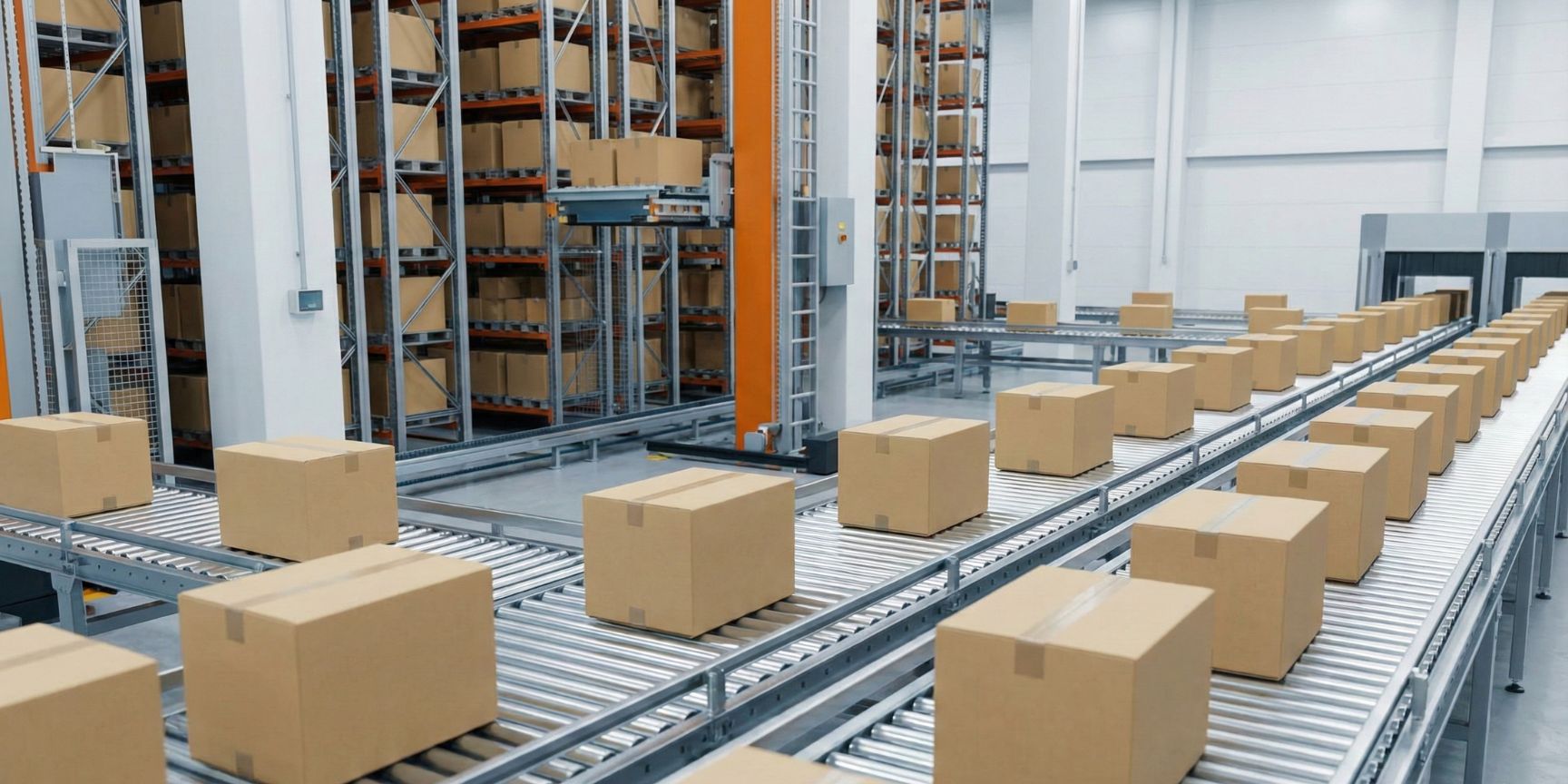
- Full automation (e.g. shuttle systems): These systems are extremely powerful (high double cycles per hour), but expensive. They are particularly worthwhile for fast-moving items with a small volume (small parts warehouse).
- Manual processes: In the case of large-volume high-speed trucks (e.g. beverage pallets, large equipment), people are often more flexible and economical with a high-speed forklift or an AGV (Automated Guided Vehicle) than a fully automated high-bay warehouse.
Practical tip: Many companies prefer to use "pick-by-light" or "voice picking" in the high-speed zones in order to reduce the pick error rate at the high frequency.
Frequently Asked Questions (FAQ) on Fast-moving Goods
Question: Can a fast-moving item become a slow-moving item?
Answer: Yes, absolutely. This often happens due to seasonal changes (e.g. charcoal in winter) or the end of a product life cycle. A modern warehouse management system (WMS) must recognize these dynamics and automatically reassign storage locations (dynamic warehousing).
Question: What is the difference between a "racer" and a "fast runner"?
Answer: Technically, there is no difference, they are synonyms. "Racer" and "fast runner" is the colloquial jargon for fast-movers and slow-movers.
Question: How do fast-moving goods influence the choice of logistics property?
Answer: A company with an assortment that consists of 80% fast-moving items (e.g. food logistics) needs properties with many doors on two opposite sides (through-loader/cross-dock hall) and less pure storage height, as throughput is more important than capacity.
Strategic Optimization: Data-Driven Decisions
The management of high-speed machines requires an excellent database.
- XYZ analysis: ABC analysis is often combined with XYZ analysis.
- X-Article: Constant consumption, high prediction accuracy (ideal high-speed for automation).
- Z-Article: Irregular consumption.
- Simulation software: Before moving into a new hall or a conversion, logistics planners simulate the routes based on historical data of the high-speed machines in order to avoid "traffic jams" in the aisles.
Conclusion
The high-speed machine is more than just a popular product; it is the pacesetter of warehouse logistics. Its handling determines the architecture of the logistics property, the type of conveyor technology and the profitability of the contract logistics provider. Those who do not have their high-speed machines under control – whether due to incorrect placement in the warehouse or a lack of replenishment strategies – lose margins in the competition due to inefficient processes.