




Friendshoring in warehouse logistics
Table of Contents
- Friendshoring: The New Architecture of Global Logistics Resilience
- Definition: What is friendshoring actually?
- The Paradigm Shift: From Risk Management to Site Selection
- Focus on warehouse logistics: buffer capacities in "safe havens"
- Contract Logistics: Service Providers as Strategic Bridge Builders
- Logistics real estate: Where will the new halls be built?
- FAQ: Frequently Asked Questions about Friendshoring
- Facts, figures, data: The economic dimension
- Practical checklist: Friendshoring for logistics decision-makers
- Conclusion: An opportunity for Europe as a logistics location
Friendshoring: The New Architecture of Global Logistics Resilience
The term friendshoring (also known as "ally-shoring") has rapidly developed from a political buzzword to a solid strategic guard rail for supply chain management. But what does this trend mean in concrete terms for players in warehouse logistics, contract logistics companies and the development of logistics real estate?
Definition: What is friendshoring actually?
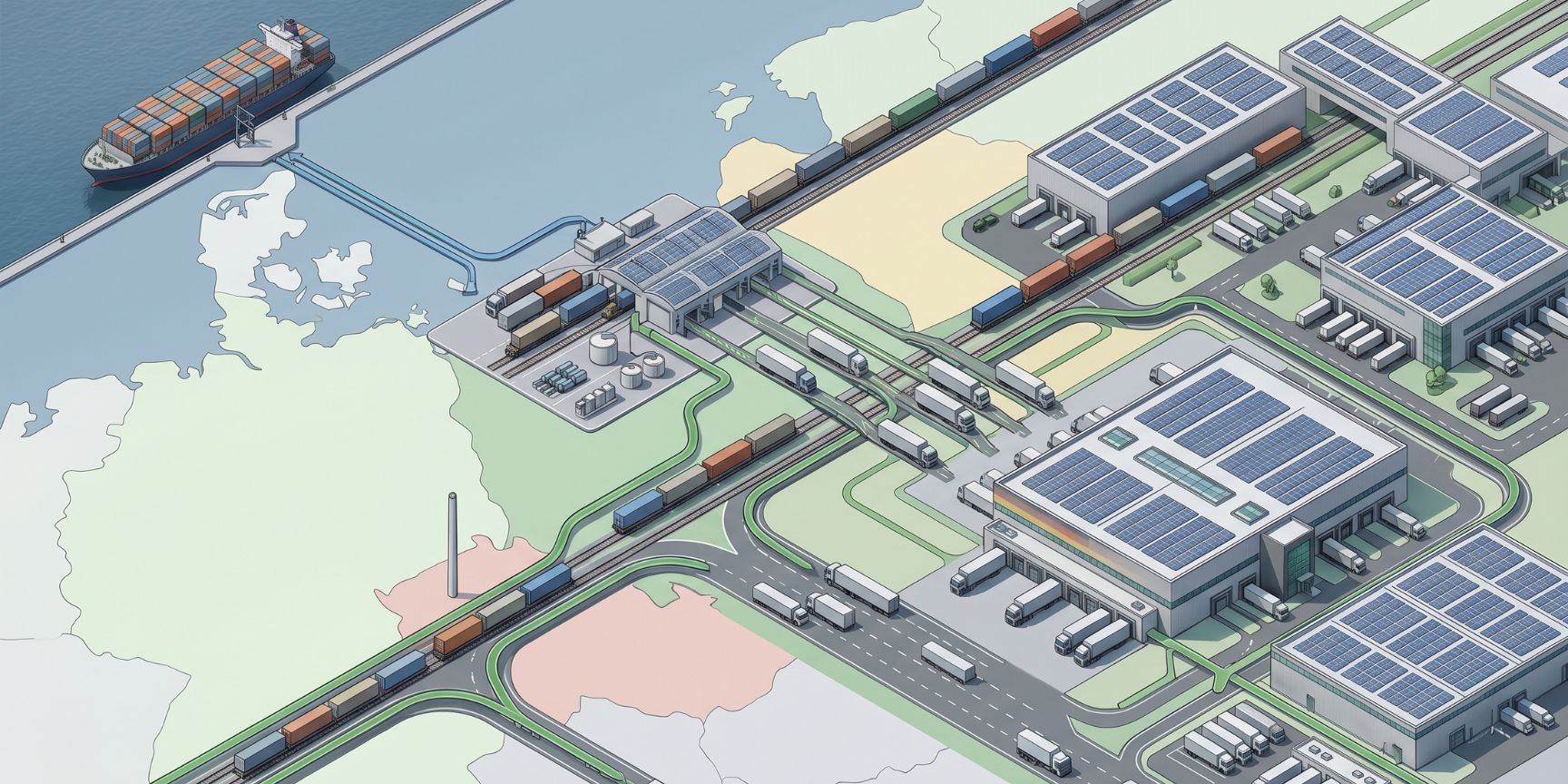
Friendshoring describes the practice of relocating supply chains and production sites to countries that are politically and strategically allied with one's own country or share similar values. While price dominates offshoring and geographical proximity dominates nearshoring, political stability and reliability are the primary currency in friendshoring.
The Paradigm Shift: From Risk Management to Site Selection
For a long time, "just-in-time" was the measure of all things. However, crises such as the pandemic or geopolitical tensions have shown that dependencies on autocratic regimes can threaten the existence of the company.
- The effect: companies diversify their procurement.
- The consequence: inventories are increased again (just-in-case), which massively increases the need for modern hall space.
Focus on warehouse logistics: Buffer capacities in "safe havens"
In warehouse logistics, friendshoring leads to decentralization. Instead of a gigantic central warehouse overseas, networks of regional hubs in friendly nations are created.
- Inventory management: To compensate for volatility, safety stocks are increasing. For logistics service providers, this means higher capacity utilization, but also the need for smarter warehouse management systems (WMS).
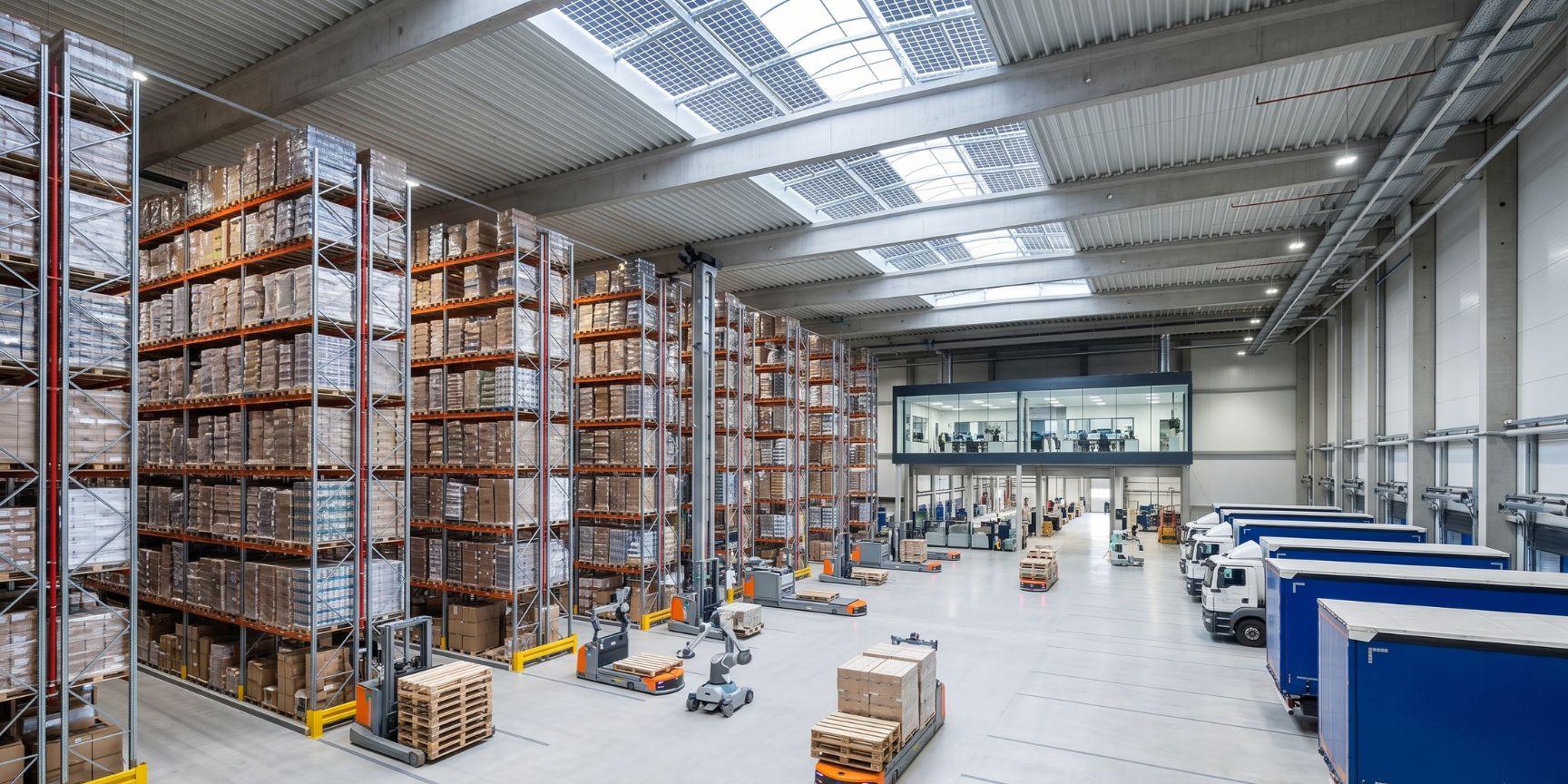
- Technology pressure: In friendshoring regions (e.g. Eastern Europe or North America), labor costs are often higher than in the Far East. This accelerates automation in the hall (cobots, AGVs).
Contract Logistics: Service Providers as Strategic Bridge Builders
Friendshoring offers enormous opportunities for contract logistics companies. They no longer act only as carriers, but as integrators in complex, politically stable corridors.
- Value Added Services (VAS): Since intermediate products from "friendly" countries often still require final assembly or quality inspections, the focus is on production-related logistics services.
- Contract Terms: Friendshoring strategies are designed for the long term. This promotes longer contract terms in contract logistics, as location decisions are made less opportunistically.
Logistics real estate: Where will the new halls be built?
The trend towards friendshoring is fundamentally changing the map of logistics real estate.
- Location hotspots: Within Europe, Poland, the Czech Republic and Romania in particular benefit, but also locations near the border with Germany.
- Requirements for the hall: Modern friendshoring properties must be ESG-compliant. Investors and users demand sustainable buildings (PV systems, heat pumps), as friendshoring often goes hand in hand with stricter Western environmental standards.
- Revitalization: Brownfields in Germany are also becoming more attractive in order to keep critical components directly in the "home market".
FAQ: Frequently Asked Questions about Friendshoring
Question: Is friendshoring more expensive than offshoring?
Answer: In the short term, often yes, through higher wage or construction costs. In the long term, however, the "total cost of risk" decreases. A supply stop due to political sanctions is far more expensive than a higher hall rent.
Question: What is the difference to nearshoring?
Answer: Nearshoring relies on geographical proximity (e.g. Morocco for Europe). Friendshoring relies on political proximity (e.g. USA for Germany), regardless of distance. The two concepts often overlap.
Question: Which industries are driving the trend?
Answer: Especially the semiconductor industry, automotive, pharmaceuticals and critical infrastructure sectors.
Facts, figures, data: The economic dimension
- Market dynamics: According to studies, over 40% of global companies plan to align their supply chains more closely with geopolitical criteria.
- Space requirements: Experts estimate that the transition from just-in-time to just-in-case (driven by friendshoring) could increase the demand for warehouse space in Europe by up to 15-20% by 2030 .
- Resilience bonus: Companies with diversified friendshoring structures were able to restore their ability to deliver in times of crisis on average 30% faster than purely price-driven competitors.
Practical checklist: Friendshoring for logistics decision-makers
If you want to integrate friendshoring into your strategy, you should check the following points:
Conclusion: An opportunity for Europe as a logistics location
Friendshoring is not deglobalization, but a re-globalization according to new rules. For the logistics industry, this means saying goodbye to the purely low-cost solution and towards quality logistics. Anyone who invests in the right locations and in flexible, automated hall concepts today will be the winner of this new trade regulation.

Your Ideal Logistics Warehouse
Browse listings for warehouse space, logistics real estate, industrial land, and contract logistics solutions.
Browse Exposés
Maximize Exposure for Your Warehouse Space
Showcase your logistics properties and attract qualified inquiries.
Discover Products